Most Expensive Henri Rousseau Paintings
Henri Rousseau occupies an unusual but increasingly celebrated position in the art market: once dismissed as a naive outsider, his visionary jungles and dreamlike tableaux are now among the most collectible works of early modernism, commanding eye-catching prices at auction and in private sales. Signature canvases such as The Sleeping Gypsy and The Sleeping Shepherdess have been valued at an astonishing $120–180 million, while The Dream (Le Rêve) sits in the $20–60 million range, and Tiger in a Tropical Storm (Surprised!) has fetched $30–60 million—figures that speak to both rarity and robust institutional demand. Paintings like Les Flamants ($40–52 million) and The Snake Charmer ($30–50 million) attract collectors for their bold color, arresting compositions and provenance histories; even smaller-market works, from Fight Between a Tiger and a Buffalo ($10–45 million) to The Hungry Lion Throws Itself on the Antelope ($8–20 million), show strong appreciation. With a market stretching from Scouts Attacked by a Tiger at $2–12 million to mid-market canvases like The Repast of the Lion ($5–20 million), Rousseau’s oeuvre blends imaginative novelty, cultural resonance, and scarcity—qualities that drive its premium valuation.
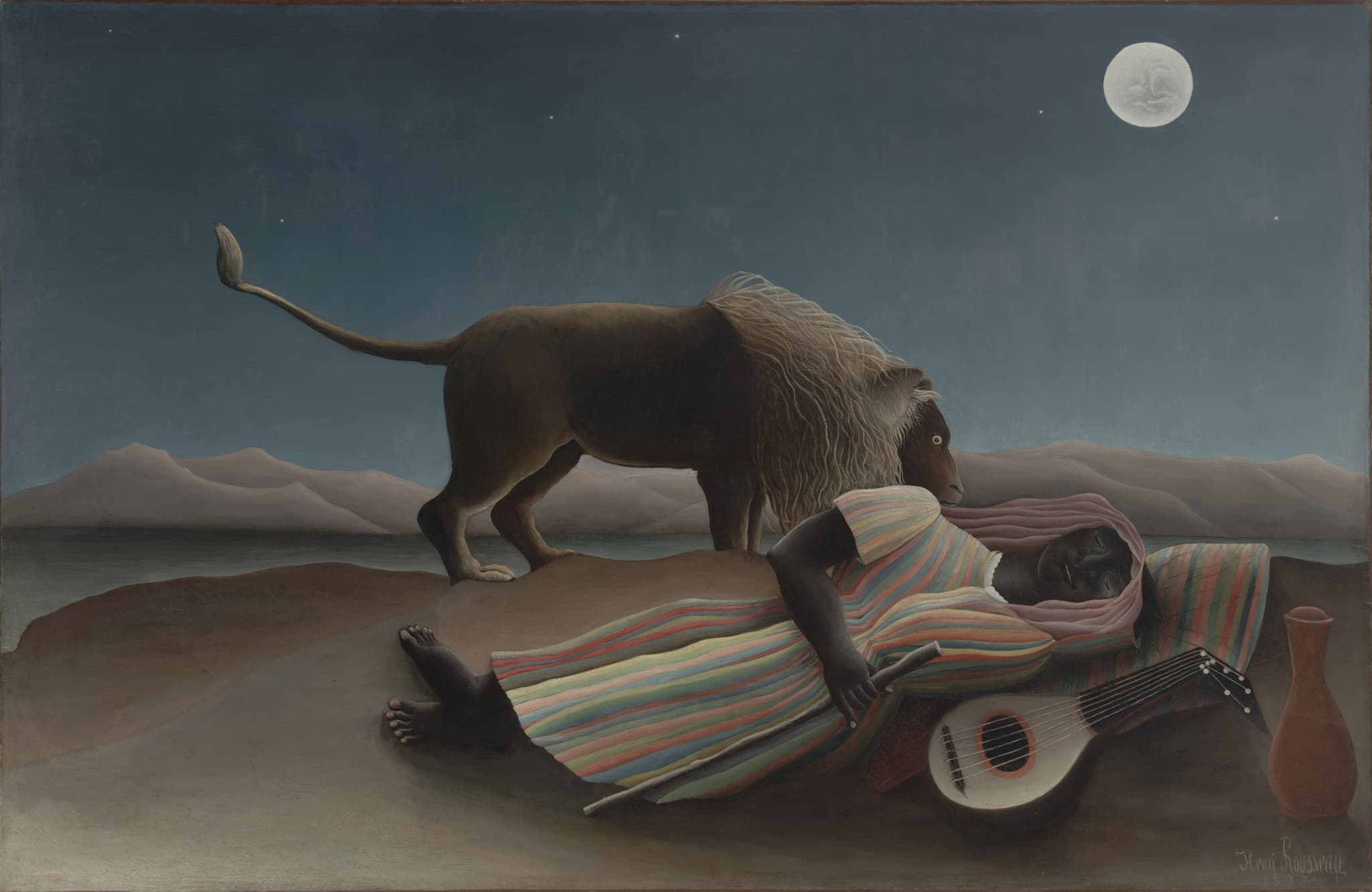
$120–180 million
This $120–180M estimate treats MoMA’s La Bohémienne endormie as a singular Rousseau icon, applying a substantial museum‑provenance premium above the artist’s $43.5M auction record.

$120-180 million
Henri Rousseau’s The Dream (1910) is a canonical, museum-held masterpiece and the culminating work of his jungle series at MoMA.
$120–180 million
As a canonical museum masterpiece, its hypothetical $120–180M valuation reflects a post‑2023 market reset for Rousseau after the $43.5M Les Flamants benchmark and extreme scarcity.
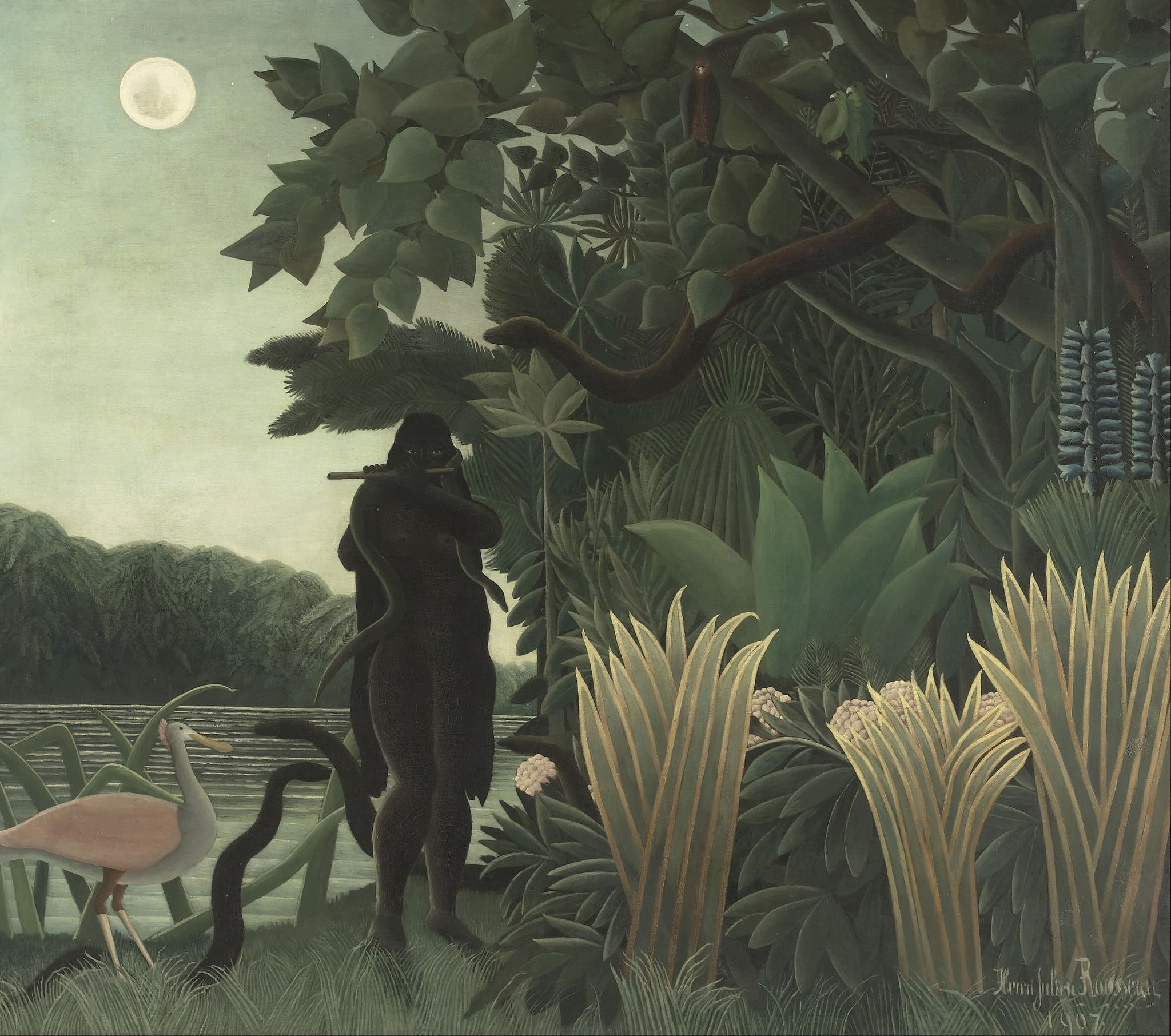
$100-150 million
The Snake Charmer (1907) is a museum‑held masterpiece by Henri Rousseau at the Musée d’Orsay and legally inalienable.

$20-60 million
MoMA’s The Dream is pushed toward the top of a $20–60M range by pristine provenance and exhibition pedigree, yet museum ownership and deaccession limits cap realization upside.

$30-60 million
Although untested at auction, the National Gallery’s Tiger in a Tropical Storm is given a $30–60M hypothetical range based on rarity, provenance and the $43.5M Rousseau benchmark.

$40-52 million
Having realized $43,535,000 at Christie’s New York (May 11, 2023), Les Flamants’ current buyer‑inclusive market range is anchored at approximately $40–52M.
$30-50 million
The Musée d’Orsay’s Snake Charmer is priced at $30–50M on account of museum quality, size and rarity, anchored to Rousseau’s 2023 $43.5M record.
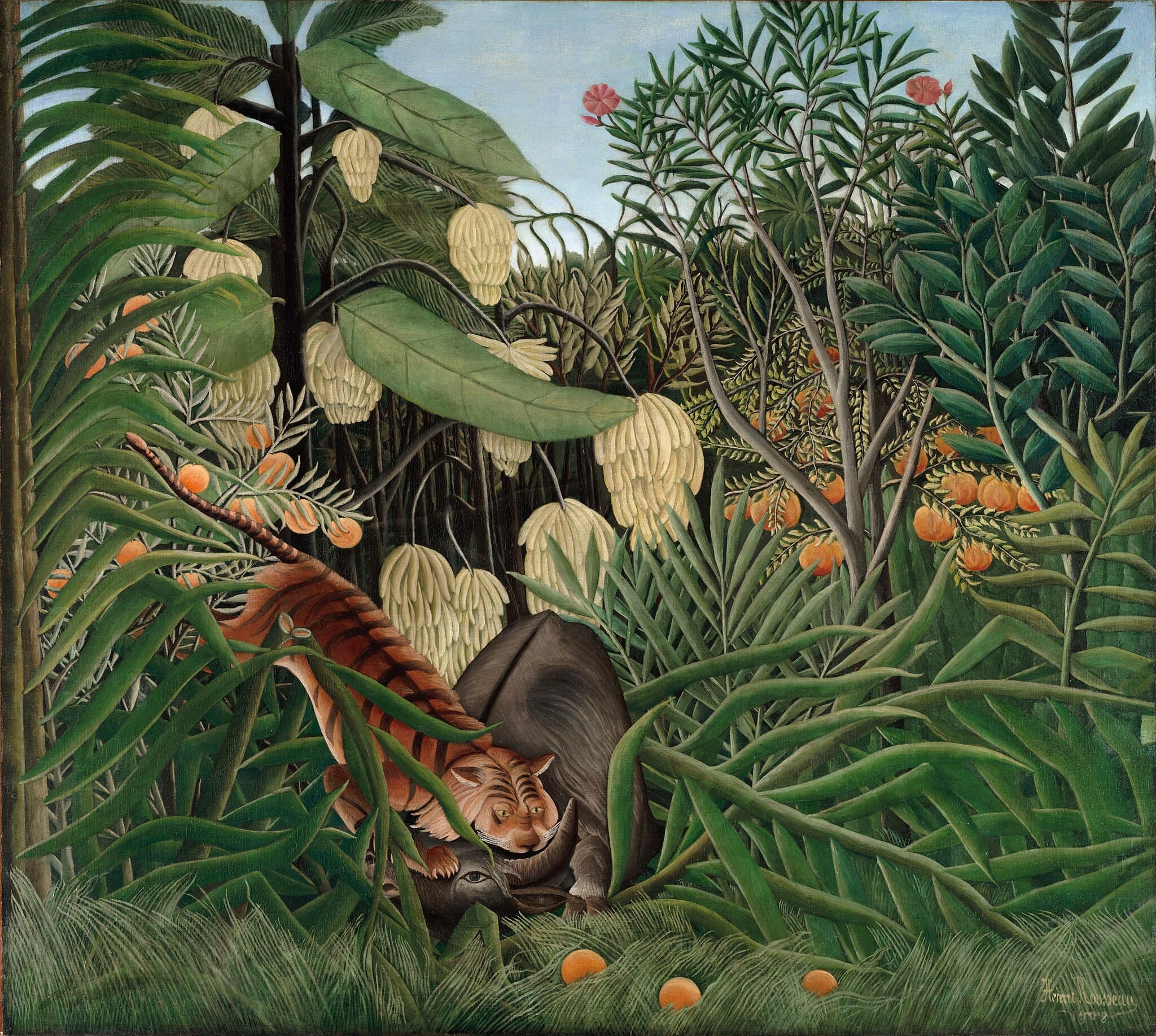
$10,000,000–$45,000,000
With direct provenance from Vollard to the Cleveland Museum, this large 1908 canvas is estimated $10–45M, the top end contingent on condition and marquee evening‑sale placement.
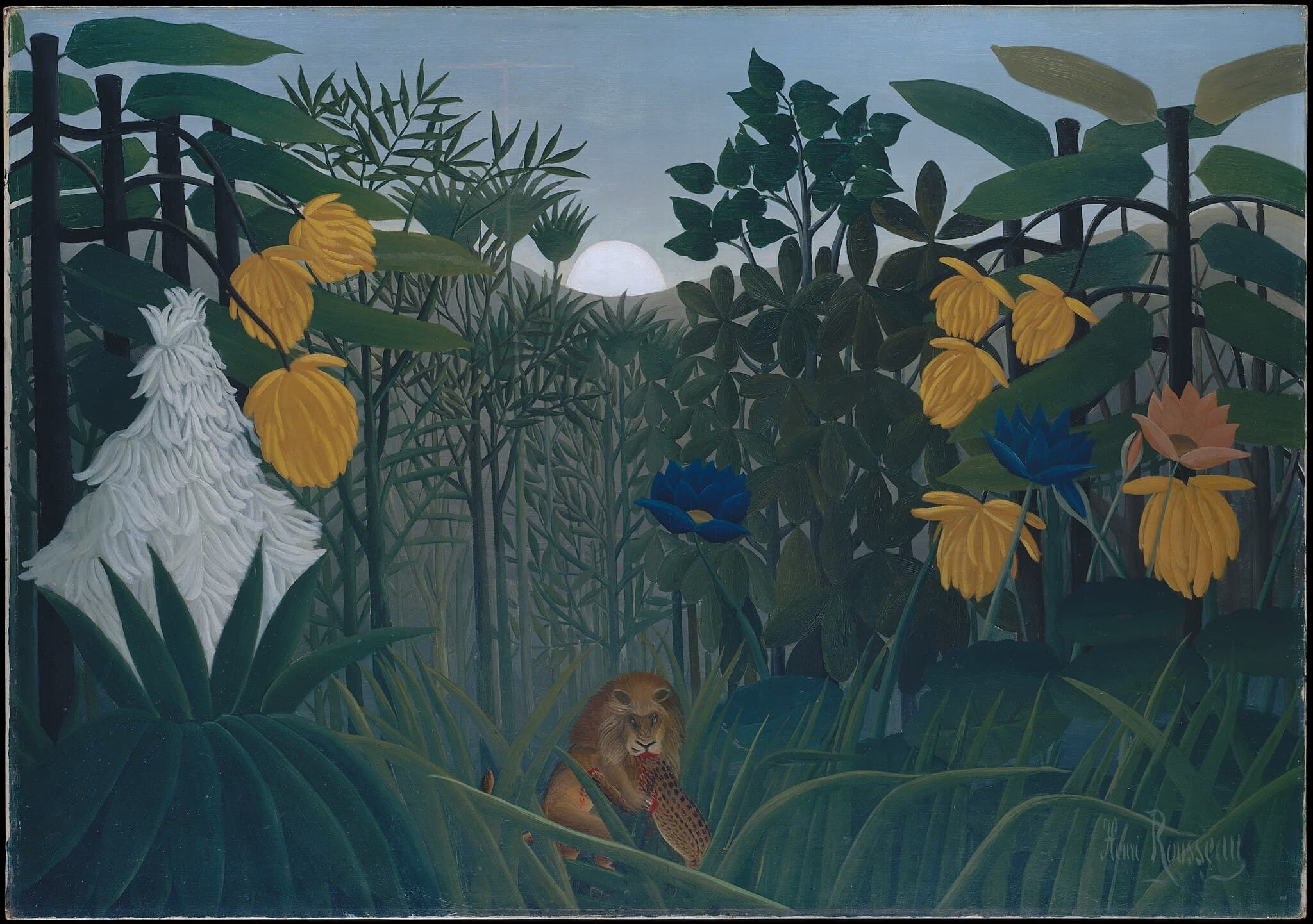
$5-20 million
The Met’s Repast of the Lion, never sold publicly, is pegged at $5–20M based on museum‑quality comparables and the $43.5M Les Flamants upper‑bound benchmark.
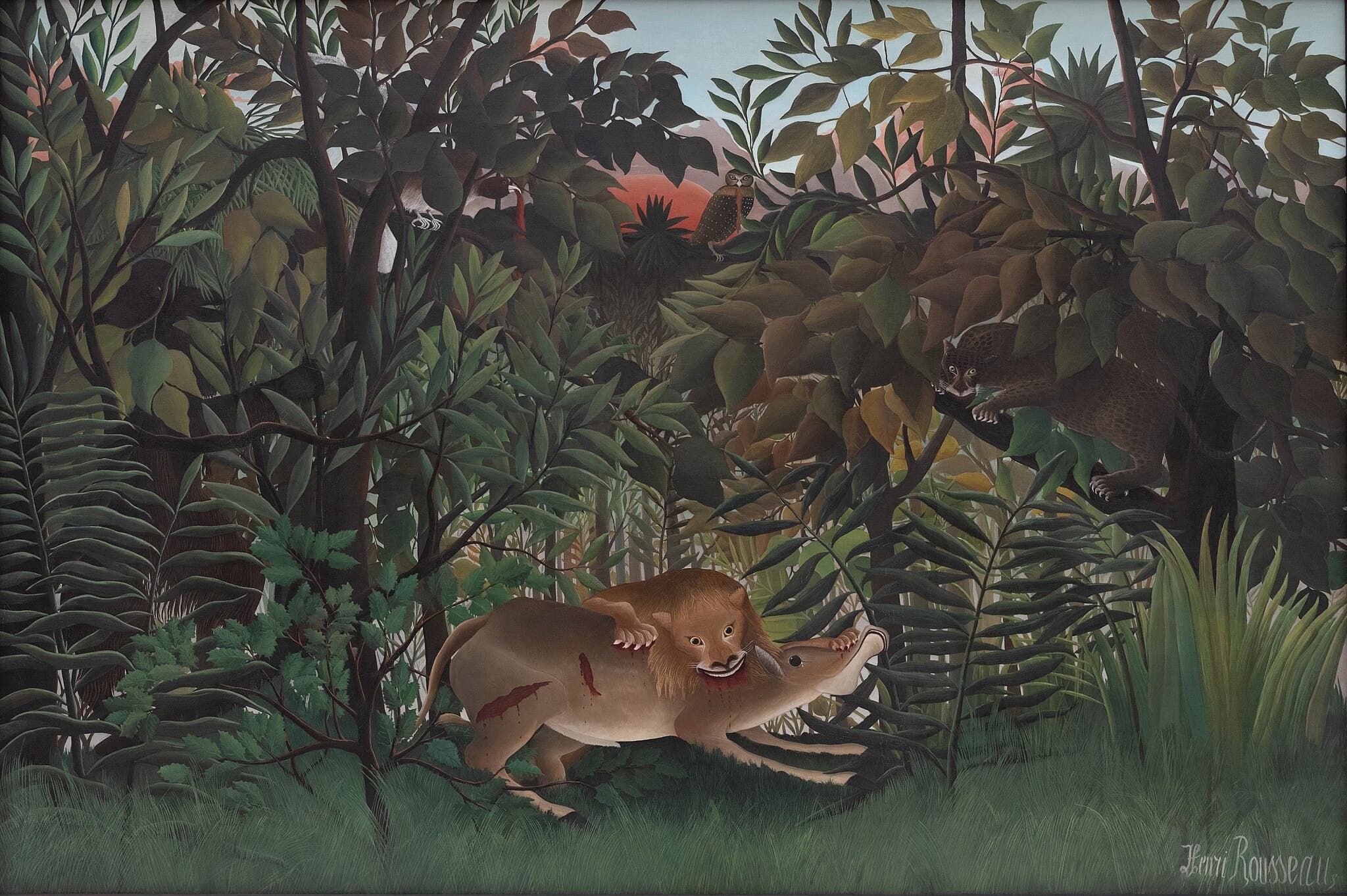
$8–20 million
If authenticated and in museum‑quality condition, the Fondation Beyeler’s Hungry Lion is preliminarily valued at $8–20M, reflecting its canonical status and comparables to the 2023 trophy sale.
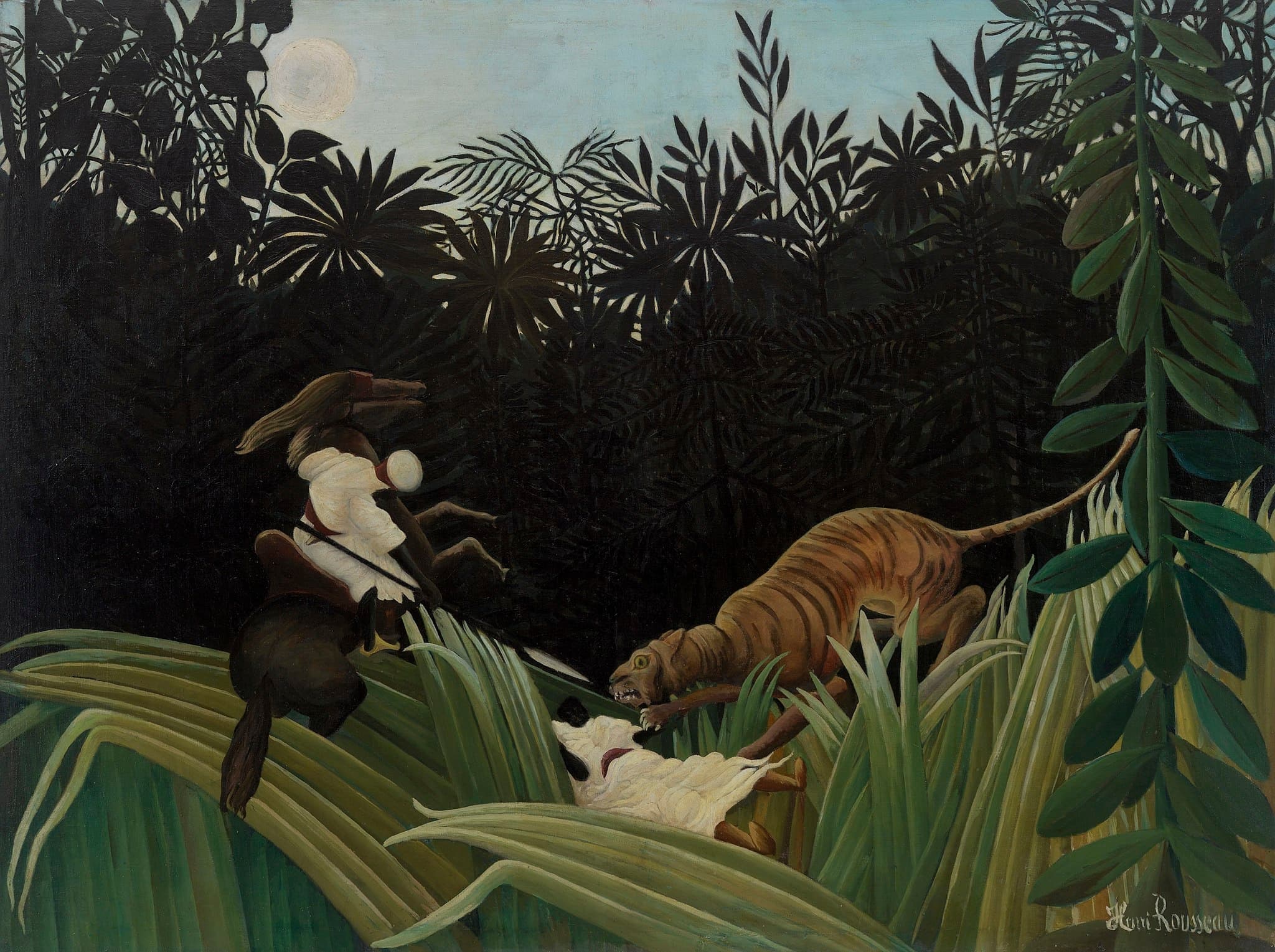
$2-12 million
Barnes Foundation’s Scouts Attacked by a Tiger is oriented to $2–12M assuming clean condition and catalogue‑raisonné confirmation despite being a large, authenticated museum canvas.
Market Context
Henri Rousseau’s auction market is defined by acute scarcity at the top and concentrated institutional ownership: Les Flamants’ $43.5m Christie’s New York sale (May 2023) reset his ceiling and confirmed deep demand for late, museum‑caliber jungle canvases, while major loans and exhibitions (notably Philadelphia and Paris 2025–26) have reinforced scholarly and institutional interest. Recent activity has been episodic — cooling and higher selectivity in 2023–24 produced buy‑ins (a smaller jungle work guided at $10–20m), followed by renewed competition for truly canonical works in late 2025 — underscoring a bifurcated market. Collectors and museums dominate demand; unimpeachable provenance, scale, and exhibition pedigree command premiums, whereas mid‑tier or poorly documented works face greater downward pressure.