How Much Is Leonidas at Thermopylae Worth?
Last updated: March 18, 2026
Quick Facts
- Methodology
- extrapolation
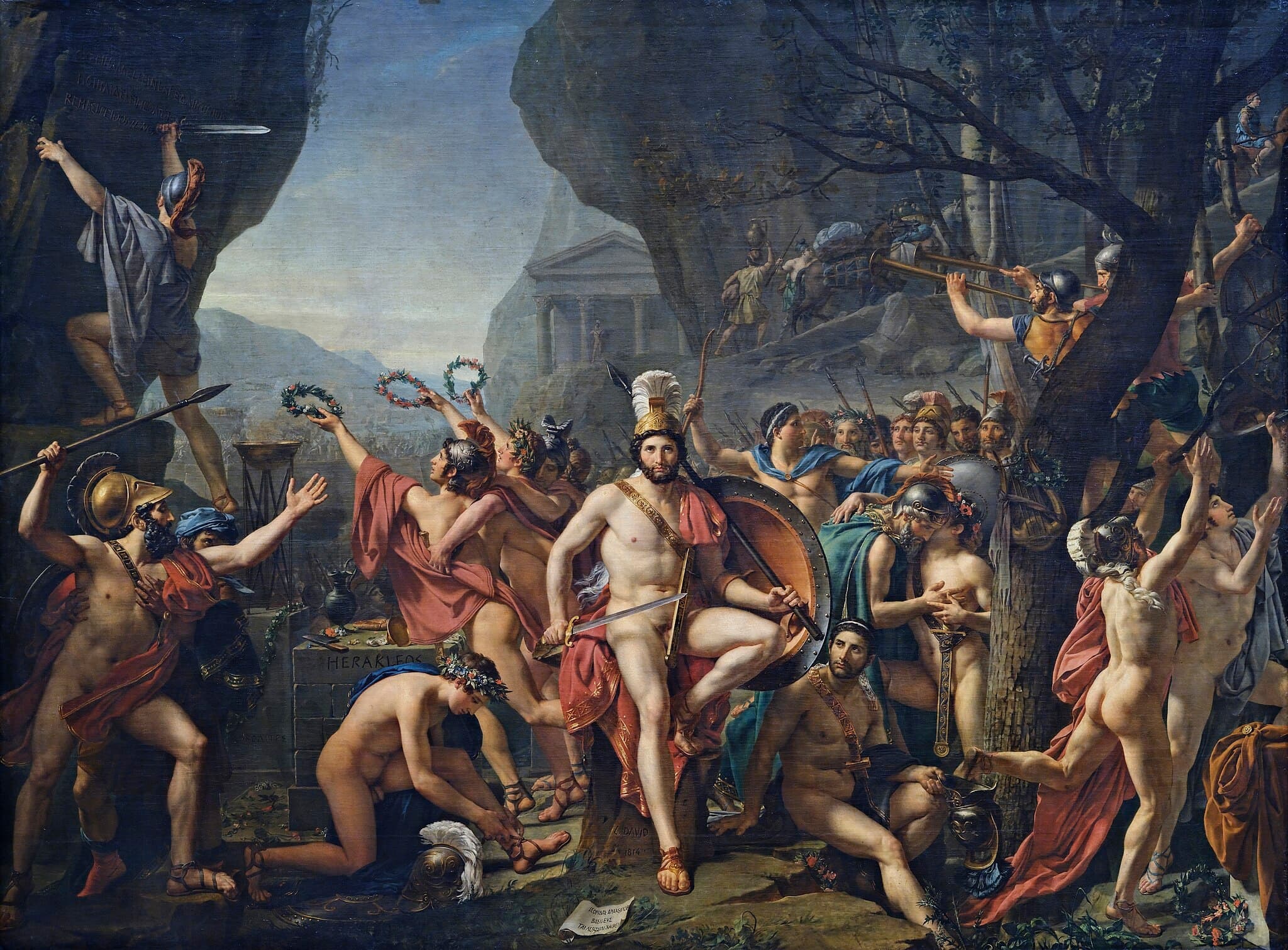
If this is the Louvre's large, finished 1814 canvas Léonidas aux Thermopyles (INV 3690), a hypothetical market value under clean deaccession/sale conditions is USD 10–30 million. This range is an informed extrapolation from David auction comparables, recent high-quality oil-sketch sales, and the work's institutional provenance and rarity.
Valuation Analysis
Valuation conclusion: If the work in question is the Louvre's large 1814 finished history canvas Léonidas aux Thermopyles (inventory INV 3690), its hypothetical market value—were it to be sold under clean legal/deaccession conditions—would reasonably be placed at USD 10,000,000–30,000,000. The painting is a museum-quality, late work by Jacques-Louis David with institutional provenance and rarity that justify a significant premium above routine auction comparables [1].
Rationale: Jacques-Louis David rarely appears at public sale in the form of large, finished history canvases; when important Davids have traded in public auctions the highest recorded sale is the Portrait of Ramel de Nogaret (Christie’s, 2008; approx. USD 7.21M), while major oil sketches/modelli have realized in the low millions (for example, The Distribution of the Eagle Standards oil sketch, Christie’s 2019, realized ~USD 2.54M) [2][3]. Because the market sample for museum-scale David canvases is extremely small, a direct auction-comparable approach understates the market for an exceptional, museum-quality history painting. Therefore the estimate is an extrapolation reflecting (a) the artist’s auction record, (b) prices paid for high-quality preparatory works, and (c) the scarcity and institutional importance of a finished history canvas.
Price drivers and constraints: Provenance as a state purchase (late 1819, entered state collections and later Louvre inventory) materially strengthens value as a work of record and scholarship, but it also creates practical constraints—public institutions rarely sell such works and deaccession rules/legal/ethical restraints often prevent market availability. If offered by a private owner with clear title and exhibition history, the painting would likely sell by private treaty to a museum or major collector, which typically yields prices above public-auction benchmarks. Condition, conservation history, and technical findings (pigment, ground, underdrawing) would be the next largest modifiers of price.
Recommended next steps: to refine this estimate toward a sale-ready figure, obtain high-resolution images, a current condition report, full provenance documentation, and technical imaging (X-radiography/IRR/pigment analysis). Solicit written opinions from two Old Master/David specialists and approach the Old Masters departments at Christie’s and Sotheby’s for private-treaty guidance. Absent institutional deaccession, this figure should be treated as a hypothetical market value rather than an immediately realizable sale price.
Key Valuation Factors
Art Historical Significance
High ImpactLéonidas at Thermopylae is a subject that embodies the core themes of David's mature Neoclassicism: civic virtue, stoic heroism and classical exemplarity. As an 1814 finished history canvas by David, it stands among the artist's late large-scale works and therefore carries high scholarly and museum value. Such works are rare on the market and are central to David scholarship and exhibition narratives; that rarity and canonical status increase both institutional demand and the price premium that well-documented examples can command. The painting's significance is therefore a primary upward factor in valuation.
Provenance & Museum Ownership
High ImpactDocumented acquisition by the French state in 1819 and long-term holding in national collections (now the Louvre, INV 3690) materially enhance the painting's pedigree. Clean, early provenance and continuous public stewardship strengthen market confidence and institutional interest. Conversely, the fact that it is a state/museum object imposes legal and ethical constraints on transferability; a real-world sale would require formal deaccessioning, which is rare and tightly regulated. Provenance therefore simultaneously raises theoretical market value while often making practical sale unlikely.
Condition & Technical State
High ImpactCondition and conservation history are critical determinants of price for a large oil history canvas. Intact original paint, stable canvas support, and minimal invasive restoration support top-tier pricing; major restorations, extensive overpaint or structural instability materially reduce marketability and price. Technical analysis (X-ray, infrared reflectography, pigment analysis) that confirms period materials and hand of the master will significantly strengthen attribution and therefore value. A current professional condition report is required to move from estimate to sale valuation.
Comparative Market Evidence
Medium ImpactPublic-auction comparables are limited: the modern auction record for David is the Portrait of Ramel de Nogaret (Christie’s, 2008, ≈ USD 7.21M), and high-quality oil sketches/modelli have sold in the low millions (e.g., Christie’s 2019 modello realized ≈ USD 2.54M). These sales provide anchor points but are not directly equivalent to a large museum history canvas. Because large history paintings by David are overwhelmingly museum-held, extrapolating from these comparables introduces uncertainty but still supports a multi-million-dollar valuation for a sale-ready, museum-grade canvas.
Liquidity & Sale Channel
Medium ImpactThe market for museum-quality David canvases is thin and specialized, with highest likelihood of sale via private treaty to cultural institutions or very high-net-worth private collectors rather than via open auction. Private treaty sales can achieve premiums over public-auction results, but successful disposal requires discreet marketing, institutional engagement and legal clarity around export/deaccession. Liquidity constraints lengthen time-to-sale and can compress realized price if market timing or buyer appetite is unfavorable.
Sale History
Jacques-Louis David's Market
Jacques-Louis David is one of the most important French Neoclassical painters and commands strong institutional interest. His market is low-volume: major history canvases are nearly always museum-held, while drawings and oil sketches appear more frequently and have realized low-to-mid million-dollar prices. The artist's modern auction record (Christie’s, 2008) is roughly USD 7.21M, but that benchmark understates potential private-treaty prices for an exceptional, museum-quality history painting. Demand remains selective and driven by provenance, condition, and exhibition potential.
Comparable Sales
Portrait of Ramel de Nogaret
Jacques‑Louis David
Same artist; finished, museum‑quality portrait and David's public‑auction record — sets the upper public‑auction benchmark for David works.
$7.2M
2008, Christie's, New York
~$10.4M adjusted
The Distribution of the Eagle Standards (oil sketch / modello)
Jacques‑Louis David
Same artist and period; important oil sketch/modello related to a major historical subject — good indicator of market for high‑quality David preparatory works (low‑millions range).
$2.5M
2019, Christie's, New York
~$3.1M adjusted
Portrait of General Baron Claude Marie Meunier (example David portrait offered 2023)
Jacques‑Louis David
Recent offering of a finished David portrait in a major evening sale — demonstrates continued collector demand for finished Davids in the low‑to‑mid millions; detailed hammer/result not available in the provided research.
Price unknown
2023, Sotheby's (Old Masters & 19th‑century sale)
Current Market Trends
The current Old Masters/Neoclassical segment is two-speed: exceptional, museum-grade works and iconic drawings can reach or exceed prior highs, while mid-tier academic works face selective demand. Institutional exhibitions and scholarly reappraisals (e.g., recent Louvre activity) have lifted visibility for David, but scarcity of supply keeps realized auction results conservative unless the work is both demonstrably authentic and saleable in practice.