How Much Is Portrait of Antoine‑Laurent Lavoisier and his wife Worth?
Last updated: March 18, 2026
Quick Facts
- Last Sale
- $4.0M (1977, Reported institutional sale by Rockefeller University (acquisition by Charles & Jayne Wrightsman prior to Met accession))
- Methodology
- comparable analysis
This is a hypothetical open‑market valuation for Jacques‑Louis David’s 1788 Portrait of Antoine‑Laurent Lavoisier and his wife. The painting is museum‑held (Metropolitan Museum of Art, accession 1977.10) and effectively not for sale; if it were offered with clear title and sound condition, a realistic market range is $8–35M, contingent on institutional participation and timing.
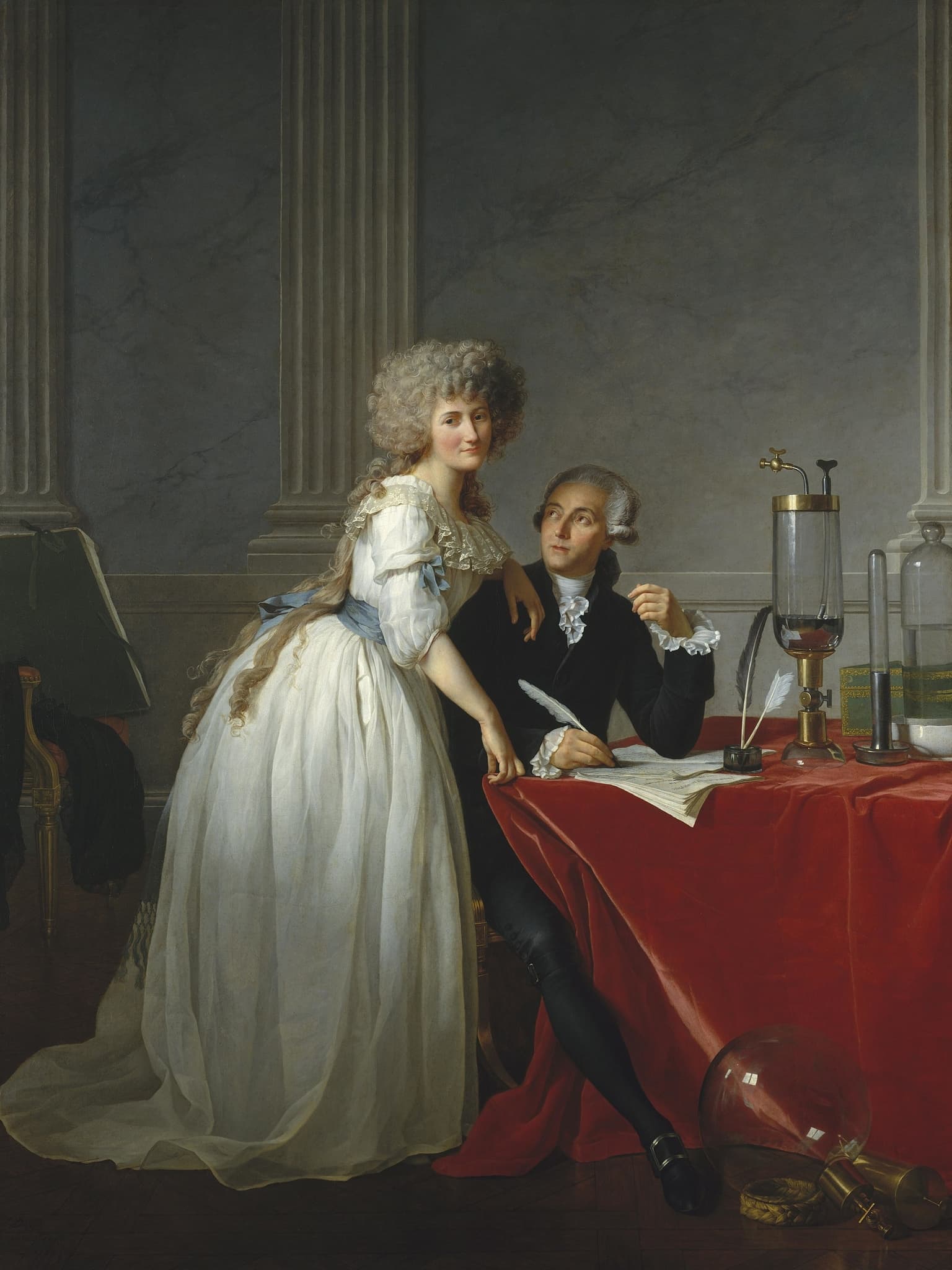
Portrait of Antoine‑Laurent Lavoisier and his wife
Jacques-Louis David, 1788 • Oil on canvas
View more by Jacques-Louis David →Valuation Analysis
Scope and provenance context. This valuation concerns Jacques‑Louis David’s 1788 double portrait of Antoine‑Laurent Lavoisier and his wife, an autograph oil currently in the Metropolitan Museum of Art (accession 1977.10). The painting’s proven institutional history and recent technical conservation work mean the estimate below is a hypothetical open‑market price to be used only if the work were genuinely offered for sale [1][4].
Methodology and anchors. I used a comparable‑analysis approach that combines: (a) the painting’s documented institutional transaction in the 1970s (reported proceeds ≈ $4,000,000) as a primary anchor; (b) the modern public auction benchmark for an autograph David oil (Portrait of Ramel de Nogaret, Christie’s NY, 2008, realized $7,209,000) as a conservative auction floor; and (c) category trophy sales and inflation‑adjusted conversions to establish upper bound potential when institutions compete strongly [2][3].
Valuation result and rationale. On balance a marketable, well‑documented, autograph 1788 Lavoisier double portrait in sound condition and clear title would reasonably be estimated at $8,000,000–$35,000,000 (USD). The lower bound reflects current auction anchors, limited recent David offerings, and market caution around rare Old Master oils. The upper bound assumes active institutional competition, optimal timing (museum retrospective or strong exhibition momentum), published conservation/scientific reports and no attribution or provenance doubts. The painting’s reported 1977 institutional proceeds (~$4M), when adjusted for purchasing power and compared with later trophy sales, support a plausible mid‑market outcome above the 2008 auction anchor [2][3].
Key sensitivities and final note. The estimate is strongly sensitive to confirmed autograph attribution, unbroken provenance, condition (including any historic restorations) and whether major museums participate in bidding. The Met’s technical studies and conservation treatment materially reduce condition and authenticity uncertainty compared with an unstudied work, which supports the higher end of the range if the painting were sold [4]. Practically, because the work is museum‑held and culturally significant, an actual sale is unlikely; if pursued, a private treaty or a highly curated Old Masters placement timed to institutional momentum would be the optimal route to realize value.
Key Valuation Factors
Art Historical Significance
High ImpactJacques‑Louis David’s portrait of Antoine‑Laurent Lavoisier and his wife carries unusually high art‑historical weight: the sitter is a founder of modern chemistry and the composition uniquely integrates scientific instruments and studio portraiture. Within David’s oeuvre it is one of his most discussed portraits—widely reproduced, extensively cited in scholarship and used in exhibitions—so it enjoys strong cultural cachet. This intrinsic importance elevates institutional demand and collector interest relative to an otherwise comparable period portrait. As a result, historical significance is a primary upward driver of value and supports pricing materially above decorative or workshop examples.
Provenance & Exhibition History
High ImpactThe painting benefits from a robust, traceable provenance: painted in 1788 for Lavoisier, retained in the family, sold to dealers (c.1924–25), acquired by John D. Rockefeller Jr., placed at the Rockefeller Institute and then transferred in the 1970s prior to the Met accession. Repeated institutional custody and presence in exhibition and catalogue literature significantly reduce title risk and increase buyer confidence. For institutions and underwriting parties, uninterrupted provenance and documented exhibition history materially raise price expectations; conversely any provenance gaps or title disputes would sharply reduce marketability and value.
Condition & Conservation
High ImpactCondition is decisive. The Metropolitan Museum conducted technical analysis and a conservation campaign that documented underpaintings, treated varnish and stabilised the canvas, producing published findings. A well‑documented conservation history reduces uncertainty and underwriting risk for institutional buyers, supporting higher estimates. However, major unrecorded restorations, structural instability or significant overpainting would depress value. For any transaction‑grade appraisal, up‑to‑date condition reports, IR/UV/X‑ray documentation and conservation records are prerequisites and will likely determine whether the work sits near the lower or upper bound of the stated range.
Market Rarity & Supply
High ImpactAutograph David oils of museum quality are scarce on the open market because most major canvases are in public collections. This constrained supply concentrates demand among a small set of institutions and deep‑pocketed collectors when a genuine work appears, producing a scarcity premium. Scarcity explains why comparatively few Davids set public benchmarks and why single‑owner or institutional consignments can dramatically outperform typical auction lots. The rarity premium raises the ceiling for value, but also increases price volatility since realized outcomes depend heavily on the specific buyer set and sale format.
Institutional Demand & Likelihood of Sale
Medium ImpactDemand is primarily institutional: museums and scholarly institutions prize canonical Davids for collection, display and research value. Institutional interest can push prices well above private‑collector benchmarks but actual availability is often limited by deaccession policies and reputational constraints. Because this work is already museum‑held, a real market transaction is unlikely; if it were privately owned, institutional competition would be the most probable path to a top result. This factor supports a high ceiling for price but moderates practical probability of sale and therefore affects liquidity assumptions in any formal appraisal.
Sale History
Private sale; Wildenstein / John D. Rockefeller Jr.
Gift to Rockefeller Institute
Private/institutional sale (reported)
The Metropolitan Museum of Art (accession 1977.10)
Jacques-Louis David's Market
Jacques‑Louis David is a pillar of French Neoclassicism and remains a highly sought artist among museums and specialist collectors. The market is defined by the scarcity of autograph oils, heavy museum representation of key works, and episodic high attention when an authentic David appears. The artist’s modern auction benchmark for an autograph oil is Christie’s 2008 Portrait of Ramel de Nogaret (≈ $7.21M realized), but many of David’s most important canvases are effectively off‑market. Consequently, confirmed attribution, catalogue inclusion and institutional interest are the primary price drivers, and top‑quality Davids can command premiums disproportionate to decorative period pictures.
Comparable Sales
Portrait of Ramel de Nogaret
Jacques‑Louis David
Same artist and an autograph oil portrait in David's Neoclassical idiom; one of the few high‑quality Davids to reach the major auction rooms — this lot establishes the modern public auction benchmark for an autograph David oil.
$7.2M
2008, Christie's New York (Important/Old Masters sale)
~$10.7M adjusted
Portrait of Antoine‑Laurent Lavoisier and his wife
Jacques‑Louis David
Direct prior transaction for the exact painting being valued — the single best documented market datapoint for this object (reported proceeds ≈ $4M).
$4.0M
1977, Sale by Rockefeller University (reported private/institutional sale to Charles & Jayne Wrightsman, 1977)
~$21.1M adjusted
Basket of Wild Strawberries
Jean‑Siméon Chardin
Top‑tier sale for an 18th‑century French master — useful as a market precedent for institutional willingness to pay high prices for museum‑quality French 18th‑century works and to set a broader category ceiling.
$26.9M
2022, Artcurial, Paris (March 2022)
~$29.4M adjusted
The Return of the Bucintoro on Ascension Day
Canaletto (Giovanni Antonio Canal)
A 2025 Old Masters 'trophy' sale that demonstrates the upper bound of institutional/private competition in the category — although different artist/genre, it shows the market can support multi‑tens‑of‑millions prices for standout historic works.
$43.9M
2025, Christie's London (Classic/Old Masters Week, July 2025)
Current Market Trends
Across 2024–2025 the Old Masters and high‑quality eighteenth‑century French market has shown selective strength: institutional buying, major retrospectives and single‑owner consignments drove trophy results and heightened interest. Supply remains thin and buyers are discriminating, prioritising works with impeccable provenance and conservation documentation. For a canonical David, timing with museum programming and access to institutional bidders or guarantees materially improves sale outcomes; absent that, auction results tend to cluster nearer conservative historic anchors.
Sources
- The Metropolitan Museum of Art, collection entry: Antoine Laurent Lavoisier and his wife (object no. 1977.10)
- Rockefeller University / reported institutional transaction and provenance notes
- Christie’s press release: Portrait of Ramel de Nogaret (Important/Old Masters sale, 15 April 2008)
- The Metropolitan Museum of Art, technical/conservation perspectives on the David Lavoisier portrait