How Much Is The Intervention of the Sabine Women Worth?
Last updated: March 18, 2026
Quick Facts
- Methodology
- comparable analysis
Hypothetical market valuation for the autograph, full‑scale 1799 The Intervention of the Sabine Women (Jacques‑Louis David, INV 3691, Musée du Louvre): if legitimately offered and exportable, a realistic range is USD 30–80 million. This is theoretical — the work is museum‑held and protected, so sale is unlikely; legal/export constraints, condition and provenance would materially change any realized price.
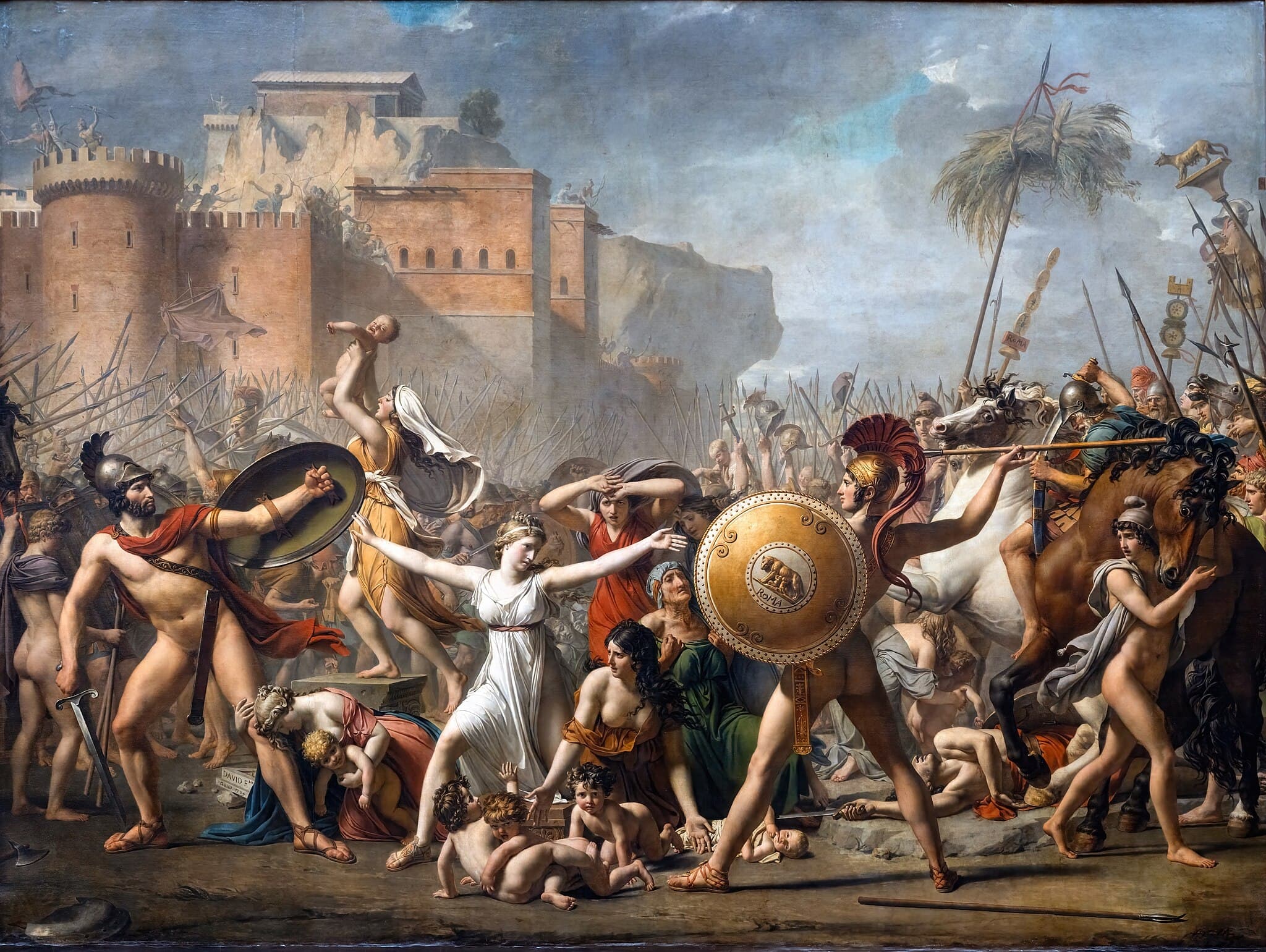
The Intervention of the Sabine Women
Jacques-Louis David, 1799 • Oil on canvas
View more by Jacques-Louis David →Valuation Analysis
Context and conclusion: The Intervention of the Sabine Women (1799) is an autograph, full‑scale history painting by Jacques‑Louis David currently held by the Musée du Louvre (INV 3691) and effectively off‑market [1]. Any open‑market figure is therefore hypothetical and contingent on (a) proof of private ownership or authorised deaccession, (b) export permissions, and (c) a clean technical/condition report.
Comparables and market anchors: David’s market presence at auction is driven more by rarity than by weak demand — his finest canvases are museum‑retained. The best public auction anchor is a 2008 Christie’s sale (Portrait of Ramel de Nogaret) that realized approx. USD 7.21M; that lot was a much smaller portrait and therefore not directly equivalent to a monumental history painting, but it provides a secure open‑market datum point for autograph oils by David [2]. By contrast, workshop/studio variants and preparatory material have sold in the low‑to‑mid six‑figure range (e.g., a workshop Les Sabines at Millon) demonstrating the gulf between autograph masterpieces and studio copies.
Why USD 30–80M is reasonable (if sale were possible): A canonical, museum‑quality, large‑scale history painting by a master such as David is extremely scarce in the private market. If one were truly available without export/legal encumbrance, museums and deep‑pocketed collectors would compete, producing a multi‑tens‑of‑millions outcome. The lower bound (≈USD 30M) assumes constrained bidding (domestic retention pressures, limited international buyers, or condition caveats). The upper bound (≈USD 80M) assumes strong international institutional and private competition, good condition, and no export block — a best‑case auction scenario with active guarantees and underwriting.
Key caveats: The Louvre inventory and long public provenance make a sale unlikely; French national‑heritage rules and potential designation as a trésor national can prevent export or trigger a compulsory acquisition by the State. Condition, undisclosed restorations, or a downgrading of attribution to workshop/studio would reduce value sharply (to low six figures or a few million USD depending on attribution). Thorough technical, provenance and legal due diligence would be essential before any formal valuation or asking price.
Recommended next steps: confirm ownership/ deaccession status with the Louvre or French cultural authorities, obtain full conservation/technical reports (X‑ray, IRR), and assemble comparables and institutional interest indications. With those inputs the range can be narrowed and a formal pre‑sale strategy (guarantees, museum notifications) prepared.
Key Valuation Factors
Art Historical Significance
High ImpactThe Intervention of the Sabine Women is a cornerstone work in David’s late‑Republic/Consulate output and a canonical example of French Neoclassical history painting. Its scale, narrative ambition, and place in scholarship mean it commands an intrinsic premium over portraits or studies. Major history canvases by David are museum anchors; that pedigree multiplies perceived market value because institutions and top collectors prize museum‑quality masterpieces and are prepared to bid aggressively when one appears. Scholarly visibility and canonical status therefore constitute a primary upward driver of price.
Provenance & Legal Status
High ImpactLong public/museum provenance (acquisition into state collections, presence in the Louvre inventory) strengthens attribution and scholarly confidence but simultaneously imposes legal constraints. French heritage law and the trésor national framework permit export refusals and priority acquisitions by State institutions. Even if a work were privately owned, a flagged masterpiece can face export hurdles that shrink the international buyer pool and depress competitive bidding. Provenance that ties the work to the State therefore increases certainty of authorship while substantially reducing market liquidity.
Market Scarcity & Demand
High ImpactAutograph, full‑scale David history paintings almost never come to market. Scarcity creates potential for high prices because museum and private buyers must compete for rare opportunities, but it also concentrates demand in an unusually small pool (major museums and ultra‑high‑net‑worth collectors). The small number of comparable sales means price discovery is more volatile — a single exceptional sale can set a new benchmark, but that relies on circumstances (exportability, guarantees, and bidding competition) aligning favorably.
Condition & Conservation
Medium ImpactCondition is determinative for a large eighteenth‑century oil: original paint, limited retouching, and sound canvas structure sustain top market value; heavy restoration, overcleaning, or structural issues can reduce value materially. Transportation and packing for a large canvas also raise logistical costs and buyer caution. Because no public condition report is available for the Louvre canvas, condition introduces uncertainty; a pristine technical report would support the higher end of the estimate, while significant conservation issues would justify the lower bound or lower.
Exhibition & Scholarly Record
Medium ImpactA robust exhibition history and recent scholarship (for example, participation in a major David retrospective and catalogue entries) increase market desirability and institutional interest. Museum loans, catalogue raisonnés, and high‑visibility retrospectives raise both the work’s profile and its perceived market value. The Louvre’s curatorial attention and inclusion in major publications meaningfully strengthens the case for a premium if the work were ever to be offered, though it also reinforces the likelihood of State retention.
Sale History
The Intervention of the Sabine Women has never been sold at public auction.
Jacques-Louis David's Market
Jacques‑Louis David is a leading figure of French Neoclassicism and a central artist in museum collections worldwide. His market is defined by extreme scarcity of autograph large‑scale canvases — most of his celebrated history paintings remain in public institutions — so auction activity centers on drawings, studies and workshop variants. The artist’s recorded auction highs (e.g., a 2008 portrait) are modest relative to canonical status but reflect limited supply rather than weak demand. When a museum‑quality David does appear, institutions and specialists typically drive the market and auctions often rely on guarantees or private placements.
Comparable Sales
Portrait of Ramel de Nogaret
Jacques-Louis David
Highest secure auction result for an autograph David oil — same artist and period; provides an open‑market anchor for autograph David works (though this is a portrait, not a monumental history canvas).
$7.2M
2008, Christie's, New York
~$10.5M adjusted
The Intervention of the Sabine Women (workshop / studio version)
Jacques-Louis David (workshop)
Directly tied to the same composition/subject as the Louvre autograph — a workshop/school version sold at public auction, showing realized market values for studio variants and the large gap between autograph museum masterpieces and workshop copies.
$106K
2023, Millon (Drouot), Paris
~$110K adjusted
Napoleonic bicorne (memorabilia) — indicator sale
Not a painting, but a high‑profile sale of Napoleonic material in Nov 2023 demonstrates strong institutional/collector demand for Napoleonic‑era objects — relevant as market context since David is closely associated with Napoleonic iconography and institutional interest can lift valuations for related works if a museum decides to compete.
$2.3M
2023, Reported French auction (press-reported)
~$2.4M adjusted
Current Market Trends
The Old Masters/Neoclassical segment has seen selective strength for museum‑quality rarities but overall softer turnover since 2022. Auction houses increasingly use guarantees and third‑party underwriting for high‑value lots. Institutional exhibition programming (such as major retrospectives) is the principal driver of renewed interest in historical artists; scarcity and legal protections for national cultural property remain the dominant constraints on realized prices for masterpieces.