How Much Is A Horse Frightened by Lightning Worth?
Last updated: May 7, 2026
Quick Facts
- Methodology
- comparable analysis
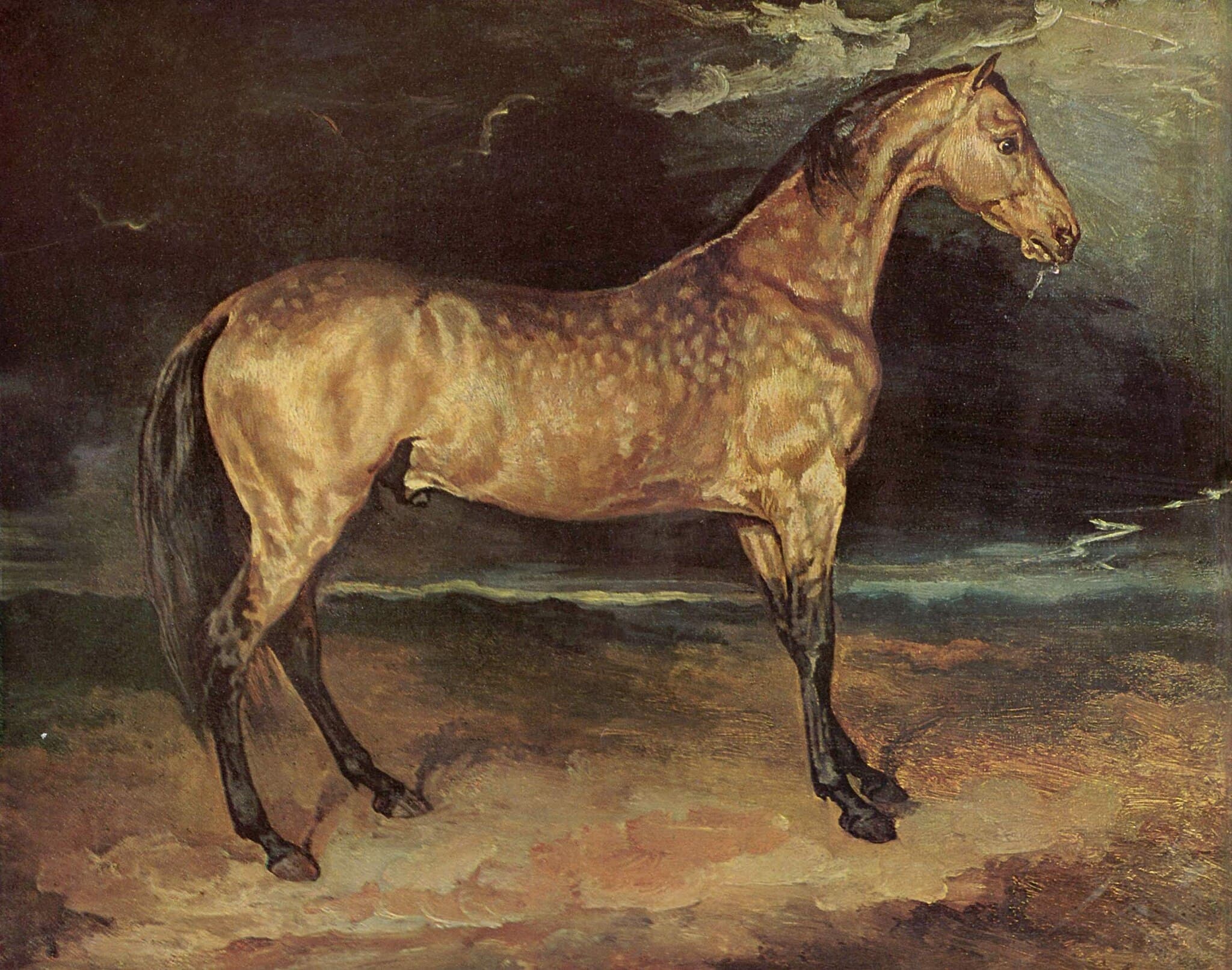
A Horse Frightened by Lightning (c.1813–14) is an accepted autograph oil by Théodore Géricault in the National Gallery (NG4927) and has been museum‑held since 1938. Based on market comparables for autograph Géricault oils and recent demand for equine studies, a defensible auction range today is approximately USD 3,000,000–12,000,000, subject to condition, technical authentication and exhibition/publication history.
Valuation Analysis
Identification & provenance: A Horse Frightened by Lightning (c.1813–14) is recorded in the National Gallery, London (NG4927) as an autograph oil on canvas (48.9 × 60.3 cm) that entered the Gallery from the Duc de Trévise sale in 1938; earlier provenance includes an 1856 Paris sale [1]. Because the work has been museum‑held since 1938, there is no modern auction hammer directly for this canvas, and any market estimate must therefore be built from comparables, institutional premium and technical/condition assessment.
Comparable evidence & market ceiling: The practical market ceiling for a fresh, desirable Géricault oil is demonstrated by rare auction appearances of museum‑quality canvases: the Portrait d’Alfred et Elisabeth Dedreux at Christie’s Paris (23 Feb 2009) realised roughly EUR 9.0m (≈ USD 12.8m at the sale date), establishing an upper bound for top‑tier Géricault oils [2]. At the opposite end, well‑provenanced equine watercolours and drawings by Géricault have recently realised in the high five‑figure to mid‑six‑figure band in major French rooms, showing active collector demand for equine subjects and works on paper [3]. These poles frame a realistic range for a study‑scale autograph oil that is otherwise museum‑provenanced and in good condition.
Rationale for the USD 3,000,000–12,000,000 range: The suggested band reflects three considerations: first, the painting’s autograph status and long museum ownership confer a clear premium versus unattributed or studio pieces; second, its modest dimensions and study/subject character argue for values below the rare, large history canvases; third, the market’s demonstrated ceiling for Géricault oils and the active mid‑market for equine material set the upper and lower bounds. A well‑presented, technically authenticated, clean condition canvas with a strong exhibition/publication history would be competitive in the mid to upper portion of the range; condition problems, disputed attribution or weak supporting documentation would push a result toward the lower end or below.
Sale scenarios & next steps: Institutional/private sale dynamics can shift outcomes — targeted institutional acquisitions can exceed auction ceilings while contested attributions depress bids. To firm a commercial valuation, obtain high‑resolution recto/verso images, a full condition/conservation report and technical analysis (X‑ray/infrared/pigment), compile the complete provenance/exhibition/publication dossier and request formal pre‑sale estimates from 19th‑century specialists at Christie’s or Sotheby’s. These steps will materially narrow the band and identify whether the work should be offered on the open market or via a negotiated institutional sale.
Key Valuation Factors
Art Historical Significance
High ImpactThis oil is an autograph equine study by Géricault, a subject central to his artistic practice and technical investigations of movement and anatomy. While not a monumental history canvas, such studies are important to scholarship because they illuminate the artist’s methods and preparations for larger works; that scholarly value translates into collector and institutional interest. The painting’s date (c.1813–14) places it early in Géricault’s mature output, increasing interest among museums and specialist collectors who prize works that shed light on formative stages of a major artist’s development.
Attribution / Authentication
High ImpactThe National Gallery’s acceptance of the work as autograph provides strong baseline confidence in authorship, which is critical for market value. The Géricault market is sensitive to contested attributions — a formal technical analysis (X‑ray, infrared reflectography, pigment tests) and scholarly endorsement materially increase marketability and price. Conversely, any credible doubt or downgrade to 'studio' or 'after' would sharply reduce value. Authentication is therefore a gating factor that can determine whether the canvas sits in a multi‑million commercial bracket or a much lower attribution band.
Provenance & Institutional Ownership
High ImpactThe traceable provenance (19th‑century Paris sales) and acquisition by the National Gallery in 1938 materially strengthen market confidence. Long museum ownership is a double‑edged asset: it confers a premium for buyers who prefer works with institutional history, but it also means the painting is rarely offered and therefore lacks a modern hammer to evidence market value. Institutional provenance reduces transactional risk, typically moves estimate ranges upward, and positions the work as likely to attract both museums and high‑end private collectors if it were to come to market.
Condition & Conservation
Medium ImpactCondition directly affects aesthetic impact and market price. Important considerations include canvas stability, varnish layer, relining or tear repairs and any historic overpainting. A clean conservation record and minimal invasive restoration preserve value; significant restoration, inpainting or structural instability can reduce competitive bidding and lower a final price materially. A professional condition and conservation report is therefore necessary before any firm reserve or sale strategy is set, and it will be a primary determinant of whether the work earns a premium or disqualification by cautious buyers.
Market Rarity & Demand
High ImpactLarge, autograph Géricault oils come to market very infrequently; rarity supports value for well‑provenanced examples. Recent heightened interest in Géricault equine subjects—stimulated by exhibitions and rediscoveries—has bolstered demand for equine studies, particularly when fresh provenance and technical backing are present. Nonetheless, the 19th‑century Romantic segment is more selective than mainstream Impressionist/Modern markets, so demand concentrates on museum‑quality, well‑documented lots. Rarity plus selective collector demand explain the wide valuation band and the potential for both strong results and soft outcomes depending on circumstance.
Sale History
Veuve Martin sale, Paris
Duc de Trévise sale, Paris
Theodore Gericault's Market
Théodore Géricault is a major French Romantic master whose major oils are relatively rare on the market; many of his most important canvases are museum‑held. The artist’s auction ceiling has historically been in the low‑to‑mid single‑digit millions (with exceptional lots reaching higher), while drawings and watercolours trade more frequently and typically in the five‑ to six‑figure range. Institutional acquisitions and scholarly attention support long‑term stature, but short‑term liquidity is limited and prices are highly sensitive to attribution, provenance and exhibition history.
Comparable Sales
Portrait d'Alfred et Elisabeth Dedreux
Théodore Géricault
Rare museum‑quality autograph oil by Géricault sold at auction — establishes the artist's upper market ceiling; same artist and period though a portrait rather than an equine study.
$12.8M
2009, Christie's Paris (Yves Saint Laurent / Pierre Bergé sale)
~$18.9M adjusted
Le Derby (preparatory watercolour)
Théodore Géricault
Same artist and equine subject; preparatory watercolour is relevant for subject/period but a different medium and much lower price tier than oils.
$73K
2024, Hôtel Drouot (Drouot sale)
~$75K adjusted
Chevaux au pâturage (watercolour/ink)
Théodore Géricault
Equine subject by Géricault that realized a strong result at Drouot — useful as a subject‑specific comparable though medium (watercolour/ink) differs from the NG oil.
$585K
2026, Hôtel Drouot
~$568K adjusted
A Sleeping Fishmonger (drawing)
Théodore Géricault
Recent small work on paper by Géricault sold in New York — indicates demand and price levels for drawings/studies (lower tier than oils).
$70K
2026, Christie's New York
~$68K adjusted
Current Market Trends
The recent market for 19th‑century French Romantic works is selective: buyers favour well‑provenanced, museum‑quality lots and there is active interest in works on paper and freshly documented discoveries. Attribution disputes and macroeconomic caution have made buyers more risk‑averse, increasing the premium for thoroughly authenticated works while depressing speculative bids.