How Much Is The Raft of the Medusa Worth?
Last updated: February 8, 2026
Quick Facts
- Methodology
- comparable analysis
Hypothetical open‑market value for Géricault’s The Raft of the Medusa is $300–450 million. This reflects its status as the artist’s undisputed masterpiece, a pillar of French Romanticism, and one of the most recognized images in Western art, despite its inalienability within the Louvre’s national collection.
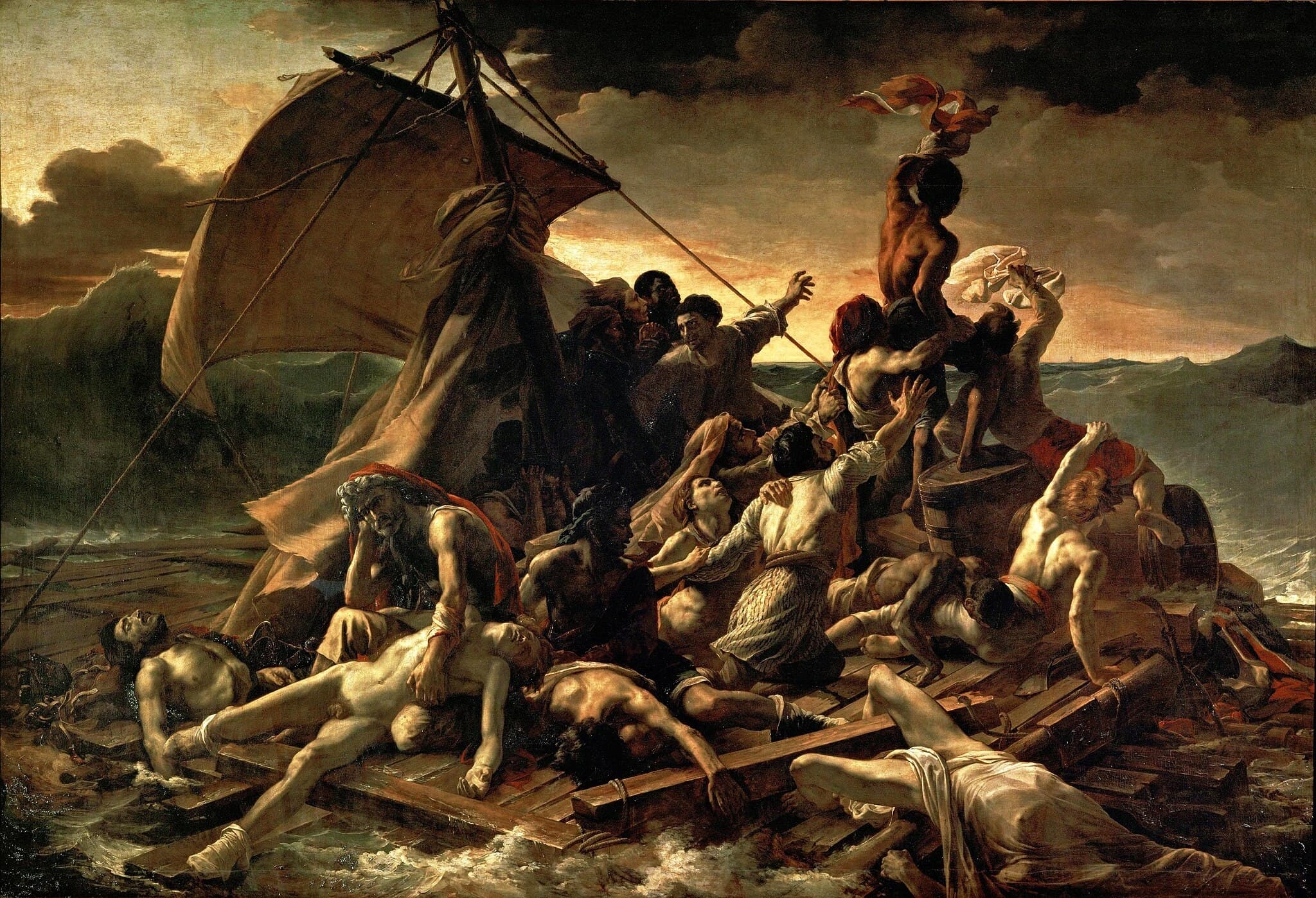
The Raft of the Medusa
Theodore Gericault, 1818–1819 • Oil on canvas
Read full analysis of The Raft of the Medusa →Valuation Analysis
Conclusion: In a hypothetical, fully open international market, Théodore Géricault’s The Raft of the Medusa would command $300–450 million. This range reflects its status as the artist’s magnum opus, its centrality to French Romanticism, its global fame, and the near-total absence of comparable masterpieces in private hands. The work resides in the Musée du Louvre and is legally inalienable under French law; our figure represents theoretical fair‑market value rather than a practicable transaction price [1][2].
Methodology and comparables: Because the painting has never traded publicly in the modern era, we anchor value to cross‑category trophy benchmarks. Within Old Master/pre‑Impressionist markets, Botticelli’s Portrait of a Young Man Holding a Roundel realized $92.2 million (2021) [3], while Rubens’s Massacre of the Innocents achieved $76.7 million in 2002—well above $120 million in today’s dollars after inflation [4]. At the very top of the global trophy market, the Leonardo Salvator Mundi transaction at $450.3 million (2017) demonstrates private capacity for uniquely resonant works [5]. On art‑historical significance, cultural recognition, and scarcity, the Raft ranks above typical category records and below Leonardo’s singular ceiling, supporting a nine‑figure estimate in the low‑to‑mid hundreds of millions.
Positioning within Géricault’s oeuvre and market: The Raft is universally acknowledged as Géricault’s defining achievement and a cornerstone of 19th‑century French painting, eclipsing other works by the artist that appear at auction only rarely and at vastly lower price points. The standing auction record for any Géricault painting (a portrait) is roughly $11.5 million; smaller oils and prime drawings range from five to low‑seven figures. Those sales frame the normal market—but the Raft stands apart as a museum‑defining icon with brand recognition comparable to Delacroix’s Liberty Leading the People. Its uniqueness justifies extrapolation well beyond artist‑specific precedents.
Why $300–450 million: The lower bound ($300m) comfortably surpasses inflation‑adjusted Old Master highs, reflecting the Raft’s unparalleled stature and worldwide resonance. The upper bound ($450m) recognizes a realistic ceiling informed by the demonstrated capacity of a handful of global buyers and institutions for once‑in‑a‑generation pictures, while stopping short of Leonardo’s exceptional case. This corridor balances cultural primacy, market depth for trophies, and practical considerations such as monumental scale and condition‑management complexity.
Constraints and caveats: As a French national treasure in a “musée de France,” the painting is inalienable and not exportable under the Code du patrimoine; France typically relies on state indemnity, not commercial insurance, when such works travel [2]. These legal and logistical realities preclude an actual sale and might affect pricing mechanics. Our estimate therefore represents a robust, evidence‑based, hypothetical fair‑market value for the painting’s stature and demand profile were it ever legally and practically sellable [1][2][3][4][5].
Key Valuation Factors
Art Historical Significance
High ImpactThe Raft of the Medusa is the cornerstone of French Romanticism and Géricault’s undisputed masterpiece. It crystallizes the movement’s human drama, political charge, and technical ambition, shaping generations of artists and public imagination. Its curricular and museum prominence—a mainstay of art‑historical surveys and one of the Louvre’s most recognized images—confers an influence that transcends the artist’s broader output. Within 19th‑century painting, only a handful of images (e.g., Delacroix’s Liberty Leading the People) rival its cultural imprint. This pervasive recognition substantially elevates the painting’s hypothetical fair‑market value relative to any tradeable Géricault work, pushing it well beyond standard Old Master/19th‑century pricing benchmarks.
Scarcity and Uniqueness
High ImpactMasterpieces of this scale, ambition, and fame almost never exist outside national collections, and there is no true substitute for the Raft. Géricault’s major oils are overwhelmingly in museums; the private market offers only occasional studies, drawings, and small oils. That extreme scarcity, combined with the work’s singular status within the oeuvre, concentrates potential demand from a small cohort of top collectors, foundations, and states. In a genuine open‑market setting, this lack of supply, paired with universal brand recognition, would catalyze outsized competitive bidding, validating a range that exceeds inflation‑adjusted Old Master records and aligns with broader trophy‑market capacity.
Legal and Heritage Status
High ImpactAs part of the Louvre’s national collection, the painting is inalienable under the French Code du patrimoine. Practically, this means the work is not for sale and not exportable. For valuation, however, heritage status underscores the painting’s recognized national and cultural importance—attributes that, in a hypothetical scenario where legal barriers did not apply, convert to market premiums. The state’s reliance on indemnity rather than commercial insurance for such holdings further signals public‑realm valuation at a level difficult to replicate privately. These constraints are central to narrative—and while they block an actual sale, they also validate the trophy‑caliber estimate under open‑market assumptions.
Scale, Condition, and Logistics
Medium ImpactThe work’s monumental dimensions and complex surface history imply specialized conservation, display, and transport requirements. Such logistics can trim the pool of practical bidders and elevate ownership costs. In the true ultra‑trophy tier, however, these hurdles rarely suppress value; they often amplify perceived gravitas and institutional suitability. Our range reflects a modest discount for logistics versus a hypothetically more portable icon, while recognizing that leading museums and a handful of private buyers can readily meet these requirements to secure a once‑in‑a‑generation masterpiece.
Sale History
The Raft of the Medusa has never been sold at public auction.
Theodore Gericault's Market
Géricault is a blue‑chip, museum‑caliber figure with scarce market supply. Major oils almost never appear; the standing auction record is the portrait of Alfred and Elisabeth Dedreux at about $11.5 million (2009). Smaller oils and prime drawings typically range from five to low‑seven figures, with select, well‑documented works on paper occasionally reaching mid‑six figures. Recent public results skew to drawings and small oils, reflecting scarcity of grand‑manner canvases on the market. Demand is selective but deep for vetted, literature‑rich works tied to signature subjects (equestrian, history). The Raft of the Medusa sits far above this tradeable corpus; its valuation must be extrapolated from cross‑category trophy benchmarks rather than from typical artist sales.
Current Market Trends
Historic European art (“Classics,” spanning Old Masters through 19th century) has shown resilient demand at the top end, with 2025 seeing renewed strength as supply improved and buyers re‑engaged. Category records such as Botticelli’s $92.2m portrait confirm robust depth for universally recognized pre‑Impressionist icons, while broader trophy sales demonstrate capacity for nine‑figure outcomes when uniqueness and brand recognition converge. At the same time, the middle market remains estimate‑sensitive, rewarding freshness, subject quality, and rigorous attribution. For a singular Romantic masterpiece with global name recognition, current conditions support aggressive pricing well above traditional category norms in a hypothetical open‑market scenario.
Study print
Study this painting as a print
Pair the full artwork with a museum-style study sheet focused on one meaningful detail.
