How Much Is Portrait of a Child Snatcher (The Madman-Kidnapper / The Child Thief) Worth?
Last updated: May 7, 2026
Quick Facts
- Methodology
- comparable analysis
The painting known as "Portrait of a Child Snatcher" (Le Monomane du vol d’enfants) is museum‑held and, if confirmed as an autograph Théodore Géricault in sound condition with the recorded provenance, I estimate its market value at approximately $1,000,000–$6,000,000. This range is driven by comparable auction precedents for Géricault oils, the scarcity of his works on the market, and the painting’s documented history in the James Philip Gray collection [1][2].
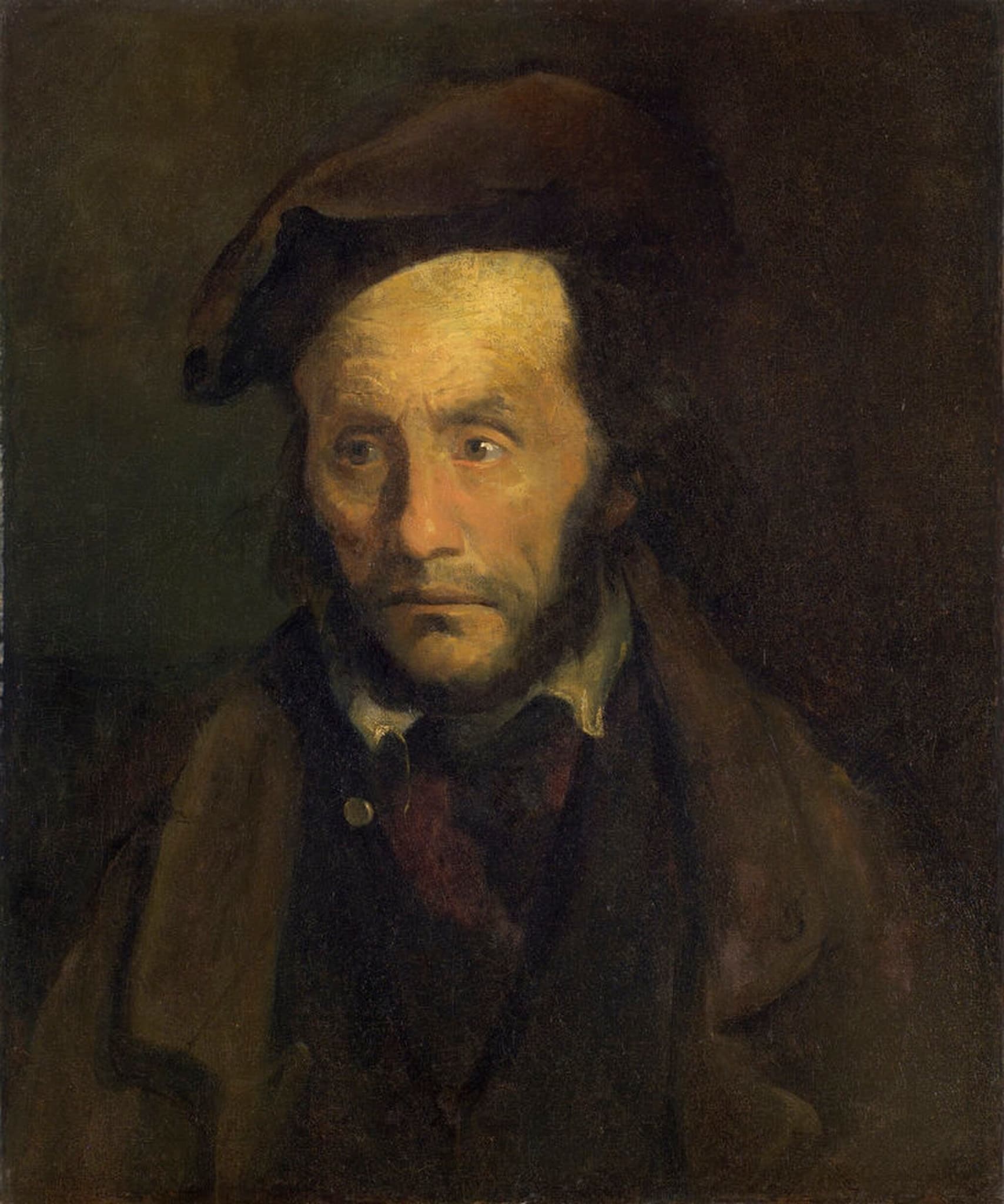
Portrait of a Child Snatcher (The Madman-Kidnapper / The Child Thief)
Theodore Gericault • Oil on canvas
View more by Theodore Gericault →Valuation Analysis
Overview and conclusion: The picture commonly titled "Portrait of a Child Snatcher" (Le Monomane du vol d’enfants) is catalogued in scholarship as part of Géricault’s monomanes series and is recorded in the James Philip Gray collection at the Michele & Donald D’Amour Museum of Fine Arts, Springfield — a fact that both confirms institutional recognition and indicates the work has not been a modern market lot [1]. On the assumption of secure autograph attribution, reasonable condition, and intact provenance, a market valuation in the range of $1,000,000–$6,000,000 is appropriate, reflecting demand for authenticated Géricault oils and the relative scarcity of such works on the open market.
Comparable basis: The top of the band is informed by the artist’s auction ceiling for oils (notably the 2009 Christie’s sale that remains the modern benchmark for Géricault), while mid‑range and lower outcomes reflect realized prices for smaller oils and studies by Géricault and his circle when provenance and condition were solid [2]. Recent competitive results for drawings and small studies demonstrate active specialist collector demand; when a well‑documented monomane enters the market it tends to attract both museum and private bidder interest. The combination of an institutional provenance and the painting’s placement within a recognized cycle supports pricing in the band above for a sale conducted through a major evening sale or a targeted private treaty with institutional outreach.
Value drivers and sensitivity: The dominant drivers are (1) attribution/authentication, (2) provenance and exhibition/publication history, and (3) condition/conservation. A decisive scholarly authentication and strong provenance maintain or push value toward the upper end of the range; by contrast, attribution doubts, confirmation of a later workshop copy, or extensive unsympathetic restoration would materially reduce market value — in many such downside scenarios prices fall to well below the low estimate. Market demand and timing (presence of interested museums or foundation buyers) also influence realized outcomes.
Methodology and recommended next steps: This estimate uses comparable analysis anchored to public sale records and market behavior for Géricault oils and studies, adjusted for the painting’s documented provenance and museum status. To refine the estimate to a sale‑grade appraisal you should obtain: high‑resolution recto/verso photography, a full conservation/condition report, technical imaging (infrared reflectography, X‑ray), pigment and ground analysis, and written opinions from recognized Géricault scholars/museum curators. With those materials, approach nineteenth‑century/Old Masters specialists at major houses and consider a private sale campaign targeted at institutions and high‑net‑worth collectors.
Scenarios: Upside—new documentary evidence or an authoritative catalogue‑raisonné entry could push the work into multi‑million territory above the stated band. Downside—classification as a studio work, severe condition issues, or gaps in provenance would place realized value well below the lower estimate. This assessment is market‑facing and intended to guide sale planning and due diligence, not as a formal insured appraisal.
Key Valuation Factors
Art Historical Significance
High ImpactGéricault’s monomanes series occupies an important position in early‑19th‑century French Romanticism and in the history of psychiatric portraiture. While these works are smaller in scale than his monumental history paintings, they are highly regarded by scholars for their psychological intensity and documentary interest. A securely attributed monomane benefits from both scholarly attention and institutional collecting priorities, increasing the pool of potential museum buyers and specialist collectors. Because Géricault produced relatively few autograph oils and many key works remain in public collections, any authenticated monomane has outsized cultural and market significance relative to comparable minor 19th‑century portraits.
Attribution / Authentication
High ImpactAttribution is the single most important value determinant. A clear, uncontested autograph attribution—supported by technical imaging, materials analysis and scholarly endorsement—places the picture solidly within the stated valuation band and attracts museum interest. Conversely, unresolved attribution disputes or reclassification as a studio piece or later copy will reduce demand and price dramatically. Buyers in this segment are cautious: institutions and informed private collectors typically require written expert opinions and technical corroboration before bidding at the top end of the market.
Provenance & Exhibition History
High ImpactWell‑documented provenance (19th‑century ownership traces, inclusion in notable collections, and confirmed exhibition/publication history) materially enhances marketability and price. The painting’s recorded passage into the James Philip Gray collection and its museum accession are positive indicators that mitigate title and attribution risk. Gaps, conflicting ownership claims, or lack of exhibition citations reduce institutional confidence and bidding competition. Provenance that ties a work into known historical dispersals or key private collections adds premium value, especially when corroborated by sale catalogues or catalogue‑raisonné entries.
Condition & Conservation
Medium ImpactPhysical condition affects both marketability and price. Common issues—relining, heavy inpainting, varnish discoloration, or canvas degradation—can depress bidding and increase buyer hesitation. A clean conservation history with sympathetic restoration, complete condition reports, and no evidence of major overpainting supports the estimate above. Conversely, significant structural or surface problems that require expensive treatment will reduce the likely sale price and may limit buyer types to dealers or restorers rather than institutions.
Market Scarcity & Demand
High ImpactGéricault oils are rare on the market; most major paintings are held by museums, which pushes private prices upward when authentic works become available. Institutional demand for museum‑quality monomanes and the collector interest in Romantic masterworks create competitive bidding dynamics. However, the market is attribution‑sensitive: scarcity amplifies value only when buyers have confidence in authenticity and provenance. Recent high‑visibility sales of Géricault drawings and small oils demonstrate that well‑documented pieces can command premium prices, but lack of documentation or contested attributions sharply narrows the buyer pool.
Sale History
Portrait of a Child Snatcher (The Madman-Kidnapper / The Child Thief) has never been sold at public auction.
Theodore Gericault's Market
Théodore Géricault is a blue‑chip 19th‑century French artist whose relatively small oeuvre and signature masterpieces (notably The Raft of the Medusa) ensure sustained institutional and private demand. Authenticated oils by Géricault are uncommon on the market, producing episodic but strong auction results when they appear; the artist’s peak public sale remains a high‑seven to low‑eight‑figure outcome for a well‑provenanced portrait. Works on paper and small studies are more frequently seen and trade at lower absolute levels but can still achieve high five to low seven figures when attribution and provenance are robust. Attribution clarity and provenance are primary market sensitivities.
Comparable Sales
Portrait d'Alfred et Elisabeth Dedreux
Théodore Géricault
Same artist and medium (autograph oil portrait); this lot is the artist's modern auction high and therefore establishes the ceiling for top‑quality, well‑provenanced Géricault oils.
$10.6M
2009, Christie's Paris (Yves Saint‑Laurent / Pierre Bergé sale)
~$15.6M adjusted
A Sleeping Fishmonger (Le Marchand de poissons endormi)
Théodore Géricault
Recent sale of a Géricault work on paper; shows active specialist demand and sets a lower‑end reference for small studies/drawings by the artist (liquid but materially less significant than an oil).
$70K
2026, Christie's New York
Chevaux au pâturage (Le Cheval bai et le cheval blanc)
Théodore Géricault
Important recently published watercolour/drawing sold in Paris — demonstrates strong French market interest in high‑quality Géricault studies and that provincial/Auction‑House buyers will pay premium prices for previously unpublished works.
$584K
2026, Hôtel Drouot (Paris)
Current Market Trends
The market for Old Masters and high‑quality 19th‑century works has strengthened recently, with greater institutional and collector appetite for historically validated pieces. Demand is concentrated around museum‑quality lots and well‑documented works; attribution controversies have increased buyer due diligence and placed a premium on technical and provenance documentation. Smaller works and drawings remain liquid but the market rewards works that can be confidently authenticated and exhibited.