Structure Kept vs Structure Dissolved
Both painters set themselves the same task: record time and weather on site, often by repeating one motif from a fixed vantage. The shared ground is rigorous—bridges, cathedrals, stations, and rivers treated as optical laboratories. The crucial fork is purpose: Sisley keeps the public world legible so change can be measured; Monet uses the motif as an instrument to reveal an enveloping field of light that can unmake the very forms it touches.
Comparison frame: How do Sisley and Monet turn the same subjects into different ways of seeing—structure under changing light (Sisley) versus light that remakes structure (Monet)?
Quick Comparison
| Topic | Alfred Sisley | Claude Monet |
|---|---|---|
| Purpose of the motif | A stable civic anchor to measure change (Moret church; flood streets). | An instrument to expose the light–air envelope (Rouen, Parliament, Water Lilies). |
| What must stay legible | Ground plan, volumes, and façades remain countable and clear. | Edges become provisional; mass yields to chromatic fields. |
| Atmosphere’s role | Calibrated description laid on things. | Event that can re-author things (fog, steam, glare). |
| Water and reflection | A measuring device—doubling trees/streets to mark level and time. | A second architecture that dissolves the first (Thames, Giverny pond). |
| Serial method | Quiet, site-bound series at public places (Moret, Marly, Port‑Marly). | Formalized serial exhibitions; timed sessions; multiple canvases at once. |
| Modern infrastructure | Bridges and quays integrated into a balanced civic scene. | Stations/bridges recast as optical theaters (Gare Saint‑Lazare). |
| Control of site | Observes found places; classical placements and perspective. | Sometimes builds the motif to study it (Giverny pond and bridge). |
| Palette and touch | Cooler, measured keys; steadier strokes for buildings. | Higher-chroma intervals; touch equalizes materials across the field. |
Shared Ground
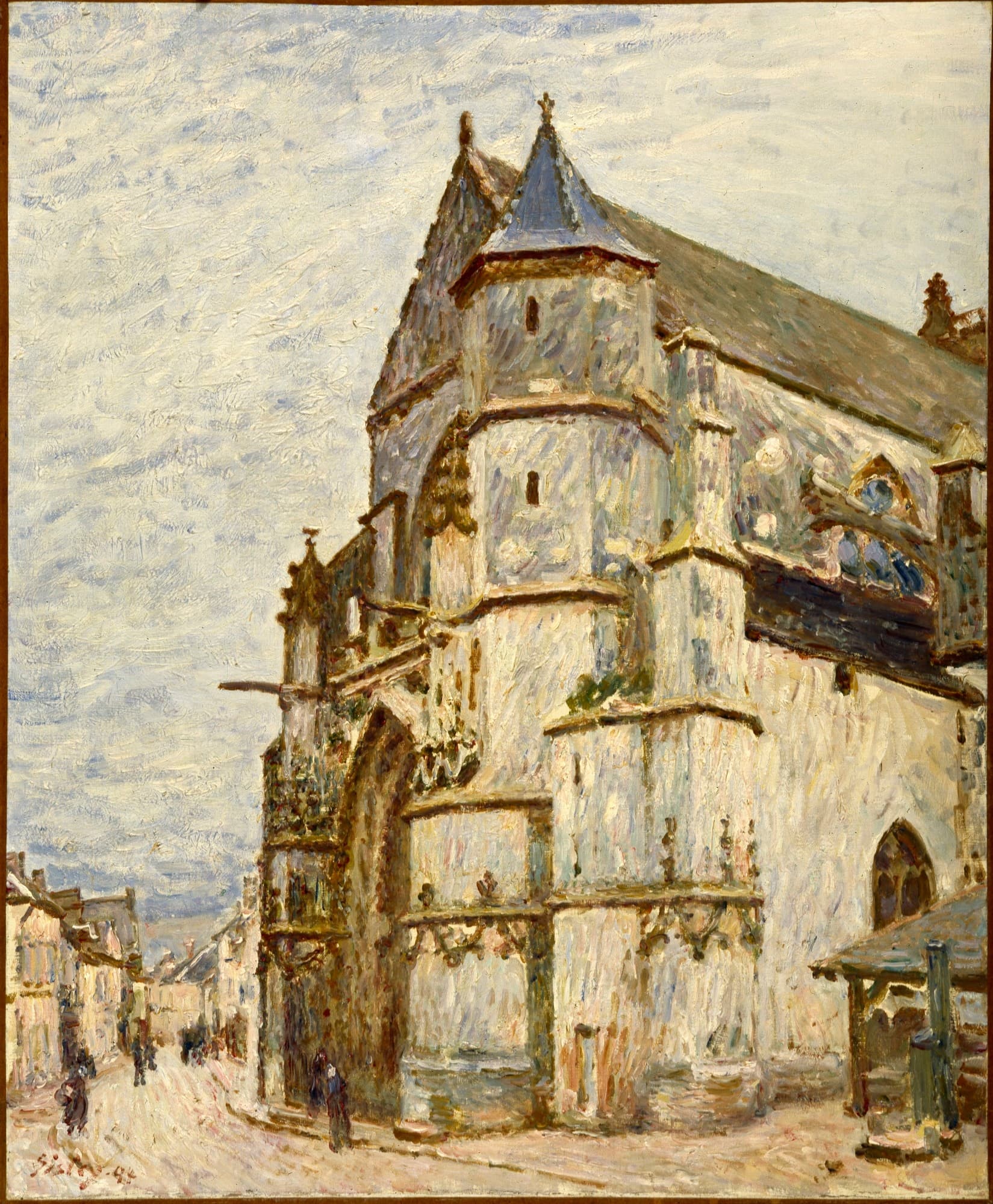
Alfred Sisley and Claude Monet pursued the same core problem: how to make painting register time and atmosphere in front of the motif. Both worked outdoors and returned to the same view under shifting light, turning serial practice into method. Sisley’s 1893–94 canvases of the Church at Moret and Monet’s near‑contemporary Rouen Cathedrals are parallel experiments: fix a Gothic façade, vary hour and weather, and let differences accumulate across a set. In each case, the motif becomes a comparative instrument.
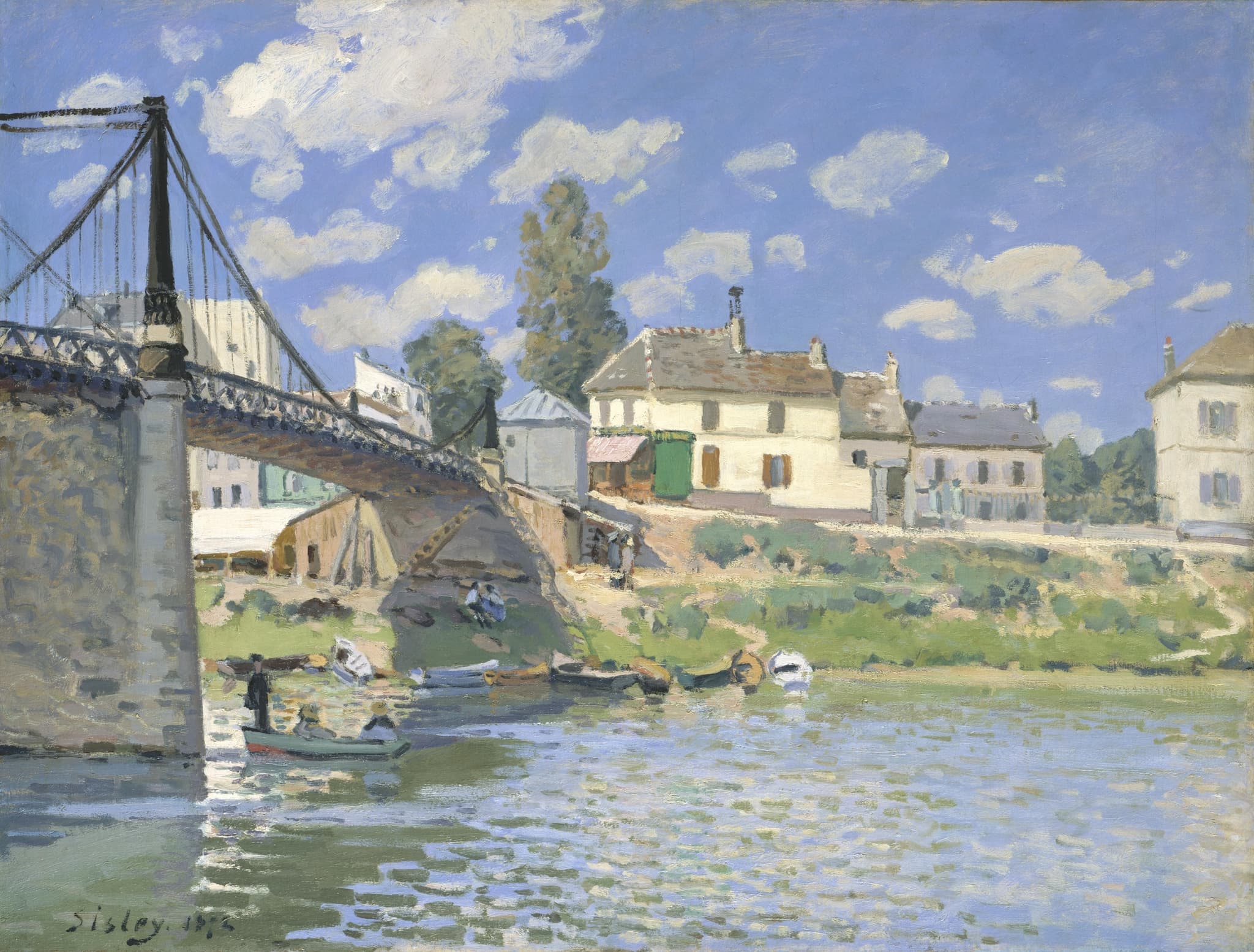
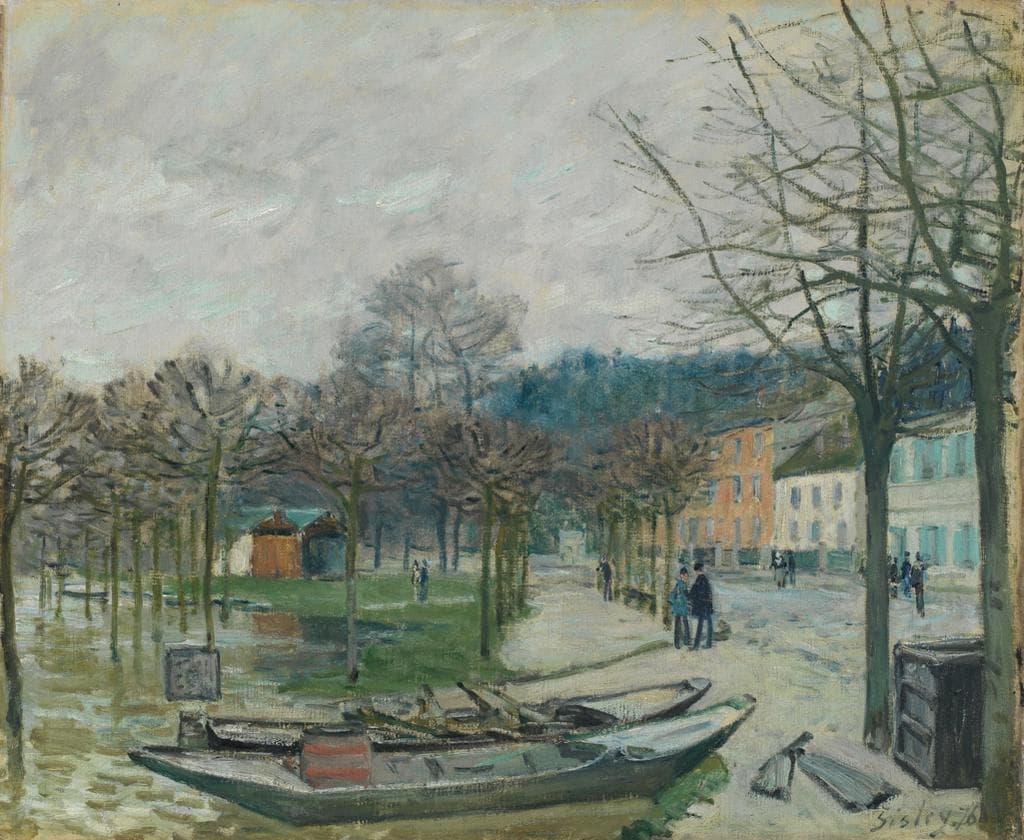
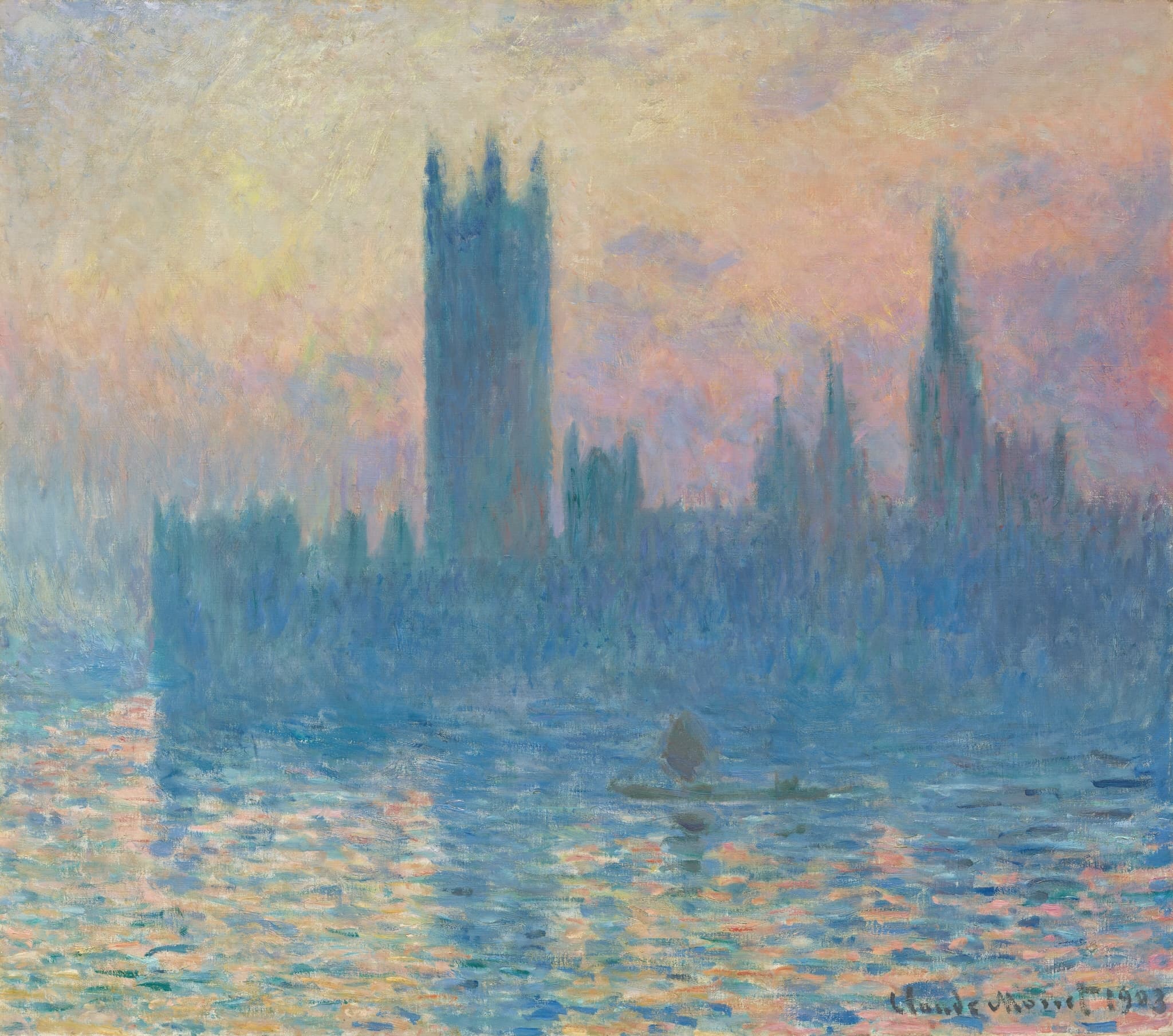
Architecture and modern infrastructure were their laboratories of seeing. Sisley’s The Bridge at Villeneuve‑la‑Garenne (1872) and Monet’s Argenteuil bridges put iron, stone, and water into one optical system, where leisure boats, pylons, and ripples share the same light. Stations and bridges are not only subjects; they are devices for timing perception. Water plays a similar role. In Sisley’s Port‑Marly flood views, reflections double trees and streets, marking levels and duration; in Monet’s Houses of Parliament, the Thames becomes a second architecture whose shimmer can eclipse masonry.
Both artists also fold modernity into landscape without abandoning nature. Suburban bridges, river traffic, and the new edges of Paris appear as part of a lived environment. Monet’s Gare Saint‑Lazare treats steam as luminous weather inside an iron nave; Sisley maps suburban mobility with calm clarity. Across this shared ground—serial work, fixed structures, reflective surfaces—each painter proves that the everyday city and its waterways can carry the drama of changing light as fully as mountains or seas.
Decisive Difference
The decisive difference is what the motif is for. Monet increasingly treats a cathedral, bridge, or pond as an optical instrument—a screen for the surrounding envelope of light and air. Edges are negotiable; mass succumbs to haze, steam, or backlight. In London he timed sessions from St Thomas’s Hospital so that Parliament collapsed into silhouette against pollution‑tinged sunsets; in Giverny he built a pond and a Japanese bridge expressly to choreograph reflections and suppress the horizon. In these projects the world is provisional: appearance is authored by atmosphere, historically conditioned and time‑stamped.
Sisley’s ethic keeps public form legible. In the Moret series, buttresses, cornices, and the street’s recession remain countable even as weather slides across the stone. In flood pictures, trees and façades function like measuring rods, so that change is seen against a shared civic ground. Bridges at Villeneuve and other urban‑river views hold geometry steady while light plays across water and stucco. Sisley’s atmosphere is pursued with equal persistence, but as calibrated description within a classical composition that respects how places are built and used.
Put simply: Monet makes atmosphere the event that can remake structure; Sisley shows atmosphere on things so that structure can measure change. One relocates meaning from objects to their mutable appearances; the other balances transience with civic legibility. The difference clarifies two durable modern options for painting: dissolve the world to reveal perception, or keep the world readable so perception has something to measure.
Paired Works
Gothic façades under changing light
Focus question: When a church front is painted repeatedly, does light become the subject—or does it test how structure endures?
The Church at Moret vs Rouen Cathedral, The Portal (Morning Sun)
Bridges as optical systems
Focus question: Does structure organize light, or does light fold structure into scene‑wide rhythm?
The Bridge at Villeneuve-la-Garenne vs The Bridge at Argenteuil
Water rewriting the city
Focus question: When water and air dominate, what remains of urban authority?
Flood at Port-Marly vs Houses of Parliament
Why This Comparison Matters
Seeing Sisley beside Monet clarifies two workable models for modern vision. If you want painting to carry public meaning—how streets, bridges, and churches hold a community together—Sisley shows how to keep forms readable while letting time pass across them. If you want painting to test perception itself, Monet demonstrates how a fixed motif can be treated as an instrument, revealing an atmospheric field in which even monuments are provisional.
The split matters beyond art history. It helps explain why Impressionism can feel both documentary and dreamlike, and why later painters could move toward abstraction without abandoning the world. It also sharpens how we read pictures of cities and weather today: water as a second architecture; smog and glare as active agents of appearance; the ethics of keeping places legible versus surrendering to optical experience. The choice between “structure kept” and “structure dissolved” remains a live one for anyone trying to picture a changing environment with clarity and force.
Related Links
Sources
- The Metropolitan Museum of Art – Alfred Sisley, The Bridge at Villeneuve‑la‑Garenne
- Musée d’Orsay – L’inondation à Port‑Marly (Alfred Sisley)
- Detroit Institute of Arts – Church at Moret, After the Rain (Alfred Sisley)
- Musée des Beaux‑Arts de Rouen – The Church at Moret in the Morning Sun (context on Sisley vs Monet)
- National Gallery, London – Claude Monet, The Gare St‑Lazare
- National Gallery of Art – Claude Monet, The Houses of Parliament, Sunset
- The Metropolitan Museum of Art – Claude Monet, Haystacks (Effect of Snow and Sun) and the 1891 series
- PNAS (2023) – Atmospheric pollution and the optics of Impressionist skies
- The Metropolitan Museum of Art – Claude Monet, The Water‑Lily Pond (constructed motif at Giverny)
- Musée d’Orsay – La Cathédrale de Rouen, Le Portail (Soleil matinal)
- National Gallery, London – The Thames below Westminster (Monet’s London vantage and fog)
- National Gallery of Art – Picturing France (teaching packet; Sisley’s palette and approach)