The Bridge at Villeneuve-la-Garenne
Study Print Studio
Create a personal study print
Build a companion study sheet around the part of this painting that speaks to you most. Choose a detail, shape an interpretation, and walk away with something personal and display-worthy.
Fast Facts
- Year
- 1872
- Medium
- Oil on canvas
- Dimensions
- 49.5 × 65.4 cm
- Location
- The Metropolitan Museum of Art, New York
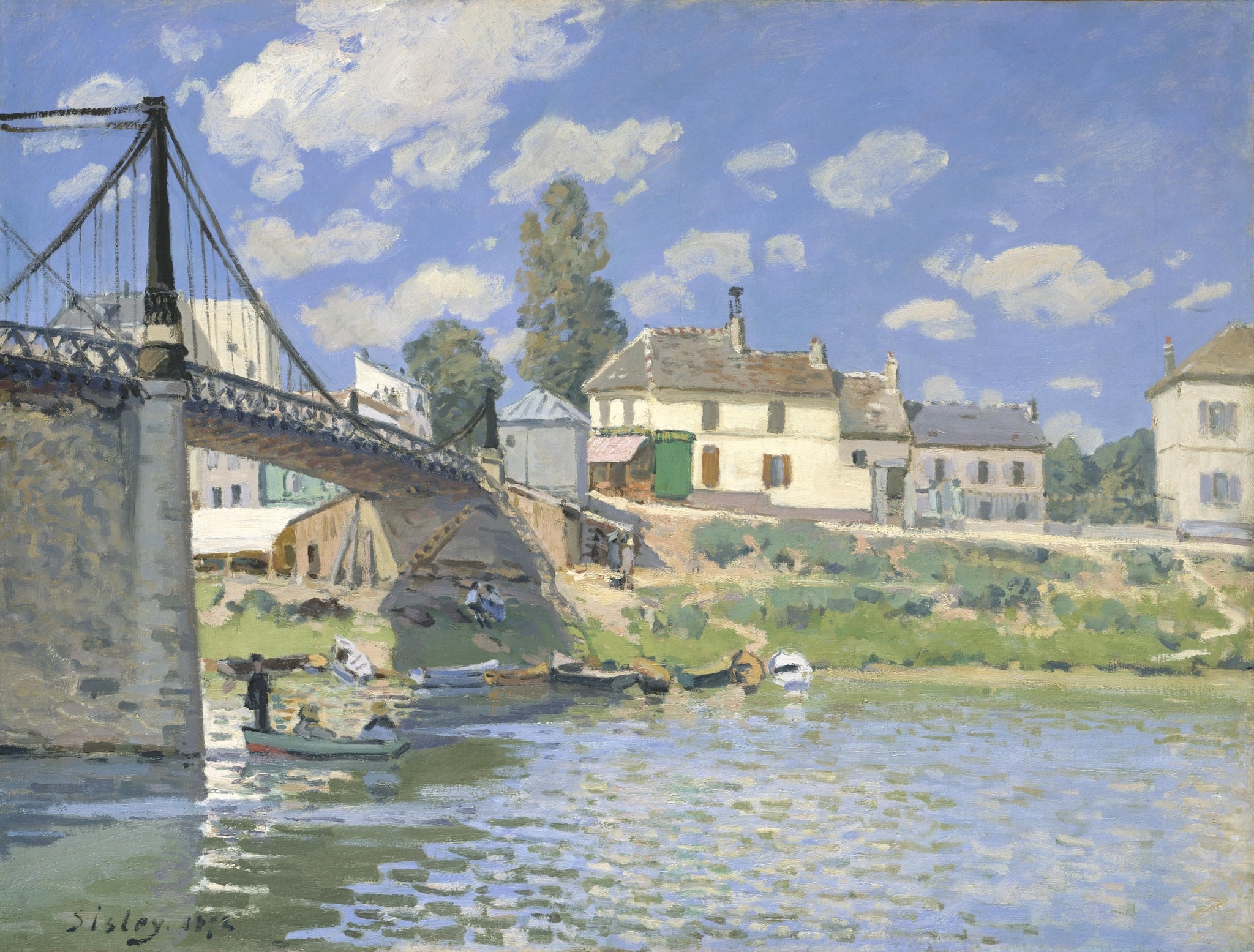
Click on any numbered symbol to learn more about its meaning
Meaning & Symbolism
Explore Deeper with AI
Ask questions about The Bridge at Villeneuve-la-Garenne
Popular questions:
Powered by AI • Get instant insights about this artwork
Interpretations
Infrastructural History
Source: The Metropolitan Museum of Art; Municipal/encyclopedic histories
Series and Site Rhythms
Source: The Metropolitan Museum of Art; Kimbell Art Museum (via recognized catalogues)
Optics and Embodied Viewing
Source: The Metropolitan Museum of Art (object entry and Timeline essay)
Social History of Leisure
Source: Robert L. Herbert (Impressionism: Art, Leisure, and Parisian Society)
Modernity’s Ambivalence
Source: T. J. Clark (The Painting of Modern Life)
Seen in Comparisons
Related Themes
About Alfred Sisley
More by Alfred Sisley
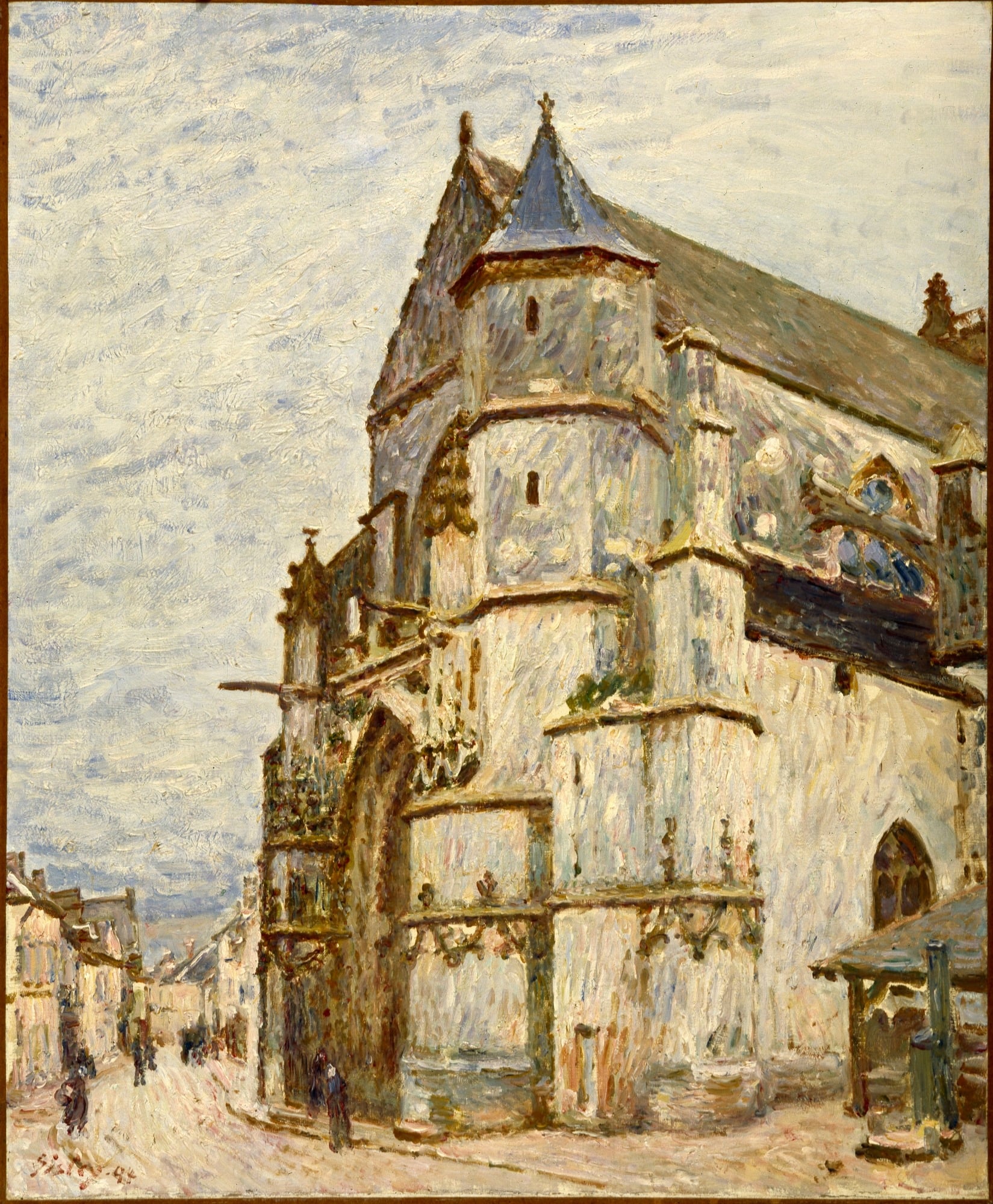
The Church at Moret
Alfred Sisley (1894)
Alfred Sisley’s The Church at Moret turns a Flamboyant Gothic façade into a living barometer of light, weather, and time. With <strong>cool blues, lilacs, and warm ochres</strong> laid in broken strokes, the stone seems to breathe as tiny townspeople drift along the street. The work asserts <strong>permanence meeting transience</strong>: a communal monument held steady while the day’s atmosphere endlessly remakes it <sup>[1]</sup><sup>[2]</sup><sup>[3]</sup>.
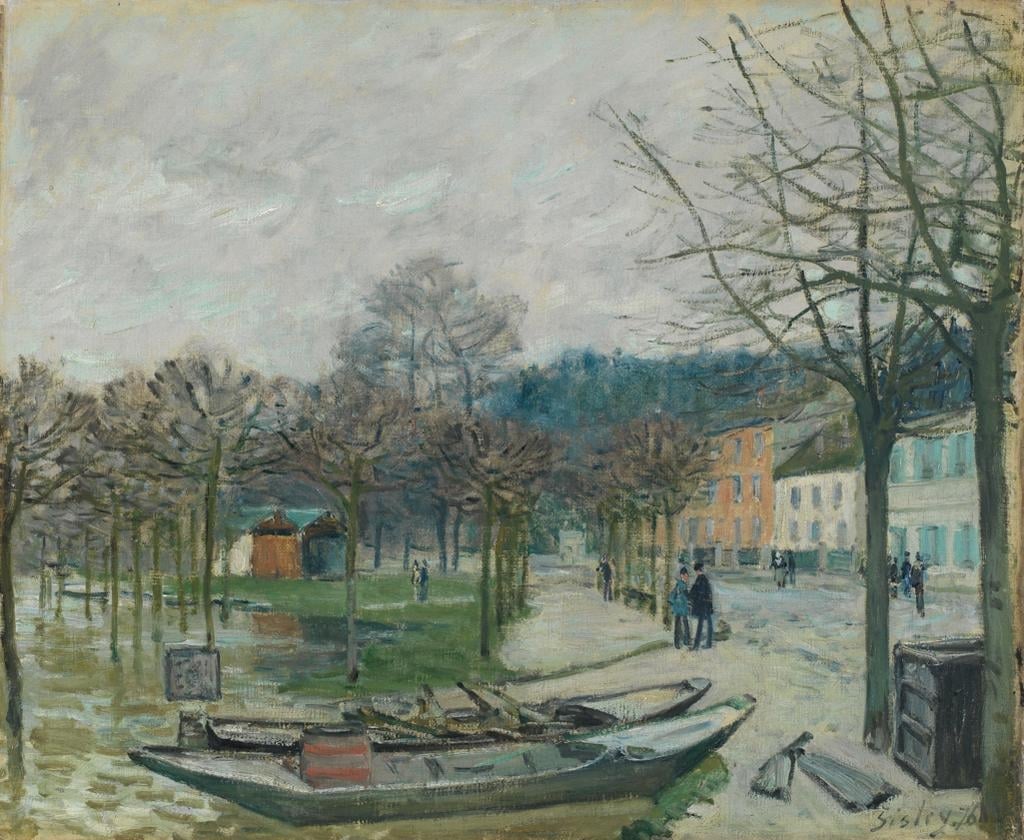
Flood at Port-Marly
Alfred Sisley (1876)
In Flood at Port-Marly, Alfred Sisley turns a flooded street into a reflective stage where <strong>human order</strong> and <strong>natural flux</strong> converge. The aligned, leafless trees function like measuring rods against the water, while flat-bottomed boats replace carriages at the curb. With cool, silvery strokes and a cloud-laden sky, Sisley asserts that the scene’s true drama is <strong>atmosphere</strong> and <strong>adaptation</strong>, not catastrophe <sup>[1]</sup><sup>[2]</sup><sup>[4]</sup>.