Two ways of seeing a landscape
Friedrich and Constable both turn landscape into a medium for seeing rather than scenery. Friedrich composes vistas that test the viewer against fog, void, and finitude. Constable builds large canvases from timed studies of skies and weather so the eye learns to read the world’s particulars. Together they show that how we look is the picture’s real content.
Comparison frame: How do Friedrich’s composites of inward vision and Constable’s notated weather studies reshape what looking in landscape painting can do?
Quick Comparison
| Topic | Caspar David Friedrich | John Constable |
|---|---|---|
| What looking is for | An inward test of the self; vantage without overview. | A disciplined reading of weather, time, and place. |
| How pictures are built | Studio composites from observed motifs tuned to an inner idea. | Large canvases assembled from on‑the‑spot oil studies and full‑size sketches. |
| Structural armature | Fog, emptied middlegrounds, vertical compression. | Skies keyed to timed cloud types and tonal scale. |
| Human presence | Rückenfigur or absence; solitude as device. | Distributed small figures and work rhythms. |
| Space and horizon | High horizons, blocked paths, engineered uncertainty. | Low horizons, navigable fields, mapped reflections. |
| Viewer’s job | Project inward; accept doubt and finitude. | Accumulate evidence; infer weather and duration. |
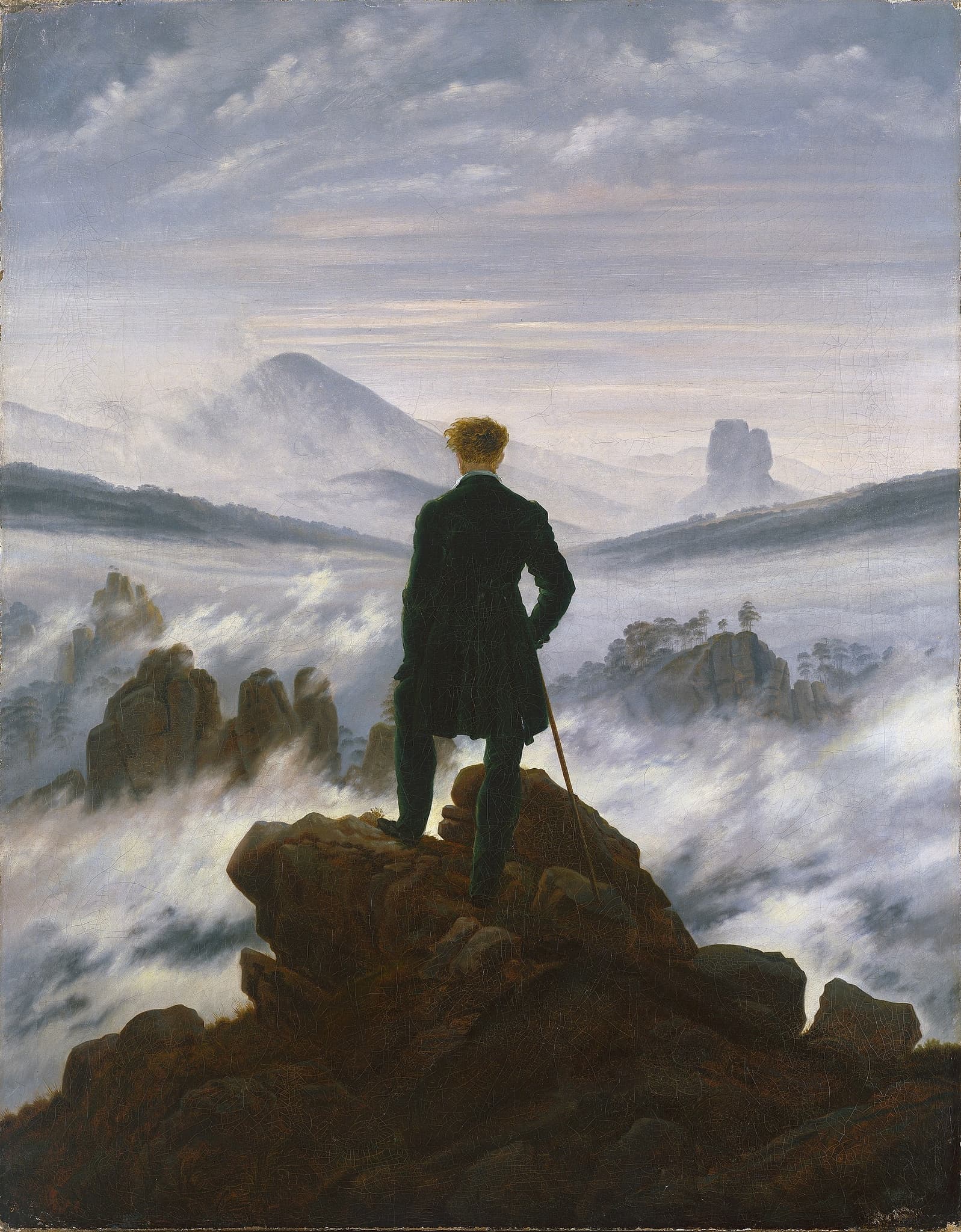
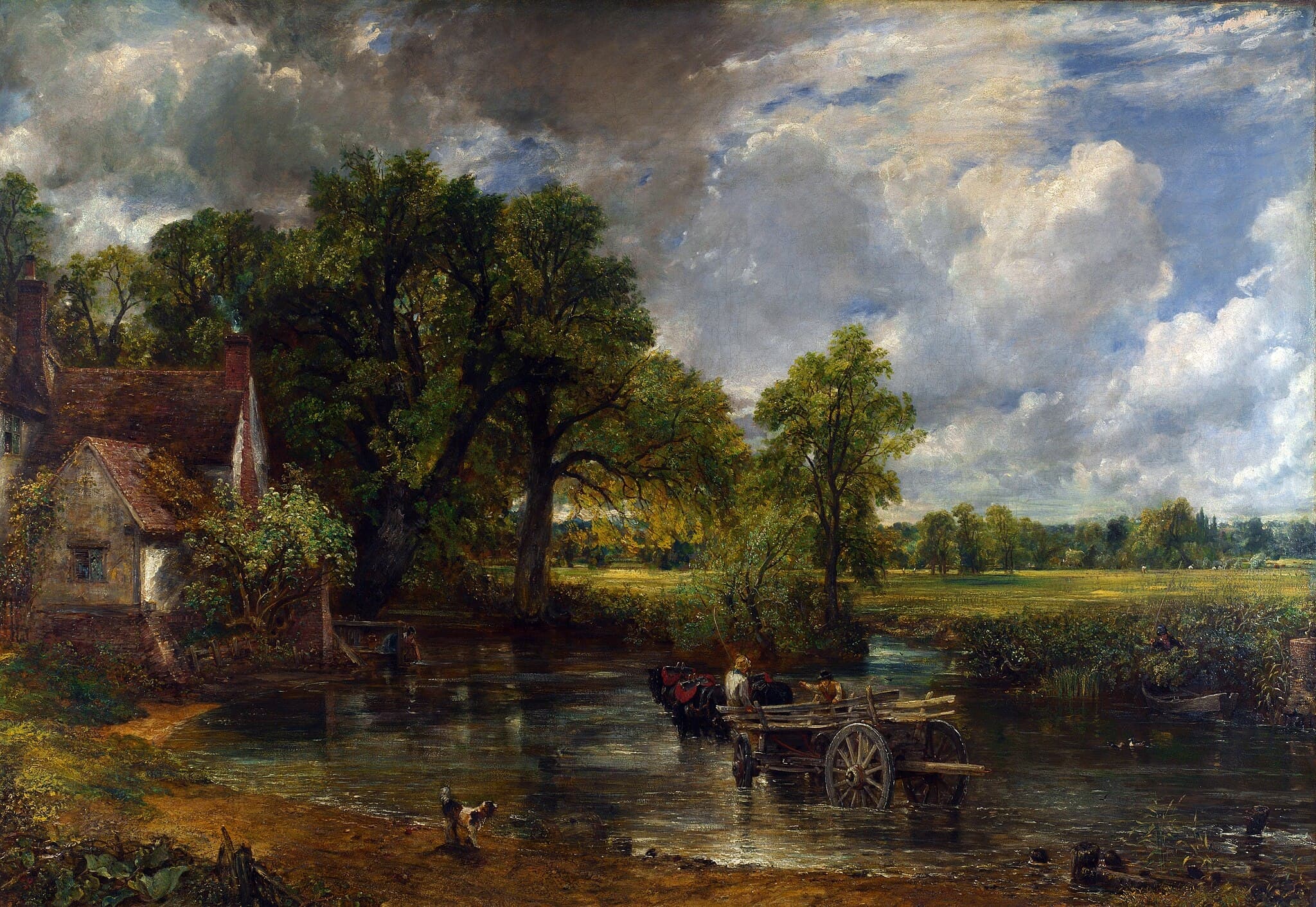
| Anchor example | The Wanderer above the Sea of Fog. | The Hay Wain. |
Shared Ground
Both painters rebuild landscape so that looking itself becomes the subject. Friedrich frequently inserts a Rückenfigur—a solitary back‑turned observer—so that our vision is routed through a surrogate stance. Constable, by contrast, makes the sky the active organ of sight: timed cloud studies and weather notes determine the key and structure of his large canvases. In each case, the picture is less a place than a protocol for attention.
Their methods converge more than they first appear. Both harvested nature through field study, then built major works in the studio. Friedrich’s famous panoramas are composites from specific motifs (such as Elbe Sandstone outcrops) rearranged to serve an inner idea. Constable translated a repertory of outdoor oil studies—cloud types, reflections, cottages, boats—into exhibition “six‑footers,” often after preparing a full‑scale oil sketch. Weather is not background for either artist; it is the armature that organizes space and meaning.
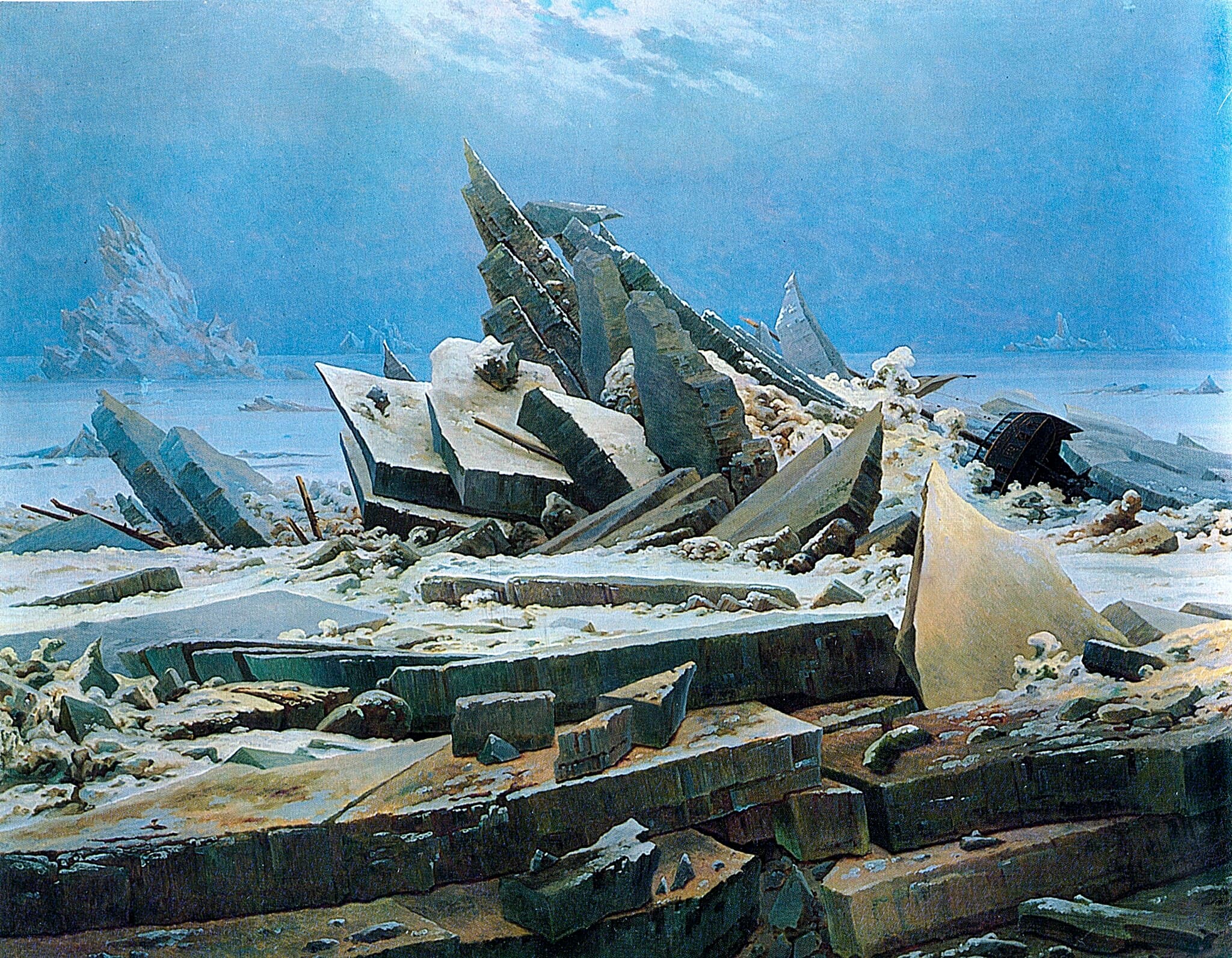
Finally, each invests landscape with ethical weight. Friedrich tests human finitude through fog, polar light, and voided middlegrounds, as in The Wanderer above the Sea of Fog or Monk by the Sea. Constable binds perception to social continuity and labor: sky‑driven light and shade articulate work rhythms in The Hay Wain, while sacred architecture in Salisbury Cathedral from the Meadows ties weather to a cultural order. In both, looking is not passive reception; it is a stance toward the world.
Decisive Difference
The decisive split is what a painting asks the eye to do. Friedrich engineers uncertainty to turn outward viewing inward. Rear‑facing figures, high horizons, and veils of fog promise a vantage but deny overview; the viewer must furnish meaning across a gap. His own maxim—paint what lies within—governs the construction: studies from nature are edited into a composite that privileges metaphysical truth over topographic fact. In Monk by the Sea he even removed ships to radicalize emptiness; in The Sea of Ice he freezes catastrophe into an unyielding geometry. Seeing becomes an existential trial—how to stand when the world withholds paths.
Constable trains the eye to register changing particulars. His “skying” practice produced panels annotated with time, wind, and direction; those observations calibrate the light, tone, and scale of large works. Painting, for him, is scientific as well as poetic: feeling emerges from accurate effects of air and water. The Hay Wain distributes evidence—cloud strata, reflections, leaf flicker—so perception accumulates into knowledge of weather and duration. A seascape study with a rainshaft over the channel records a short‑lived event rather than monumentalizing it. Where Friedrich stages height without mastery, Constable offers legible atmospheres. The viewer’s task shifts from projection into doubt to the disciplined reading of the world.
Paired Works
Fog ledge vs ford
Focus question: What can the eye know from a ledge of fog versus a ford under a timed sky?
The Wanderer above the Sea of Fog vs The Hay Wain
Emptiness vs notation
Focus question: Does a landscape cohere through metaphysical void or through measured data?
Monk by the Sea vs Cloud Study, Hampstead
Monument vs moment
Focus question: How do catastrophe and weather event structure time in landscape?
The Sea of Ice vs Rainstorm over the Sea (Seascape Study with Raincloud)
Sacred stones, different claims
Focus question: What does sacred architecture mean in each painter’s world?
Abbey among the Oaks vs Salisbury Cathedral from the Meadows
Why This Comparison Matters
Friedrich and Constable offer two durable models for how images teach us to see. One makes the eye confront limits: the view is high yet withheld, so meaning must be furnished from within. The other makes the eye accumulate facts: weather, light, and work rhythms add up to a readable world. Those stances still shape how we look today—at landscapes, data, risk, and faith.
Understanding their difference clarifies choices artists and viewers face. Do we edit the world to test the self, or do we measure the world to know it better? Do pictures stabilize doubt or stabilize evidence? The answer matters beyond art history: it marks two habits of mind. Friedrich’s composites counsel steadiness under uncertainty; Constable’s sky‑driven method models attentive empiricism. Taken together, they map the modern field between metaphysical searching and observational truth.
Related Links
Sources
- Caspar David Friedrich portal: Wanderer above the Sea of Fog
- Staatliche Museen zu Berlin: Friedrich exhibition texts (Monk by the Sea / Abbey among the Oaks)
- The Metropolitan Museum of Art: Monk by the Sea
- Caspar David Friedrich portal: The Sea of Ice (Das Eismeer)
- National Gallery, London: John Constable, The Hay Wain (catalogue and overview)
- Yale Center for British Art (Interactive): Cloud Study and 'skying'
- YCBA Collections: Constable Cloud Study with back inscriptions
- Met Heilbrunn Timeline: John Constable overview