Two ways to make seeing visible
Both painters rebuild landscape from the ground up, treating perception as the subject. Monet trains the eye to register environmental change—hour, weather, reflection. Van Gogh makes inner weather legible in color and touch. Their pictures teach different forms of attention.
Comparison frame: How do Monet and Van Gogh turn painting from describing things to making seeing itself visible—and why does Monet locate truth in light’s envelope while Van Gogh locates it in color’s emotion?
Quick Comparison
| Topic | Claude Monet | Vincent van Gogh |
|---|---|---|
| Core wager | Seeing as ethical/affective event; color and touch declare feeling as fact. | Seeing as environmental event; light and air construct what we perceive. |
| Working “labs” | Arles and Saint‑Rémy as test sites (e.g., night without black). | Giverny’s engineered pond and bridge as an optical laboratory. |
| Serial thinking | Revisits emblems (Sunflowers, stars, wheatfields) to test mood and meaning. | Fixes a motif (Haystacks, Rouen, London, Venice) to unfold time across canvases. |
| Color’s job | Complementary clashes (blue/orange, red/green, yellow/violet) as expressive syntax. | Complementary harmonies modulated to signal hour, weather, and distance. |
| Edges and facture | Directed impasto; emphatic contours; strokes behave like vectors. | Dissolving edges; broken touches knit forms into an atmospheric field. |
| Time logic | Condenses time symbolically within one frame. | Distributes time comparatively across many frames. |
| Key devices | Local light sources; “night without black.” | Reflection as second architecture; fog/backlight level stone, sky, water. |
| Japonisme | Cropping and contour; prints pinned in the studio and copied. | Japanese bridge and print collection; garden designed with Eastward inflection. |
Shared Ground
Monet and Van Gogh shift painting’s task from naming things to staging how we see. Each makes perception the subject. Monet fixes a motif and lets hour and weather rebuild it before our eyes; Van Gogh uses color and touch to externalize inner weather—states of feeling inseparable from place and time. The result is not illustration but experiment, conducted outdoors and refined in disciplined series.
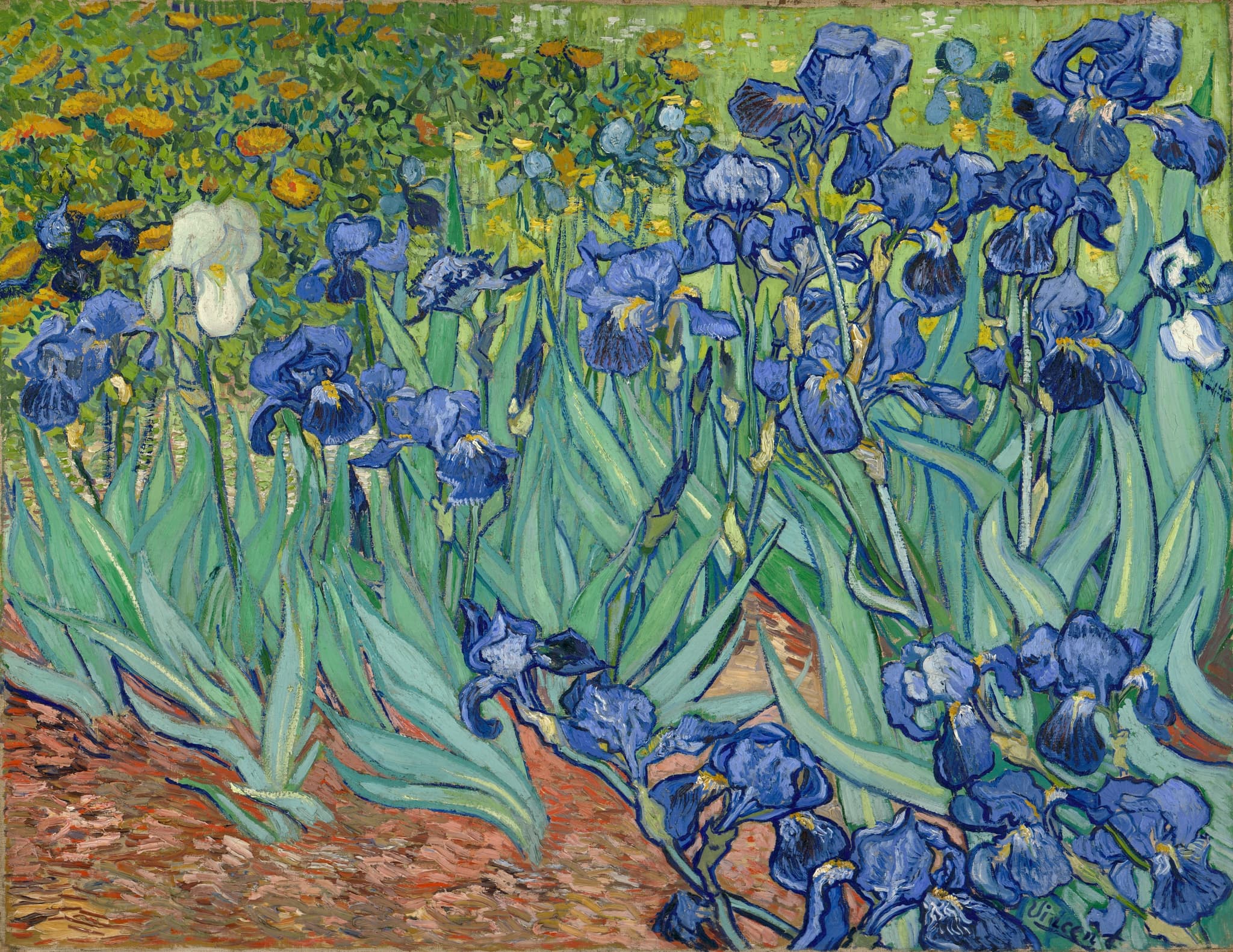
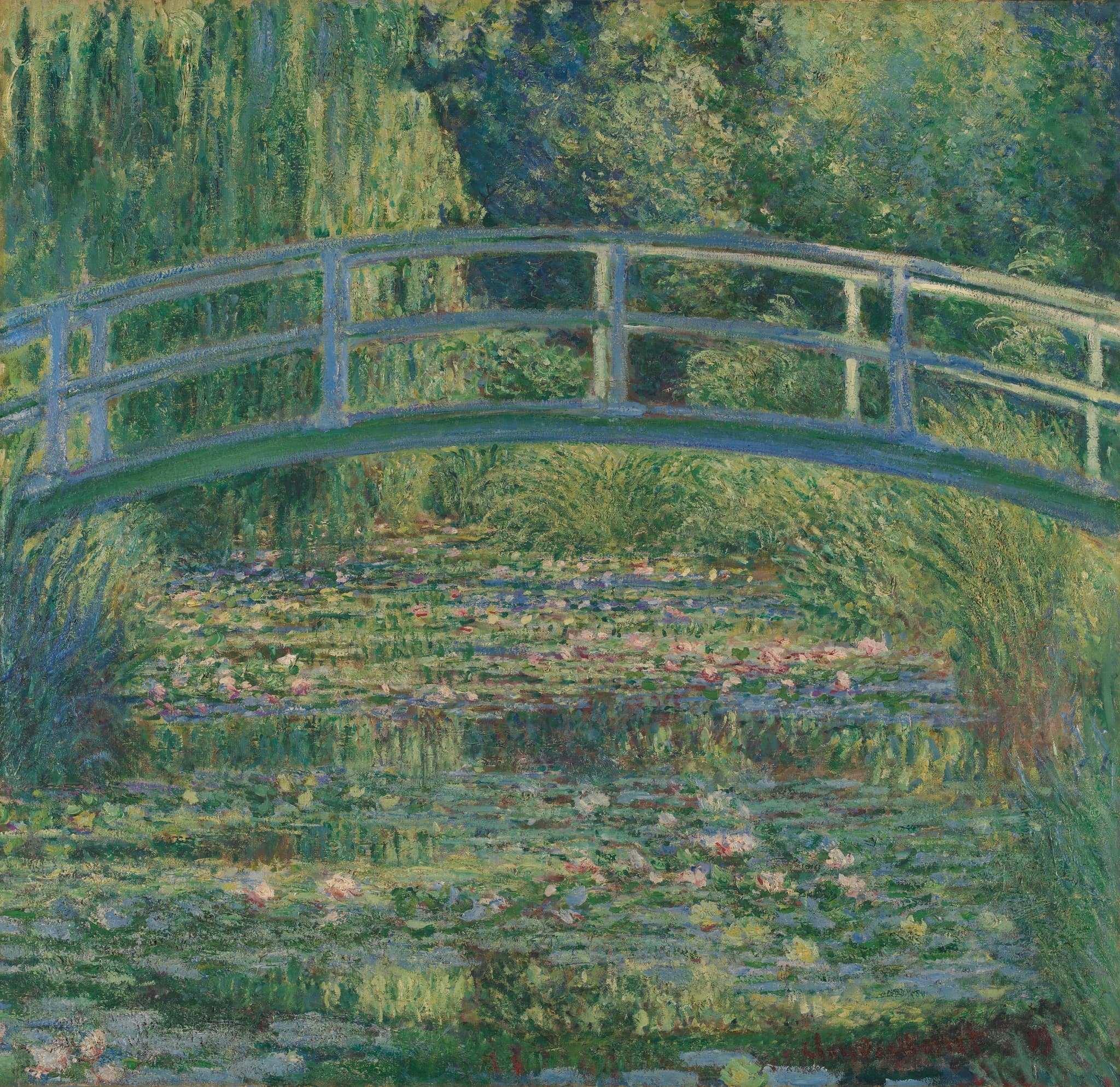
Both built or chose “labs.” Monet engineered Giverny’s water garden—diverted water, planted willows and irises, and raised a Japanese bridge—to observe reflection and atmospheric change under controlled variation. Van Gogh turned Arles and later Saint‑Rémy into test‑sites for chromatic conviction, declaring a “night without black” in his nocturnes and driving complementary contrasts to expressive ends. In each case, landscape becomes a studio of perception rather than a backdrop.
Serial thinking anchors their methods. Monet’s Haystacks, Rouen Cathedral, and London and Venice canvases hold the motif steady so conditions can become the story. Van Gogh repeats emblematic subjects—Sunflowers, irises, starry skies, panoramic wheatfields—to test how color and direction of stroke carry meaning. Color is structural for both, rooted in practice and the era’s color discourse, not mere décor. So is Japan: Monet’s print collection and Japanese bridge shape his design of Giverny; Van Gogh’s ardent Japonaiserie informs his cropping, contour, and the prints that hang in his studio portraits. On this shared ground, their differences become clarifying rather than oppositional.
Decisive Difference
Monet’s decisive move is to treat vision as an environmental event. He minimizes narrative, fixes a vantage, and watches time alter a stable motif. Edges soften into an enveloppe of light and air; reflections create a second architecture that can level stone, sky, and water into one field. The London and Venice series sharpen this stance: silhouettes dissolve under backlight and haze, and the painting records duration—often begun on site and calibrated later so the harmony matches a remembered hour. Even when the effect is lyrical, it remains anchored in conditions: light angle, moisture, particulate air.
Van Gogh’s decisive move is to treat vision as an ethical and affective event. Color becomes syntax—reds and greens for pressure, blues and oranges for charge; brushwork turns into vectors that carry mood as movement. Letters from 1888–1890 state the aim plainly: a night built from blues, violets, and greens instead of black; passions expressed through chromatic oppositions; “turbulent skies” that admit loneliness while honoring nature’s strength. He condenses time within a single frame—the life cycle in a vase of Sunflowers, a weather‑front compressed into a wheatfield—so the picture reads as a present-tense verdict on feeling.
In short: Monet conditions the eye to register external flux (light/time). Van Gogh conditions the eye to register inner pressure made visible (feeling/time). Both change how painting makes us see; they disagree on where seeing’s truth lives.
Paired Works
Night and atmosphere
Focus question: When darkness arrives, do we learn more from local light or from the air itself?
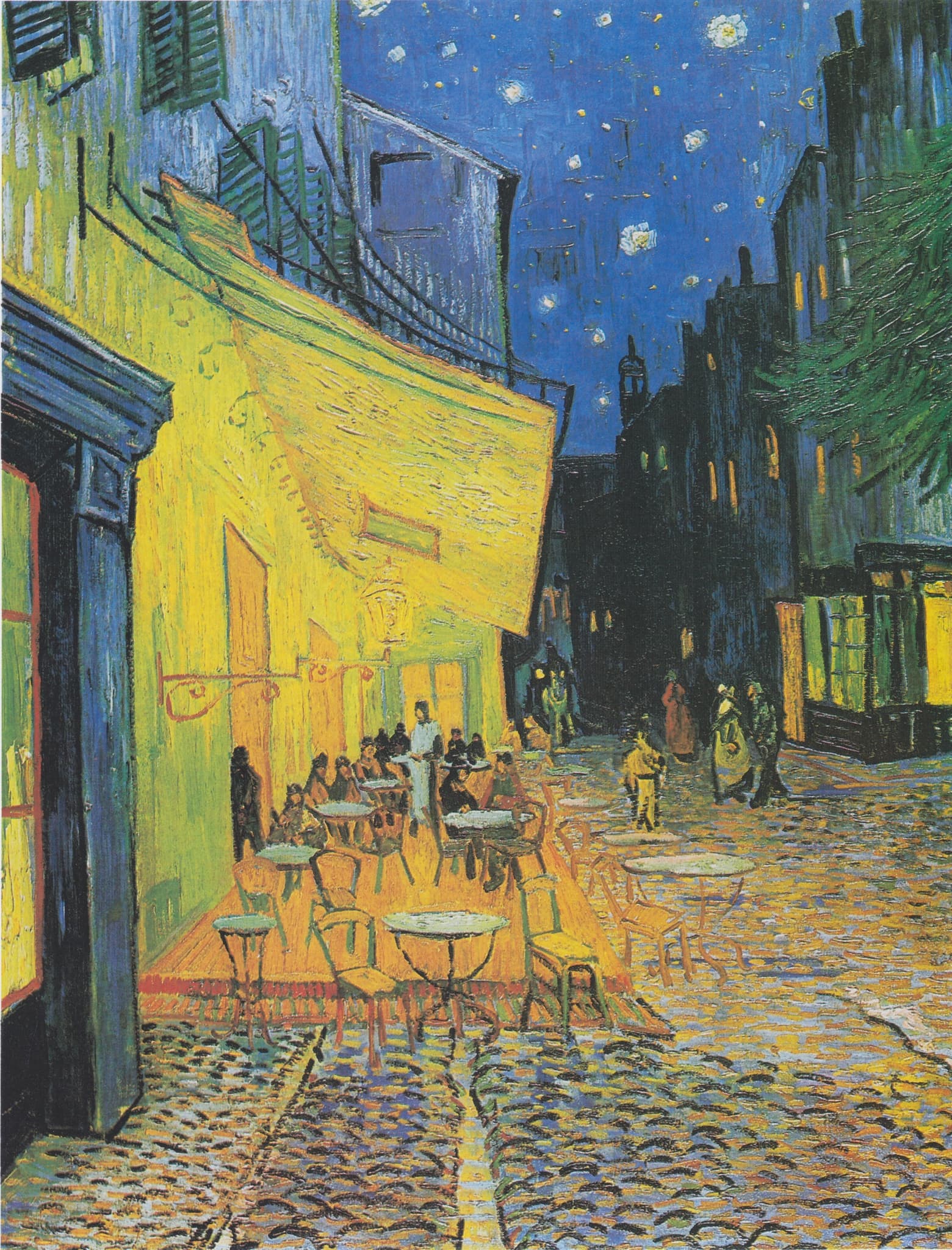
Café Terrace at Night vs Houses of Parliament
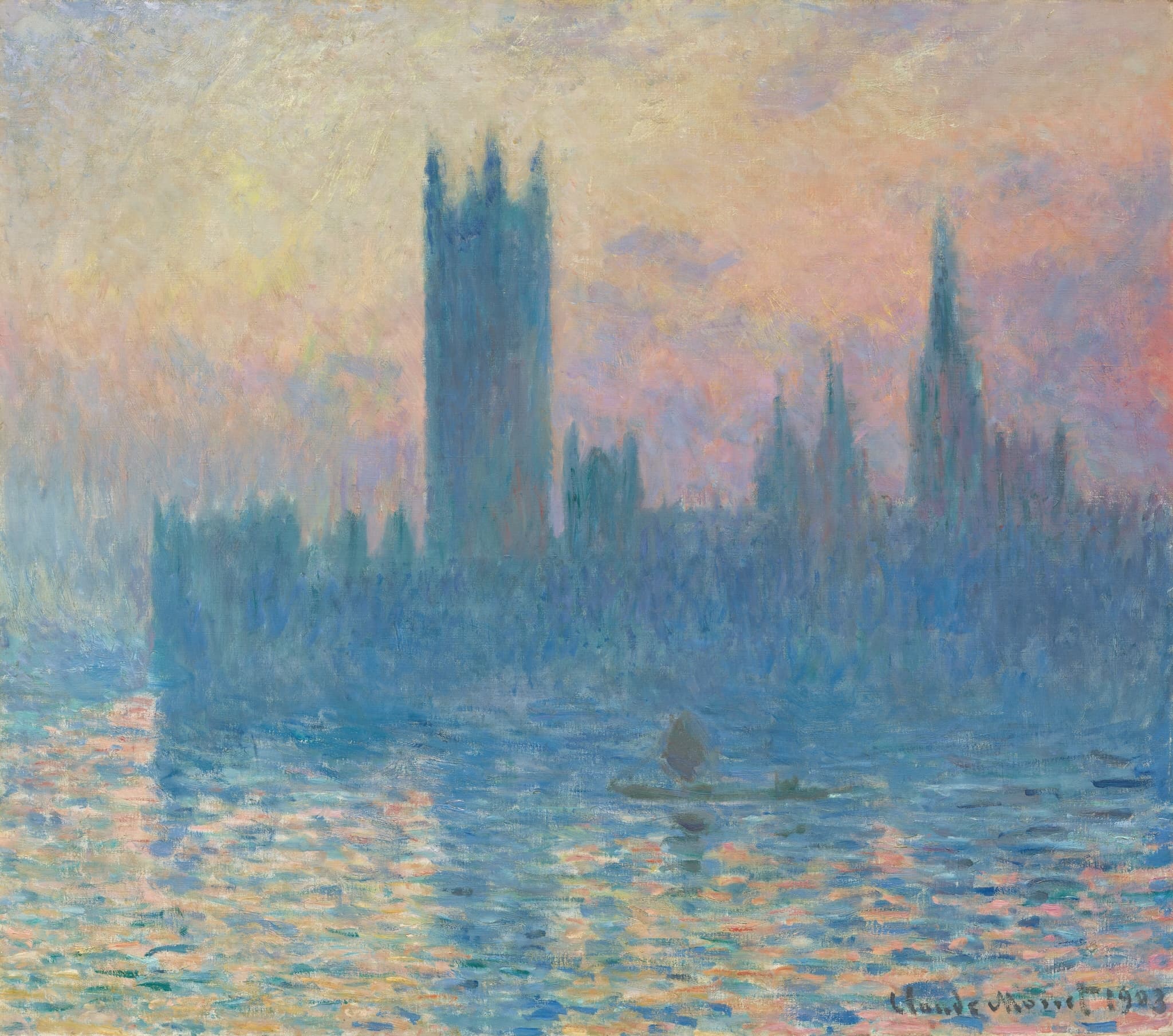
One motif, two logics of time
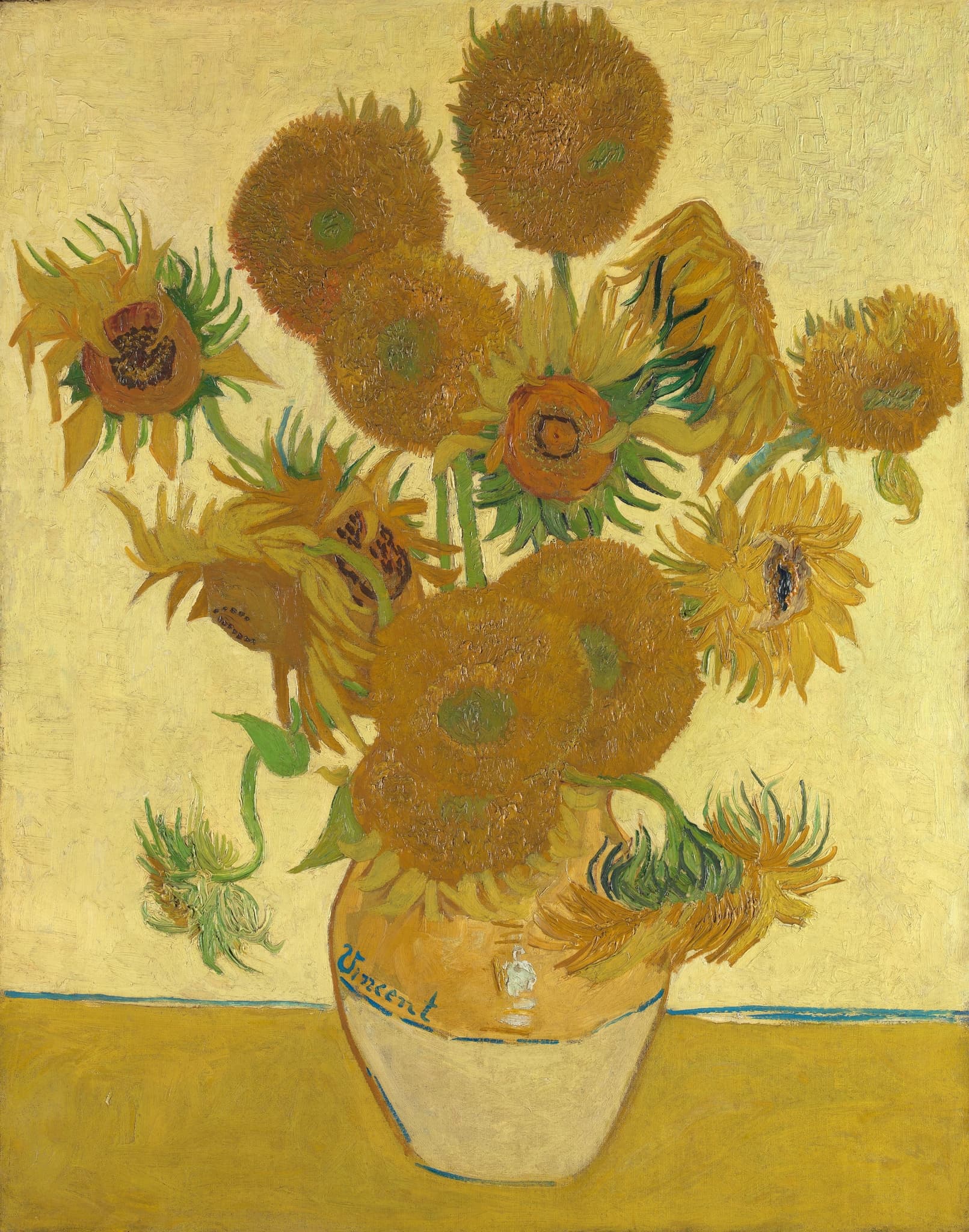
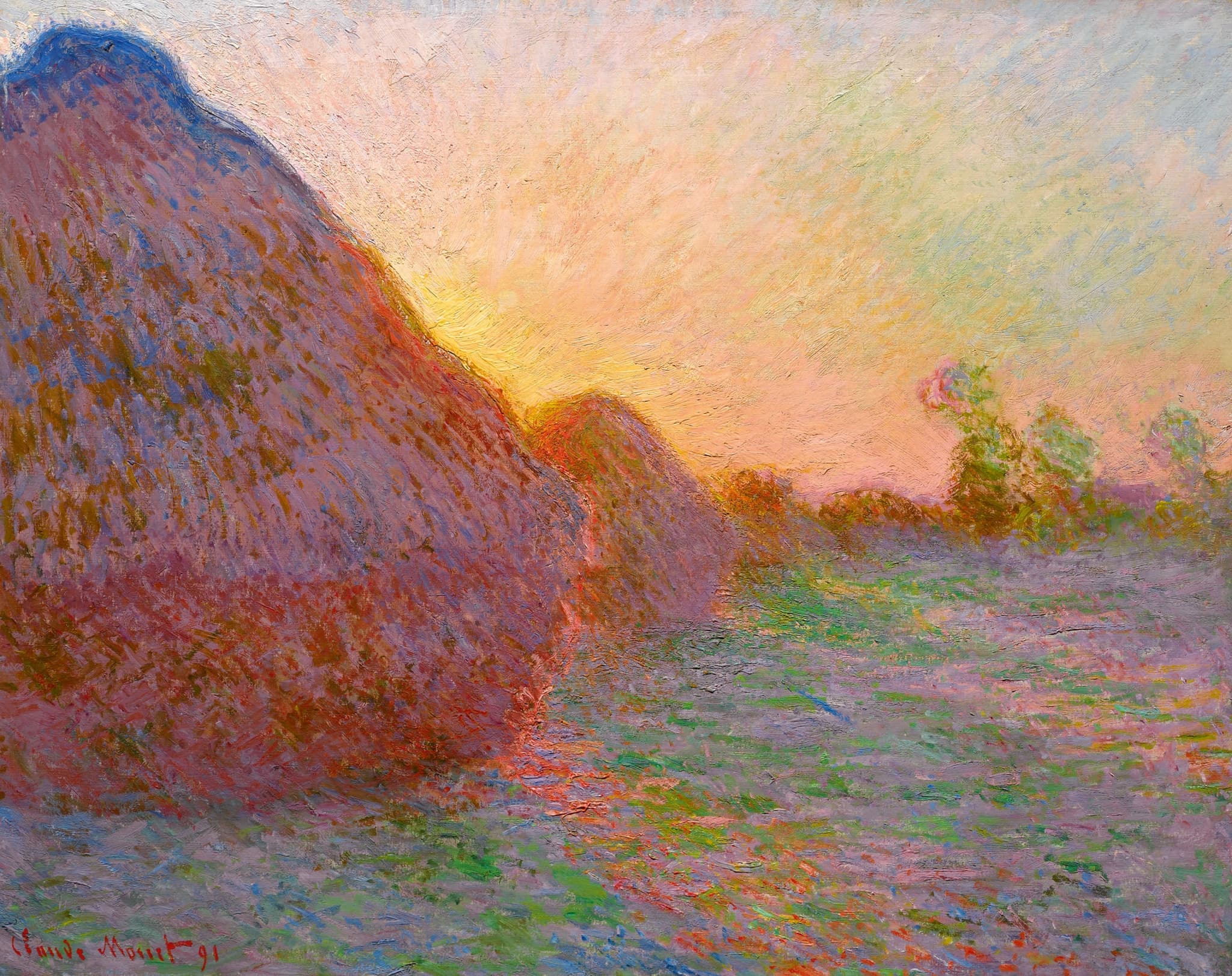
Focus question: Is time better condensed within a single image or unfolded across many?
Sunflowers vs Haystacks Series by Claude Monet | Light, Time & Atmosphere
Gardens and Japonisme
Focus question: How do Japanese strategies—cropping, contour, reflection—reshape the garden?
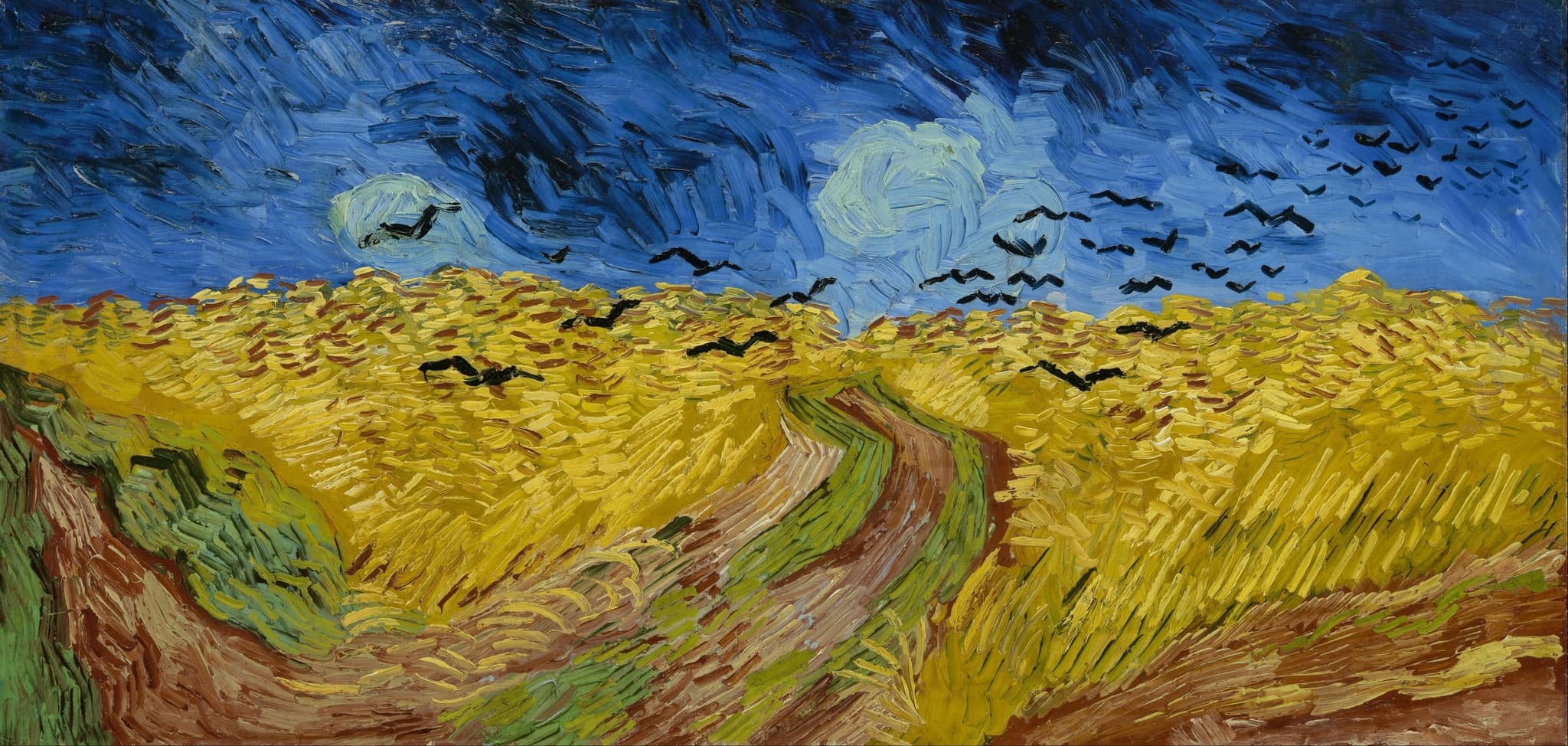
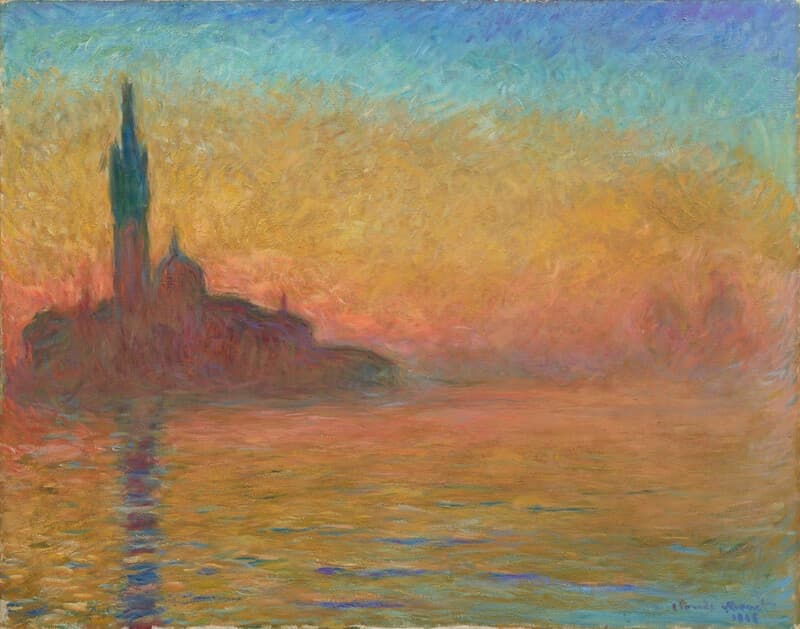
Weather as protagonist
Focus question: When weather leads, does it press inward or dissolve outward?
Wheatfield with Crows vs San Giorgio Maggiore by Twilight
Why This Comparison Matters
This pairing clarifies two durable ways modern painting changed how we look. Monet asks us to calibrate attention to conditions—hour, haze, reflection—so that a palace or a haystack becomes a register of time. Van Gogh asks us to let color speak—so that a café, a vase, or a field can carry conviction about care, loneliness, welcome, or resolve. Both reframe landscape as an experiment you can test with your eyes.
For a general viewer, that shift is practical. After Monet, you notice how fog erases edges and how reflections rearrange space; after Van Gogh, you feel how a red–green clash tightens a scene and how a directed stroke can tilt mood. The works here—seen side by side—map those lessons with specificity. They do not cancel each other; they expand your field of attention. One centers truth outside, in light’s envelope; the other centers it inside, as color’s emotion. Together they model a fuller, more exact way to look at the world.
Related Links
Sources
- National Gallery (UK): Monet, The Water-Lily Pond
- Art Institute of Chicago: Monet’s Haystacks (series practice and 1891 show)
- NGA teaching packet: Picturing France (Monet’s enveloppe, plein‑air aims)
- Van Gogh Letters: Night without black (Café Terrace at Night), Sept 9–14, 1888
- Van Gogh Letters: Color and feeling (Night Café), Sept 8, 1888
- Van Gogh Letters: Wheatfields under turbulent skies, c. July 10, 1890
- Getty: Color change in Van Gogh’s Irises
- The Met: Monet’s Houses of Parliament (method, vantage, serial practice)
- PNAS via PubMed: Atmospheric pollution and Impressionist optics (2023)
- Fondation Monet: Monet’s Japanese print collection
- Musée d’Orsay: Women in the Garden (outdoor scale; trench anecdote)
- National Gallery of Art: The Houses of Parliament, Sunset