Monet’s atmosphere vs Kandinsky’s inner grammar
Both painters reorganize perception rather than tell stories. Monet ties meaning to the external, making light, haze, and reflection remake what we see from moment to moment. Kandinsky abandons motif to build a non-objective language in which color and form act like forces, composed as a score. The comparison shows two rigorous ways painting can teach us to see.
Comparison frame: How does Monet turn seeing into a test of time and air, while Kandinsky turns it into a language of inner necessity?
Quick Comparison
| Topic | Claude Monet | Wassily Kandinsky |
|---|---|---|
| Where meaning starts | In front of the motif: hour, weather, and haze determine appearance. | Inside the picture’s constructed system: relations of color, line, and plane express inner necessity. |
| Working method | Serial practice—fixed subject, changing conditions (Haystacks, Rouen, London, Water Lilies). | Codified grammar—points, lines, planes, circles, diagonals; compositions orchestrated like music. |
| Color’s job | Indexes atmosphere and time; local color yields to the enveloppe of light and air. | Carries affect and direction (yellow outward, blue inward) within a non-objective syntax. |
| Space and structure | Flattened depth via reflection; soft contours; man-made anchors steady flux (bridges, sheds). | Planar stage regulated by vectors, grids, and circles; clarity especially in Bauhaus period. |
| Time signature | Measured outdoors—sun angle, fog, season; the same motif is never the same twice. | Internal tempo—pulses, rests, and climaxes set by intervals and counterpoint. |
| Viewer training | Compare states; notice micro-shifts of color and value across a series. | Read tensions; feel harmonies among abstract elements without a depicted object. |
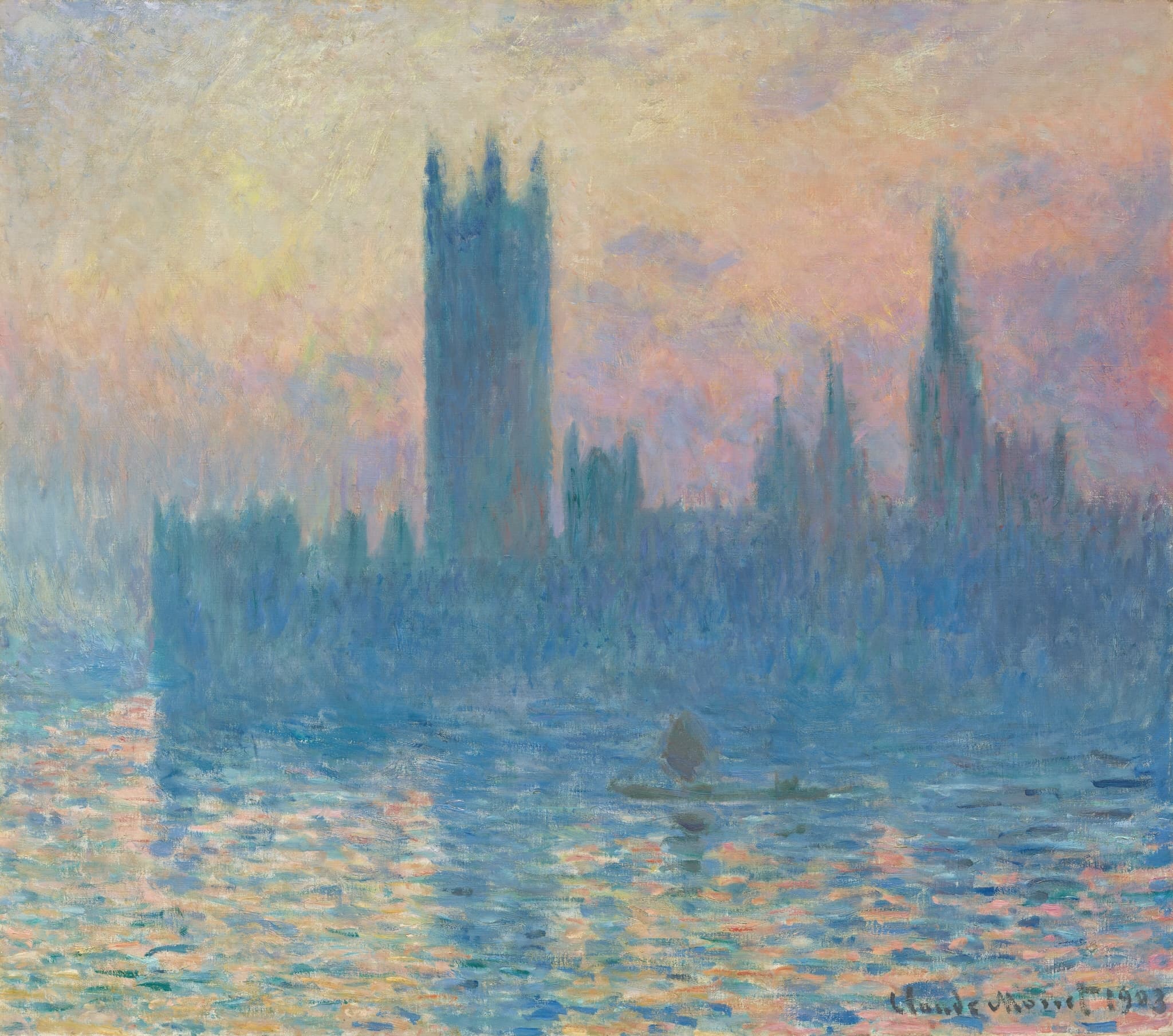
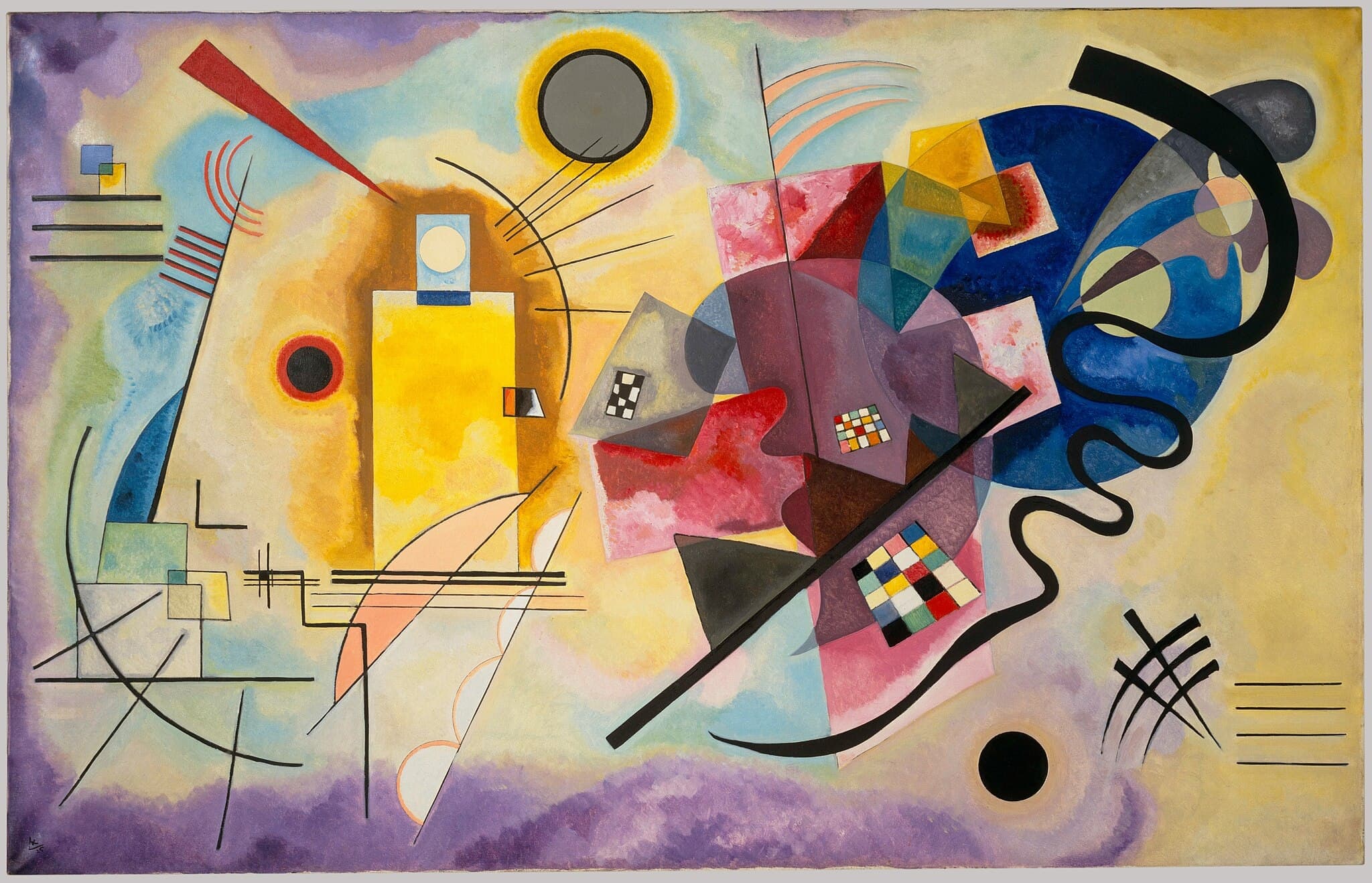
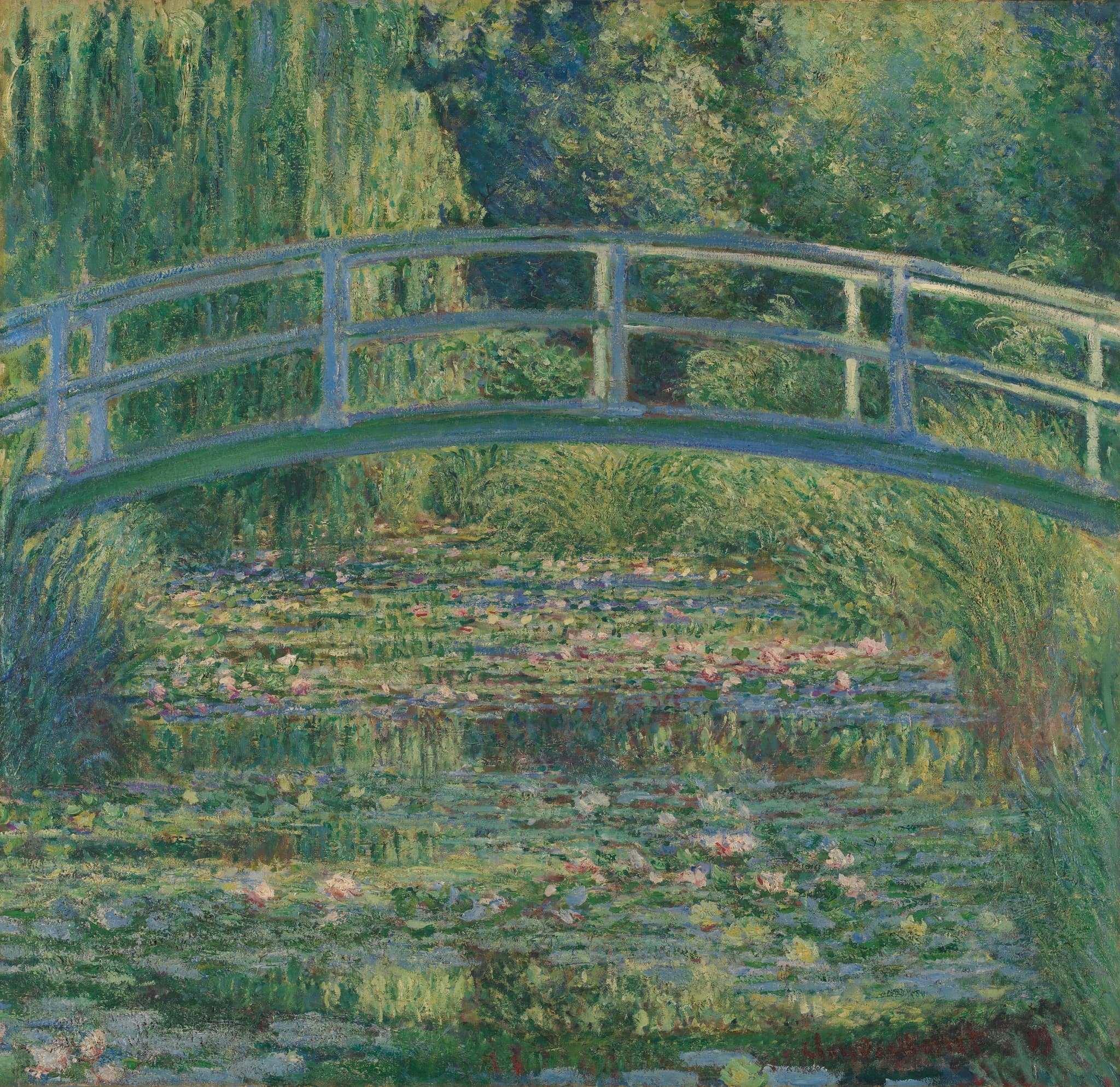
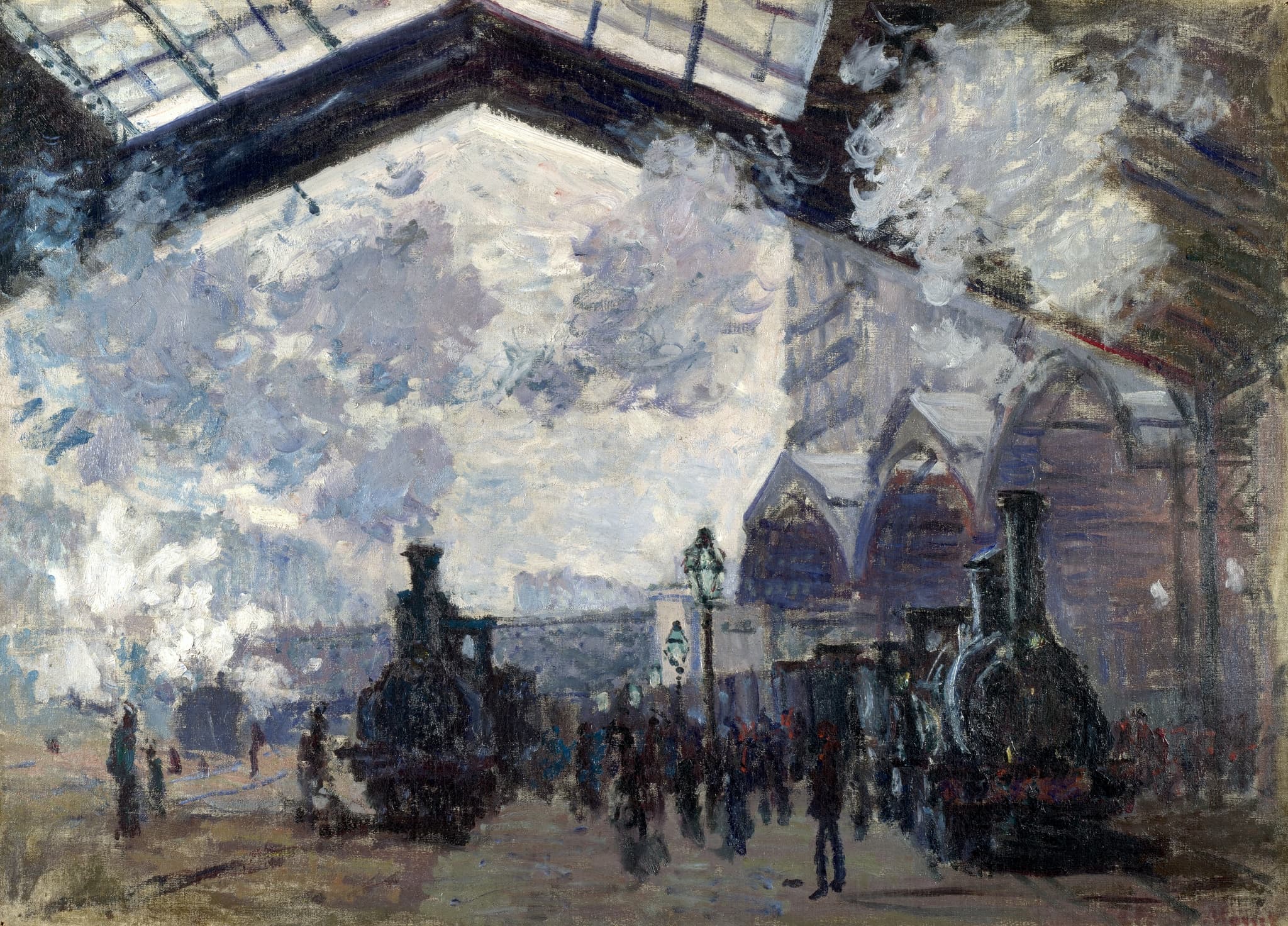
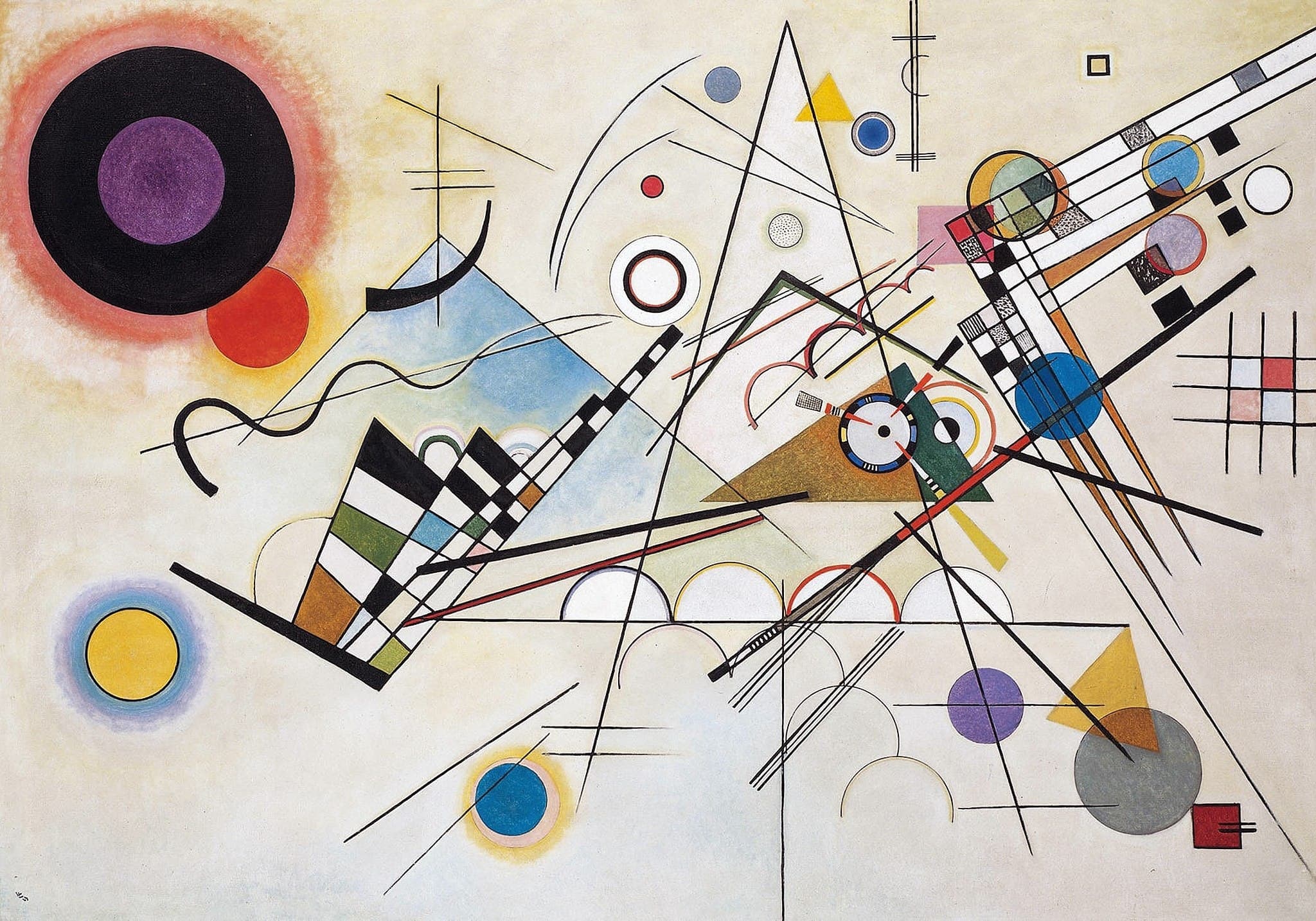
| Representative pair | Houses of Parliament; The Water-Lily Pond; Gare Saint-Lazare. | Yellow-Red-Blue; Several Circles; Composition VII/VIII. |
Shared Ground
Monet and Kandinsky treat painting as an instrument that reorganizes perception. Instead of narrating events, both replace subject matter with relations. Monet fixes a motif and records how hour, season, and weather remake it; Kandinsky builds a teachable grammar—point, line, plane; circle and diagonal—and composes those elements to transmit inner states, often likened to music. In each case, color is the principal carrier of experience. Monet keys color to atmosphere and reflection so that buildings, bridges, and lilies become envelopes of light; Kandinsky assigns colors distinct roles and lets them act as forces within a score.
Method is crucial. Monet’s serial ensembles—grainstacks, Rouen Cathedral, the Thames at Westminster, the Water Lilies—turn difference itself into content: the viewer learns by comparing. Kandinsky’s program, articulated in writings and at the Bauhaus, turns composition into orchestration: measured diagonals, calibrated circles, and small grids regulate bursts of chroma. Both flatten or complicate depth: Monet by using water as a second architecture that doubles and compresses space; Kandinsky by treating the canvas as a planar field where vectors establish depth as felt pressure rather than perspective. The result is a shared modern ambition: painting becomes a laboratory in which vision is analyzed and recomposed so that we register the world—and our responses to it—with greater precision.
Decisive Difference
Their anchor points diverge. Monet’s truth begins in empirical perception: he paints external conditions—sun position, fog, steam, and their reflections—as they alter appearances before him. The Houses of Parliament series, the Gare Saint-Lazare canvases, and the Giverny pond were laboratories where observation and timing governed method; many works were started on site and reworked later to preserve an experienced state. Monet temporalizes the world: stone becomes a time event in air and water. The viewer’s task is comparative and patient—detecting how the same thing is different each hour.
Kandinsky’s truth begins in interior construction. He abandons external motif to build a non-objective language intended to communicate inner necessity. In Yellow-Red-Blue and Composition VIII, circles, diagonals, and measured grids serve as actors whose relationships, not any depicted object, generate feeling. Kandinsky internalizes the world: instead of observing weather, he invents harmonies and tensions that function like music. The viewer’s task is to read intervals, pulses, and balances among abstract elements. Both routes are rigorous, but they ask for different kinds of seeing—Monet grounds sensation in the physics of light; Kandinsky grounds it in a designed grammar of forces.
Paired Works
Authority in flux vs authority as order
Focus question: What holds the field together when power becomes atmosphere (Monet) or when form is conducted like music (Kandinsky)?
Houses of Parliament vs Yellow-Red-Blue
Fields without horizon
Focus question: How do two surface‑oriented paintings create depth without traditional perspective?
The Water Lily Pond vs Several Circles
Modern time vs inner tempo
Focus question: What kind of time moves through each surface—clocked, urban time or an internal crescendo?
Gare Saint-Lazare vs Composition VIII
Why This Comparison Matters
This pairing clarifies two durable models for modern vision. Monet shows how careful attention to light and air can relocate meaning from things to their appearances—an ethics of looking that registers environmental conditions as part of what the world is. Kandinsky demonstrates that abstract relations can be legible and affecting without depiction—an ethics of construction that lets form and color speak as a language. Together they expand what counts as evidence: for Monet, the calibrated hues of fog and reflection; for Kandinsky, the measured intervals of circle, line, and plane.
Understanding the difference changes how we stand in front of them. In a Monet series, we compare canvases the way we would watch weather pass. In Kandinsky, we follow a score across the surface, sensing tension, release, and balance. The works do not contradict each other; they train complementary faculties—empirical noticing and interpretive listening—that shape how we read the visual world today.
Related Links
Sources
- National Gallery of Art (Washington): Monet, The Houses of Parliament, Sunset
- National Gallery (London): Claude Monet, The Water-Lily Pond
- Solomon R. Guggenheim Museum: Kandinsky, Several Circles (resources)
- Vassily Kandinsky, Point and Line to Plane (1926), Bauhausbücher 9
- Wassily Kandinsky, On the Spiritual in Art (1911/12)
- University of Birmingham: Solar position within Monet’s Houses of Parliament
- Musée de l’Orangerie: The Water Lilies—history of the cycle and installation
- National Gallery (London): The Gare St-Lazare
- Centre Pompidou: Kandinsky, Jaune-rouge-bleu (Yellow-Red-Blue), 1925
- MoMA: Kandinsky’s Compositions (catalogue PDF)
- Guggenheim: Teaching materials—Kandinsky, Composition VIII
- PNAS (2023): Atmospheric pollution and the optics of Impressionist skies