Ermine Symbolism
In Renaissance portraiture, the ermine signifies moral virtue and self-restraint and can also signal courtly favor. Artists enlist its winter-white pelt and poised bearing as a compact emblem that links individual identity to ethical or social standing.
Ermine in Lady with an Ermine
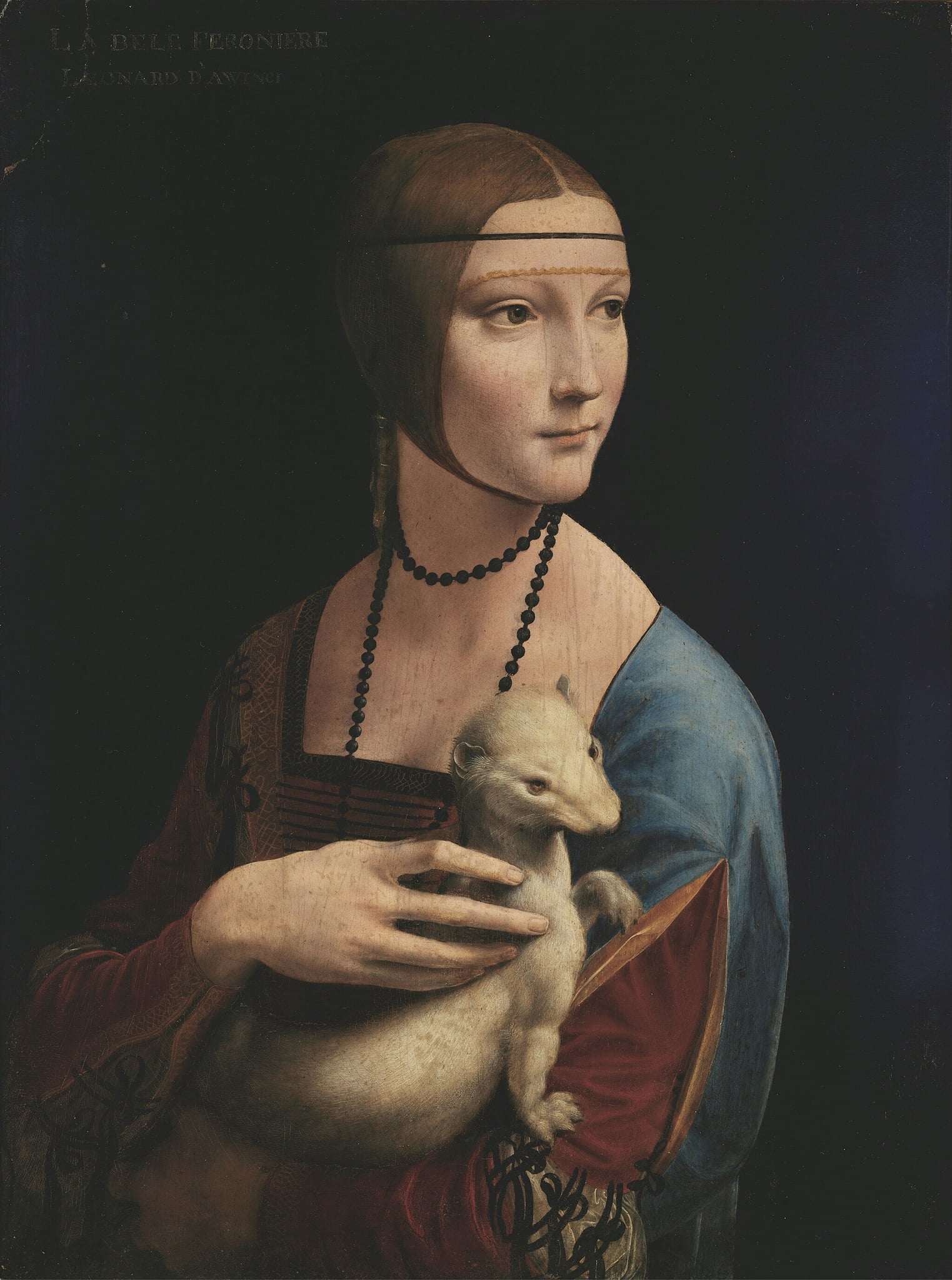
Leonardo da Vinci’s Lady with an Ermine (c. 1489–1491) makes the animal central to the painting’s meaning: the sleek, pale ermine cradled in the sitter’s arms reads as a marker of virtue and of favor within a courtly setting. Leonardo’s sfumato and the sitter’s alert, spiraling turn bind woman and animal into a single, purposeful gesture, so that the portrait becomes, as much as a likeness, a meditation on restraint, distinction, and inward motion. The later blackened background and misnaming inscription trace the work’s reception history without obscuring the emblematic force of the ermine.