Light–dark threshold (diagonal seam) Symbolism
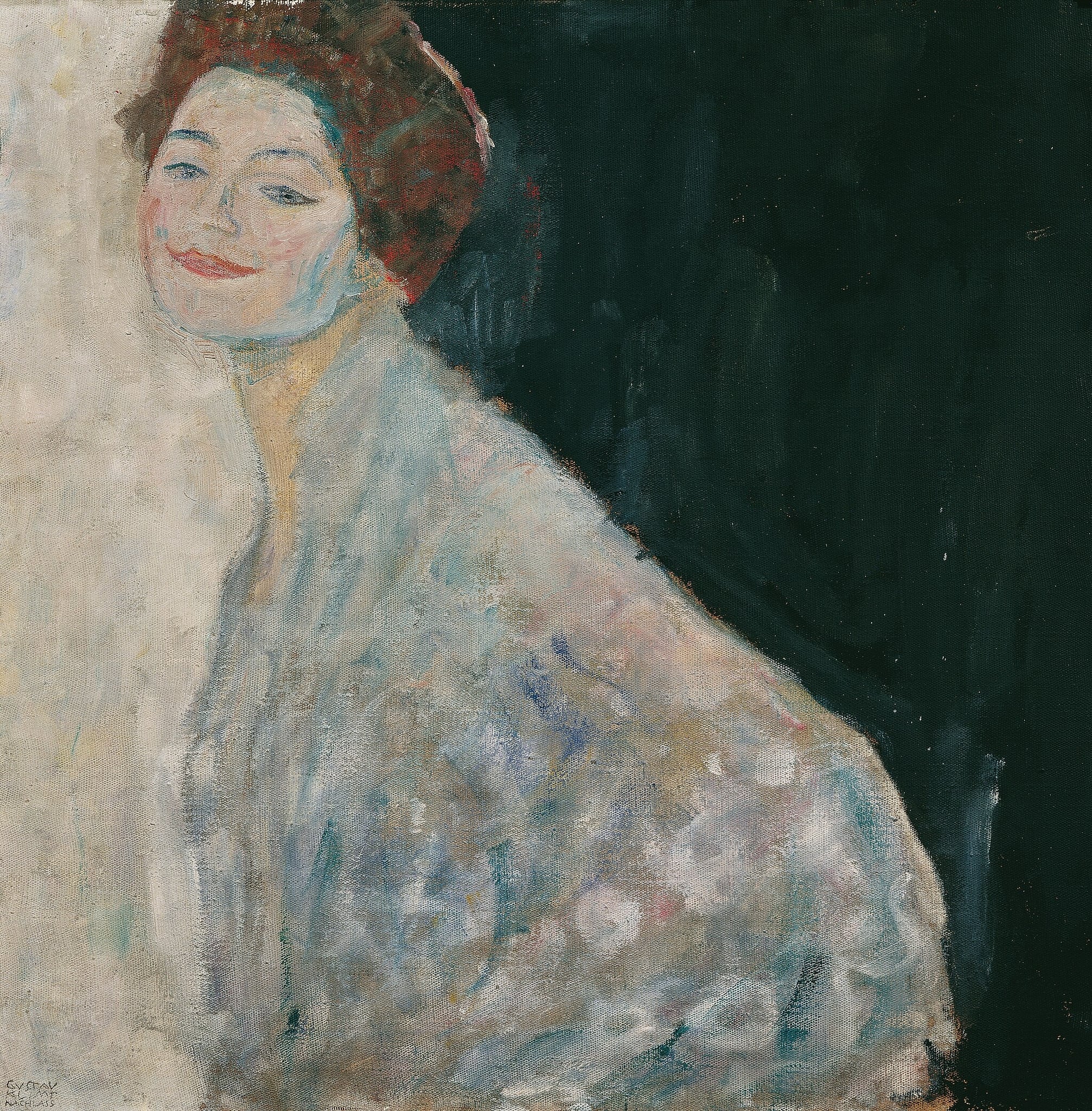
A light–dark threshold is the seam where a bright field meets a dark one, a pictorial boundary of transition. Artists use this edge—often cast as a diagonal—to stage crossings between appearance and disappearance, intimacy and anonymity, or consciousness and shadow. As seen in Gustav Klimt’s Lady in White (1917–1918), such thresholds can turn likeness into a luminous apparition.
Light–dark threshold (diagonal seam) in Lady in White
In Lady in White (1917–1918), Gustav Klimt places the figure at the very meeting edge of a pale ground and a darker field, making the light–dark threshold the site of her emergence. Her kimono-like robe dissolves into iridescent whites touched by blues and violets, so the body seems to blur into the illuminated side while the darker field gathers her outline. The tilted, mask-like smile hovers between intimacy and anonymity, reinforcing the boundary between appearance and essence, consciousness and shadow. Rather than a fixed likeness, the painting suspends identity along the seam of light and dark.