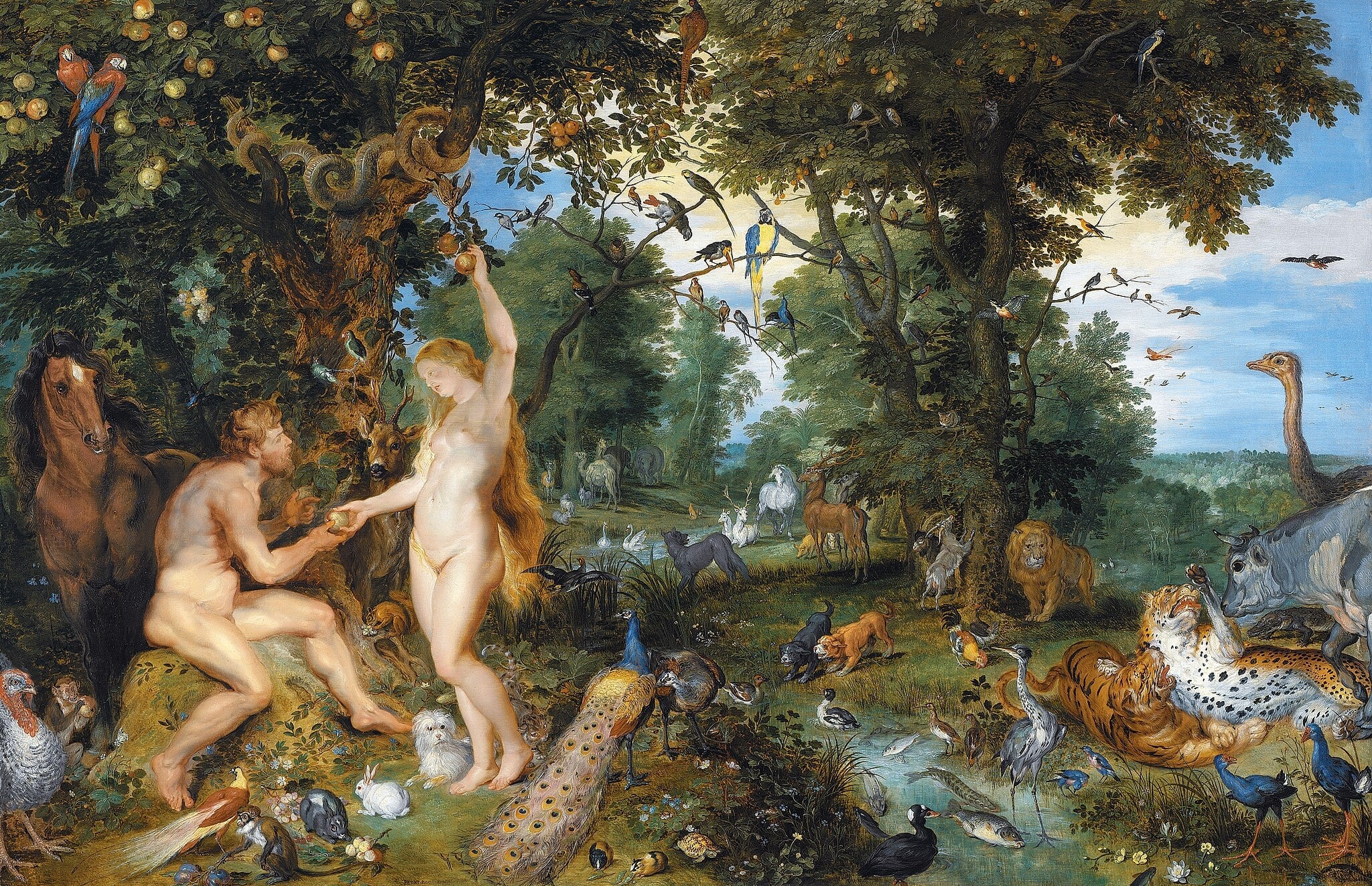
Peacock Symbolism
In European art, the peacock carries a double charge: in Christian imagery it can signal immortality and resurrection, linked to beliefs about its incorruptible flesh and yearly renewal of plumage. At the same time, its spectacular display made it a byword for pride and vanity, a moral warning woven into sacred and secular scenes. Artists often exploit this tension to celebrate creation’s splendor while critiquing self-regard.
Peacock in The Garden of Eden with the Fall of Man
In The Garden of Eden with the Fall of Man (c. 1615) by Peter Paul Rubens, a peacock stands among the encyclopedic menagerie that encircles Adam and Eve. Its iridescent train—rendered with the meticulous naturalism associated with Jan Brueghel the Elder’s fauna—amplifies the sensuous allure of paradise even as it signals the sin of pride latent in the scene of temptation. Placed at the threshold of the Fall, the bird also recalls the period’s Christian associations of immortality and renewal, now rendered poignantly unattainable as Eden begins to unravel.