Spotlight and pool of light Symbolism
A spotlight and its pool of light focus the viewer’s attention, isolating a subject and turning looking into a staged encounter. In art history, concentrated illumination often signals public display and controlled viewing. It also activates surface—color, sheen, and texture—so that light becomes the agent that assigns importance.
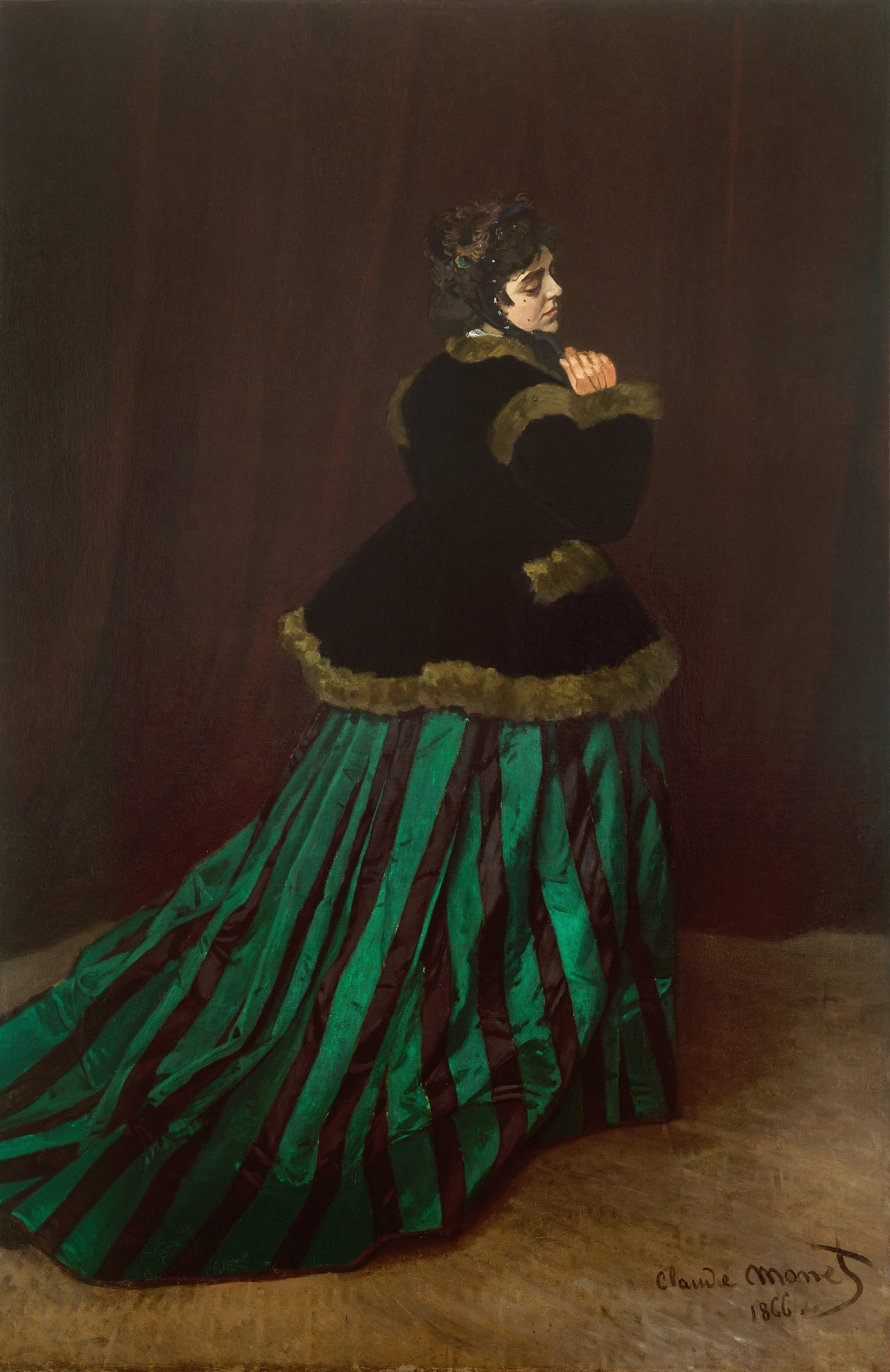
Spotlight and pool of light in Camille (The Woman in the Green Dress)
In Claude Monet’s Camille (The Woman in the Green Dress) (1866), the figure steps into a bright pool of light that isolates her against a near-black curtain. The spotlit emerald-and-black skirt becomes the visual center, its sheen and stripes intensified by contrast so that fashion carries status and meaning. By darkening the surroundings and concentrating illumination on the dress, Monet turns the full-length portrait into a study of modern spectacle and controlled viewing, making light the engine that transforms surface into significance.