Most Expensive Thomas Eakins Paintings
Thomas Eakins occupies a singular place in the American art market: celebrated for clinical realism, psychological depth, and a rigorous devotion to observation, his canvases command collectors’ attention and institutional acquisition alike. At the pinnacles sits The Gross Clinic, whose stupendous market standing — estimated at $100–140 million — underscores both its historical heft and scarcity; works like The Agnew Clinic ($20–40 million) and The Swimming Hole ($8–30 million) follow as blue‑chip anchors, prized for their iconography and provenance. Eakins’s athletic scenes and portraits, from Max Schmitt in a Single Scull ($8–25 million) to The Concert Singer ($5–25 million), translate technical virtuosity into enduring cultural narratives, which boosts bid competition and auction resilience. Mid‑tier pieces such as Arcadia ($5–15 million) and A May Morning in the Park ($3–15 million) illustrate how condition, exhibition history and rarity influence valuation, while important but more attainable works like The Writing Master ($2–6 million), Between Rounds ($3–10 million) and The Biglin Brothers Racing ($750K–3.5M) show entry points for collectors. Together these prices reflect a robust market for an artist whose realism continues to resonate with museums and private buyers.
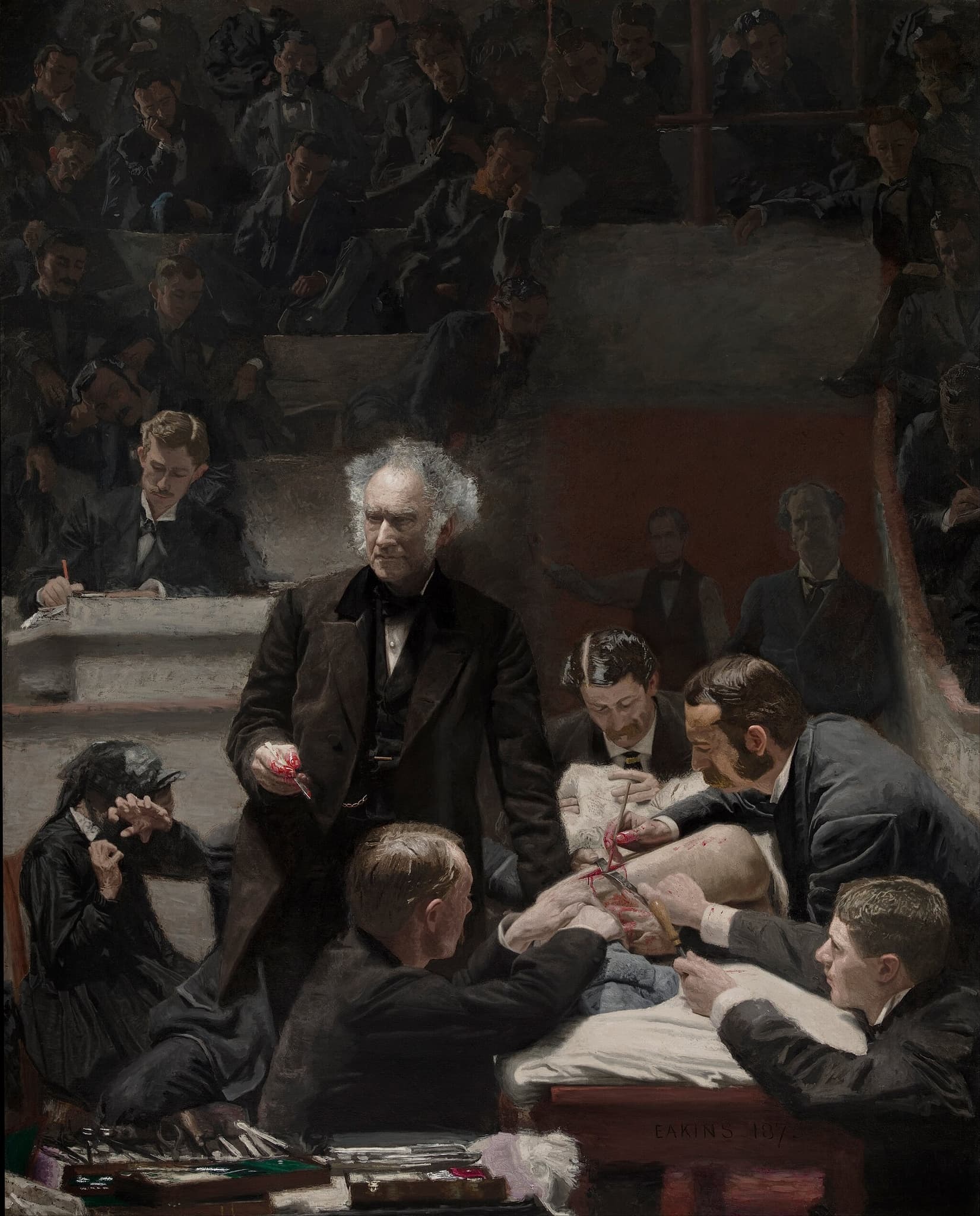
$100-140 million
Anchored to its verified $68M private sale in 2006–07, inflation adjustment and scarcity support a present valuation of $100–140M.
$20-40 million
Museum‑held and effectively off‑market, The Agnew Clinic carries a conservative hypothetical open‑market estimate of $20–40M, though a rare institutional consortium sale could exceed that.
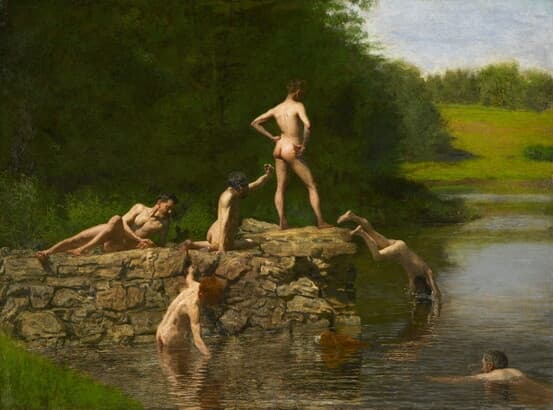
$8-30 million
Last publicly reported institutional transfer circa 1990 for about $10M anchors its hypothetical auction range of $8–30M and an insurance/replacement valuation near $24.2M.
$8-25 million
Derived from auction comparables, museum ownership and rarity, Max Schmitt in a Single Scull would reasonably command approximately $8–25M if offered today.
$5-25 million
If the Philadelphia Museum of Art canonical Concert Singer, replacement valuation is about $5–25M; a smaller autograph study would likely fetch ~$200K–$2M, copies under $200K.
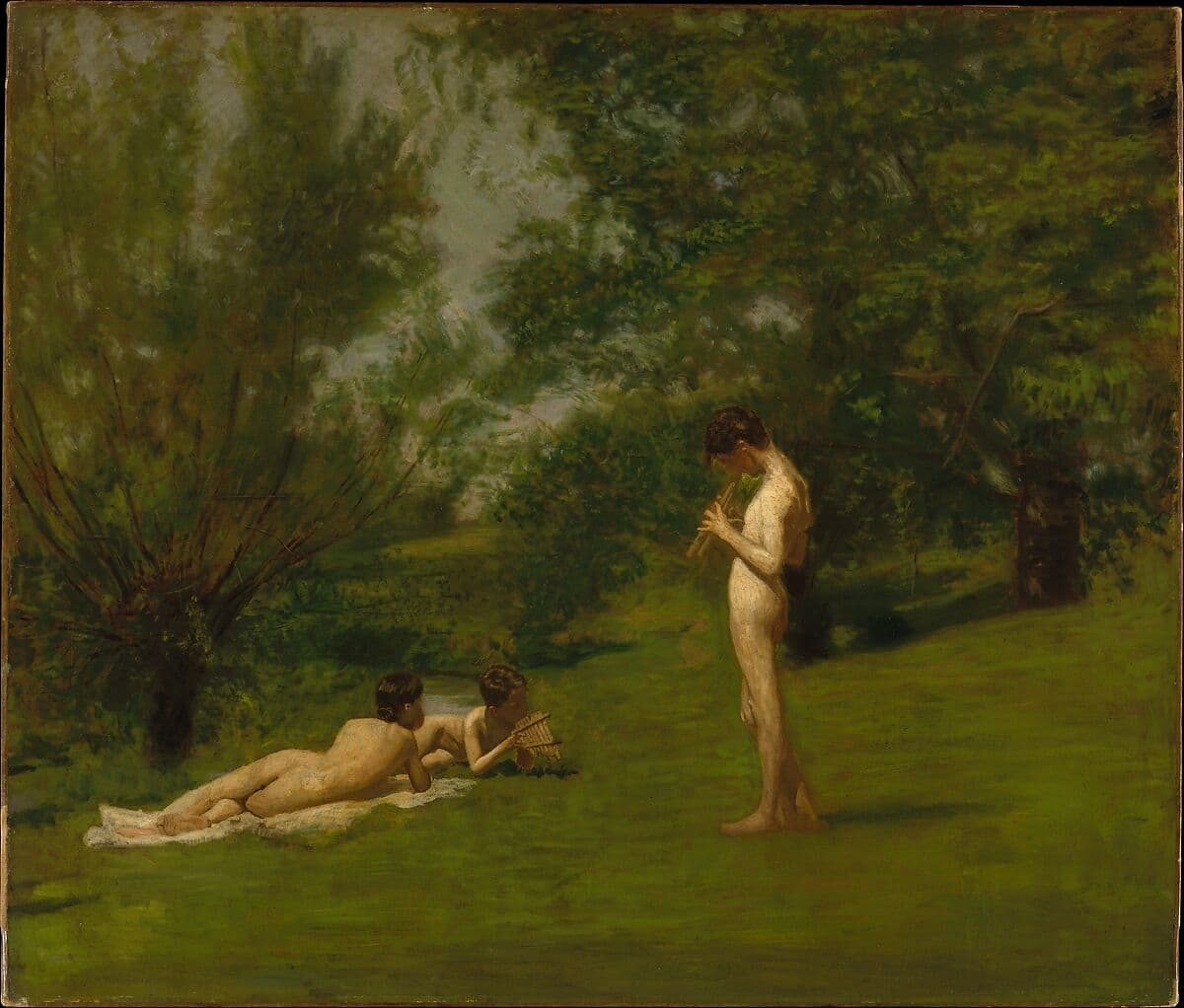
$5-15 million
As an autograph, museum‑quality Met oil, Arcadia's institutional holding and auction comparables support a reasoned hypothetical market valuation of approximately $5–15M.
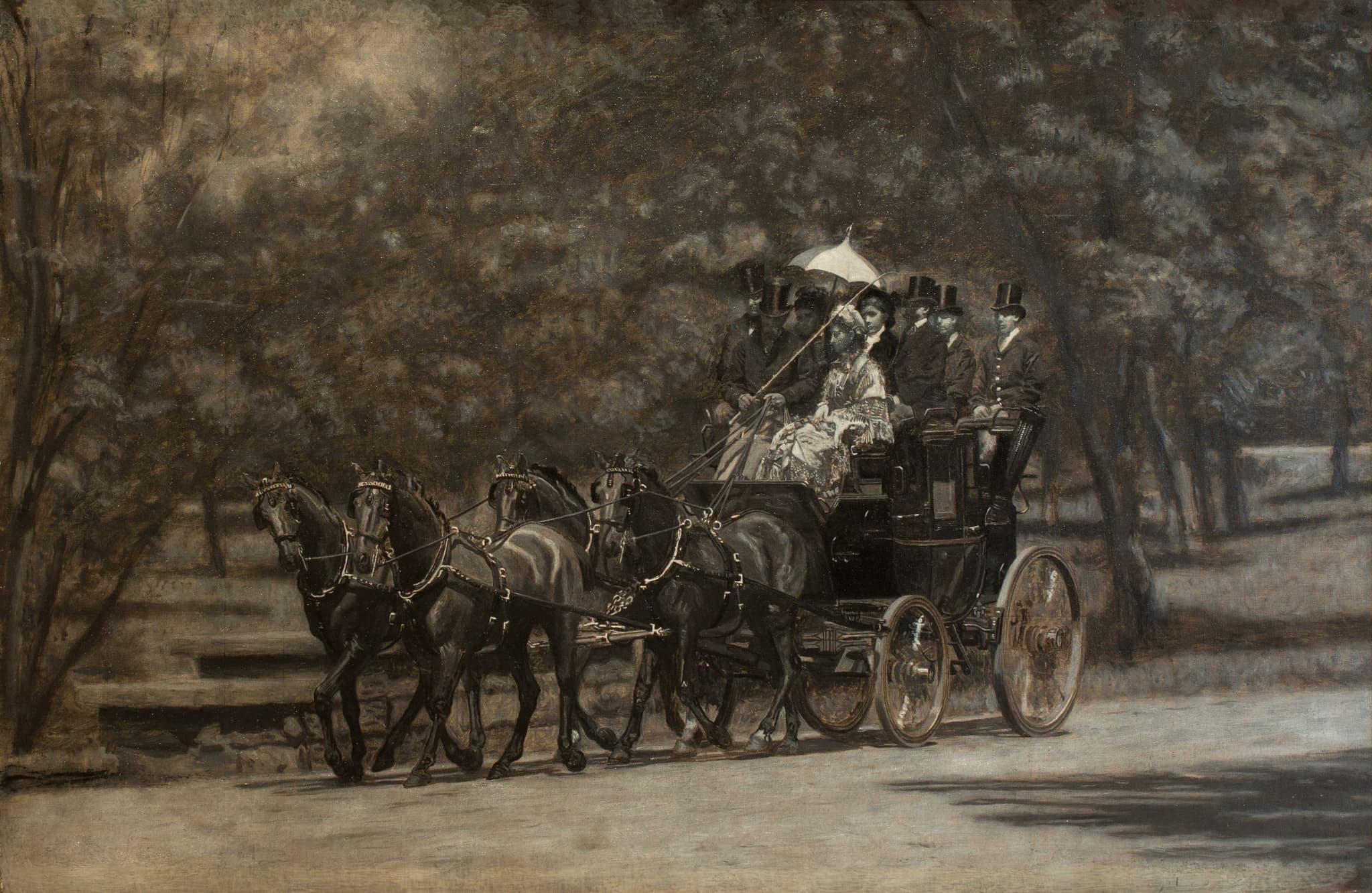
$3,000,000–$15,000,000
Assuming the finished, authenticated oil, A May Morning in the Park's hypothetical open‑market estimate is $3–15M, whereas studies or uncertain attributions would trade roughly $100K–$1M.
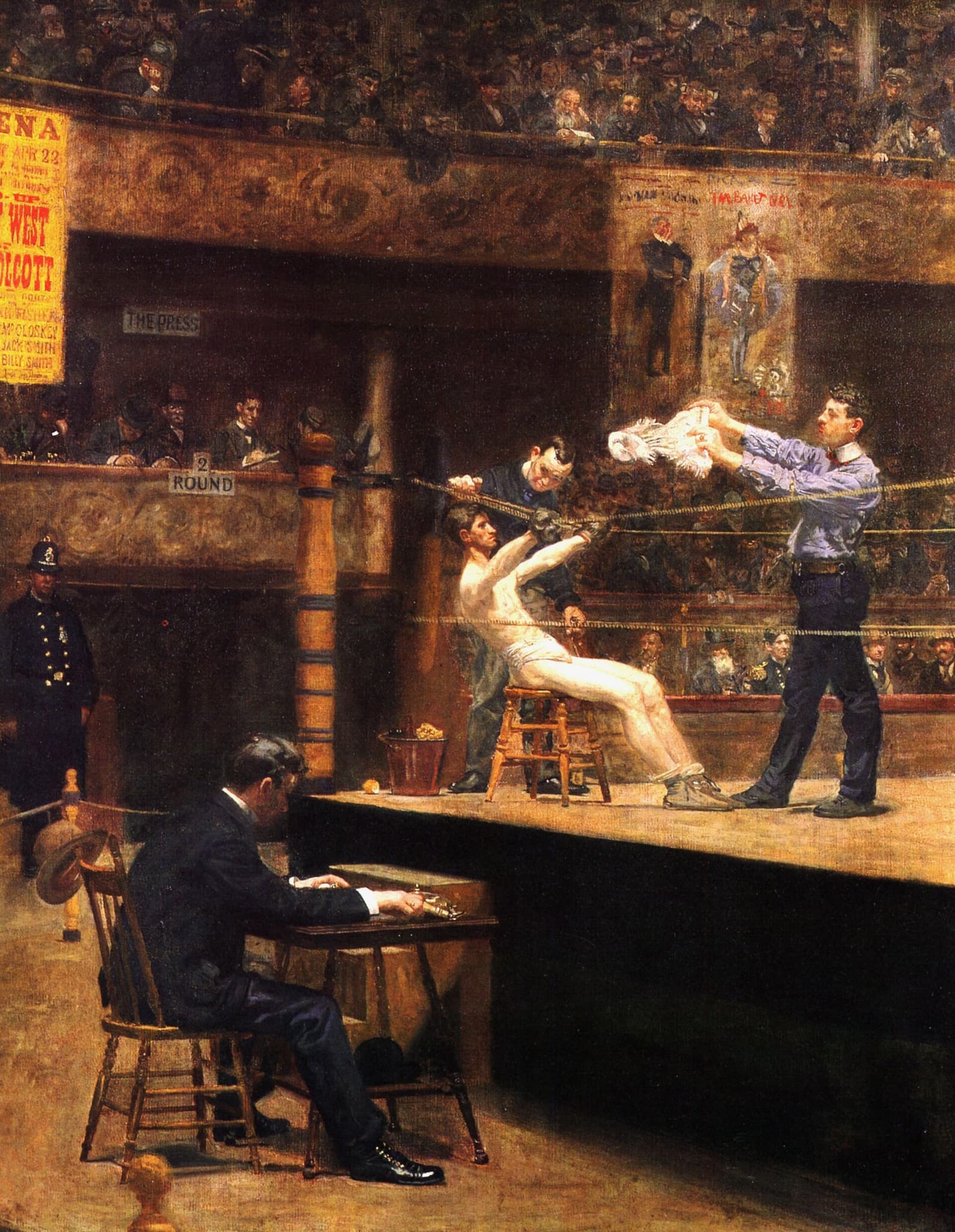
$3,000,000–$10,000,000
Unmarket‑tested and museum‑held, Between Rounds' defensible hypothetical selling range is roughly $3–10M, dependent on condition, documentation, and competing museum interest.
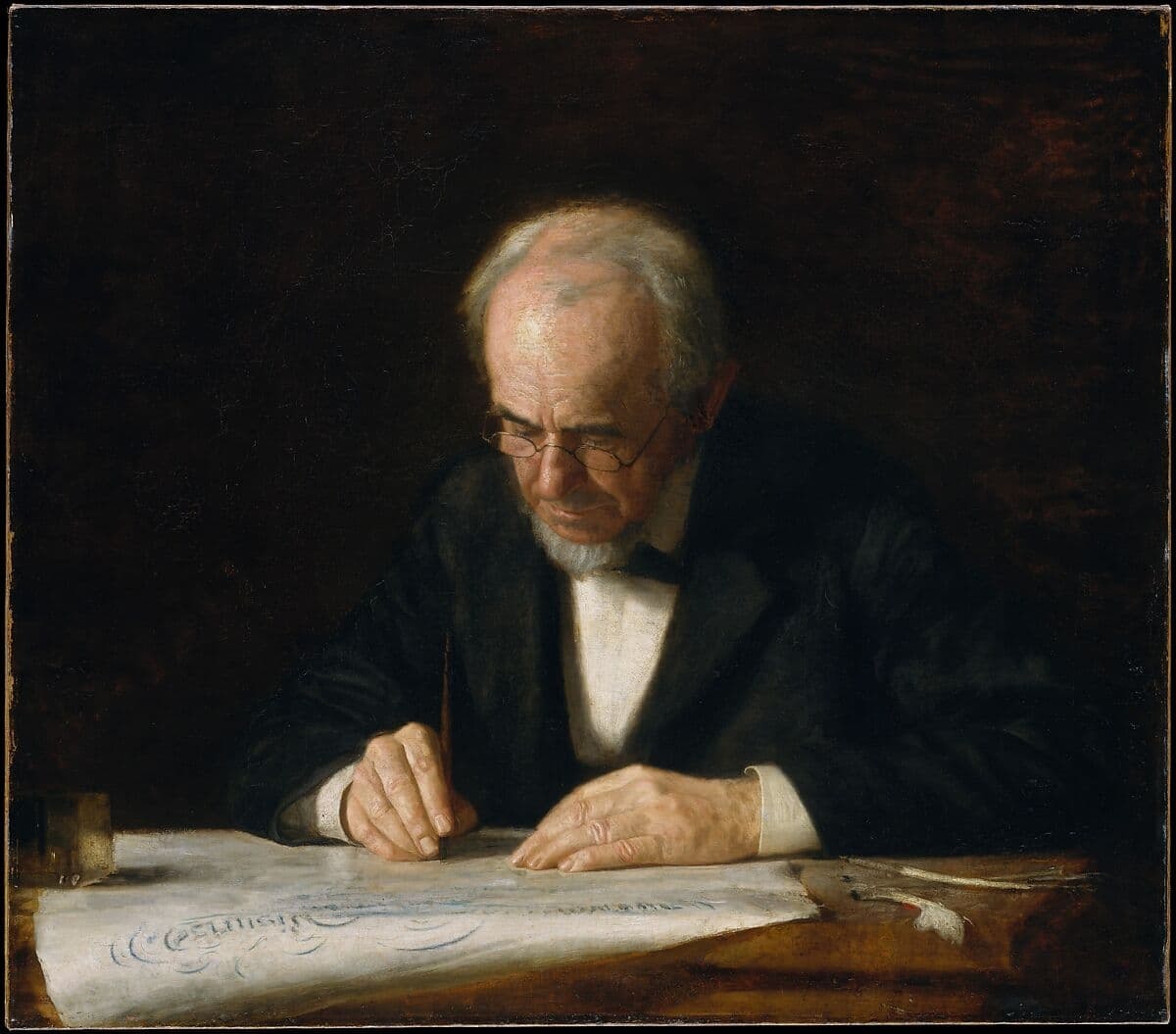
$2,000,000–$6,000,000
The Writing Master, held by the Met (accession 17.173) with no public sale history, carries a defensible hypothetical open‑market estimate of $2–6M.
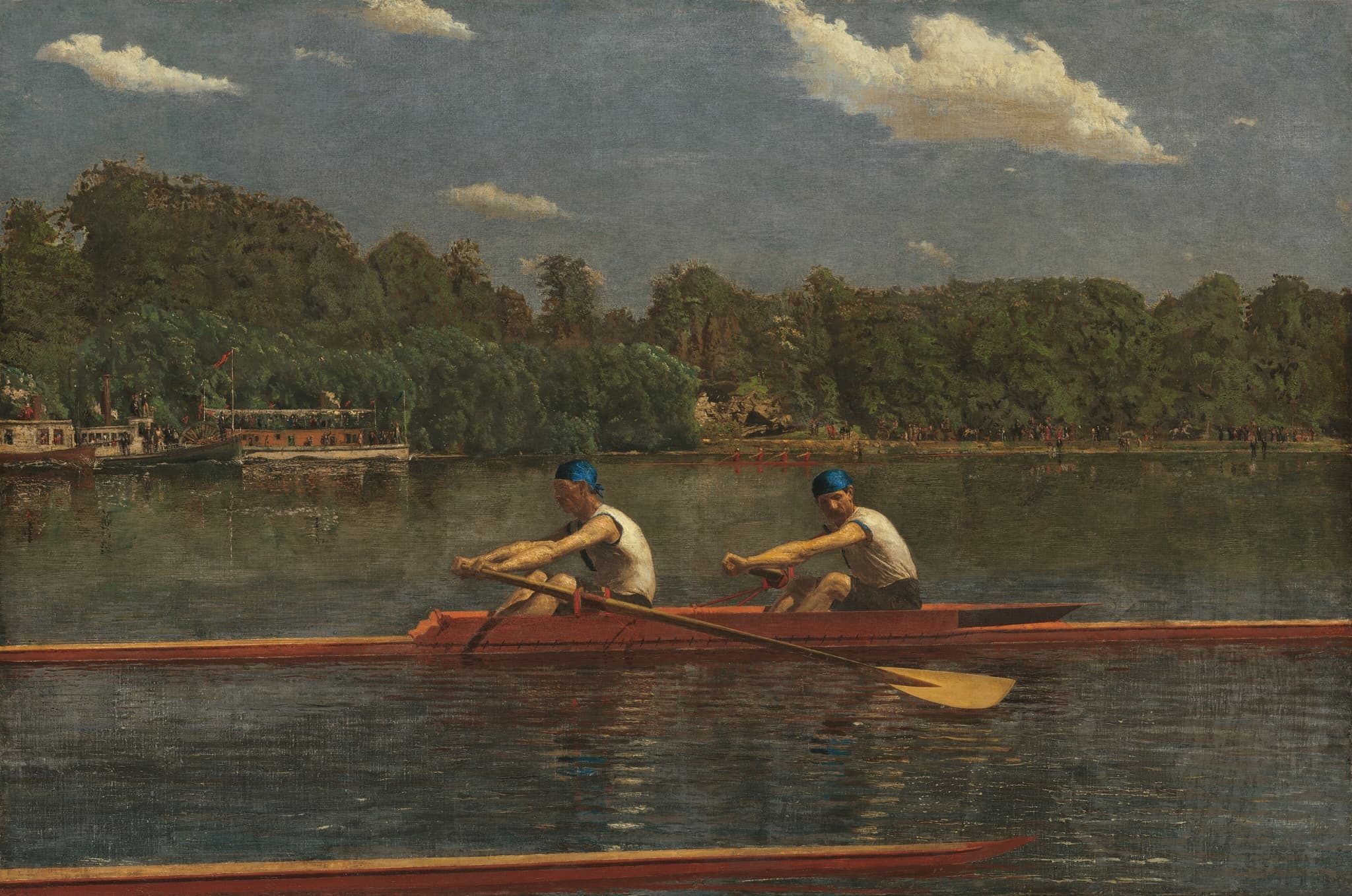
$750K–$3.5M
Assuming an autograph, finished oil in good condition, The Biglin Brothers Racing's market/insurance estimate is approximately $750K–$3.5M, reflecting sparse comparables and provenance premium.
Market Context
Thomas Eakins’s auction market is defined by acute scarcity: major oils are largely museum‑held, so public auctions usually produce drawings, studies and lesser portraits while canonical canvases surface only episodically. The private‑sale apex remains The Gross Clinic (~$68M, 2006–07) versus a public‑auction high of about $5.38M (2003), underlining that public records understate the institutional ceiling. Primary buyers are museums, consortia and specialist private collectors; institutional acquisition campaigns, exhibition programming and provenance/scholarship premiums drive peak realizations. Recent activity has been uneven—softer auction liquidity in 2023–24—but demand for museum‑quality, late‑19th‑century American realism has strengthened into 2026, favoring conservatively marketed, impeccably documented works and reinforcing a flight‑to‑quality dynamic.