How Much Is Cross in the Mountains (Tetschen Altar) Worth?
Last updated: March 18, 2026
Quick Facts
- Methodology
- comparable analysis
Provisional open‑market valuation for Cross in the Mountains (Tetschen Altar, 1808) is USD 5–20 million. This range reflects published auction anchors for Caspar David Friedrich oils, the painting’s exceptional art‑historical importance and museum custody, and material downward pressure from German heritage/export constraints and a limited buyer pool.
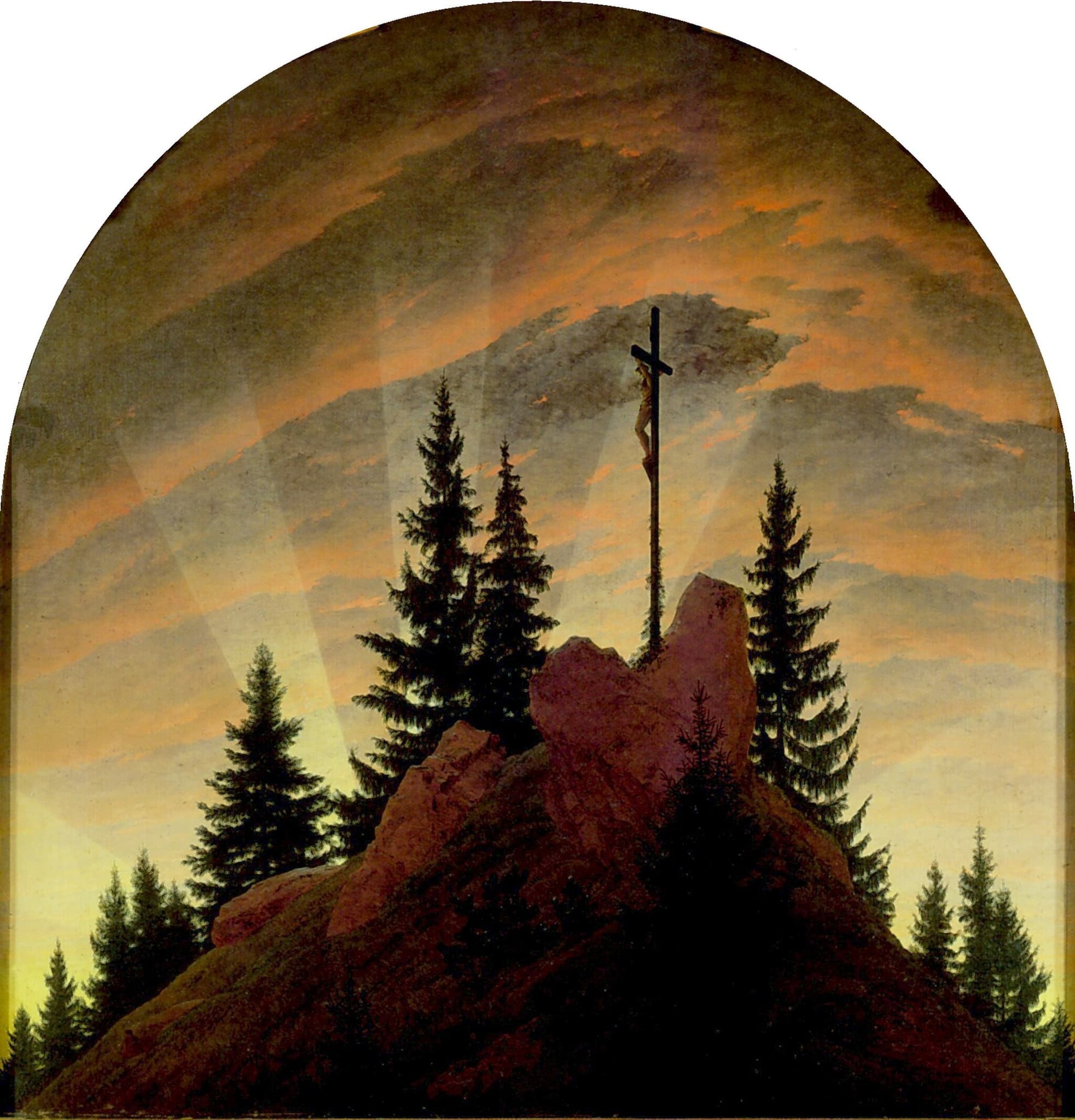
Cross in the Mountains (Tetschen Altar)
Caspar David Friedrich, 1808 • Oil on canvas
View more by Caspar David Friedrich →Valuation Analysis
Conclusion and headline rationale: If Cross in the Mountains (the Tetschen Altar, 1808) were hypothetically offered on the international market under unfettered conditions, a defensible open‑market estimate is approximately USD 5–20 million. The painting is a canonical, museum‑quality Friedrich altarpiece held by the Galerie Neue Meister (Dresden), so there is no modern sale record and the work is effectively off‑market in practice [1]. Comparable public‑auction anchors for high‑quality Friedrich oils are in the low single millions (Sotheby’s London 2018 results are the closest public precedents) [2].
How comparables inform the range: The primary market evidence for Friedrich oils comes from rare auction appearances; recorded hammer/final prices for premium oils in 2018 realized roughly in the USD ~2.7–3.2M neighborhood [2]. Works on paper and sketchbooks have recently produced stronger, clearer price discovery (e.g., a Sotheby’s NY drawing in 2025 sold for approx. USD 720k) and the 2023 Karlsruhe sketchbook episode demonstrated strong institutional willingness to acquire exceptional Friedrich material — but also how national heritage controls can intervene and limit cross‑border sales [3][4]. These public anchors justify starting point valuations in the low millions for an oil by Friedrich; the Tetschen Altar’s unique iconographic status, size and museum provenance justify an upward premium to the USD single‑digit millions if unrestricted bidding were possible.
Adjustments and constraints: Major downward adjustments apply in practice. Continuous museum custody and likely German cultural‑property protections make genuine open international competition unlikely; the Karlsruhe sketchbook case shows how quickly heritage procedures can restrict export or trigger institutional acquisition [3]. This legal backdrop reduces the effective buyer pool to German institutions and a handful of domestic collectors or foundations, which tends to compress realized prices versus a hypothetical unconstrained trophy sale. Condition, conservation history and any technical‑study provenance clarifications would also materially affect a final realized number.
Scenario framing: Under an ideal, fully open global auction with multiple institutional and private trophy bidders, the Tetschen Altar could conceivably exceed the high end of routine Friedrich oil anchors and approach or surpass the top of the USD 5–20M band. Under realistic circumstances (museum hold, export controls, limited bidder field), the practical realized outcome would more likely sit toward the lower‑to‑mid portion of this range. This estimate is a market‑context valuation, not a formal appraisal; next steps to refine it are a verified provenance/ownership check with Galerie Neue Meister, a current condition/conservation report, and formal written estimates from major auction houses [1][2][3][4].
Key Valuation Factors
Art Historical Significance
High ImpactCross in the Mountains (Tetschen Altar) is one of Caspar David Friedrich’s most discussed and reproduced works: an early, emblematic altarpiece that helped establish his reputation and shaped German Romantic discourse. Its canonical status increases cultural and institutional demand and makes the work a trophy for major museums and national collections. That significance translates into a meaningful premium over routine market anchors for Friedrich’s lesser works, because buyers prize provenance, scholarly associations and exhibition history. However, cultural importance also reduces the likelihood of sale, as custodial institutions rarely deaccession cornerstone works, and when they do public scrutiny and institutional counter‑offers are common.
Rarity & Market Scarcity
High ImpactTop‑tier Friedrich oils rarely appear in the public market; most major examples are held permanently in European museums. This scarcity elevates theoretical market value because a trophy piece draws intense interest when available, but it suppresses price discovery: with few comparable sales, auction estimates must be conservative and buyers are cautious. Public auction anchors that do exist (notably London sales in 2018) realized in the low single‑millions, setting a practical baseline. The combination of scarcity plus concentrated institutional demand makes outcomes binary: either a museum retains/acquires the work (non‑market outcome) or a rare private/institutional buyer pays a premium within a limited bidding pool.
Provenance & Museum Custody
High ImpactContinuous public/institutional provenance (Galerie Neue Meister, Dresden) greatly strengthens scholarly legitimacy and reduces attribution risk, which is positive for value. At the same time, museum custody is a practical constraint: deaccession is rare, usually heavily vetted, and often attracts national attention. When significant works are offered, museums and public foundations frequently coordinate to acquire or block export, so the painting’s museum provenance both elevates its cultural capital and makes a true open‑market sale improbable. If a sale were contemplated, expect immediate institutional interest and possible legal or reputational pressure against deaccession.
Legal & Cultural Export Controls
High ImpactGerman cultural property law and national‑heritage listing mechanisms can effectively prevent important works from leaving the country or being sold to foreign buyers. Recent episodes (e.g., the Karlsruhe sketchbook) demonstrate that high‑profile Friedrich material can quickly be registered as nationally significant, triggering export restrictions or institutional intervention. These legal protections shrink the competitive bidder field to domestic institutions and foundations, reducing realized sale prices relative to a fully open international market and increasing transaction complexity (permits, delays, potential challenges).
Condition & Physical Attributes
Medium ImpactThe Tetschen Altar’s material condition, size and any conservation history materially affect market value. A large, stable canvas with minimal later overpaint and sound structural support will attract higher institutional interest; conversely, demanding structural or aesthetic restoration will reduce marketability and price. Technical studies (pigment analysis, infra‑red, varnish stratigraphy) that confirm authenticity and original composition increase buyer confidence. Because this altarpiece is often displayed and studied, a current, professional condition report is essential to refine estimates and to determine whether conservation work would be required before sale.
Sale History
Cross in the Mountains (Tetschen Altar) has never been sold at public auction.
Caspar David Friedrich's Market
Caspar David Friedrich is the leading figure of German Romantic landscape painting; his scholarly and institutional stature is very high, but the active collector base is smaller than for French or British 19th‑century masters. Most top oils remain in museum collections, so public auction price signals are episodic and limited. Recent market activity has concentrated price discovery in works on paper and sketchbooks, where high‑quality lots have realized strong results and attracted institutional competition. Overall, Friedrich’s market is characterized by high cultural value, constrained supply, and selective but vigorous bidding when rare primary works appear.
Comparable Sales
Landschaft mit Gebirgsee, Morgen (Landscape with Mountain Lake, Morning)
Caspar David Friedrich
Major Friedrich oil sold at a premier London sale—rare public‑auction anchor for the artist's oils; similar period and subject (romantic mountain landscape), useful as a market benchmark for museum‑quality oils.
$3.2M
2018, Sotheby's London
~$4.0M adjusted
Sonnenblick im Riesengebirge (Sunburst in the Giant Mountains)
Caspar David Friedrich
Another high‑quality Friedrich oil from the same 2018 London sale; reinforces the low‑single‑million public auction ceiling for oils and is directly comparable by medium, subject matter and market context.
$2.7M
2018, Sotheby's London
~$3.4M adjusted
Karlsruher Skizzenbuch (Karlsruhe Sketchbook, 1804)
Caspar David Friedrich
High‑quality sketchbook by Friedrich that attracted intense institutional interest and heritage scrutiny; not an oil but shows institutional willingness to pay and the market ceiling for rare primary material from the artist.
$2.0M
2023, Villa Grisebach, Berlin
~$2.1M adjusted
The Beach at Wieck near Greifswald (drawing, circa 1815–21)
Caspar David Friedrich
Recent strong result for a premium Friedrich drawing during the 250th‑anniversary exhibition cycle; useful for gauging demand for works‑on‑paper and institutional competition around major exhibitions.
$720K
2025, Sotheby's New York (Master Works on Paper)
Current Market Trends
Current market conditions: Friedrich has benefited from renewed institutional attention (anniversary exhibitions) and strong demand for works on paper; however, national heritage procedures and museum co‑acquisitions have taken several important items off the international market. Scarcity of oils persists, so price discovery for paintings will remain episodic and institutionally driven; works on paper will continue to signal near‑term demand.
Sources
- Galerie Neue Meister / Staatliche Kunstsammlungen Dresden — collection entry for Cross in the Mountains
- Sotheby’s — 19th Century European Paintings sale (London), 12 Dec 2018; Friedrich oil lot listings and results
- The Art Newspaper — coverage of the Karlsruhe sketchbook sale and national‑heritage considerations (Nov 2023)
- Sotheby’s — Master Works on Paper (New York), The Beach at Wieck near Greifswald (sale listing, Feb 2025)
- MutualArt — Caspar David Friedrich auction records and artist market summary