How Much Is The Sea of Ice Worth?
Last updated: February 19, 2026
Quick Facts
- Methodology
- extrapolation
The Sea of Ice (1823–24) is a canonical masterpiece by Caspar David Friedrich and a defining image of German Romanticism, held by the Hamburger Kunsthalle since 1905. With no modern sale history and an exceptionally thin market for prime Friedrich oils, a defensible hypothetical valuation is $100–150 million, reflecting a masterpiece premium, extreme scarcity, and global cultural significance.
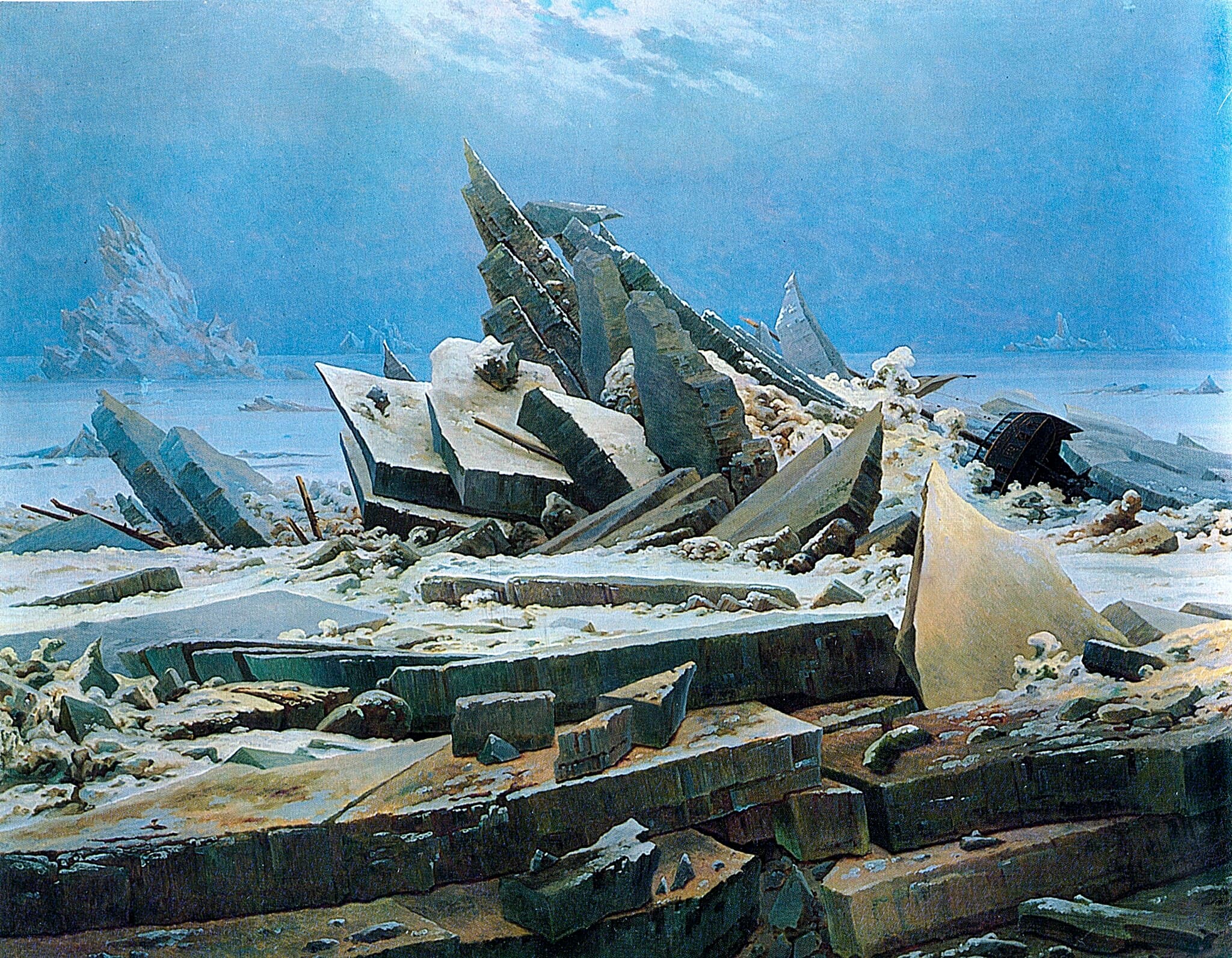
The Sea of Ice
Caspar David Friedrich, 1823–1824 • Oil on canvas
Read full analysis of The Sea of Ice →Valuation Analysis
Conclusion: We estimate Caspar David Friedrich’s The Sea of Ice (Das Eismeer/The Wreck of Hope) at $100–150 million on a hypothetical, unconstrained replacement basis. The work is a museum-held, culture-defining icon with no modern public sale and has been in the Hamburger Kunsthalle since 1905 [1]. Our range is derived by extrapolating from the artist’s limited auction benchmarks, applying a substantial masterpiece premium, and calibrating for cross-category trophy demand and institutional retention.
How we derived the estimate: Public auction anchors for Friedrich oils are modest relative to his stature due to scarcity: Landscape with Mountain Lake, Morning achieved c.$3.20m (Sotheby’s London, 2018) and Sunburst in the Riesengebirge realized $2.75m (acquired by the Saint Louis Art Museum) [2][3]. More recently, works on paper have demonstrated deep demand—e.g., The Beach at Wieck near Greifswald sold for $720,000 at Sotheby’s New York in 2025—underscoring market appetite when quality and subject align [4]. These data points set a floor, not a ceiling, for a singular, canonical oil like The Sea of Ice.
Masterpiece premium and scarcity: The Sea of Ice is widely regarded as one of Friedrich’s most radical and important compositions, on par with his most famous images. Prime Friedrich oils are overwhelmingly in museums; meaningful comparables virtually never surface. In such contexts, pricing for a globally recognized image is non-linear: values reflect cultural-icon status, not incremental movements from smaller- or mid-tier works. Our estimate therefore applies a step-change premium above the artist’s auction record, consistent with how the market values singular 19th-century masterpieces that transcend their category.
Buyer pool and constraints: In a real transaction, Germany’s cultural-property regime would almost certainly constrain export and channel outcomes toward a domestically negotiated solution, often at a discount to an unconstrained international price. The 2023–24 Karlsruhe Sketchbook episode—hammered at €1.45m before being placed with public institutions after heritage listing—demonstrates how export controls re-shape liquidity and price discovery for top-tier German material [5]. Our $100–150 million range represents a global, insurance-style replacement view; a domestically negotiated transfer could clear lower.
Market positioning and timing: The work’s global profile has been reinforced by the 250th-anniversary exhibitions in Germany and the Met’s 2025 U.S. retrospective, which broadened institutional and collector awareness [6]. Cross-category trophy buyers, major museums, and endowed foundations are the natural constituency for an icon of this magnitude. In sum, given its unimpeachable art-historical significance, extreme scarcity, cross-category resonance, and current visibility, a nine-figure valuation is justified and resilient within today’s market architecture [1][2][3][4][5][6].
Key Valuation Factors
Art Historical Significance
High ImpactThe Sea of Ice is an undisputed pinnacle of Friedrich’s oeuvre and a touchstone of German Romanticism. Its radical composition—jagged, heaving ice overwhelming the remnants of a ship—crystallizes the Romantic sublime and Friedrich’s metaphysical landscape vision. The painting is reproduced endlessly in scholarship and exhibitions, and it stands alongside Wanderer above the Sea of Fog and Monk by the Sea as a defining image of 19th-century art. Works that epitomize an artist’s historical contribution command non-linear premiums: they function not merely as exemplary objects but as cultural symbols. This status makes price discovery dependent on trophy demand rather than on incremental comparisons to lesser works, justifying a nine-figure valuation band.
Extreme Scarcity of Comparable Oils
High ImpactFriedrich’s prime oils are overwhelmingly in institutional collections; modern-era auctions have featured smaller or less iconic paintings, with a public record around $3.2m (2018). Such scarcity produces a market where conventional comps understate value for a canonical masterpiece. When a truly emblematic 19th-century work appears—or is hypothetically priced—collectors and museums recalibrate well beyond prior records. The artist’s drawings show strong, consistent demand, but they are not direct substitutes for landmark oils. Consequently, the price for The Sea of Ice would be set by cross-category trophy competition and institutional urgency, not by linear extrapolation from modest-scale oils or works on paper.
Cultural-Heritage and Export Constraints
Medium ImpactGermany’s cultural-property laws and the likelihood of heritage listing would materially narrow a real buyer pool to domestic public or foundation-backed entities. The Karlsruhe Sketchbook case—hammered at Grisebach in 2023 but subsequently placed with German museums after listing—highlights how export restrictions compress international liquidity and favor negotiated institutional outcomes. This factor does not diminish the global replacement value of The Sea of Ice, but it could temper an executed transaction price if a sale occurred under domestic constraints. Our estimate reflects an unconstrained insurance-style view; in practice, heritage oversight typically leads to privately brokered solutions below a global, trophy-driven price ceiling.
Cross-Category Trophy Appeal and Visibility
High ImpactBeyond specialist 19th-century buyers, The Sea of Ice speaks to contemporary, Modern, and Old Masters collectors who pursue culturally defining images. The 250th-anniversary cycle in Germany and the Met’s 2025 retrospective have amplified Friedrich’s profile to a broader international audience. Such visibility expands the potential demand base for a hypothetical transaction or informs robust insurance valuations. Buyers who prioritize museum-caliber, globally legible icons are accustomed to paying step-change premiums. In this context, The Sea of Ice would command intense interest comparable to top-tier Romantic masterpieces by the most collected names, validating a valuation far above the artist’s historical auction benchmarks.
Sale History
The Sea of Ice has never been sold at public auction.
Caspar David Friedrich's Market
Caspar David Friedrich is a cornerstone of German Romanticism whose market is defined by scarcity at the top end. The institutional hold on major oils is strong; when paintings appear, they are typically smaller or less iconic. The standing auction record for an oil, c.$3.2m (Sotheby’s London, 2018), and another oil at $2.75m (museum purchase) provide historic anchors rather than ceilings. Works on paper have shown vigorous demand, with a 2025 Sotheby’s drawing at $720,000 and the 2023 Karlsruhe Sketchbook episode underscoring institutional urgency and export-control realities. The confluence of limited supply, expanding global recognition, and cross-category interest supports outsized premiums for any museum-grade oil, especially a canonical image.
Comparable Sales
Landscape with Mountain Lake, Morning
Caspar David Friedrich
Same artist; oil on canvas; closest modern auction benchmark for Friedrich oils; early 19th‑century Romantic landscape. Direct medium/period read‑across, though smaller/less iconic than The Sea of Ice.
$3.2M
2018, Sotheby's London
~$4.0M adjusted
Sunburst in the Riesengebirge
Caspar David Friedrich
Same artist; oil on canvas; museum-purchased at auction (Saint Louis Art Museum). Confirms institutional demand and sets a second anchor for oil pricing.
$2.8M
2018, Sotheby's London
~$3.4M adjusted
The Beach at Wieck near Greifswald (c.1815–21, drawing)
Caspar David Friedrich
Same artist; major recent works‑on‑paper result and a headline lot, evidencing current demand depth for prime Friedrich material (though not an oil). Useful for market appetite context.
$720K
2025, Sotheby's New York
The Karlsruhe Sketchbook (1804, bound sketchbook)
Caspar David Friedrich
Same artist; rare, museum‑grade work on paper set a public price signal before being placed with German museums (auction result later voided for heritage reasons). Demonstrates institutional competition and export‑control effects.
$2.0M
2023, Villa Grisebach, Berlin
~$2.1M adjusted
Old Elbe Bridge near Meissen (watercolor)
Caspar David Friedrich
Same artist; quality work on paper with strong recent price, supporting the current curve for non‑oil material and overall demand intensity for Friedrich.
$277K
2023, Villa Grisebach, Berlin
~$296K adjusted
Current Market Trends
The Old Masters/19th-century segment remains selective but healthy for best-in-class works, with constrained top-end supply. Drawings have outperformed, signaling depth for scholars and connoisseurs, while trophy-level paintings spark cross-category bidding when available. Institutions increasingly acquire through private or heritage-mediated channels, and export controls can re-route market outcomes away from open competition. Against this backdrop, canonical Romantic masterpieces—particularly those with wide cultural recognition—attract non-linear pricing. Recent anniversary exhibitions and high-profile retrospectives have expanded international awareness of Friedrich, suggesting that if a prime oil emerged, it would trade far above historical records, even as actual transaction mechanics could be shaped by national heritage regimes and negotiated solutions.
Study print
Study this painting as a print
Pair the full artwork with a museum-style study sheet focused on one meaningful detail.
Sources
- Hamburger Kunsthalle — Watzmann trifft Eismeer (museum page referencing Das Eismeer and ownership since 1905)
- Sotheby’s London — 19th Century European Paintings (Dec 12, 2018), Landscape with Mountain Lake, Morning
- Saint Louis Art Museum — Press Release: Acquisition of Sunburst in the Riesengebirge
- HENI — Sotheby’s Master Works on Paper (Feb 5, 2025) headline result for a CDF drawing
- The Art Newspaper — Friedrich sketchbook jointly acquired after proposed national heritage listing (July 12, 2024)
- The Metropolitan Museum of Art — Press materials for 2025 Caspar David Friedrich retrospective