How Much Is Monk by the Sea Worth?
Last updated: March 18, 2026
Quick Facts
- Methodology
- extrapolation
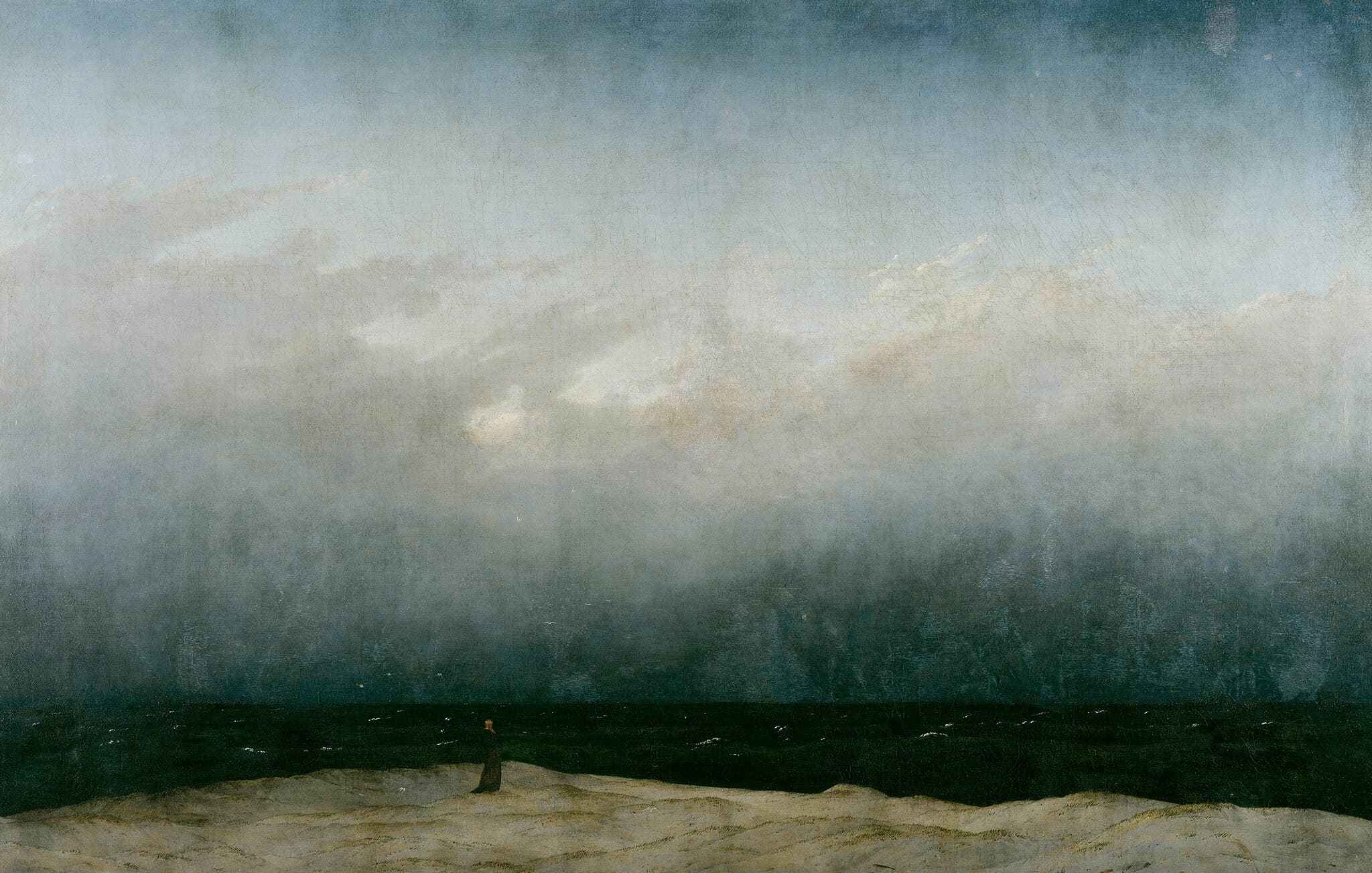
Der Mönch am Meer is a canonical, museum‑held masterpiece in the Alte Nationalgalerie and is effectively inalienable. Hypothetically placed on the open market (setting aside legal and ethical constraints), a cautious market valuation is USD 15–50 million, reflecting the painting’s extreme cultural significance, scarcity of market comparables, and the constrained pool of potential buyers.
Valuation Analysis
Der Mönch am Meer (Monk by the Sea) is one of Caspar David Friedrich’s most iconic works and is held by the Alte Nationalgalerie in Berlin; it has not appeared on the modern public market and functions, for all practical purposes, as a museum‑owned national treasure [1]. Because there is no direct sale history for this specific canvas, the valuation below is explicitly hypothetical and constructed by extrapolating from the limited auction record for Friedrich oils, the stronger activity in works on paper and sketchbooks, and the painting’s legal and political context.
Direct auction evidence for museum‑scale Friedrich oils is sparse. The modern auction high for a Friedrich oil is in the low single‑millions (a Sotheby’s London sale in Dec 2018 realized in the ≈ $3.1–3.2M range) [2]. At the same time, high‑quality drawings and sketchbooks have drawn strong bids in recent years (mid‑six to low‑seven figures), demonstrating institutional demand around exhibitions and anniversaries [4]. To translate those data into a hypothetical open‑market value for Monk by the Sea I applied a reasoned scarcity/importance premium: taking the top oil comparable (~$3.2M) and applying a conservative 5x–15x uplift to capture the painting’s iconic status, museum scale and likely institutional competition yields a range consistent with USD 15–50M. This is why the methodology is labelled extrapolation and not a straight recent‑sale valuation [2][4].
Legal and cultural protections materially constrain marketability. German cultural property legislation and national‑patrimony mechanisms create export and disposal restrictions for state museum holdings; any attempt to remove or sell a canonical Alte Nationalgalerie painting would face licensing hurdles, potential refusal and intense public/political scrutiny [3]. That restricted context narrows the possible buyer pool to major national museums, sovereign buyers or exceptionally well‑connected private collectors willing to accept political risk — a factor that both suppresses true price discovery and makes a real sale improbable.
Given the above, the recommended hypothetical open‑market valuation is USD 15,000,000 to USD 50,000,000. This range recognizes the artwork’s singular cultural value and the scarcity premium that would operate if a sale were permitted, while remaining conservative relative to speculative outliers because of limited auction comparables and legal constraints. This estimate is not an insured or legal valuation. A binding value would require in‑person inspection, the museum’s conservation and provenance records, and legal clearance checks; engage a specialist appraiser and the institution for formal underwriting or transactional work.
Key Valuation Factors
Art Historical Significance
High ImpactDer Mönch am Meer is central to Friedrich’s legacy and to German Romanticism broadly—an image repeatedly reproduced in scholarship and exhibition catalogues. Its monumental composition, austere palette and philosophical resonance make it a defining work in 19th‑century landscape painting. That status creates a structural premium: institutional buyers prize canonical works for their cultural capital and exhibition value, and such pieces often command values well above ordinary market comparables because they are viewed as irreplaceable anchors for public collections.
Market Scarcity & Comparables
High ImpactFew museum‑quality Friedrich oils circulate; the modern auction ceiling for oils sits in the low single‑millions, so there is limited direct price discovery for a painting of Monk by the Sea’s scale and importance. Recent strong results have been concentrated in works on paper and sketchbooks. To arrive at the estimate, a scarcity/importance multiplier (roughly 5x–15x) was applied to the top oil comparable (~$3.1–3.2M), reflecting the extraordinary rarity and competitive institutional interest that would attend a genuine offering.
Legal & Cultural Protection
High ImpactGerman cultural‑property law and national patrimony norms impose licensing and export constraints on state‑owned museum holdings. These protections limit the possibility of a market transaction and constrain the buyer universe to institutions and state actors. The practical result is reduced liquidity and muted price discovery: even if a sale were technically possible, legal hurdles, retention decisions and public resistance would substantially affect market dynamics and the achievable price.
Condition & Provenance
Medium ImpactAs a long‑held museum piece, Monk by the Sea benefits from established provenance and professional conservation oversight, which supports higher valuation certainty. However, precise condition, past restorations and any structural issues materially affect insurable and transactional value; a professional appraisal would require the museum’s conservation records and an in‑person condition report before issuing a certified market or insurance valuation.
Exhibition & Scholarly Profile
Medium ImpactSustained exhibition exposure and recent scholarly attention (250th‑anniversary programming and major retrospectives) elevate market interest and buyer awareness. While exhibitions increase demand—especially for works on paper and loanable items—curatorial prominence cannot by itself overcome legal or export barriers for a canonical state‑owned painting, though it does strengthen the argument for a premium in a hypothetical sale.
Sale History
Monk by the Sea has never been sold at public auction.
Caspar David Friedrich's Market
Caspar David Friedrich is a central figure of German Romanticism whose works attract strong scholarly and institutional interest. The market for his work is characterized by infrequent oil appearances and comparatively higher liquidity for drawings and sketchbooks; auction highs for oils have historically been in the low single‑millions, while select works on paper have achieved mid‑six to low‑seven figures. Institutional demand is a primary price driver when museum‑quality material is offered, but overall scarcity limits regular price discovery and keeps Friedrich below the absolute top tiers of global auction records.
Comparable Sales
Landschaft mit Gebirgsee, Morgen
Caspar David Friedrich
Same artist; oil landscape from the modern auction high range for Friedrich oils—useful as a direct oil benchmark.
$3.2M
2018, Sotheby's, London
~$3.8M adjusted
Sunburst in the Riesengebirge
Caspar David Friedrich
Museum‑quality oil sold at the same 2018 sale; demonstrates institutional willingness to pay low‑single millions for significant Friedrich oils.
$2.7M
2018, Sotheby's, London (acquired by Saint Louis Art Museum)
~$3.3M adjusted
1804 'Karlsruhe' sketchbook
Caspar David Friedrich
Rare primary material (sketchbook) with strong institutional interest—signals demand and valuation for scarce Friedrich material around museum acquisition.
$1.9M
2023, Villa Grisebach, Berlin
~$2.0M adjusted
The Beach at Wieck near Greifswald (pen & ink)
Caspar David Friedrich
Works on paper are the most active submarket for Friedrich and achieve mid‑six‑figure results—reflects exhibition‑driven demand.
$720K
2025, Sotheby's, New York
Current Market Trends
Recent market activity (2023–2025) shows renewed collector interest in Old Masters and 19th‑century works, with particular strength in works on paper and museum‑grade sketches. Exhibition cycles and anniversary programming have stimulated demand, but large oils by canonical artists like Friedrich remain rare and therefore unpredictable in open competition. Legal protections for national holdings continue to constrain trades in high‑profile, museum‑owned works.
Sources
- Alte Nationalgalerie — Der Mönch am Meer (online collection entry)
- Sotheby’s — 19th Century European Paintings (Dec 12, 2018) - comparable Friedrich oil sale
- German Cultural Property Protection Act (Kulturgutschutzgesetz) — English translation
- Sotheby’s / Heni — Master Works on Paper, New York (5 Feb 2025) - market activity for Friedrich works on paper