How Much Is The Abbey in the Oakwood (Abtei im Eichwald) Worth?
Last updated: March 18, 2026
Quick Facts
- Methodology
- comparable analysis
Hypothetical open‑market estimate for Caspar David Friedrich’s Abtei im Eichwald (museum‑held) is USD 3,000,000–8,000,000, assuming clear title, good condition and exportability. The band is anchored to recent public auction anchors for Friedrich oils and elevated for the work’s canonical museum‑quality status while tempered by market thinness and legal/heritage constraints.
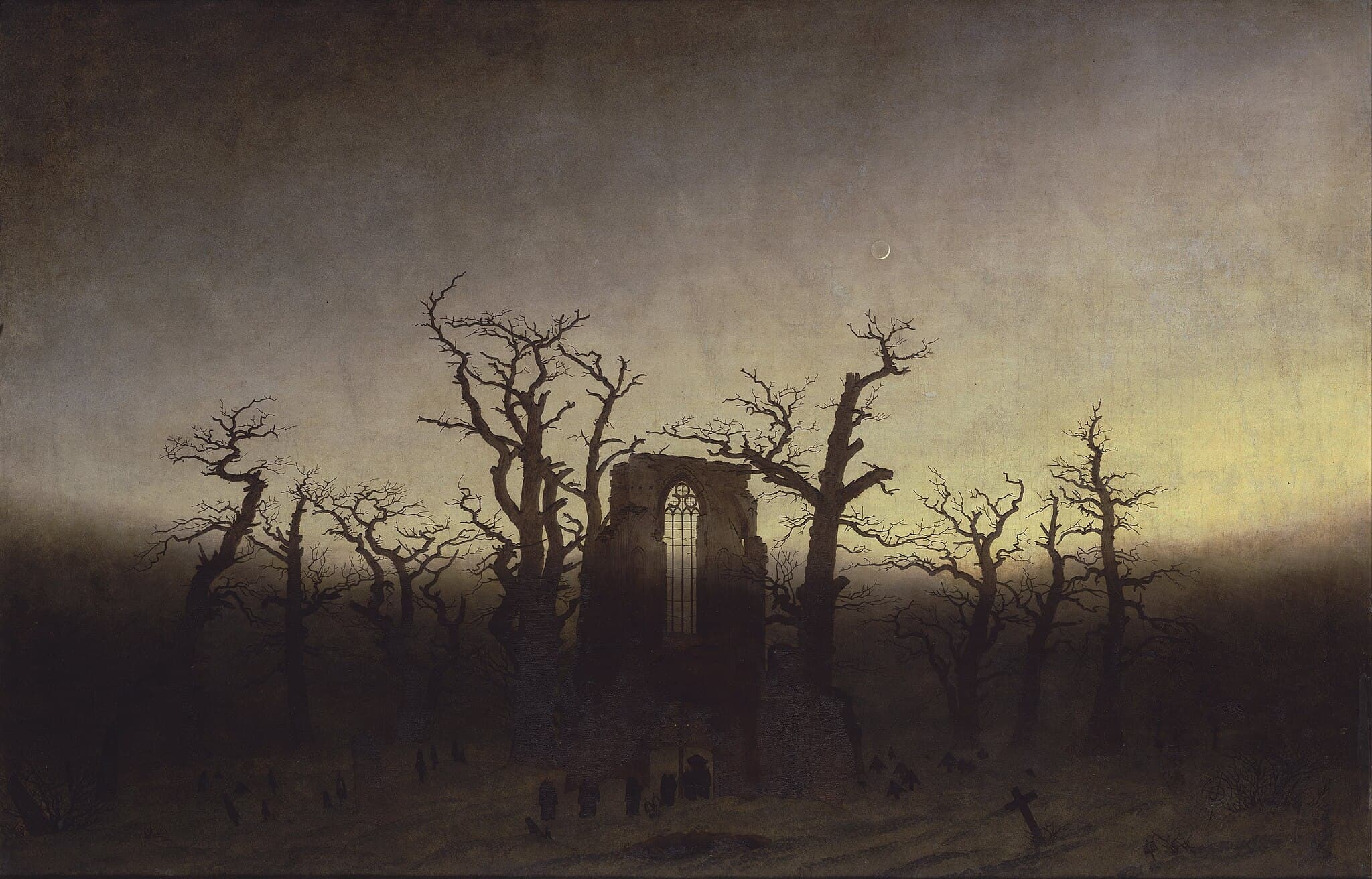
The Abbey in the Oakwood (Abtei im Eichwald)
Caspar David Friedrich, 1810 • Oil on canvas
View more by Caspar David Friedrich →Valuation Analysis
Valuation premise and headline. This is a hypothetical market valuation that assumes the painting were legitimately offered, in sound condition, and free of export or title encumbrances. Under those assumptions, the reasonable open‑market estimate for Abtei im Eichwald is USD 3.0–8.0 million. The painting’s museum status makes it effectively off‑market in ordinary circumstances, so the band describes likely competitive market behaviour if a sale were possible.
Comparables and anchors. Public auction anchors for high‑quality Friedrich oils in recent years sit in the mid‑single‑million range (notably late‑2018 Sotheby’s oil results and related institutional purchases), which set the practical floor for a sale of a museum‑quality canvas. Those sales are the primary empirical comparables used to form the lower bound; the upper bound allows for a trophy premium in the rare event of competing institutional/private bidders and favourable market conditions [2].
Positive value drivers. Abtei im Eichwald is a canonical composition within Friedrich’s oeuvre, extensively published and exhibited; that academic and curatorial prominence increases its desirability and scarcity premium. Its presence in the Staatliche Museen zu Berlin / Alte Nationalgalerie, plus recent conservation and exhibition attention, confirm its museum‑quality status and provenance pedigree — a decisive plus for institutional buyers [1].
Restraints and market risks. Major restraints reduce practical convertibility to cash: the work is in a national collection (effectively off‑market), Germany’s cultural‑asset protections can impede export, and the Friedrich market is thin and idiosyncratic. Condition, technical history, or previously undisclosed encumbrances would materially alter price. Given those constraints, the estimate is deliberately a hypothetical range rather than a guaranteed sale figure.
Conclusion and recommended next steps. Treat USD 3–8M as a reasoned market window anchored to recent Friedrich oil sales and institutional purchase behaviour, adjusted upward for canonical status and down for practical market scarcity and legal hurdles. To refine this to a formal insured or sale valuation, obtain the museum’s accession/provenance record, a full conservation/technical report, and a confidential market opinion from leading auction‑house specialists.
Key Valuation Factors
Art Historical Significance
High ImpactAbtei im Eichwald is a core, canonical work within Caspar David Friedrich’s oeuvre and one of the artist’s most cited cemetery/ruin compositions. Its sustained presence in scholarly literature, major exhibitions and museum displays elevates its cultural and institutional value above routine market examples. That prominence encourages competition among major museums and specialist collectors when comparable works come to market, supporting a substantial premium versus anonymous studio works. In short, the painting’s canonical status is a primary upward driver of hypothetical market price.
Provenance & Ownership
High ImpactThe painting’s long‑standing ownership by the Staatliche Museen zu Berlin / Alte Nationalgalerie is a double‑edged factor: it provides exemplary provenance, scholarly documentation and exhibition history (powerfully positive for price), but it also makes a legitimate sale unlikely under normal circumstances. Museum ownership increases the work’s perceived authenticity and cachet for buyers, yet simultaneously reduces liquidity and the odds of a market transaction—thereby constraining upside in any realistic disposal scenario.
Condition & Conservation
Medium ImpactA formal valuation depends on an in‑hand condition and technical report. The Alte Nationalgalerie’s documented conservation and restoration work improves market confidence, but unknowns remain (historic restorations, losses, relining, varnish issues). Condition impacts both buyer willingness and the appropriate comparables: even minor structural or surface issues can materially depress price in a thin market. A clean technical dossier would materially reduce transactional risk and firm up the upper end of the estimate.
Market Scarcity & Demand
High ImpactMajor Friedrich oils rarely come to market; recent public sales of oils cluster in the mid‑single‑million range, while works on paper achieve solid mid‑six‑figure to low‑seven‑figure results. Scarcity increases the premium for the few available museum‑quality canvases, but low transaction frequency also makes pricing more volatile. Institutional demand for canonical works is strong, but potential buyers are concentrated, which can both depress competitive bidding and heighten the role of timing and venue in any sale outcome.
Legal & Export Constraints
Medium ImpactGerman cultural‑heritage protections and national patrimony controls can delay or prevent export or sale of important works, as seen in recent high‑profile Friedrich sales. These legal and regulatory constraints reduce the pool of potential international buyers and introduce execution risk to any sale process. The prospect of state protective measures can materially narrow market scope and therefore temper the final price even if interest from institutions exists.
Sale History
The Abbey in the Oakwood (Abtei im Eichwald) has never been sold at public auction.
Caspar David Friedrich's Market
Caspar David Friedrich is the leading figure of German Romantic landscape painting; his museum‑quality oils are rare in the commercial market and highly prized by institutions and specialist collectors. Public auction results for oils are infrequent and have clustered in the mid‑single‑million USD range, while works on paper and unique sketchbooks have realized robust mid‑six‑figure to low‑seven‑figure prices. Institutional demand is strong but supply is constrained by national collections and heritage protections, making the market for top examples thin and episodic.
Comparable Sales
Landschaft mit Gebirgsee, Morgen (Landscape with Mountain Lake, Morning)
Caspar David Friedrich
Same artist, oil painting; one of the few Friedrich oils to appear at major auction in recent years and commonly cited as a public benchmark for market value of Friedrich canvases.
$3.2M
2018, Sotheby's, London (19th‑Century European Paintings sale)
~$4.0M adjusted
Sonnenblick im Riesengebirge (Sunburst in the Riesengebirge)
Caspar David Friedrich
Same artist and medium; institutional purchase demonstrates museum demand for top Friedrich oils and provides a clear market anchor for museum‑quality canvases.
$2.8M
2018, Sotheby's, London (sold to Saint Louis Art Museum; museum press release reported total USD price incl. premium)
~$3.4M adjusted
Karlsruher Skizzenbuch (Karlsruhe Sketchbook, 1804)
Caspar David Friedrich
Rare sketchbook by Friedrich sold at auction; though works on paper differ from oil canvases, this lot shows strong institutional competition and a high ceiling for unique Friedrich material.
$2.0M
2023, Grisebach, Berlin
~$2.0M adjusted
The Beach at Wieck near Greifswald (drawing, c.1815–21)
Caspar David Friedrich
High‑end works‑on‑paper sale demonstrating robust demand and mid‑six‑figure results for quality Friedrich drawings—useful as a floor/comparative for market interest in non‑canvas material.
$720K
2025, Sotheby's, New York (Master Works on Paper)
Current Market Trends
Recent museum retrospectives and 250th‑anniversary programming have raised Friedrich’s profile and institutional demand, particularly for works on paper. However, the very top end of the auction market has been cautious; scarcity and legal export protections for German cultural property further limit the pool of available masterpieces. Overall, firm demand for quality pieces coexists with low transactional frequency, keeping pricing sensitive to provenance, condition and venue.
Sources
- Staatliche Museen zu Berlin / Alte Nationalgalerie — Caspar David Friedrich restoration/project page
- Sotheby's — 19th‑Century European Paintings sale (Dec 2018) — lot and sale coverage (benchmark auction result)
- Saint Louis Art Museum — press release: acquisition of 'Sunburst in the Riesengebirge' (Sotheby's London, 2018)
- Grisebach — press release and placement statement for the 'Karlsruher Skizzenbuch' (Nov 2023)
- HENI / Sotheby's coverage — 'Master Works on Paper' (Sotheby's New York, Feb 2025) Friedrich drawing sale