How Much Is The Grand Canal Worth?
Last updated: February 26, 2026
Quick Facts
- Insurance Value
- $90.0M (Sotheby's New York (May 17, 2022) precedent and scarcity-adjusted replacement convention)
- Methodology
- comparable analysis
Based on direct auction comparables from Monet’s 1908 Venice campaign—including the $56.6m sale of a closely related Grand Canal/Salute view in 2022—we estimate a fair‑market value of $55–70 million if offered at a marquee auction today. Given museum ownership and scarcity, we set a replacement/insurance indication at approximately $90 million.
Valuation Analysis
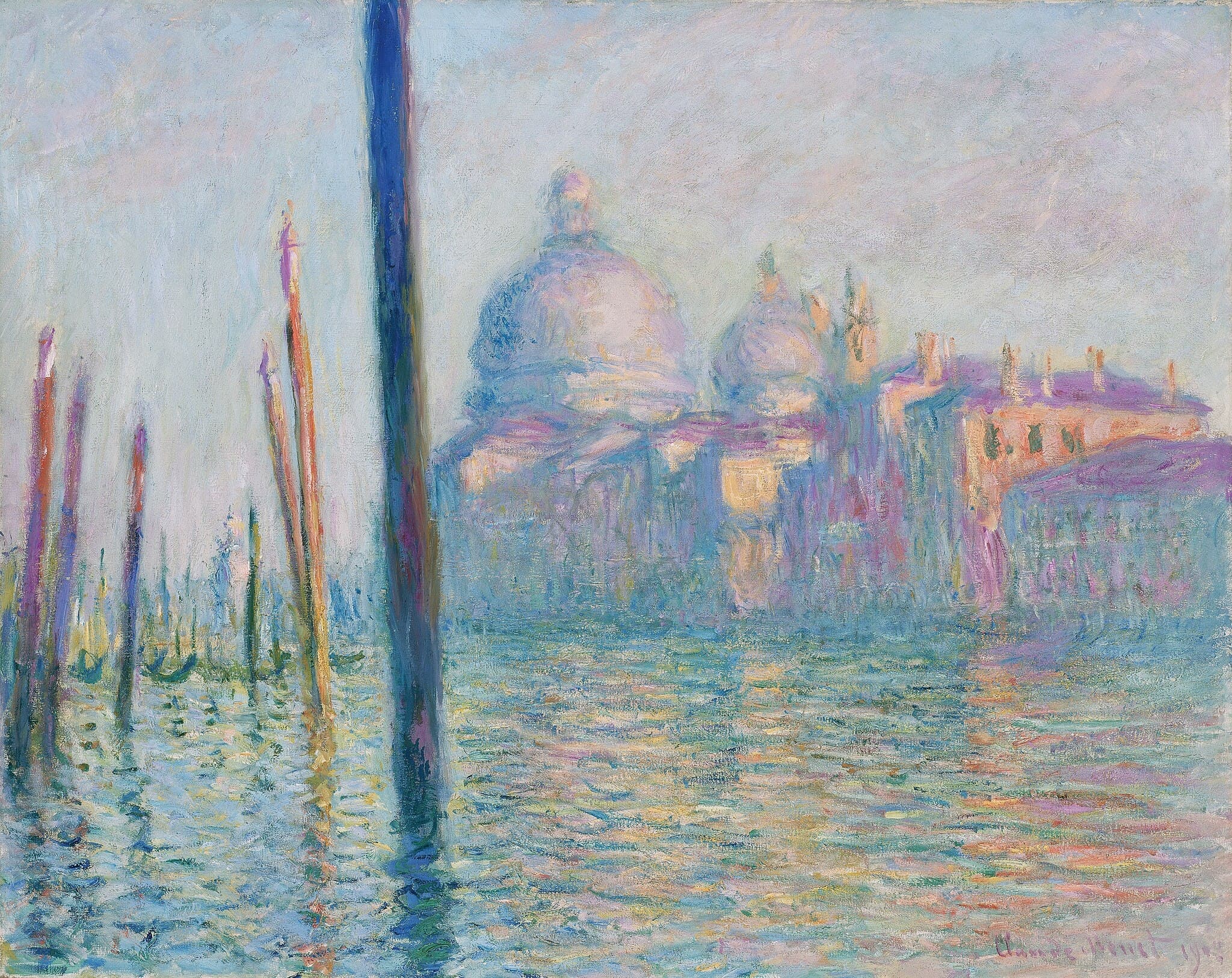
Conclusion: Monet’s The Grand Canal (1908) is a prime late work from the artist’s celebrated Venice campaign, depicting the highly coveted view toward Santa Maria della Salute with foreground mooring poles. Anchored by direct auction precedents for near-identical compositions and supported by the artist’s blue-chip market standing, a fair‑market value of $55–70 million is appropriate were a comparable example offered at a top New York evening sale today. Given rarity and the difficulty of replacement—especially for museum-caliber examples—a prudent insurance/replacement indication is set at approximately $90 million. This synthesis assumes sound condition and first‑rate provenance/exhibition history.
Comparable sales: Three public benchmarks define the range. In 2015, a Grand Canal canvas sold for £23.7m (≈$35.6m at the time) in London, establishing demand for the motif in the mid‑thirties with fees [5]. In 2019, Monet’s Le Palais Ducal—another premier Venetian view—made £27.5m (≈$36.2m), advancing the series’ pricing despite venue and currency effects [2]. Most decisively, Le Grand Canal et Santa Maria della Salute achieved $56.6m (hammer $49m) at Sotheby’s New York in May 2022, setting the current record for a Venice Monet and placing the top examples squarely in the high‑$50m band [1]. Together, these data points justify a present‑day range centered in the high‑$50m to low‑$60m area, with upside into the $70m zone for optimal quality and presentation.
Market context: Monet remains among the most liquid, globally pursued artists. His all‑time auction record—$110.7m for Meules (Sotheby’s New York, 2019)—underscores enduring demand at the very top of the market [3]. Recent marquee seasons have confirmed strong appetite for A‑caliber Monets, with late Water Lilies repeatedly clearing $60m+ in a selectively priced environment. Within this robust framework, the Venice series commands a consistent—but slightly lower—tier than the most iconic Haystacks and monumental Nymphéas, making the $55–70m bracket for a prime Grand Canal/Salute both defensible and current.
Work-specific considerations: The Legion of Honor’s example is widely reproduced and securely held in a major U.S. museum collection [4]. While not available for sale, its institutional status, visibility, and presumed literature/exhibition depth inform our scarcity and replacement calculus. As with any seven‑ or eight‑figure valuation, a current condition report (varnish, surface, stability, retouch) and a full check of provenance, publication, and exhibition history could refine the range; immaterial conservation or publication gaps would have limited impact at this level, whereas material issues could compress pricing.
Insurance/replacement: Replacement costs for top Monet Venice subjects exceed recent fair‑market benchmarks due to extreme scarcity and placement difficulty. Applying a customary uplift above auction FMV to reflect finder’s fees, transaction costs, and the low probability of sourcing a like‑for‑like composition, we indicate ~$90 million for insurance.
Key Valuation Factors
Art Historical Significance
High ImpactPainted during Monet’s 1908 Venetian sojourn, the Grand Canal motif with the Salute and mooring poles is among the most emblematic subjects of his late career. These works synthesize decades of serial looking—Rouen, Poplars, Meules—into a distilled study of atmosphere, light, and reflection at the threshold of modern abstraction. The Venice campaign has been extensively exhibited and discussed, and it resonates with both connoisseurs of Impressionism and collectors focused on the origins of modern painting. Because relatively few first‑rate examples remain available outside institutions, the art historical weight of this subject directly supports a top‑tier valuation and helps sustain demand across geographies and collecting categories.
Subject and Composition Desirability
High ImpactWithin the Venice series, the frontal Grand Canal view toward Santa Maria della Salute—framed by rhythmic mooring poles—is the most recognized and commercially validated composition. The interplay of architectural silhouette and shimmering waterline, together with Monet’s late, sumptuous color and touch, makes these pictures especially desirable in public and private contexts. The salience of this exact viewpoint also boosts brand‑level recognition beyond specialist audiences, which matters for competitive bidding. Auction records show that this composition sits at the apex of Venice pricing, routinely outperforming secondary Venetian subjects in the series when condition, size, and palette are comparable.
Scarcity and Institutionalization
High ImpactA significant portion of Monet’s Venice canvases are in museums or long‑standing private collections, resulting in highly episodic supply. Prime Grand Canal/Salute views have appeared at public auction only a handful of times in the past decade, and when they do, they typically carry strong pre‑sale interest and financial backing. This supply dynamic compresses the pool of potential substitutes for both collectors and insurers, thereby elevating replacement difficulty. The museum-held status of the Legion of Honor example highlights the broader scarcity of A‑caliber works in this motif—an important driver of both our fair‑market estimate and the higher insurance indication.
Condition, Provenance, and Literature
Medium ImpactAt this price level, condition is a binary gatekeeper: clean, stable surfaces with minimal, well‑documented conservation underpin full results, while significant condition issues can reduce prices materially. Provenance clarity, publication, and exhibition history further differentiate value among visually similar works. The Legion of Honor’s holding suggests vetted provenance and strong visibility; however, absent a current condition report for this specific canvas, our range prudently assumes a standard, well‑preserved state. Should a hypothetical market example present with exceptional literature/exhibition history or acclaimed conservation, it could tilt the estimate to the upper band; conversely, issues would compress it toward the low end.
Sale History
The Grand Canal has never been sold at public auction.
Claude Monet's Market
Claude Monet remains a cornerstone of the global auction market, with deep participation from U.S., European, and Asian buyers. His all‑time record is $110.7m for Meules (Sotheby’s New York, 2019), and multiple late Nymphéas have sold in the $60m–$75m range over the past few seasons. Demand is anchored by a clear hierarchy of subjects—Haystacks and monumental Water Lilies at the top, followed by major series such as Venice, Rouen Cathedral, and Poplars. Liquidity is excellent for top‑tier, well‑preserved works with clean provenance. While the very top of the market has become more selective, A‑caliber Monets consistently attract guarantees/irrevocable bids and competitive bidding, reinforcing price stability and upside for best‑of‑series examples.
Comparable Sales
Le Grand Canal
Claude Monet
Same artist and year (1908), same Venice campaign, near-identical Grand Canal/Santa Maria della Salute viewpoint with foreground mooring poles; comparable large-format size; top-tier subject within the series.
$35.8M
2015, Sotheby's London
~$48.0M adjusted
Le Palais Ducal
Claude Monet
Same artist and 1908 Venice series; iconic Venetian subject of similar scale and prestige; set a record for Monet’s Venice views at the time, making it a strong benchmark for prime Venice paintings.
$36.2M
2019, Sotheby's London
~$45.6M adjusted
Le Grand Canal et Santa Maria della Salute
Claude Monet
Closest direct comparable: same artist, same 1908 Venice campaign, virtually the same Grand Canal/Salute motif and size; the current auction record for a Venice Monet.
$56.6M
2022, Sotheby's New York
~$61.7M adjusted
Current Market Trends
The broader Impressionist/Modern segment softened in 2024 amid fewer trophy consignments, but stabilized and partially rebounded in 2025 as sellers recalibrated expectations and houses tightened curation. Blue‑chip masterpieces with strong narratives and museum‑level quality continued to clear with confidence, even as buyers became more discriminating. Monet benefited from this flight to quality: high‑end Water Lilies and key series pictures posted strong results, while secondary works priced more carefully. With the Monet centenary (2026) energizing exhibitions and scholarship, and ongoing cross‑border demand, well‑presented, prime‑subject Monets are positioned to remain highly liquid, with pricing supported by scarcity and a robust base of global buyers.
Study print
Study this painting as a print
Pair the full artwork with a museum-style study sheet focused on one meaningful detail.
Sources
- The Art Newspaper – Sotheby’s Modern Evening Sale totals $408m; Monet’s Venice makes $56.6m
- Sotheby’s – Monet’s Venetian Masterpiece triumphs (Le Palais Ducal, £27.5m, Feb 2019)
- Sotheby’s – Monet’s Meules sells for $110.7 million (Artist Record, May 2019)
- Google Arts & Culture – The Grand Canal, Venice (Legion of Honor, San Francisco)
- The Guardian – Sotheby’s London sets highest sales total; Monet’s Grand Canal £23.7m (Feb 2015)