How Much Is Fulang‑Chang and I Worth?
Last updated: April 3, 2026
Quick Facts
- Methodology
- comparable analysis
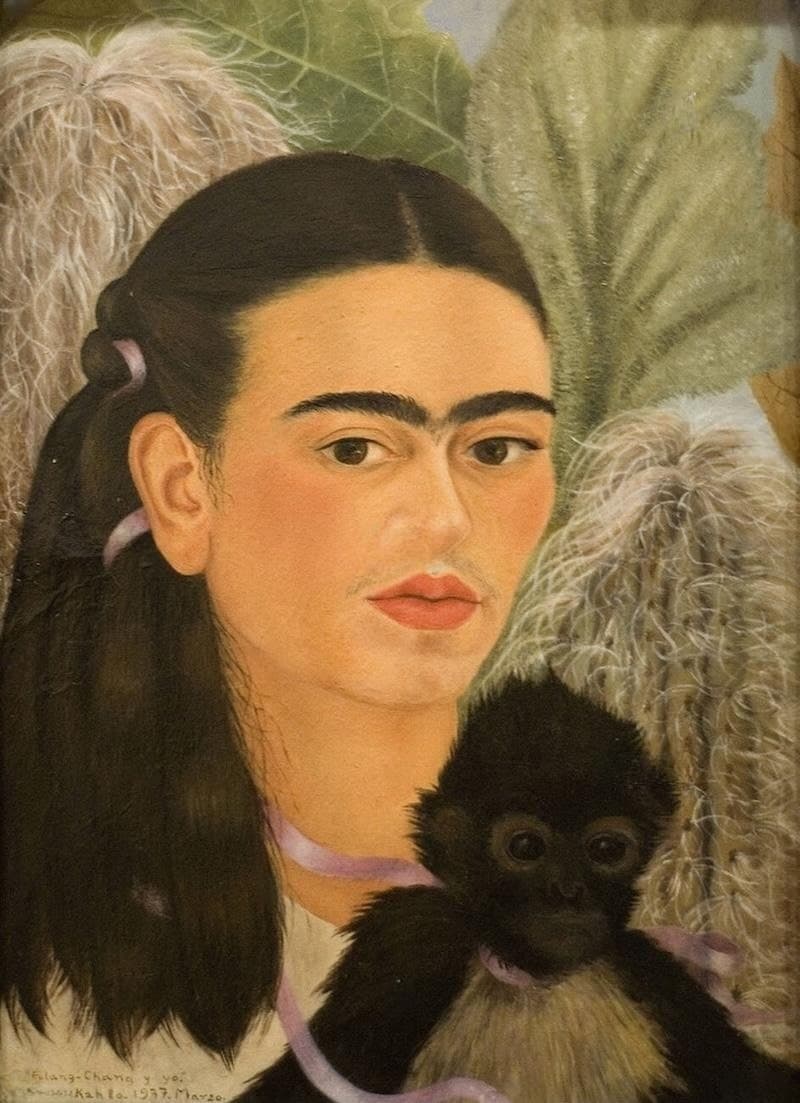
Fulang‑Chang and I (1937), currently recorded in MoMA’s collection and not market‑tested, is a museum‑quality but mid‑tier Kahlo portrait. A hypothetical public‑auction estimate is USD 6–15M; a discreet private sale could reasonably reach USD 8–20M depending on provenance, condition and buyer competition.
Valuation Analysis
Fulang‑Chang and I (1937) is recorded in The Museum of Modern Art’s collection (Mary Sklar Bequest) and has not been tested on the public auction market in the modern record, so any market valuation is hypothetical and necessarily relies on comparable evidence and market context rather than a transaction history [1].
Direct auction comparables set both a practical mid‑market and an upside ceiling. The artist’s auction record—Diego y yo (1949)—realised approximately USD 34,883,000 at Sotheby’s New York in November 2021, demonstrating institutional and private‑buyer appetite for top‑tier Kahlo self‑portraits [2]. By contrast, Dos desnudos en el bosque (1939) sold at Christie’s Impressionist & Modern evening sale in May 2016 for roughly USD 8,005,000 and is a useful mid‑market analogue for museum‑quality Kahlo portraits from the late 1930s [3]. These two sales illustrate both the ceiling and the more common realised market for similarly dated works.
Stylistically and historically, Fulang‑Chang and I is a well‑documented, art‑historically substantive portrait that features the monkey motif present in several of Kahlo’s works. It is generally regarded as important but not one of the handful of canonical masterpieces that drive the artist’s absolute record prices; collectors therefore treat it as an elevated but mid‑tier Kahlo [1]. MoMA’s catalogue entry notes that the presentation combines a painting with a mirror frame added after 1939, a factor that is relevant for condition, display and conservation assessments and can influence buyer perception at sale.
Valuation synthesis: using comparable‑analysis and adjusting for size, museum ownership and the painting’s relative position in Kahlo’s oeuvre, a realistic public‑auction estimate is approximately USD 6,000,000–15,000,000. In a discreet private sale—where targeted buyer outreach, confidentiality and negotiation can produce premiums—the reasonable range is roughly USD 8,000,000–20,000,000. Private sale outcomes depend heavily on the buyer pool and negotiation dynamics; in practice, private deals can outperform auction results by a low double‑digit percentage when a motivated collector or institution is involved.
Variables that would move a realised price materially include: a pristine condition report and an unbroken, well‑documented provenance and exhibition history (would push the work toward the top of the range); significant conservation or structural issues (would discount the work, potentially sharply); and market timing and buyer composition (strong institutional interest or a concentrated collector rivalry can elevate the outcome). Because MoMA currently holds the work, a sale would require deaccession and institutional approval—an infrequent and often publicly sensitive process—which both reduces the probability of sale and supports theoretical scarcity [1].
Recommended next steps to refine this estimate or prepare the painting for sale are: commission a condition/conservation report with high‑res photography; assemble a full provenance and exhibition dossier; obtain pre‑sale written opinions from Modern/Latin American specialists at major houses (Sotheby’s, Christie’s, Phillips); and secure a formal independent appraisal should insurance or sale planning be required. Those actions will materially tighten the range and provide supportable figures for insurers, institutions or private buyers.
Key Valuation Factors
Art Historical Significance
High ImpactFulang‑Chang and I occupies a meaningful but not apex position in Frida Kahlo’s oeuvre. Painted in 1937, it embodies recurring personal iconography (the pet monkey) and reflects the artist’s portrait practice during a productive period. Institutional ownership and museum documentation increase scholarly validation and collector confidence, but the work is not normally cited alongside Kahlo’s handful of canonical masterpieces that command record prices. For buyers, the painting’s art‑historical weight translates to a strong, positive valuation influence—it is collectible and desirable—yet the lack of iconic singularity relative to the corpus tempers the maximum price a competitive bidding environment might produce.
Provenance & Ownership
High ImpactCurrent ownership by The Museum of Modern Art (Mary Sklar Bequest) provides authoritative institutional provenance and effectively confirms the painting’s authenticity and scholarly acceptance. Museum provenance typically increases buyer confidence and can support a premium if the work is offered with institutional records. Conversely, museum ownership also makes a sale unlikely: deaccession policies, institutional priorities and public scrutiny reduce liquidity and make market testing rare. Any gaps, contested ownership claims or unattributed transfers in the provenance chain would materially reduce value; a gapless, well‑documented chain or a history of display in major retrospectives would materially increase the painting’s marketability and price potential.
Condition & Conservation
Medium ImpactCondition is a primary transactional driver. MoMA’s record indicates the work includes an assembled mirror frame added after 1939, which has direct implications for conservation, display and shipping. Clean, documented condition and recent conservation reports support the top end of the estimate; conversely, structural instability, inpainting or prior over‑restoration can reduce buyer appetite and force discounts—often materially (ranging from modest reductions to double‑digit percentage hits depending on severity). A thorough, illustrated condition report and conservation history are prerequisites for a firm market valuation and for effective marketing to both institutions and private buyers.
Market Scarcity & Demand
High ImpactKahlo’s market is characterised by acute scarcity of major works in private hands and very strong demand from institutions and committed private collectors. Top‑tier self‑portraits can reach tens of millions (the artist’s 2021 record sale anchors the ceiling), while museum‑quality mid‑tier works typically transact in the mid‑single to low‑double‑digit millions when they appear. The supply constraint—many important Kahlo canvases are museum‑held—creates upward pressure on prices for works that do reach the market. This structural scarcity, combined with the artist’s cultural prominence, is a strong positive factor supporting the upper portion of the valuation range.
Exhibition & Publication History
Medium ImpactInclusion in major retrospectives, prominent exhibitions or authoritative catalogue raisonnés materially boosts a work’s market value. Exhibition history increases visibility, scholarly importance and buyer confidence. If Fulang‑Chang and I has been included in landmark Kahlo shows or widely cited in scholarship, that would justify pushing toward the high end of the estimate. Lack of exhibition exposure or minimal citation reduces perceived pedigree and could keep the painting solidly mid‑range. A comprehensive exhibition/publication dossier is therefore essential to secure the best market outcome.
Sale History
Fulang‑Chang and I has never been sold at public auction.
Frida Kahlo's Market
Frida Kahlo is one of the most valuable Latin American artists on the market; supply is limited and institutional holdings are extensive, which supports strong pricing when works do come to market. The artist’s auction record (Diego y yo, Nov 2021) demonstrates that exceptional canvases can reach the high tens of millions, while other museum‑quality paintings from the 1930s and 1940s commonly achieve mid‑single to low‑double‑digit million results. Collector demand for Kahlo remains robust, but realised prices vary greatly depending on size, subject, provenance and condition.
Comparable Sales
Diego y yo (Diego and I)
Frida Kahlo
Artist's auction record — late-date Kahlo self-portrait that establishes the market ceiling for top-tier, iconic Kahlo portraits and shows buyer appetite for the artist at the highest level.
$34.9M
2021, Sotheby's New York (Modern Evening Sale)
~$40.8M adjusted
Dos desnudos en el bosque (La tierra misma) / Two Nudes in the Forest
Frida Kahlo
Close in period (late 1930s), similar figurative subject and museum-quality provenance; provides a mid-market benchmark for small/medium Kahlo paintings entering the market.
$8.0M
2016, Christie's New York (Impressionist & Modern Evening Sale)
~$10.6M adjusted
Current Market Trends
The market for blue‑chip works and marquee names remains selective: buyers favour museum‑quality, well‑provenanced works; private sales continue to be an important channel for high‑value transactions and can yield premiums. Macro factors (interest rates, liquidity) influence timing and aggressiveness, but scarcity of Kahlo paintings in private hands keeps long‑term fundamentals supportive. If offered, a museum‑quality Kahlo portrait would attract institutional interest and competitive private bidders, especially if condition and provenance are strong.