Frida Kahlo

Biography

Frida Kahlo (1907–1954) was a Mexican painter whose work fuses autobiographical trauma, national identity, and meticulous symbolism. After a devastating 1925 accident and years of surgeries, she developed a medicalized visual language that others linked to Surrealism, a label she resisted. Her marriage and 1939 divorce from Diego Rivera mark the biographical crucible in which this painting was made [3][1].

Themes in Their Work

Where to See Frida Kahlo's Paintings

Explore Frida Kahlo's works on display in museums around the world.

Most Expensive Frida Kahlo Paintings

Explore ranked valuations of Frida Kahlo's most valuable works →

Featured Artworks
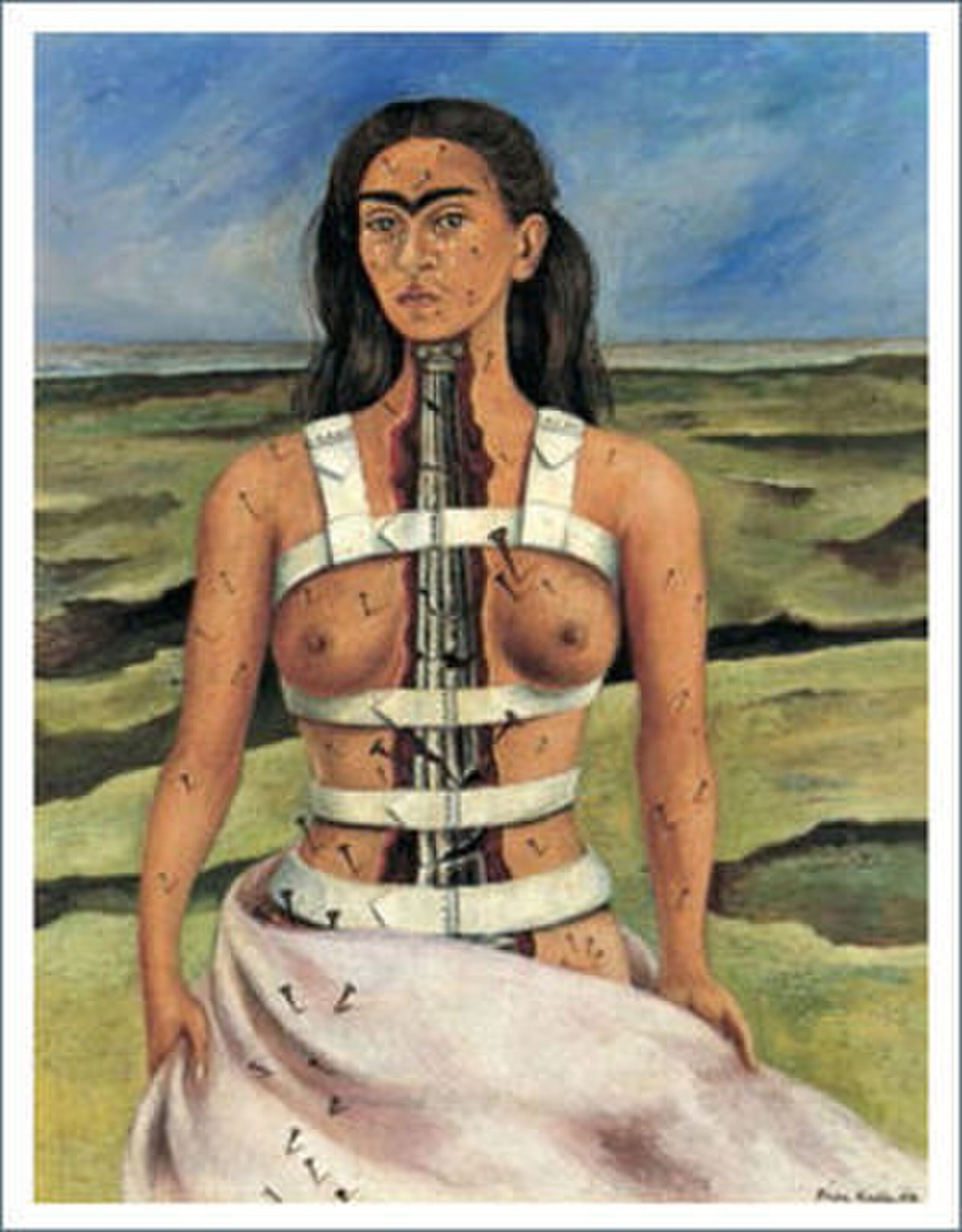
The Broken Column by Frida Kahlo

The Broken Column

Frida Kahlo (1944)

The Broken Column presents a frontal self-image split open to expose a shattered classical spine, mapping <strong>chronic pain</strong> across the body with nails while a white <strong>medical corset</strong> both supports and imprisons. Against a cracked, barren landscape, Kahlo’s steady gaze transforms injury into <strong>endurance</strong> and self-possession <sup>[1]</sup><sup>[2]</sup>.
Henry Ford Hospital (The Flying Bed)

Frida Kahlo (1932)

Self‑Portrait with Cropped Hair

Frida Kahlo (1940)

What the Water Gave Me (Lo que el agua me dio)

Frida Kahlo (1938)

Two Nudes in a Forest (Dos desnudos en el bosque)

Frida Kahlo (1939)

El sueño (La cama) (The Dream (The Bed)) by Frida Kahlo

El sueño (La cama) (The Dream (The Bed))

Frida Kahlo (1940)

Diego y yo (Diego and I) by Frida Kahlo

Diego y yo (Diego and I)

Frida Kahlo (1949)

Self‑Portrait with Thorn Necklace and Hummingbird by Frida Kahlo

Self‑Portrait with Thorn Necklace and Hummingbird

Frida Kahlo (1940)

Roots by Frida Kahlo

Roots

Frida Kahlo (1943)

Viva la Vida (Watermelons) by Frida Kahlo

Viva la Vida (Watermelons)

Frida Kahlo (1954)

The Wounded Deer (El venado herido) by Frida Kahlo

The Wounded Deer (El venado herido)

Frida Kahlo (1946)

Fulang‑Chang and I by Frida Kahlo

Fulang‑Chang and I

Frida Kahlo (1937)

My Grandparents, My Parents, and I (Family Tree) by Frida Kahlo

My Grandparents, My Parents, and I (Family Tree)

Frida Kahlo (1936)

The Suicide of Dorothy Hale (El suicidio de Dorothy Hale) by Frida Kahlo

The Suicide of Dorothy Hale (El suicidio de Dorothy Hale)

Frida Kahlo (1939)

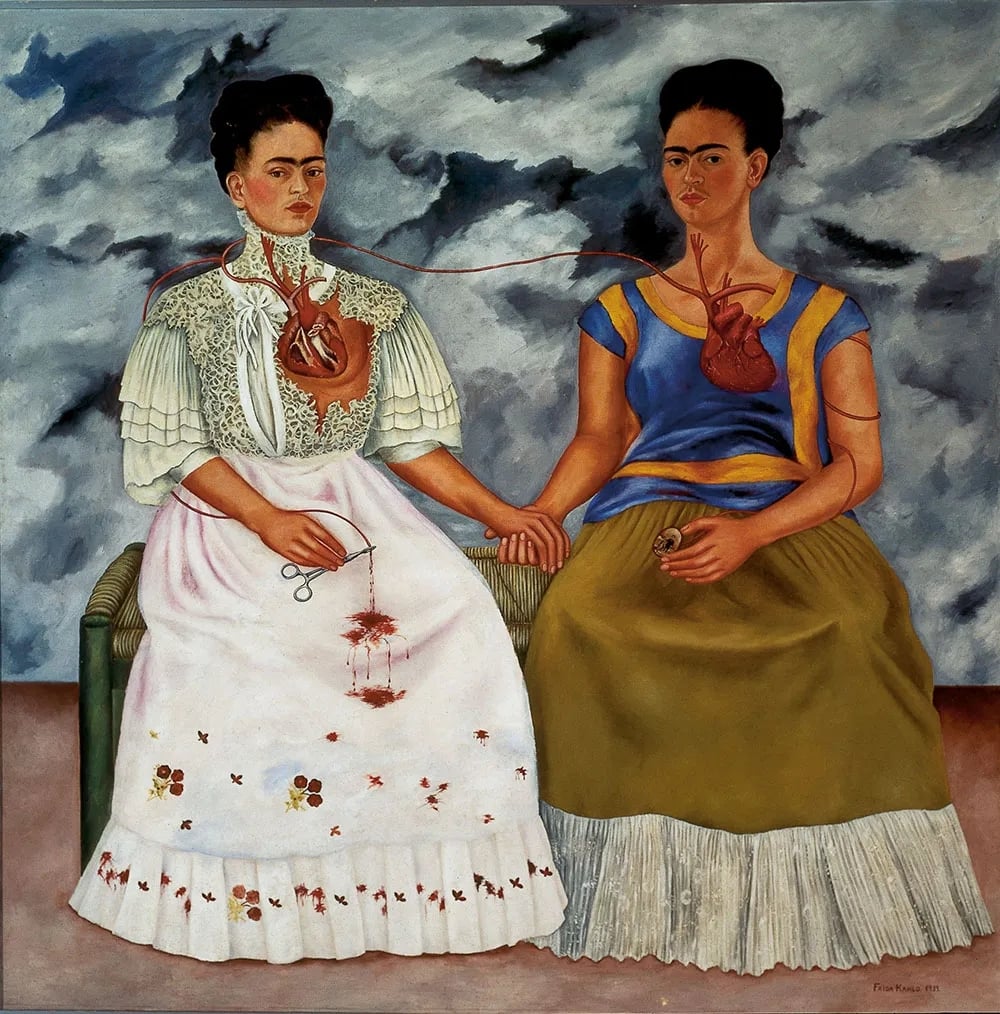
The Two Fridas by Frida Kahlo

The Two Fridas

Frida Kahlo (1939)

The Two Fridas presents a doubled self seated under a storm-charged sky, their opened chests revealing two hearts joined by a single artery. One Frida in a European dress clamps the vessel with a surgical <strong>hemostat</strong> as blood stains her skirt, while the other in a <strong>Tehuana</strong> dress steadies a locket and the shared pulse. The canvas turns private injury into a public image of <strong>dual identity</strong> and endurance <sup>[1]</sup><sup>[2]</sup>.