How Much Is The Wounded Deer (El venado herido) Worth?
Last updated: April 3, 2026
Quick Facts
- Methodology
- comparable analysis
Based on comparable auction benchmarks and the painting’s attributes, The Wounded Deer (El venado herido), 1946 by Frida Kahlo is estimated at USD 12,000,000–35,000,000 on the open market under normal sale conditions (clear title, exportable, good condition). If the work is subject to Mexican patrimony/export restrictions or has unclear provenance, marketability and price would be materially reduced or the work effectively unsaleable.
Valuation Analysis
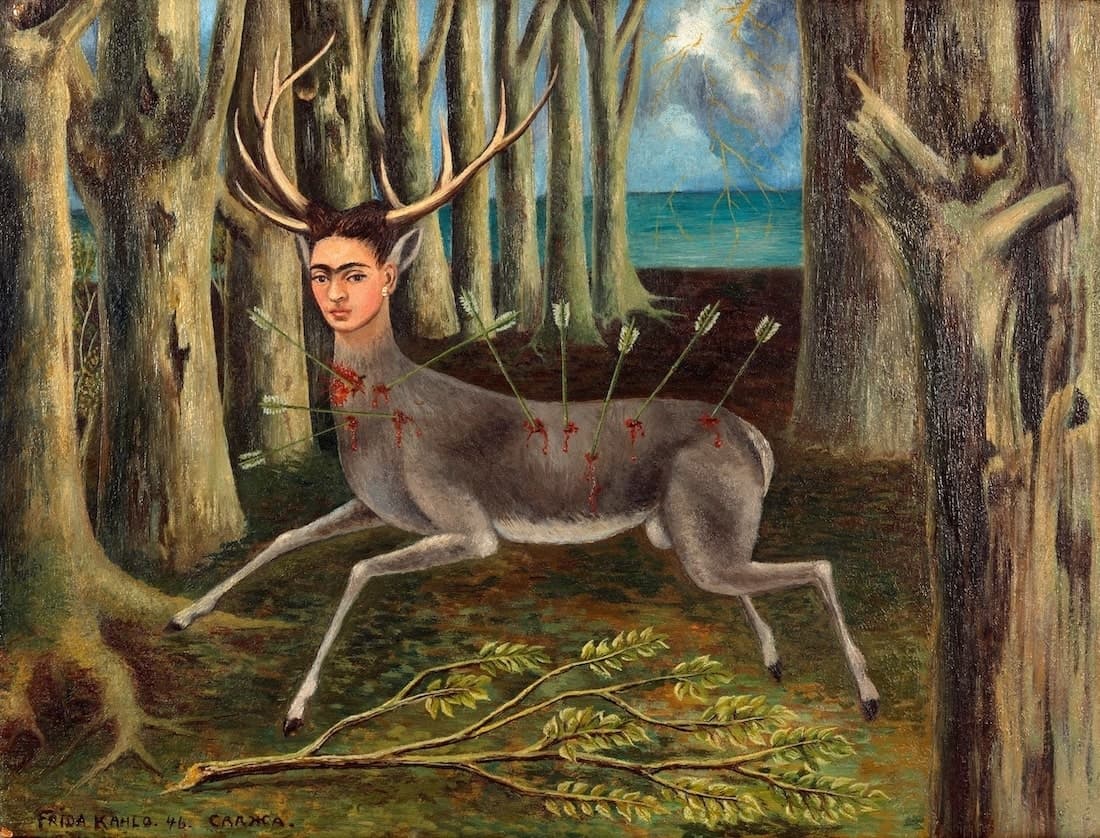
Valuation conclusion: On a normalized open‑market sale with clear title, exportability and sound physical condition, this opinion places Frida Kahlo’s The Wounded Deer (El venado herido), 1946, at approximately USD 12,000,000–35,000,000. That range reflects current public price discovery among Kahlo’s late‑period, autobiographical works, adjusted for the painting’s small scale, provenance transparency and typical buyer appetite for works of this type.
Comparable frame: Recent headline sales have reset Kahlo’s upper tier: El sueño (La cama) realized ~USD 54.66M at Sotheby’s in November 2025, establishing a new auction ceiling for the artist and for high‑profile Surrealist/Latin American modern works [1]. Earlier, Diego y yo sold for ~USD 34.9M in 2021, demonstrating demand for major late‑career self‑portraits [3]. By contrast, mid‑market examples (e.g., Two Nudes in a Forest, Christie’s 2016) sold for roughly USD 8M, signaling how scale, exhibition history and perceived museum quality drive dispersion in outcomes [4]. The Wounded Deer’s iconography places it above generic mid‑market works, but its modest physical size and the absence of a documented public auction sale moderate the ceiling.
Work attributes & provenance: The painting is a potent late‑period Kahlo allegory and is widely reproduced in scholarship—strengths that support collector interest. Published records indicate Kahlo gifted the work in 1946 to Lina and Arcady Boytler and that it has appeared in private‑collection references (commonly attributed to Carolyn Farb), though a transparent, recent public‑sale provenance is not publicly documented [2]. Provenance clarity, a comprehensive conservation report and an exhibition/publication dossier would materially increase buyer confidence and improve realization prospects; conversely, patrimony claims or export impediments would sharply curtail the buyer pool.
Market dynamics & practical recommendation: Kahlo’s market is characterized by acute scarcity of major canvases and strong institutional/private demand; when a canonical, exhibition‑ready work appears, competitive bidding can push prices well above baseline estimates. For The Wounded Deer, realistic outcomes under clean‑title, exportable conditions are in the mid‑to‑high millions, with an outside ceiling possible in the mid‑30s if provenance and condition are impeccable and competitive buyer dynamics emerge. To refine this opinion into a transactable pre‑sale estimate, verify current ownership and any patrimony/permit status, obtain a professional condition/conservation report, compile the full provenance and exhibition history, and engage Latin American specialists at a major auction house for a formal pre‑sale market check.
Key Valuation Factors
Art Historical Significance
High ImpactThe Wounded Deer (1946) is one of Kahlo’s most recognisable late‑period allegories, merging autobiographical pain motifs with mythic imagery (the artist as stag pierced by arrows). That iconic subject matter and its articulation of Kahlo’s persistent themes make the painting curatorial and scholarly fodder, enhancing desirability among institutions and collectors. Although it is not at the singular public‑image level of The Two Fridas, it routinely appears in monographs and exhibitions and thus carries a significant premium relative to non‑iconic works. This historical and cultural resonance materially supports valuation and buyer interest, particularly for collectors focused on canonical works by Kahlo.
Provenance & Legal Status
High ImpactKnown secondary sources indicate Kahlo gifted the painting in May 1946 to Lina and Arcady Boytler, and the work has been referenced in private‑collection literature (commonly attributed to Carolyn Farb). Clear, documented chain of title and exportability are crucial: clean provenance and freedom to export materially increase price prospects. Conversely, Mexican cultural patrimony rules, INBAL/INAH registrations, or contested ownership would either bar sale or drastically reduce the eligible buyer pool, lowering realizable value. For this work provenance/legal clarity is a primary determinant of its marketability and therefore a high‑impact valuation factor.
Condition & Scale
Medium ImpactThe painting’s modest dimensions (approx. 22.4 × 30 cm) and support (oil on masonite) influence market reception: small format works typically attract fewer institutional buyers and can compress top results compared with large canvases. Condition and conservation history are material: visible deterioration, unstable paint or undocumented restoration will reduce competitive bidding and insurer confidence. A pristine, well‑documented state of conservation mitigates scale disadvantages; a poor or uncertain condition report will lower the likely sale price and could shift sales to private treaty rather than marquee auction channels. Thus condition and size are a mid‑level but actionable factor.
Market Scarcity & Demand
High ImpactFrida Kahlo’s market is defined by a severe supply constraint—few major canvases come to market—which concentrates demand among institutions and trophy collectors. This scarcity, combined with heightened global interest in female modernists and Latin American modern art, creates structural support for high prices when canonical works are available. However, demand is selective: buyers prize scale, provenance, and exhibition history. For The Wounded Deer scarcity lifts baseline value, but realized price will depend on whether buyer appetite overcomes the painting’s size and any legal constraints. Scarcity is therefore a high‑impact driver of upside potential.
Exhibition & Publication History
Medium ImpactDocumented exhibition loans and repeated appearance in scholarly publications materially increase a work’s market value by enhancing public recognition and institutional desirability. The Wounded Deer is widely reproduced in Kahlo literature, which supports its visibility; a demonstrated loan history to reputable museums or inclusion in major retrospectives would further elevate value and competitive bidding. Lack of exhibition records or absence from catalogues raisonnés reduces perceived pedigree and can limit high‑end interest. Exhibition/publication credentials therefore act as a reliable premium enhancer when present and a limiting factor when absent.
Sale History
The Wounded Deer (El venado herido) has never been sold at public auction.
Frida Kahlo's Market
Frida Kahlo occupies a top tier in the global market for twentieth‑century art: extreme scarcity of market‑available works, enormous cultural recognition, and sustained institutional interest underpin strong price performance. Recent public results (notably the 2025 Sotheby’s record for El sueño and the 2021 Diego y yo result) have pushed Kahlo into the trophy‑art category, where a limited number of canonical works can command multi‑tens of millions. At the same time, smaller or less‑documented pieces trade at materially lower levels; provenance, condition and exhibition pedigree remain decisive. Overall, Kahlo’s market is robust, with significant upside for fully documented masterpieces.
Comparable Sales
El sueño (La cama)
Frida Kahlo
Top public-market benchmark for Kahlo; same artist and a major, museum‑quality work that sets the current auction ceiling for Kahlo. Useful as an upper bound when valuing a rarer/smaller private work like The Wounded Deer.
$54.7M
2025, Sotheby's New York
Diego y yo (Diego and I)
Frida Kahlo
Major recent auction result for a late-period Kahlo self‑portrait; strong indicator of collector demand for high‑quality Kahlo self‑images and a useful high‑mid market comparator.
$34.9M
2021, Sotheby's New York
~$38.4M adjusted
Two Nudes in a Forest (Dos desnudos en el bosque)
Frida Kahlo
Mid‑market public sale of a significant Kahlo figurative work; although not as iconic as top self‑portraits, this sale illustrates price levels for important but less trophy‑grade Kahlo paintings and helps calibrate downward from the auction highs.
$8.0M
2016, Christie's New York
~$9.6M adjusted
Current Market Trends
As of late 2025 the market shows concentrated strength for culturally resonant works: resurgence in demand for Surrealism and female modernists has produced record results for top lots, while broader auction liquidity remains uneven. Trophy canvases and well‑documented museum‑grade works continue to outperform; auction houses increasingly employ guarantees and private‑sale strategies to facilitate large transactions. Legal and patrimony constraints (notably in Mexico) remain a salient downside risk that can limit cross‑border demand and reduce realizable prices for specific works.