How Much Is Farmhouse in Buchberg (Upper Austrian Farmhouse) Worth?
Last updated: March 16, 2026
Quick Facts
- Methodology
- comparable analysis
Assuming clear title, good condition, and normal marketability, Farmhouse in Buchberg (Gustav Klimt, 1911) is estimated at USD 3,000,000–12,000,000 (central expectation USD 5–8M). This range reflects the painting’s status as a late‑period Klimt landscape, strong museum provenance (Belvedere), absence of public sale history, and recent high‑end Klimt sales that establish the market ceiling.
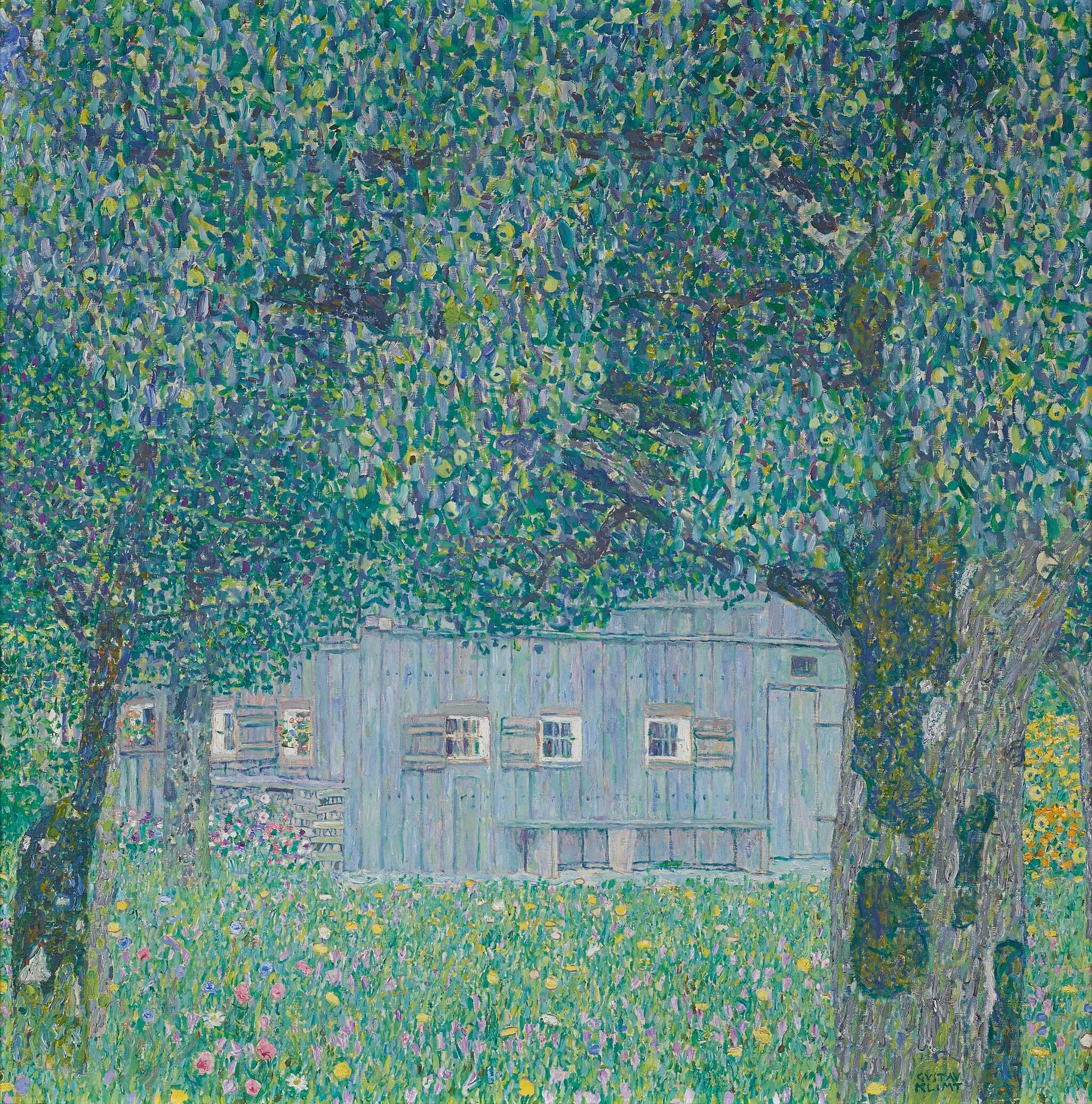
Farmhouse in Buchberg (Upper Austrian Farmhouse)
Gustav Klimt, 1911 • Oil on canvas
Read full analysis of Farmhouse in Buchberg (Upper Austrian Farmhouse) →Valuation Analysis
Valuation conclusion: On a hypothetical open‑market offering with clear title and good condition, I estimate USD 3,000,000–12,000,000 for Farmhouse in Buchberg, with a working central expectation of about USD 5–8M. This is a market‑based estimate derived from analysis of recent Klimt landscape sales, the work’s museum provenance and the typical price differential between Klimt’s trophy portraits and his landscapes.
The painting is held by the Österreichische Galerie Belvedere; institutional ownership confirms attribution and museum quality but also makes an actual sale unlikely absent a formal deaccession process [1]. Museum provenance generally supports authenticity and can justify a premium if offered, yet institutional ownership often reduces liquidity and the pool of potential buyers because national rules and reputational constraints limit routine market exits.
Recent public auction results for Klimt — including very large landscape and portrait sales in 2022–2025 — establish a strong market ceiling but do not directly imply that every museum landscape will attain those figures. Trophy works (e.g., large, exhibition‑important landscapes or Golden‑Phase portraits) have reached high eight to nine figures; more typical Klimt landscapes have realized mid‑single‑ to low‑eight‑figure outcomes in high‑profile consignments, which supports valuing Farmhouse in Buchberg materially below the trophy ceiling [2].
Key downward drivers here are subject and relative rarity: as a 1911 landscape it is art‑historically significant within Klimt’s late production but not in the same canonical tier as his Golden‑Phase portraits. Upward movement toward the top of the range would require exceptional attributes — unusually large scale, pristine condition, landmark exhibition/publication history, or an uncommon provenance that attracts competitive museum/private bids.
Major unknowns that would materially tighten or shift this estimate include: confirmed dimensions and media, a current conservation/condition report, catalogue‑raisonné entry and exhibition/publication history, and any restitution/provenance issues. If technical study or catalogue inclusion reveals rare or uniquely important aspects, the upper end could expand. Conversely, conservation problems, restoration, or export restrictions would depress value and marketability.
Recommended next steps: obtain the Belvedere inventory/provenance statement and current condition report; request catalogue‑raisonné and exhibition citation; and compile closely matched auction comparables by size and date. With those items the estimate can be tightened into a narrower professional appraisal suitable for insurance or sale planning.
Key Valuation Factors
Art Historical Significance
Medium ImpactFarmhouse in Buchberg (1911) is a mature Klimt landscape that illustrates his late‑period handling of paint, composition and colour. Within Klimt scholarship landscapes are important for understanding his post‑Golden‑Phase experimentation, but they are generally valued lower in the marketplace than his iconic portraits and gold‑ground allegories. As a museum‑held example, it carries scholarly weight; however, it is not widely cited as a signature masterpiece that would automatically command a trophy‑level premium. Its significance therefore supports collector interest and institutional demand, but positions it in the mid‑to‑upper market for Klimt landscapes rather than at the top of the artist’s price spectrum.
Provenance & Institutional Ownership
High ImpactOwnership by the Belvedere substantially strengthens attribution and curatorial validation—factors that typically increase buyer confidence and value. Museum provenance is a major positive for authenticity and scholarly acceptance, but it also reduces probability of sale because national and institutional deaccession rules, export controls and reputational considerations limit availability. If the Belvedere were to deaccession, a carefully managed, single‑owner institutional sale could produce competitive bidding and push price higher; absent that, provenance functions principally as a value‑support while suppressing liquidity.
Market Comparables & Price Ceiling
High ImpactRecent high‑profile Klimt sales (large landscapes and portraits in well‑publicised single‑owner consignments) establish an auction ceiling in the tens to low hundreds of millions, but those are exceptional trophies. Comparable museum‑quality landscapes sold in top sales have reached high single‑ to low‑eight‑figure results when they are fresh to market and accompanied by stellar provenance. Given those outcomes, Farmhouse in Buchberg is more likely to trade below the trophy bracket; comparables therefore anchor this estimate while explaining why the upper range is limited absent exceptional attributes.
Condition, Size & Technical Documentation
Medium ImpactDimensions, current condition and conservation history materially affect value for every canvas. A large, unrestored panel in excellent condition with technical documentation (IR, X‑ray, pigment studies) and catalogue‑raisonné inclusion will command premiums. Conversely, damage, extensive restoration or uncertain condition reporting can reduce competitive bidding and insurance estimates. At present these data are not publicly available for this work, so the valuation range intentionally accommodates both positive and negative condition scenarios.
Market Liquidity, Legal & Export Constraints
Medium ImpactKlimt’s market is highly segmented: trophy works are exceptionally liquid, while mid‑market works depend on institutional interest and private collectors. Legal issues — wartime provenance gaps, restitution claims or national export restrictions — can immediately suppress marketability and price. Because Farmhouse is in a national museum, potential buyers would demand clear legal opinions and export clearance; such friction reduces the number of prospective buyers and typically narrows realized prices compared with unrestricted market lots.
Sale History
Farmhouse in Buchberg (Upper Austrian Farmhouse) has never been sold at public auction.
Gustav Klimt's Market
Gustav Klimt is a top‑tier turn‑of‑the‑century European master whose auction and private‑sale records expanded sharply in 2022–2025. His Golden‑Phase portraits and several landmark landscapes have set new artist records, resulting in strong collector demand for museum‑quality examples. That said, the market differentiates sharply by subject and rarity: iconic portraits routinely realize multiples of what typical landscapes fetch. Provenance, condition and fresh‑to‑market status remain the most important value drivers for Klimt works.
Comparable Sales
Birch Forest (Birkenwald)
Gustav Klimt
Large Klimt landscape sold at a high‑profile sale; same artist and subject (landscape), useful as a high‑end landscape comparable and market ceiling.
$104.6M
2022, Christie's (The Paul G. Allen Collection)
~$115.1M adjusted
Lady with a Fan (Dame mit Fächer)
Gustav Klimt
High‑profile Klimt (Golden‑period portrait). Different subject/style than Farmhouse but valuable as a demonstration of strong auction demand and as a market ceiling for Klimt works.
$108.4M
2023, Sotheby's London
~$114.9M adjusted
Portrait of Elisabeth Lederer
Gustav Klimt
Artist auction record (Nov 2025). Not a landscape, but establishes the contemporary top market ceiling for Klimt and indicates buyer appetite for museum‑quality masterpieces.
$236.4M
2025, Sotheby's New York (Leonard A. Lauder single‑owner sale)
Blooming Meadow (Blumenwiese)
Gustav Klimt
Klimt landscape sold in the same high‑profile Lauder sale (Nov 2025); directly relevant as a recent, high‑value landscape comparable.
$86.0M
2025, Sotheby's New York (Leonard A. Lauder single‑owner sale)
Forest Slope at the Attersee (Waldabhang bei Unterach am Attersee)
Gustav Klimt
Attersee landscape by Klimt sold in Nov 2025; relevant as a recent landscape comparand with strong provenance and auction visibility.
$68.3M
2025, Sotheby's New York (Leonard A. Lauder single‑owner sale)
Current Market Trends
The market since 2022 has been polarized: trophy, well‑provenanced Klimt works continue to set records, while broader market volume cooled and the number of lots above US$10M contracted. Provenance clarity, technical documentation and exhibition history are now essential; restitution and provenance risk materially affect sale outcomes and buyer confidence.
Study print
Study this painting as a print
Pair the full artwork with a museum-style study sheet focused on one meaningful detail.
Sources
- Belvedere — Klimt Collection (collection entry / museum listing)
- Sotheby's coverage of major Klimt results (Leonard A. Lauder single‑owner sale) / market reporting on recent Klimt auction ceilings
- Christie's / press coverage of Paul G. Allen sale (Birch Forest result)
- The Guardian — report on Sotheby's 'Lady with a Fan' sale (market context)