How Much Is Portrait of Adele Bloch-Bauer I Worth?
Last updated: February 28, 2026
Quick Facts
- Last Sale
- $135.0M (2006, Private sale)
- Methodology
- extrapolation
We estimate $320–480 million for Gustav Klimt’s Portrait of Adele Bloch-Bauer I in a current, open‑market sale. This range extrapolates from Klimt’s $236.4m auction record and applies an icon premium for the most celebrated Golden Phase portrait, with the 2006 $135m Lauder purchase (≈$217m today) as a conservative floor.
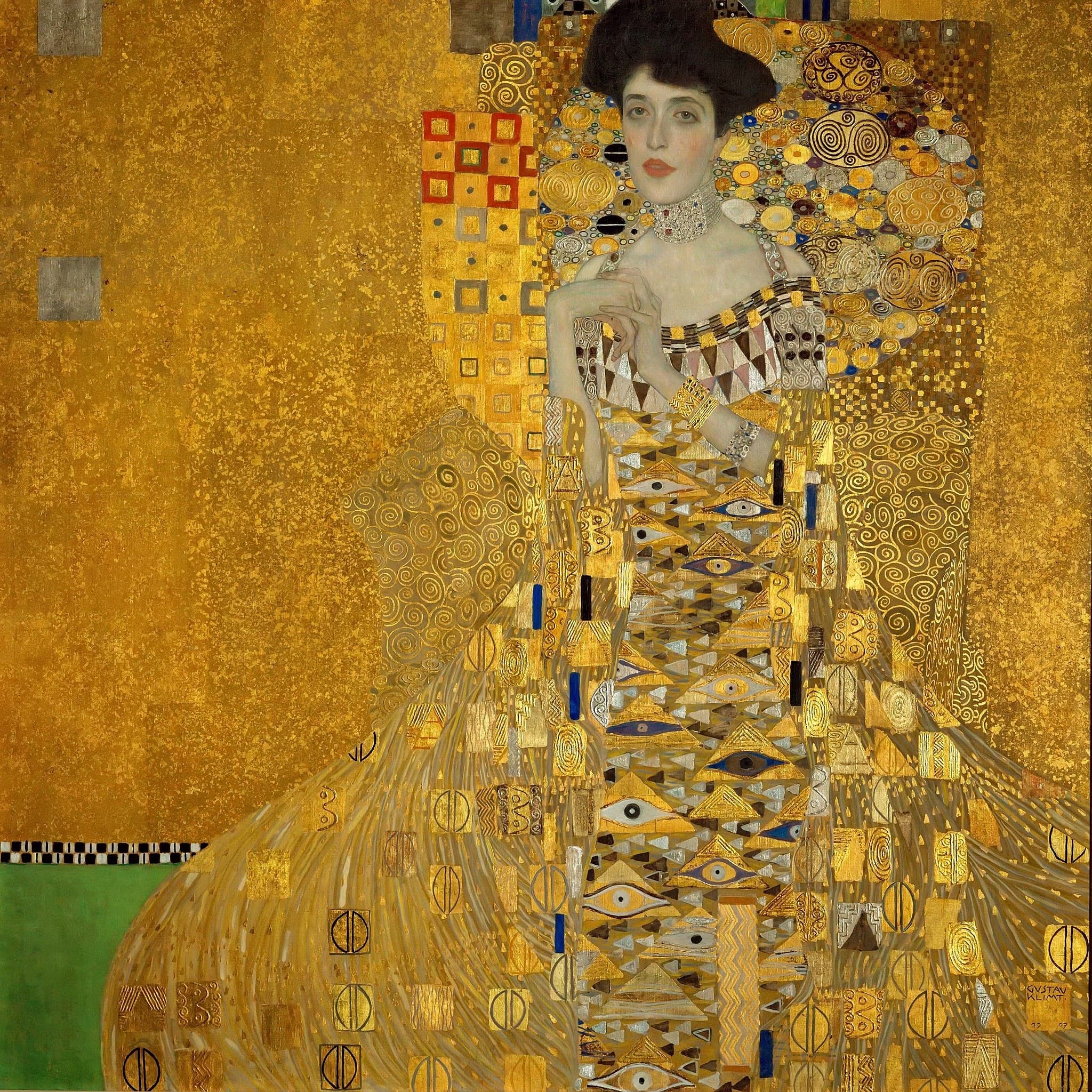
Portrait of Adele Bloch-Bauer I
Gustav Klimt, 1907 • Oil, silver, and gold on canvas
Read full analysis of Portrait of Adele Bloch-Bauer I →Valuation Analysis
Portrait of Adele Bloch‑Bauer I (1907) is widely regarded as Gustav Klimt’s magnum opus and the defining statement of his Golden Phase. The work last transacted in June 2006 for $135 million in a private sale arranged by Ronald S. Lauder for the Neue Galerie New York—then the most expensive painting ever sold [1]. It now anchors the Neue Galerie’s collection and public identity [7]. In 2026 dollars, the 2006 price approximates $217 million, which serves as a conservative floor for today’s fair‑market value.
Klimt’s price ceiling has since shifted materially. In November 2025, Portrait of Elisabeth Lederer achieved $236.4 million at Sotheby’s New York, establishing a new auction record for Klimt and resetting the Modern category’s benchmark at the house [2]. Additional anchors include the late portrait Dame mit Fächer (Lady with a Fan) at $108.4 million in 2023 [4] and the landscape Birch Forest at $104.585 million in 2022 [5]. Reported private transactions reinforce the high‑end level for A‑tier Klimts: Portrait of Adele Bloch‑Bauer II at about $150 million in 2016 [3] and Water Serpents II around $183.8 million in 2012/13 (with a 2015 resale reportedly around $170 million) [6].
Methodology: extrapolation. We begin with the fresh $236.4 million public benchmark [2] and apply an icon premium to reflect this painting’s singular status: Klimt’s most famous Golden Phase portrait, the closest market‑accessible counterpart to The Kiss, and a widely reproduced cultural touchstone. Relative to the 2025 record, a 1.35x–2.0x premium is supported by art‑historical primacy, gold‑ground opulence, and global brand recognition. That yields $320–480 million. The lower bound sits above the inflation‑adjusted 2006 price [1] and all other Klimt comparables; the upper bound anticipates competitive, trophy‑driven private‑treaty bidding for an unrepeatable masterpiece.
Key drivers include extreme rarity (museum‑grade Golden Phase portraits almost never trade), demonstrated cross‑regional demand at recent Klimt benchmarks, and the additional cachet of a fully resolved and well‑publicized restitution history that the market understands and values [1][6]. The painting’s public prominence at the Neue Galerie amplifies its narrative power and desirability for any prospective steward [7].
Execution considerations—notably museum ownership and any deaccession policies or donor covenants—may affect route‑to‑sale and timing, but they influence logistics more than intrinsic value. In a hypothetical, unconstrained open‑market scenario, we would expect robust global competition from leading private collectors and select institutions, consistent with late‑2025 bidding behavior at the top of the Klimt market [2]. On that basis, our synthesized fair‑market estimate for Portrait of Adele Bloch‑Bauer I is $320–480 million.
Key Valuation Factors
Art Historical Significance
High ImpactAdele Bloch‑Bauer I is the quintessential Golden Phase portrait and a pinnacle of Viennese Secession aesthetics. Klimt’s synthesis of portraiture, ornamental abstraction, and lavish gold leaf—drawing on Byzantine mosaics and Arts & Crafts design—recast the possibilities of modern portraiture. The painting’s scale, technique, and radical fusion of figure and pattern make it central to 20th‑century art history and to Klimt scholarship. Its status as the artist’s magnum opus, the emblematic ‘Woman in Gold,’ places it in the rarefied tier of works that define an era. This art‑historical primacy translates directly into market value, supporting a premium above other top Klimt portraits and landscapes.
Iconicity and Cultural Profile
High ImpactFew 20th‑century images are as universally recognized as the Woman in Gold. The painting’s visibility—museum cornerstone, frequent reproductions, and wide public familiarity through books and the feature film ‘Woman in Gold’—creates a powerful brand effect. For ultra‑high‑net‑worth buyers, this ‘trophy of trophies’ stature increases competitive urgency and willingness to pay for the singular, most famous example of Klimt’s Golden Phase. In practice, iconicity expands the global buyer pool, boosts media impact, and supports values above what standard comparables predict. Because this painting encapsulates both Klimt’s style and a compelling restitution narrative, its cultural resonance is unusually strong and persistent.
Market Comparables and Records
High ImpactKlimt’s market has surged: Portrait of Elisabeth Lederer fetched $236.4m at Sotheby’s in 2025; Lady with a Fan made $108.4m in 2023; Birch Forest achieved $104.585m in 2022. Reported privates include Adele II at ~$150m (2016) and Water Serpents II at ~$183.8m (2012/13). These benchmarks confirm deep liquidity for top Klimts across portrait and landscape categories. Adele I sits above all of them in renown and Golden Phase allure, warranting extrapolation above the $236.4m auction ceiling. The 2006 Adele I sale at $135m (≈$217m today) further underscores a long‑standing premium for this specific image, validating a range materially higher than all recent public results.
Rarity and Supply Constraints
High ImpactMasterpiece‑level Golden Phase portraits are effectively unavailable: most reside in institutions or long‑term private holdings. The only Klimt image with comparable name recognition, The Kiss, is in the Belvedere and is not market‑accessible. Adele I’s combination of sitter prominence, gold‑ground opulence, and art‑historical centrality is unique even within Klimt’s oeuvre. Such scarcity compels premium pricing when supply hypothetically appears, as rival collectors have no direct substitute. Recent market episodes show persistent depth at the top with immediate competition for each A‑tier Klimt that surfaces. In this context, Adele I’s singularity is a decisive driver of price discovery.
Ownership and Sale Route Considerations
Medium ImpactThe painting is owned by the Neue Galerie New York, where it is a cornerstone display work. Institutional ownership can affect route‑to‑sale (board approvals, policy constraints, optics), potentially shaping timing and venue. While such considerations influence execution risk, they do not diminish intrinsic value; a museum‑to‑private or private‑treaty pathway would likely emerge for a work of this stature. The painting’s fully resolved restitution history is well understood by the market and removes a major category of risk often priced into Austrian modernist material. Net, ownership structure moderates liquidity mechanics rather than the price level a competitive market would bear.
Sale History
Private sale
Sold to Ronald S. Lauder for the Neue Galerie New York; then the most expensive painting ever sold.
Gustav Klimt's Market
Gustav Klimt is a blue‑chip Modern master whose top works command intense global demand. The artist’s auction record was reset in November 2025 when Portrait of Elisabeth Lederer sold for $236.4 million at Sotheby’s New York, following major results such as Lady with a Fan at $108.4 million (2023) and Birch Forest at $104.585 million (2022). Reported private sales include Adele Bloch‑Bauer II at about $150 million (2016) and Water Serpents II around $183.8 million (2012/13). Landscapes and late portraits have performed strongly, but Klimt’s gilded Golden Phase works remain the apex of buyer interest. The collector base is deep and international, with notable participation from Asia, and supply of masterpiece‑level works is extremely limited.
Comparable Sales
Portrait of Elisabeth Lederer (Bildnis Elisabeth Lederer)
Gustav Klimt
Same artist; elite society portrait closely aligned in subject type and market tier. Later work (not gold) but the new Klimt auction record.
$236.4M
2025, Sotheby's New York
Portrait of Adele Bloch-Bauer II
Gustav Klimt
Same sitter as the subject work; closest subject comparator among Klimt’s portraits. 1912 portrait without gold ground; widely reported private price.
$150.0M
2016, Private sale
~$199.0M adjusted
Wasserschlangen II (Water Serpents II)
Gustav Klimt
Golden Phase icon with lavish ornament and gold; while not a portrait, it benchmarks pricing for Klimt’s most decorative, museum-grade works of the period.
$183.8M
2013, Private sale
~$252.0M adjusted
Dame mit Fächer (Lady with a Fan)
Gustav Klimt
Single female portrait and late masterpiece; strong market barometer for Klimt portraits though not gilded.
$108.4M
2023, Sotheby's London
~$113.0M adjusted
Birch Forest
Gustav Klimt
Top-tier Klimt landscape with major provenance; demonstrates depth of demand for A‑grade Klimts beyond portraits; a secondary anchor for overall price level.
$104.6M
2022, Christie's New York
~$114.0M adjusted
Blumenwiese (Blooming Meadow)
Gustav Klimt
Prime Attersee-period landscape, c.1908—contemporary with the Golden Phase—sold in the same 2025 cycle; useful non‑portrait benchmark for top Klimt demand.
$86.0M
2025, Sotheby's New York
Current Market Trends
The very top of the Modern market has been selective but resilient. After a softer 2024 with fewer trophies and tighter bidding, late‑2025 marquee auctions demonstrated vigorous appetite when A‑tier, canonical works appeared—culminating in Klimt’s new record. Market bifurcation persists: mid‑tier material can face negotiation, while singular, museum‑grade masterworks attract global competition. For Viennese Secession and related fin‑de‑siècle material, recent provenance scrutiny has raised the premium on fully resolved histories. Within this context, Klimt’s Golden Phase material is exceptionally well bid, and a culturally iconic, gold‑ground portrait like Adele I would be expected to command a value premium over all recent public Klimt benchmarks.
Study print
Study this painting as a print
Pair the full artwork with a museum-style study sheet focused on one meaningful detail.

Sources
- The Art Newspaper – “Lauder pays $135m for Bloch-Bauer Klimt” (2006)
- Sotheby’s – “Historic Night at Sotheby’s… Leonard A. Lauder Collection totals $527.5m” (Nov 18, 2025)
- Bloomberg – “Oprah Said to Snag $150 Million Selling Klimt to Chinese Buyer” (2017)
- Bloomberg – “$108 Million Klimt Painting Breaks European Auction Record” (2023)
- The Value – “Paul Allen Collection record-breaking auction (incl. Klimt’s Birch Forest)” (2022)
- The Art Newspaper – “Gustav Klimt: a buyer’s guide” (2026)
- Neue Galerie New York – Woman in Gold