How Much Is La Belle Ferronnière Worth?
Last updated: May 7, 2026
Quick Facts
- Methodology
- comparable analysis
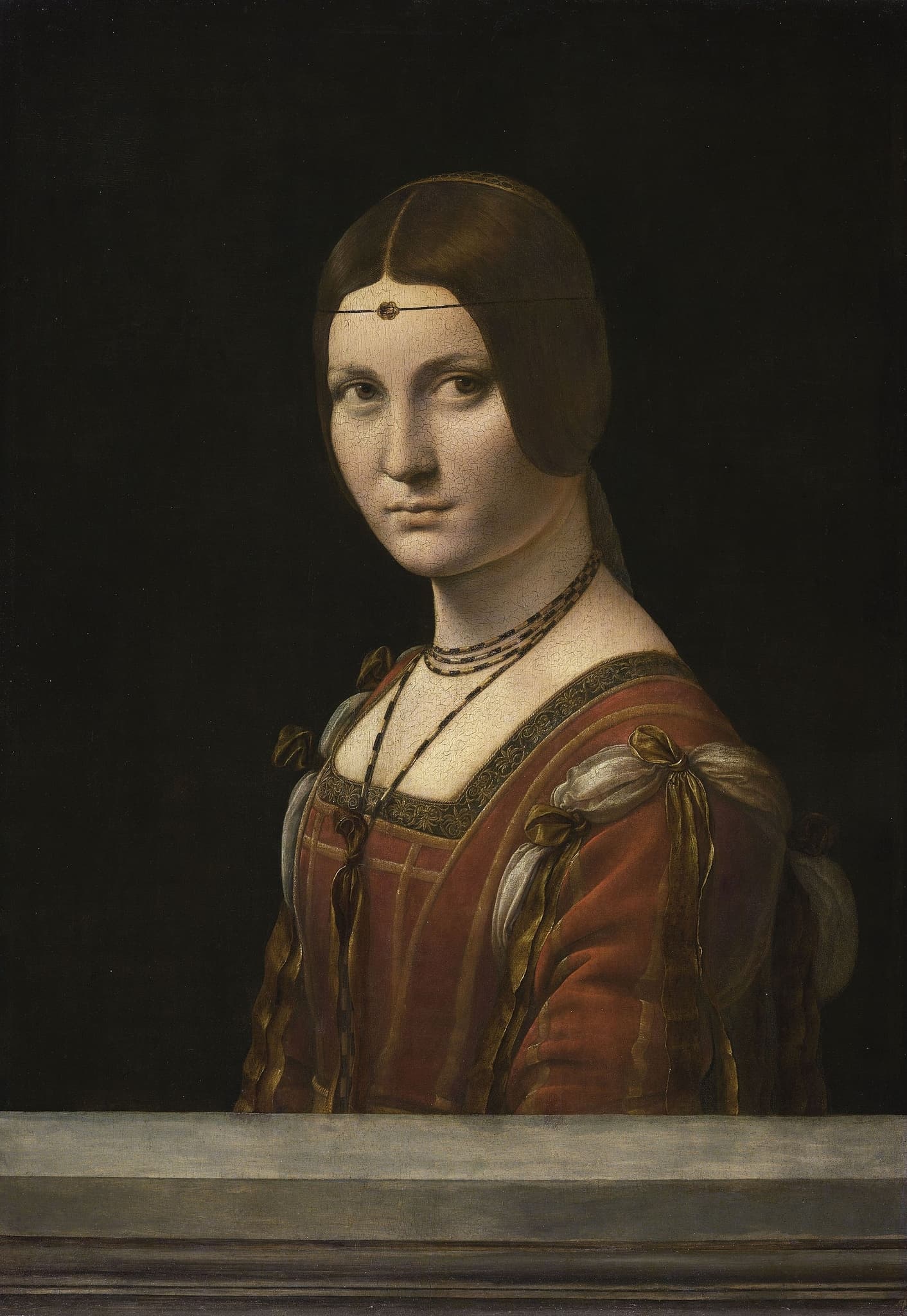
La Belle Ferronnière is held by the Musée du Louvre and is effectively off‑market. If hypothetically accepted as an autograph Leonardo by broad scholarly and market consensus, a defensible market valuation is US$200–500 million; if reattributed to studio/follower hands, value would drop to roughly US$5–50 million.
Valuation Analysis
Context and ownership. The painting known as La Belle Ferronnière is part of the Musée du Louvre's permanent collection and has no modern public sale record; in practice it is not a freely tradable market lot and remains subject to museum and national heritage control [1].
Primary valuation driver — attribution. The single decisive determinant of monetary value is whether the work is accepted as an autograph Leonardo. If a broad scholarly and market consensus accepted the Louvre panel as an autograph work, it would enter the ultra‑rare class of Leonardo paintings and command a price in the hundreds of millions of dollars. The 2017 sale of Salvator Mundi provides the clearest practical benchmark for a Leonardo autograph in the modern era and establishes a market ceiling in the several‑hundred‑million range [2]. Based on scarcity, precedent and likely buyer appetite, a working market range of US$200–500 million is defensible for a widely accepted autograph Leonardo.
Alternate attribution scenarios. If the painting is judged to be largely a workshop production, a later copy, or by a follower with limited autograph intervention, the market value falls sharply — typically to the single‑ to low‑double‑digit millions. Comparables for follower/copy versions of this composition have traded in the low millions (for example, a follower/Hahn version sold at Sotheby's in 2010) and illustrate the order‑of‑magnitude gap between autograph and non‑autograph lots [3].
Legal, institutional and market constraints. Because La Belle Ferronnière is held by the French national collection, inalienability rules, export restrictions and political considerations greatly reduce real‑world marketability; any hypothetical sale would be legally and politically fraught and likely require exceptional governmental approvals, which limits practical buyer competition and can suppress a headline auction outcome despite intrinsic value [1]. At the same time, institutions have demonstrated willingness to pay institutional‑scale prices for unique portrait masterpieces (see joint purchases for Rembrandt portraits) when institutional acquisition is feasible and politically supported [4].
Technical and condition caveats. Final valuation would require full technical and conservation documentation — infrared reflectography, X‑ray, pigment analysis, dendrochronology (if applicable), and a detailed restoration history. These technical studies can materially shift attribution confidence and therefore value. Condition, restorations and any areas of loss or heavy overpaint will be important in assessing insurability and buyer appetite.
Practical conclusion and next steps. For market planning, adopt a conditional approach: US$200–500 million as a working range if accepted as autograph; US$5–50 million if reattributed to workshop/follower. To refine this estimate undertake a full provenance audit, publish comprehensive technical studies, and obtain any indemnity/insurance valuations available for loans. Those steps will materially reduce the attribution and marketability uncertainty that currently drives the large valuation spread.
Key Valuation Factors
Art Historical Significance
High ImpactLa Belle Ferronnière occupies an important position among portraits associated with Leonardo's Milan period. While it does not enjoy the universal celebrity of the Mona Lisa, it forms part of the compact corpus of paintings that define Leonardo's portrait practice and provides scholars insight into sitter treatment, costume, and compositional strategy at Ludovico Sforza's court. Its long museum history and recurring scholarly attention mean it is regularly referenced in Leonardo literature and exhibition programming, sustaining both cultural and institutional recognition. In market terms, any credible association with Leonardo—especially for a work with museum provenance—translates directly into a substantial premium because securely attributed autograph paintings by Leonardo are vanishingly rare.
Attribution Certainty
High ImpactAttribution is the single most consequential factor for valuation. A published, peer‑reviewed consensus supported by technical evidence would move the painting into the supreme tier of Old Master works and justify pricing in the hundreds of millions. Lack of consensus or clear evidence of predominant studio execution would reduce buyer interest dramatically and shift price expectations to the single‑ to low‑double‑digit millions. Because the market discriminates so sharply based on authorship, investment in rigorous conservation science, transparent publication of results, and endorsement by leading Leonardo scholars is essential to convert scholarly status into market value.
Provenance & Legal Status
High ImpactThe Louvre provenance is a double‑edged asset: it strengthens the historical narrative and public trust in the painting's significance, but it also invokes legal protections that inhibit sale. French national collections are typically subject to inalienability and export restrictions that make disposal politically and legally difficult. These constraints materially change how a market participant values the work because potential buyers must factor in the practical improbability of a clean, public transfer and possible reputational risks. In hypothetical valuation terms, solid museum provenance supports a high theoretical ceiling while simultaneously narrowing realistic transactional pathways.
Condition & Technical Findings
Medium ImpactPhysical condition and the results of conservation‑science testing materially influence both attribution confidence and insurability. Confirmatory findings—such as characteristic underdrawing, pentimenti, or pigments consistent with early 16th‑century Milan—would bolster an autograph attribution and support a higher valuation. Conversely, extensive overpainting, unstable ground layers, or modern restorations can depress buyer confidence and reduce insurability and price. Critical technical investigations include infrared reflectography, X‑radiography, microscopic pigment and binder analysis, and, where relevant, dendrochronology. The clarity, quality and transparency of these reports are central to market reception.
Market Scarcity & Comparable Sales
High ImpactScarcity is the dominant commercial lever for Leonardo works: only a very small number of paintings are attributed to him and most are held by institutions. The 2017 Salvator Mundi sale demonstrated the practical market ceiling for a broadly accepted Leonardo and illustrated how exceptional provenance and buyer willingness can drive extreme prices. Institutional willingness to pay institutional‑scale sums for unique portraits (as with high‑profile Rembrandt acquisitions) also confirms that museums and state buyers are active competitors at the top end. By contrast, documented sales of clear followers and copies of this composition trade in the low millions, highlighting the steep price gradient tied to attribution certainty.
Sale History
La Belle Ferronnière has never been sold at public auction.
Leonardo da Vinci's Market
Leonardo da Vinci stands at the apex of the Old Master market. Very few paintings are attributed to him and nearly all are museum‑held, creating an extreme scarcity premium. The 2017 Salvator Mundi transaction established a modern market ceiling and demonstrated the capacity of private buyers and states to pay extraordinary sums for a Leonardo attribution. Market interest in Leonardo is persistent and institutional; however, attribution disputes, provenance transparency and reputational risk can introduce substantial volatility into realized outcomes.
Comparable Sales
Salvator Mundi
Leonardo da Vinci
Only modern public auction record for a work attributed to Leonardo; sets the practical market ceiling for an accepted autograph portrait by Leonardo.
$450.3M
2017, Christie's, New York
~$588.0M adjusted
La Belle Ferronnière (Hahn version) — follower of Leonardo
Follower of Leonardo da Vinci
Direct copy/variant of the same composition sold as a follower; demonstrates the market level for non‑autograph versions of this composition (low‑millions).
$1.5M
2010, Sotheby's, New York
~$2.3M adjusted
Portraits of Marten Soolmans and Oopjen Coppit (pair)
Rembrandt van Rijn
High‑value institutional purchase for canonical Old Master portraits; shows museums will pay hundreds of millions for unique, museum‑quality portrait masterpieces.
$180.0M
2016, Joint acquisition: Musée du Louvre & Rijksmuseum (reported purchase)
~$240.0M adjusted
Portrait of Adele Bloch‑Bauer I
Gustav Klimt
Top‑market portrait by a canonical artist that realized a mid‑hundreds‑of‑millions figure; useful as a cross‑market portrait benchmark for superstar artists.
$135.0M
2006, Private sale / Neue Galerie purchase (reported)
~$214.3M adjusted
Portrait of Dr. Gachet
Vincent van Gogh
Iconic portrait by a canonical artist whose 1990 auction price, inflation‑adjusted, sits in the low‑hundreds of millions — shows how historic high‑price portrait sales map into present‑day dollars.
$82.5M
1990, Christie's, New York
~$202.0M adjusted
Current Market Trends
At the ultra‑high end demand for unique, museum‑quality Old Master masterpieces remains robust with a narrow but deep buyer pool (museums, sovereigns, ultra high net worth collectors). Provenance clarity and rigorous technical documentation are increasingly decisive. Macro volatility affects timing and appetite, but genuinely canonical works typically retain resilient long‑term value; political and heritage protections, however, can substantially alter transaction feasibility and realized pricing.
Sources
- Musée du Louvre collection entry: Portrait of a Woman called 'La Belle Ferronnière'
- Christie's press release: Sale of Salvator Mundi (2017)
- Sotheby's: Sale record for a follower/Hahn version of La Belle Ferronnière (2010)
- Wikipedia: Portraits of Marten Soolmans and Oopjen Coppit (joint institutional acquisition example)