How Much Is Saint John the Baptist Worth?
Last updated: May 6, 2026
Quick Facts
- Methodology
- comparable analysis
Hypothetical open‑market valuation for Leonardo da Vinci’s Saint John the Baptist (Musée du Louvre, INV.775) is USD 300–800 million. This is a theoretical range anchored to the 2017 Salvator Mundi precedent and adjusted for rarity, provenance, condition, and the painting’s practical inalienability under French public‑property rules.
Valuation Analysis
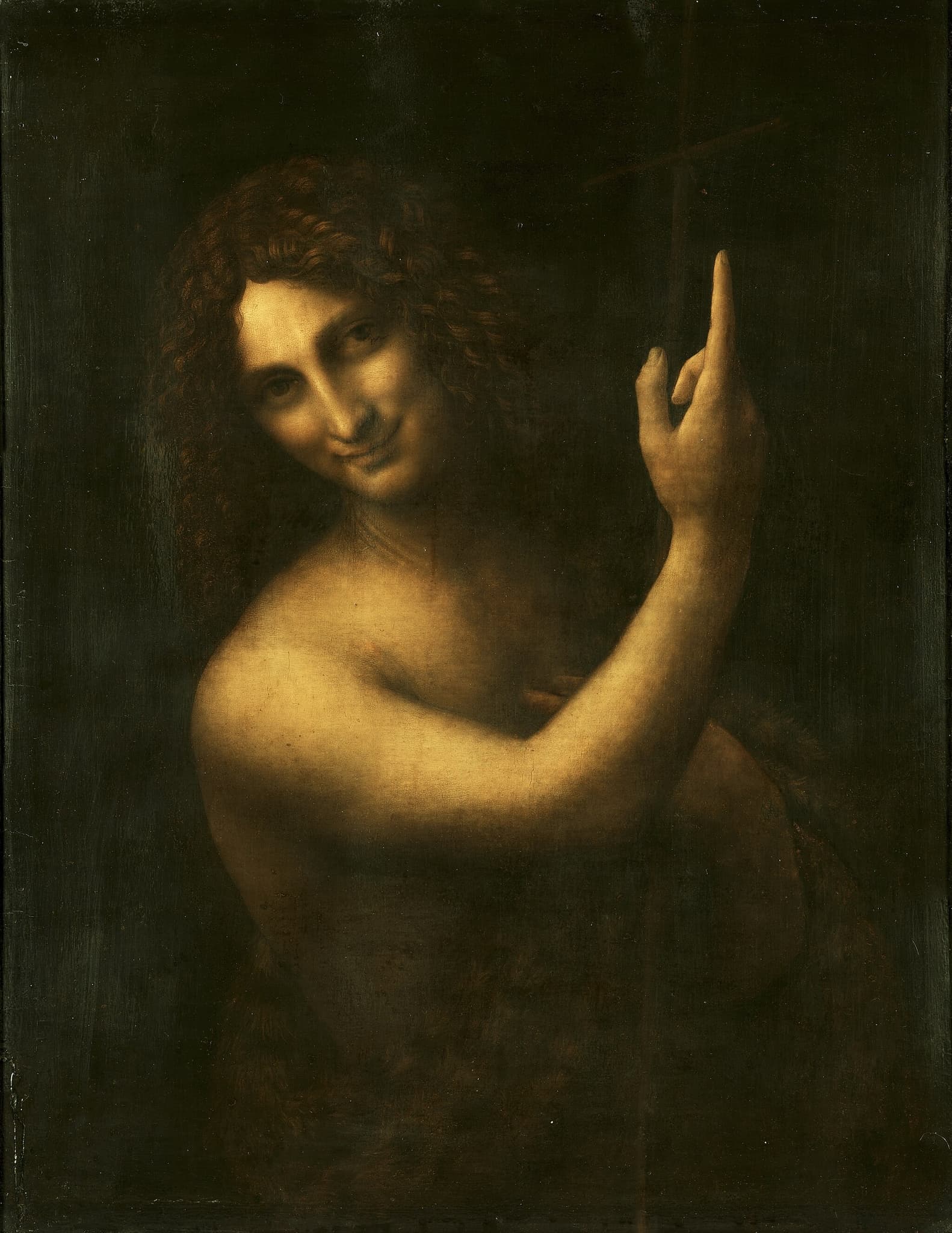
Valuation narrative: In a hypothetical arm’s-length sale, Leonardo da Vinci’s Saint John the Baptist (Musée du Louvre, INV.775) would be among the world’s most valuable single paintings. The principal market anchor is the 2017 Christie’s sale of Salvator Mundi, which demonstrated public willingness to pay in the mid‑hundreds of millions for an autograph Leonardo and established the current market ceiling for the artist [1]. Applying a comparable-analysis approach, Saint John’s late-period authorship, museum-grade condition, and royal provenance support valuation materially in line with that benchmark.
Range construction: The proposed USD 300–800 million range reflects calibrated adjustments around the Salvator Mundi anchor. The lower bound (≈USD 300M) is conservative—allowing for buyer risk aversion, differences in iconic recognition relative to Salvator Mundi, and potential conservational unknowns. The central/working band near USD 400–500M tracks closely with the Salvator Mundi precedent, reflecting parity in rarity, quality, and desirability. The upper bound (≈USD 800M) anticipates a highly competitive private transaction to a strategic purchaser (state or ultra‑high‑net‑worth collector) where symbolic value, prestige, and limited supply could push bidding well above prior public records.
Drivers and adjustments: Key positive drivers are scarcity (fewer than ~20 generally accepted autograph Leonardos), authoritative attribution, strong royal/state provenance, and institutional conservation stewardship that supports authenticity and physical stability. Negative or limiting factors include the painting’s practical unsellability under French public‑property rules and reputational/attribution controversies that can attach to Leonardo works. The Louvre’s custodianship and recent technical study and conservation treatments substantively support a premium valuation, but access to the full conservation file and any loan insurance appraisals would be required to refine condition-related discounts or premiums [2].
Market mechanics: Were a sale possible, the buyer universe would be extremely small and specialized, comprising sovereign buyers, national museums, and a handful of private collectors with capacity for multi‑hundred‑million transactions. Sale structure would likely favor a confidential private treaty or negotiated sale rather than the public auction circuit, although Christie’s 2017 model demonstrates that an auction can produce headline prices. Political, legal, and export-control considerations would materially affect both price and feasibility, and professional due diligence would be exhaustive.
Conclusion: Because Saint John the Baptist is part of the French national collection and effectively inalienable, this assessment is hypothetical. Nevertheless, based on comparable precedent, scarcity, provenance, and condition, a defensible open‑market range is USD 300–800 million (displayed herein). Refinement to a tighter estimate requires Louvre conservation reports, confirmation of legal deaccessionability, and confidential market feedback from leading auction houses and private dealers.
Key Valuation Factors
Art Historical Significance
High ImpactSaint John the Baptist is widely recognized as a major late autograph painting by Leonardo da Vinci, typically placed in his final decade (c.1513–1516). The work displays hallmark Leonardo techniques—subtle sfumato, refined anatomical modeling, an enigmatic psychological presence, and sophisticated handling of chiaroscuro—that make it essential to scholarship on the artist’s late style and influence. While not attaining the singular popular fame of the Mona Lisa, the painting is central to understanding Leonardo’s final inventive developments and has been the subject of sustained technical and curatorial attention. Its cultural and scholarly prominence directly elevates monetary value: institutions and private collectors prize securely attributed late Leonardos as unique cultural assets, and that status is a primary driver of any hypothetical market price.
Rarity / Scarcity
High ImpactScarcity is a dominant value driver for Leonardo’s paintings. Fewer than roughly twenty paintings are generally accepted as autograph by Leonardo, and almost all are retained in public museum collections, which effectively freezes supply. That structural scarcity means the marginal value of any one Leonardo is extremely high: there are no repeatable outputs, no estate markets, and very little liquidity. Consequently, when an accepted Leonardo does become theoretically available—either via private sale, state negotiation, or exceptional deaccession—competitive interest from sovereigns, museums, and the ultra‑wealthy would be intense. This rarity premium magnifies other factors (condition, provenance, attribution), so even small shifts in those areas can produce very large swings in theoretical price.
Provenance & Attribution Strength
High ImpactProvenance and secure attribution materially increase the painting’s hypothetical market value. Saint John has an elevated provenance history—traced into French royal collections and long maintained in state custody—which reduces title risk and strengthens confidence in authenticity. At the technical level, the Louvre’s conservation and imaging programs have provided scientific support for an autograph ascription; institutional endorsement by a leading museum significantly reduces buyer scepticism. Because buyers at this level demand near‑certainty, strong provenance and institutional attribution convert into premium pricing and ease of transaction. By contrast, any unresolved scholarly dispute or newly discovered provenance complication would create downward pressure, so continued publication of technical dossiers and clarity in provenance are crucial to preserving value.
Condition & Conservation
Medium ImpactCondition is a material determinant of value at the multi‑hundred‑million scale. Public records indicate Saint John has been conserved and studied by the Louvre and has benefited from recent treatments, which supports a presumption of good physical state. Nonetheless, panel paintings present specific risks—structural movement, historic restorations, overpaint, or losses—that can affect aesthetic reading and attribution certainty. Detailed conservation documentation (radiographs, IR reflectography, pigment analysis, dendrochronology) is required to quantify any discounts or premiums. Until the complete treatment history and technical reports are reviewed, the condition-based adjustment remains a potential source of significant value volatility, though current information supports a positive condition assessment consistent with a high valuation.
Legal & Institutional Inalienability / Marketability
High ImpactLegal and institutional constraints are the principal practical limit on market value. As part of France’s national collection, Saint John is subject to the Code du patrimoine and museum accession rules that make deaccession and export of national patrimony legally and politically fraught. In practice the work is effectively not for sale: any hypothetical market price presumes an extraordinary legal and political process. That immovability reduces realistic buyer competition and increases transaction risk, which in turn impacts hypothetical value assessments. While in theory some buyers (sovereign states or exceptional private actors) could be prepared to pay a premium for access to a unique Leonardo, the remote likelihood of lawful transfer significantly undercuts the painting’s practical marketability.
Sale History
Saint John the Baptist has never been sold at public auction.
Leonardo da Vinci's Market
Leonardo da Vinci occupies the apex of the Old Master market because extremely few autograph paintings survive and because of his unmatched cultural stature. Market activity for Leonardo is almost entirely driven by museum holdings; public auction appearances are virtually nonexistent. The 2017 Christie’s sale of Salvator Mundi created a modern pricing benchmark and underlined that motivated buyers will pay mid‑hundreds of millions for an accepted autograph Leonardo. Given limited supply, attribution certainty and provenance dominate value formation. The market is therefore characterized by intense competition when a Leonardo becomes theoretically tradable, but also by heightened reputational scrutiny, provenance diligence, and legal complexities that shape how and whether transactions occur.
Comparable Sales
Salvator Mundi
Leonardo da Vinci
Only recent public auction of an autograph Leonardo; primary market benchmark for valuation of a Leonardo that is in private hands.
$450.3M
2017, Christie's New York
~$548.7M adjusted
The Massacre of the Innocents
Peter Paul Rubens
Major Old Master auction record before the Salvator Mundi sale; large religious/figurative composition that illustrates high-end demand for Old Masters.
$76.7M
2002, Sotheby's London
~$135.4M adjusted
The Card Players
Paul Cézanne
High-profile private purchase of a single-masterpiece — useful cross-period comparable showing top private‑buyer willingness to pay mid‑hundreds of millions for an exceptional, unique work.
$250.0M
2011, Private sale (reported; buyer: State of Qatar)
~$353.1M adjusted
Les Femmes d'Alger (Version O)
Pablo Picasso
Top auction result for a 20th‑century masterpiece; demonstrates auctionhouse competition and buyer appetite that can push prices into the mid‑hundreds for iconic single works.
$179.4M
2015, Christie's New York
~$229.6M adjusted
Current Market Trends
The ultra‑high‑end art market remains robust for unique, culturally significant masterpieces. Sovereign buyers, museums, and very high‑net‑worth individuals continue to compete for icons, supporting record prices at the top end. However, geopolitical risk, regulatory scrutiny on provenance and export, and reputational concerns have increased due diligence and can elongate sale processes. Inflation and wealth concentration have preserved demand for trophy works, but the buyer pool is small and transactions are often confidential. For immovable national treasures, legal constraints override market appetite, making theoretical valuations useful primarily for scholarship, insurance, and institutional planning.