How Much Is The Virgin and Child with Saint Anne Worth?
Last updated: May 7, 2026
Quick Facts
- Methodology
- comparable analysis
The Louvre’s The Virgin and Child with Saint Anne is a major, museum‑held Leonardo and is effectively priceless and unsaleable under ordinary market conditions. For hypothetical commercial purposes only, a defensible preliminary market range is approximately USD 400 million to USD 1+ billion, anchored to the Salvator Mundi benchmark and adjusted for legal, curatorial and attribution constraints.
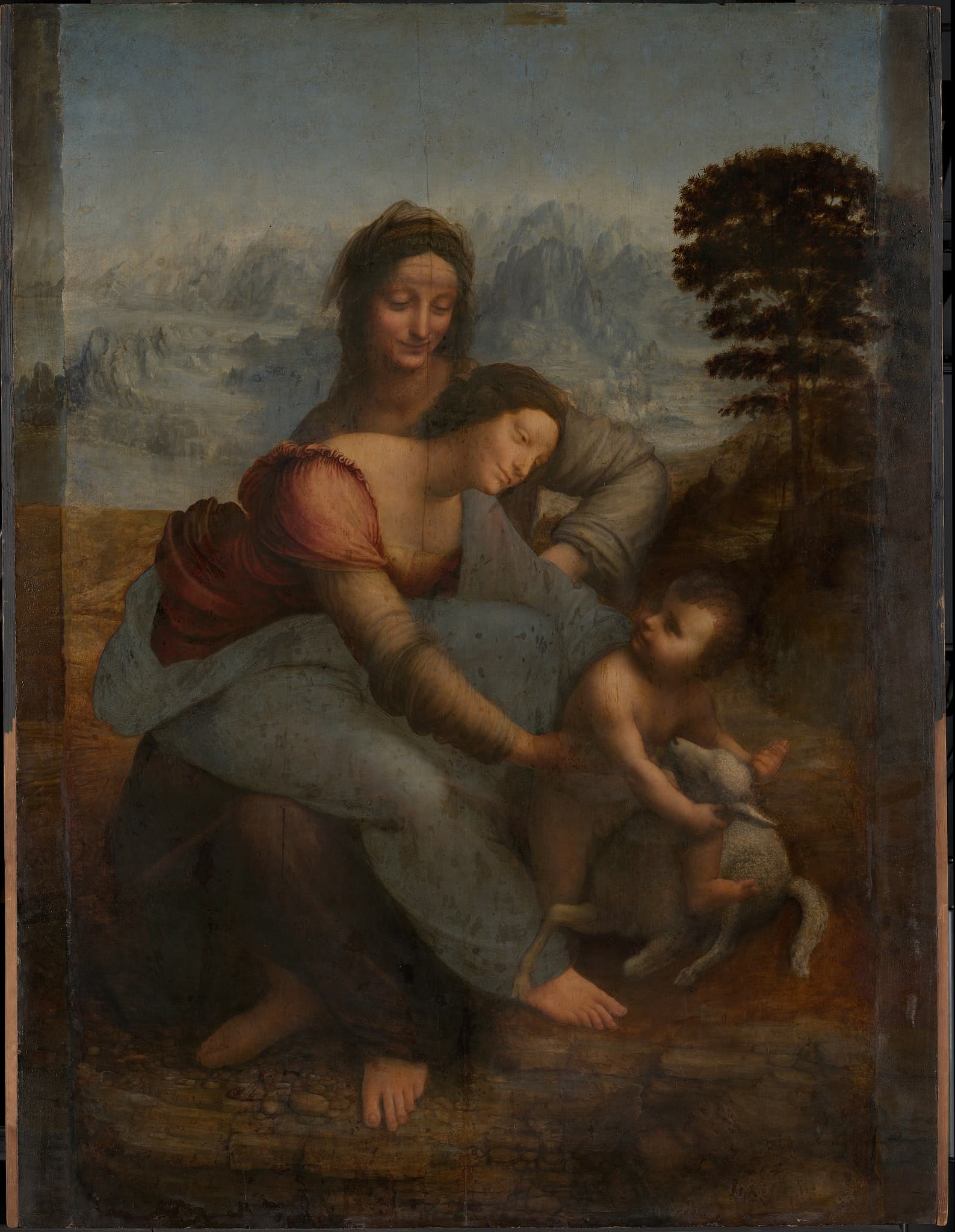
The Virgin and Child with Saint Anne
Leonardo da Vinci • Oil on panel
View more by Leonardo da Vinci →Valuation Analysis
Overview: The Virgin and Child with Saint Anne (Musee du Louvre, INV 776) is a canonical late Leonardo composition in an inalienable national collection and therefore not a liquid market asset. Any numerical estimate is hypothetical: the range presented here—USD 400 million to USD 1+ billion—represents what an unobstructed, competitive private sale or exceptional deaccession might theoretically achieve, using modern Leonardo market precedents and scarcity premiums as the primary basis [1][2].
Comparable basis: The single modern public sale that most directly influences top‑end pricing for an autograph Leonardo painting is Salvator Mundi (Christie’s, Nov 2017), which set a high‑water mark and demonstrates the ceiling that extremely rare Leonardo paintings can reach in a headline sale. Because Salvator Mundi’s attribution and post‑sale history are contested, comparability is imperfect; nonetheless it provides the only concrete modern price benchmark for an autograph Leonardo painting and justifies using USD 400M+ as a lower bound in a hypothetical market scenario [2]. Secondary comparables (autograph Leonardo drawings and high‑profile Renaissance rediscoveries) confirm the large premium for panel paintings vs. works on paper and reinforce the plausibility of a nine‑figure to low‑ten‑figure outcome in an unrestricted, competitive sale [3].
Ownership, legal and market constraints: The Louvre’s custodianship and French patrimony rules make a commercial sale extremely unlikely in practice; public law, export controls and cultural patrimony norms would either prevent transfer or sharply restrict the buyer pool and sale mechanics, which would materially affect realizable price. Political and curatorial opposition to disposing of national treasures would further depress the probability of a true market transaction and could produce forced-sale discounts if sale were attempted under duress [1].
Condition, attribution and provenance contingencies: Any final commercial value would be highly sensitive to: (a) the technical/conservation report (extent of autograph paint vs. later restoration), (b) unanimity of scholarly attribution to Leonardo’s hand, and (c) the completeness of provenance and legal title. Positive findings here would support values toward the upper part of the range; unresolved attribution or significant condition issues could reduce value materially.
Sale scenarios and recommended next steps: Practical sale routes would be private treaty to a sovereign or ultra‑high‑net‑worth collector, or an extraordinary auction with institutional and private participants—each requiring legal clearance and intense, confidential marketing. For a formal insured value or sale mandate, commission (i) a full technical/conservation report, (ii) legal advice on French patrimony and deaccessionability, and (iii) a confidential market soundings exercise through major houses/dealers. Until those steps are completed, the painting should be treated as priceless rather than a fungible market lot.
Key Valuation Factors
Art Historical Significance
High ImpactThe Virgin and Child with Saint Anne is widely regarded as a major late composition by Leonardo and occupies a central place in Leonardo scholarship and display history. Its artistic importance elevates its cultural and symbolic value above ordinary market metrics—making it a trophy asset with commensurate demand from museums, foundations and sovereign collectors. Because works of this significance rarely change hands, their market value is largely theoretical; however, if sold under exceptional circumstances the painting would command a price commensurate with the very top echelon of the art market.
Scarcity & Attribution
High ImpactLeonardo paintings are extraordinarily rare (fewer than ~20 generally accepted autograph paintings), creating intense scarcity value. Attribution certainty directly affects price: unanimous scholarly consensus on autograph status maximizes buyer confidence and pricing power, while doubts or evidence of substantial studio participation reduce the pool of buyers and the achievable price. The Louvre picture benefits from long‑standing attribution and museum vetting, which supports a very high hypothetical ceiling but is still contingent on technical confirmation of autograph passages.
Legal / Ownership Constraints
High ImpactThe painting is held by the French national collection (Louvre) and is subject to French patrimony and museum deaccession rules. These legal and administrative constraints make commercial disposition highly improbable and, if a sale were attempted, would require exceptional legal processes, ministerial approval and likely public debate. Restrictions on export and transfer would also narrow the buyer pool and could materially lower a realizable price relative to theoretical market value.
Market Precedent & Buyer Appetite
High ImpactThe Salvator Mundi sale (2017) established the modern headline ceiling for a painting attributed to Leonardo and demonstrates that a motivated competitive sale can reach mid‑to‑upper nine figures. However, that sale’s unique circumstances and subsequent disputes limit direct comparability. Potential buyers for a Saint Anne—sovereigns, major institutions or ultra‑wealthy private collectors—exist, but political sensitivity and publicity risk reduce appetite and could constrain bidding dynamics.
Condition & Conservation
Medium ImpactPhysical condition, panel stability, and the extent of restorations materially affect market value. A favorable technical report confirming substantial autograph paint and stable condition would support pricing at the top of the hypothetical range; conversely, extensive overpainting, losses or structural issues would justify downward adjustment. Conservation transparency is a prerequisite for serious market interest.
Sale History
The Virgin and Child with Saint Anne has never been sold at public auction.
Leonardo da Vinci's Market
Leonardo da Vinci sits at the apex of the Old Masters market: his autograph paintings are vanishingly rare, intensely studied, and command outsized prices when they enter the market. The 2017 Salvator Mundi sale reset the commercial ceiling for Leonardo‑attributed pictures and focused global attention on attribution, provenance and market opacity. Drawings and works on paper by Leonardo sell in the low‑to‑mid tens of millions when authenticated, underscoring the enormous premium accorded to an autograph panel painting. Overall, Leonardo’s market is characterized by extreme scarcity, a small buyer pool and very high due‑diligence thresholds.
Comparable Sales
Salvator Mundi
Leonardo da Vinci
Only modern commercial sale of a painting attributed to Leonardo; directly relevant as the market ceiling for an autograph Leonardo painting (same artist, same medium). Comparability is reduced by attribution controversy and atypical sale circumstances.
$450.3M
2017, Christie's New York (Evening sale)
~$562.9M adjusted
Head of a Bear (drawing)
Leonardo da Vinci
Record auction sale for a Leonardo drawing; useful to show the market for autograph Leonardo works on paper and the very large premium commanded by autograph panel paintings versus drawings.
$12.2M
2021, Christie's London (Old Master Drawings sale)
~$13.7M adjusted
Red‑chalk study (Sistine Chapel study)
Michelangelo
High‑profile sale of a rediscovered Renaissance master's drawing; provides a cross‑artist benchmark for demand for rare, museum‑quality Renaissance works (drawing medium). Less directly comparable by artist and medium but shows top‑end buyer appetite for rediscoveries.
$27.2M
2026, Christie's New York
~$26.7M adjusted
Current Market Trends
The Old Masters market remains selective: headline spikes (e.g., Salvator Mundi) are exceptional and followed by periods of reduced liquidity and increased due diligence. Since 2017 buyers demand stronger provenance, clearer technical documentation and legal certainty. 2024 saw a slowdown at the high end; selective rediscoveries and museum‑quality works have shown recovery into 2025–2026. Legal scrutiny and transparency pressures continue to shape buyer behavior, favoring well‑documented, museum‑validated works.