How Much Is Virgin of the Rocks (National Gallery, London) Worth?
Last updated: May 6, 2026
Quick Facts
- Last Sale
- $46K (1880, Purchased by National Gallery, London (from the Earl of Suffolk))
- Methodology
- comparable analysis
Hypothetical market value for the National Gallery’s Virgin of the Rocks (London) is approximately $250M–$600M USD, contingent on attribution and condition. Museum ownership, conservation history and UK export/deaccession constraints make any real sale unlikely; this range is driven by comparables (notably Salvator Mundi) and adjusted for attribution and condition risk.
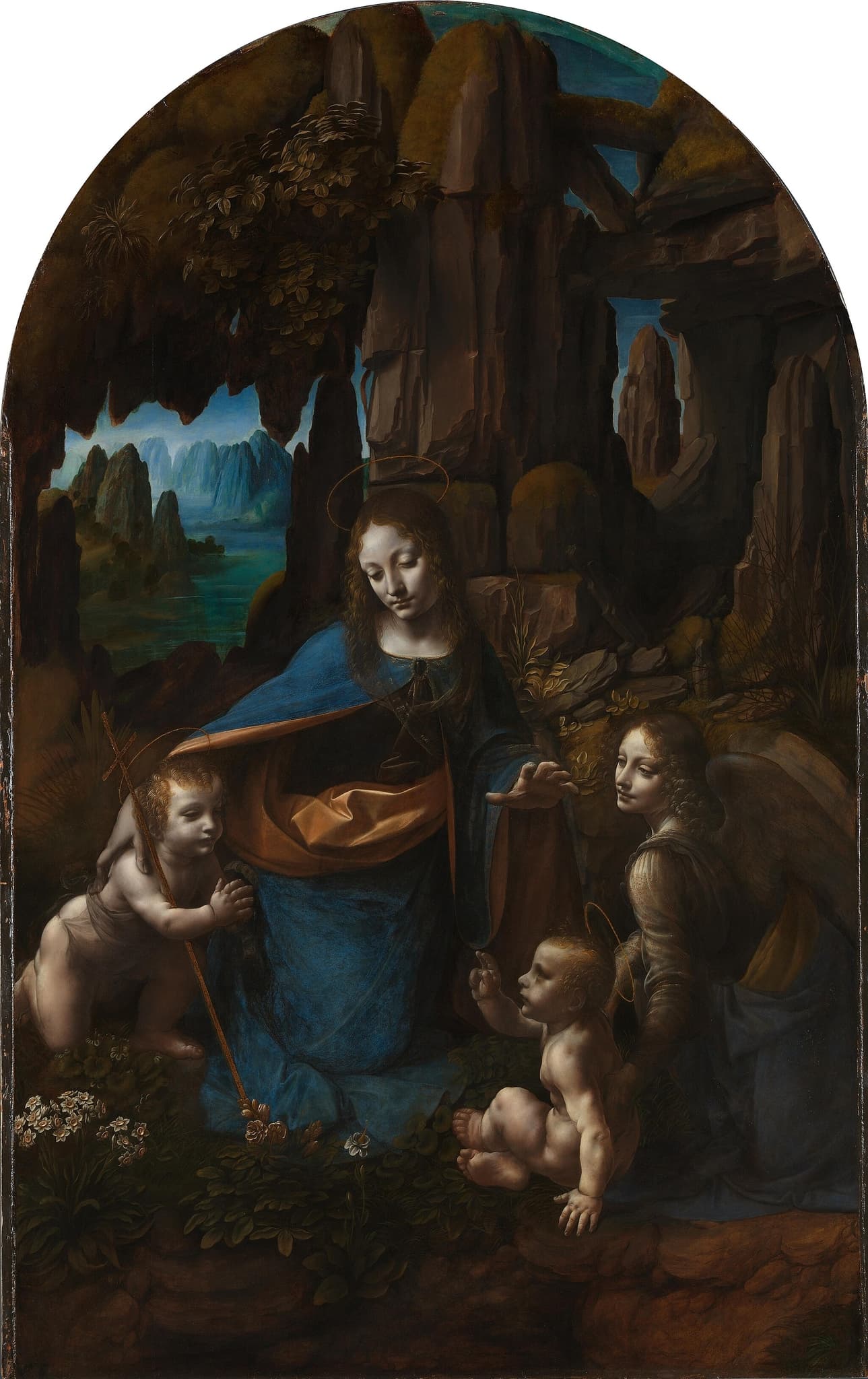
Virgin of the Rocks (National Gallery, London)
Leonardo da Vinci, 1491 • Oil on panel (later retouches/transfer history)
View more by Leonardo da Vinci →Valuation Analysis
Hypothetical market valuation: This valuation presents a theoretical market range for Leonardo da Vinci's Virgin of the Rocks (London version, National Gallery, NG1093). Were the National Gallery to sell—an extremely unlikely and legally complex step given museum ownership and UK cultural protections—the painting would reasonably be expected to command between $250,000,000 and $600,000,000 USD in today's market, with a conservative lower band and a contingent upside in exceptional circumstances [1].
The methodology is comparative, anchored to the only recent blockbuster Leonardo auction result: Salvator Mundi (Christie’s, 2017), which realized $450.3 million and establishes the contemporary ceiling for a rediscovered, broadly accepted Leonardo at auction [3]. Because Salvator Mundi demonstrated that buyer capacity exists at the high hundreds of millions, this painting’s upside tracks that benchmark; with unanimous autograph attribution and pristine technical condition, Virgin of the Rocks could approach or even exceed the Salvator Mundi figure. Conversely, unresolved attribution issues or extensive restoration will materially discount value.
Two primary risk adjustments drive the mid‑range estimate. First, the National Gallery’s published technical and conservation work documents a complex conservation history and evidence of studio participation, which moderates collector confidence and therefore reduces the price multiple collectors pay for unquestioned attribution [2]. Second, practical marketability is constrained by provenance and institutional ownership: deaccession policy, export licensing and national patrimony considerations make an open sale politically fraught and limit bidders to a small set of buyers willing to engage in a highly public transaction.
Market context also matters. The Old Masters segment is supply‑constrained and selective: buyers at the top end are fewer but willing to pay extraordinary sums for works with secure attribution, museum provenance and exhibition history [4]. The Salvator Mundi sale created a psychological price ceiling, but subsequent attribution controversy and market caution mean that realized prices for disputed works can fall well below headline comparators. In practice, therefore, the mid‑band $250–$600M reflects a balance between the painting’s undeniable art‑historical importance and the measurable doubts introduced by conservation and authorship questions.
Conclusion: The $250M–$600M band represents a reasoned, comparable‑analysis valuation: it incorporates the Salvator Mundi ceiling, a measured discount for documented technical interventions and studio participation, and an explicit recognition of the practical legal and reputational hurdles to selling a national collection masterpiece. A conservative scenario (heavy studio input or compromised condition) reduces realized value toward the low hundreds of millions; an exceptional scenario (unanimous attribution, pristine original surface, fierce competitive bidding) could push the painting to or above the Salvator Mundi level. All figures are hypothetical—the painting is effectively off‑market and any real price would depend on sale mechanics, permissions and bidders' appetite.
Key Valuation Factors
Art Historical Significance
High ImpactLeonardo’s Virgin of the Rocks is a canonical composition from his mature Milanese period and one of the most important devotional group paintings associated with his hand. The London version (NG1093) plays a central role in scholarship on composition, sfumato, and landscape integration; paired with the Louvre variant it is essential to understanding Leonardo’s studio practice. This stature places the painting in the top tier of potential market value, because works of this cultural weight attract strong institutional and private demand when attribution is secure. Art historical significance is therefore a high‑impact driver of theoretical price.
Rarity and Scarcity
High ImpactSurviving autograph paintings by Leonardo are exceptionally rare—generally counted in the low dozens—so scarcity creates outsized monetary value when an accepted work becomes available. Most major Leonardos are museum‑held and do not circulate, concentrating buyer demand on the very few that do. The London Virgin’s long public ownership elevates prestige but removes practical liquidity. Scarcity thus sets a high ceiling for potential value, but scarcity only translates into realized price when attribution, condition and sale logistics permit confident bidding.
Attribution and Condition
High ImpactAttribution and the physical integrity of the picture are the single most immediate market determinants. National Gallery technical studies document historical restorations, overpaint and evidence of workshop participation; such findings complicate assessments of autograph surface and reduce certainty for purchasers. Buyers pay very large premiums for unanimity among specialists and minimal restoration. Conversely, heavy retouching or substantial workshop contribution typically triggers steep discounts. For this painting, attribution and condition therefore have a high, immediate impact on achievable price.
Provenance and Legal / Deaccession Constraints
High ImpactStrong provenance and long museum stewardship enhance cultural value but introduce powerful barriers to sale. As a National Gallery property since 1880, NG1093 is subject to institutional deaccession procedures, probable government oversight and UK cultural property rules that restrict export and can complicate transactions. Political and public scrutiny of any sale would be intense and deter buyers sensitive to reputational risk. These constraints narrow the buyer universe and reduce practical marketability, making provenance and legal constraints a high‑impact negative on realizable value despite reinforcing cultural significance.
Comparables and Market Demand
High ImpactComparable sale evidence is limited but decisive: Salvator Mundi (Christie’s, 2017) set a contemporary auction ceiling at $450.3M and shows buyer capacity at the high hundreds of millions for a Leonardo attributed as autograph [3]. Other Old Masters sales typically trade in the tens of millions, underscoring the exceptional premium for an accepted Leonardo. The ultra‑high end is driven by a small cohort of collectors, institutions and sovereign buyers; hence comparables and concentrated demand exert high impact on valuation and explain the wide hypothetical range.
Sale History
Leonardo da Vinci's Market
Leonardo da Vinci sits at the apex of the Old Masters market. With very few securely attributed painted works remaining, each accepted autograph piece carries disproportionate cultural and monetary value. The 2017 Salvator Mundi auction demonstrated buyer capacity in the high hundreds of millions but also highlighted how attribution controversy and provenance concerns can temper market confidence. Demand is concentrated among sovereign collectors, ultra‑high‑net‑worth individuals and major museums; supply is largely fixed because most major Leonardos are museum‑held. Consequently Leonardo’s market is exceptionally sensitive to scholarship, condition reports and institutional endorsement.
Comparable Sales
Salvator Mundi
Leonardo da Vinci
Same artist and rare autograph Leonardo sold at public auction; it establishes the contemporary market ceiling for Leonardo paintings and is the primary direct benchmark for valuing another major Leonardo composition.
$450.3M
2017, Christie's New York
~$576.4M adjusted
Le Melon entamé (The Half‑Eaten Melon)
Jean‑Baptiste‑Siméon Chardin
High‑quality Old Masters sale (2024) showing realized demand and pricing for museum‑quality, well‑provenanced works in the Old Masters market; useful for gauging auction appetite and the typical scale of competitive bidding for top non‑Leonardo historic works.
$28.8M
2024, Christie's Paris
~$29.7M adjusted
Small Titian (Christie's London, Old Masters Part I)
Titian
Recent sale of a high‑quality Venetian Renaissance master in 2024 (~£17.56M ≈ $22.2M); serves as a period/market comparator illustrating how even important Renaissance works typically trade at much lower levels than an accepted autograph Leonardo.
$22.2M
2024, Christie's London
~$22.9M adjusted
Current Market Trends
Since 2017 the trophy Old Masters marketplace has behaved episodically: Salvator Mundi established a psychological ceiling, but attribution disputes and a 2024 softening introduced increased buyer caution. By 2025 the sector showed signs of recovery for well‑provenanced, museum‑quality works, yet the market remains supply‑constrained and highly selective. Collectors now prioritize pieces with secure scholarly consensus, documented exhibition history and minimal restoration. For trophy Leonardos, realized prices will depend less on broad macro trends and more on the specific outcomes of conservation, attribution studies and the identities of potential bidders.
Sources
- National Gallery – The Virgin of the Rocks (NG1093) painting entry
- National Gallery technical and conservation bulletin on The Virgin of the Rocks (2009–2011 studies)
- Christie’s / public record – Salvator Mundi sale (2017) / Guinness World Records summary
- Art Basel & UBS, Global art market reporting and Old Masters market analysis (summary pages)