How Much Is The Voyage of Life: Manhood Worth?
Last updated: April 27, 2026
Quick Facts
- Methodology
- comparable analysis
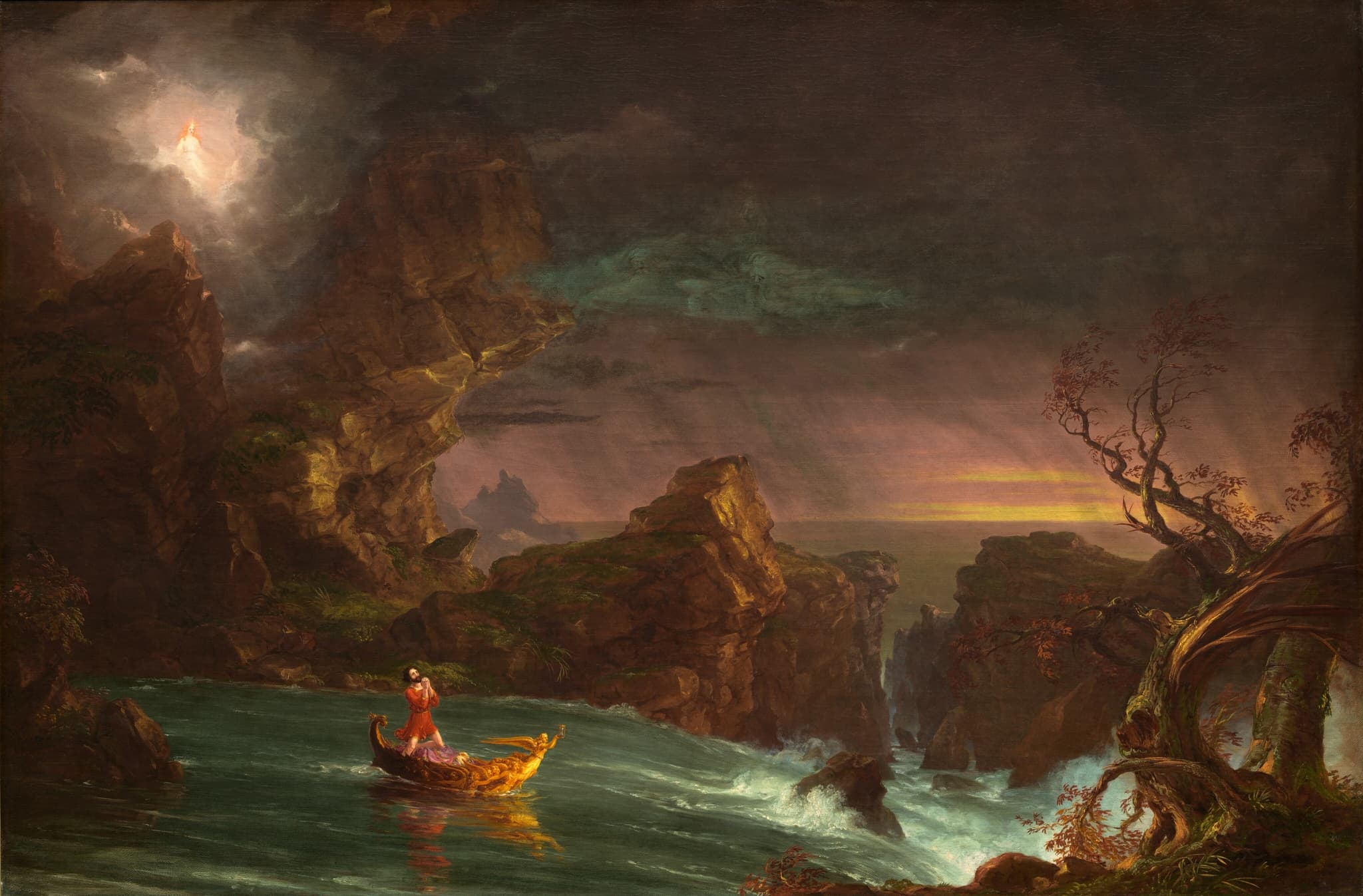
A reasoned, hypothetical market range for the canonical 1842 Thomas Cole panel The Voyage of Life: Manhood is US$3,000,000–US$10,000,000 based on recent auction comparables for museum‑quality Cole oils, institutional acquisition activity and the work's rarity. The canonical Manhood is held by the National Gallery of Art and is effectively off‑market, so this figure is theoretical and contingent on provenance confirmation, condition and sale channel.
Valuation Analysis
Valuation conclusion: Based on publicly available auction comparables, recent institutional acquisition activity, and the work's exceptional significance within Cole's oeuvre, a reasoned market range for the canonical 1842 "Manhood" panel is US$3,000,000–US$10,000,000. Because the accepted canonical panel is held by the National Gallery of Art and has not been sold in the modern public market, this figure is theoretical and predicated on a hypothetical, exceptional sale scenario [1].
The public auction record for top-quality Cole oils has clustered in the mid six-figure to low seven-figure band in recent seasons. Christie’s Jan 2025 sale of Mount Chocorua realized about US$1.62M and represents the contemporary public high-water mark for a finished Cole landscape [2]. Sotheby’s 2021 deaccession sale of The Arch of Nero realized roughly US$988k and illustrates market appetite when institutional property comes to market [3]. Smaller studio pieces and drawings continue to trade in the low five-figure to mid-six-figure range, underscoring the dispersion by scale, subject and provenance.
Why the estimate sits above most public results: The Voyage of Life is a canonical, multi-panel allegory that ranks among Cole's signature compositions; individual panels carry extra iconographic value and provenance premium. A single canonical panel with museum-quality provenance, exhibition history and full authenticity would attract both major collectors and institutional buyers and therefore would command a premium relative to run-of-the-mill Cole canvases. Moreover, private/curatorial acquisitions of exceptionally important Cole canvases (for example major museum purchases) have historically transacted off-market at values that can materially exceed public auction findings, pushing a well-preserved Manhood into the multi-million-dollar band [4].
Important caveats: the NGA's current ownership makes any actual sale improbable; institutional deaccessioning policy, donor restrictions and public controversy frequently constrain such offerings [1]. Condition and technical authenticity are decisive: a workshop replica, later version, or a heavily restored panel would dramatically lower market value. The sale channel matters — private treaty sales to museums or foundation-backed acquisitions typically produce the highest outcomes; an open auction might produce a lower realized price depending on buyer competition, estimates and marketing strategy.
To refine the range into a defensible figure requires (1) confirmation that the object in question is the canonical 1842 Manhood (catalog-raisonné / NGA accession cross-check), (2) a condition/conservation report and high-resolution photography, and (3) targeted searches of auction databases and private-sale reports. With those materials an on-site appraisal by a specialist in 19th-century American painting can convert this theoretical band into a sale-ready or insured valuation [5].
Key Valuation Factors
Art Historical Significance
High ImpactThe Voyage of Life series is one of Thomas Cole's most iconic and frequently cited allegorical works; as such, Manhood is not merely a landscape but a key node in 19th‑century American narrative painting. Its iconography, repeated reproduction and centrality in Cole scholarship elevate the panel's desirability for museums and high‑level private collectors. Because collectors prize canonical narrative works more highly than typical landscapes or studies, the panel benefits from a structural premium in value. Scholarly attention, exhibition history and reproduction frequency all tend to support a higher market multiple versus non‑canonical Cole canvases.
Provenance & Institutional Ownership
High ImpactDocumented museum provenance (the canonical Manhood is in the National Gallery of Art) both increases the work's pedigree and simultaneously suppresses market liquidity. Institutional ownership typically means long exhibition, publication and conservation histories — positive value drivers — but also makes an actual market offering rare. If the panel remains until a hypothetical deaccession or private transfer, legal, ethical and donor restrictions will heavily influence saleability and price. Clear, continuous title and robust provenance materially raise buyer confidence and therefore the price ceiling.
Condition & Conservation
High ImpactTechnical state is a decisive determinant of value. A museum‑housed canonical panel is likely well conserved, but any evidence of heavy relining, extensive inpainting, paint loss or structural instability will materially reduce market value. Conversely, an original 1842 canvas in sound condition with minimal intervention and strong technical authentication commands a premium. A full conservation report (including imaging and pigment analysis where appropriate) is necessary to substantiate high‑end estimates and to confirm the work is not a later studio replica or reduced variant.
Market Comparables & Auction Record
High ImpactRecent public auction comparables for finished Cole oils cluster in the mid six‑figure to low seven‑figure range (Christie's Mount Chocorua ~US$1.62M; Sotheby's Arch of Nero ~US$988k), while smaller studies sell for tens of thousands. Private museum acquisitions and foundation‑backed purchases (e.g., notable Huntington acquisitions) indicate that exceptionally rare masterworks can command substantially higher, privately negotiated sums. The comparative landscape supports a multi‑million dollar plausible band for a canonical, museum‑quality single panel, but public auction precedents are limited and therefore imperfect.
Saleability / Market Channel & Demand
Medium ImpactBuyer pool for a canonical Manhood is specialized: major museums, foundations and a handful of ultra‑high‑net‑worth collectors with historical art interest. Sale channel will materially affect outcome: private treaty or institution-to-institution transfer typically realizes the highest prices, while open auction performance depends on timing, marketing and competing institutional interest. If multiple panels surfaced together as a complete quartet, the aggregate value would likely be substantially higher than the sum of separate sales due to completeness premium and exhibition potential.
Sale History
The Voyage of Life: Manhood has never been sold at public auction.
Thomas Cole's Market
Thomas Cole is the preeminent figure of the Hudson River School and commands strong institutional and collector interest. Museum‑quality, well‑provenanced finished oils by Cole regularly achieve seven‑figure results in private placements or competitive auctions; the public auction high-water mark in recent seasons sits in the low seven‑figure band. The market is selective: top works outperform, while sketches and studio variants trade at much lower levels. Institutional purchases and foundation support have elevated realized values for the rarest Cole masterpieces.
Comparable Sales
Mount Chocorua, New Hampshire
Thomas Cole
Recent public auction high for Cole (museum‑quality Hudson River School landscape). Sets the contemporary auction benchmark for top-tier Cole works and signals active demand for major finished oils.
$1.6M
2025, Christie's New York
The Arch of Nero
Thomas Cole
Important mid‑career oil sold in a high‑profile museum deaccession (2021). Demonstrates that significant Cole works can realize near‑seven‑figure prices at major houses; useful as a lower‑end benchmark for museum‑quality pieces.
$988K
2021, Sotheby's New York
~$1.2M adjusted
River Landscape (small oil)
Thomas Cole
Small study/smaller-scale work sold at a regional/online house. Illustrates the lower tier of Cole's market and the wide dispersion in prices by scale, quality and provenance.
$60K
2021, Heritage Auctions
~$71K adjusted
Mount Chocorua, White Mountains (small oil on panel)
Thomas Cole
Regional auction sale of a small Cole landscape (2023). Useful mid‑market comparable showing active demand for smaller finished works and price sensitivity to scale/condition.
$150K
2023, Shannon's (regional sale)
~$159K adjusted
Current Market Trends
The market for Hudson River School and 19th‑century American painting is showing selective strength: museum‑quality, fresh‑to‑market works outperform, and institutional acquisitions drive top‑end demand. Public auction supply is limited, so private and foundation‑backed transactions often set market tone. Collector interest is concentrated at the upper tiers with a 'flight to quality' bias.
Sources
- National Gallery of Art — The Voyage of Life: Manhood (1842)
- Artnet / Christie’s coverage — Christie’s Jan 23, 2025 sales (Mount Chocorua result)
- The Art Newspaper — Newark Museum sale (The Arch of Nero, Sotheby’s 2021)
- The Huntington — reporting on significant Cole acquisitions and funding
- Thomas Cole National Historic Site / Explore Thomas Cole — Voyage of Life series background