How Much Is The Voyage of Life: Old Age Worth?
Last updated: April 27, 2026
Quick Facts
- Methodology
- comparable analysis
Final valuation range: $8,000,000–$20,000,000. This reflects (1) the painting’s canonical status within Thomas Cole’s oeuvre and museum custody, (2) transparent auction comparables that sit in the low‑millions, and (3) a premium applied for replacement/insurance/private‑trophy contexts assuming sound condition and clear title.
Valuation Analysis
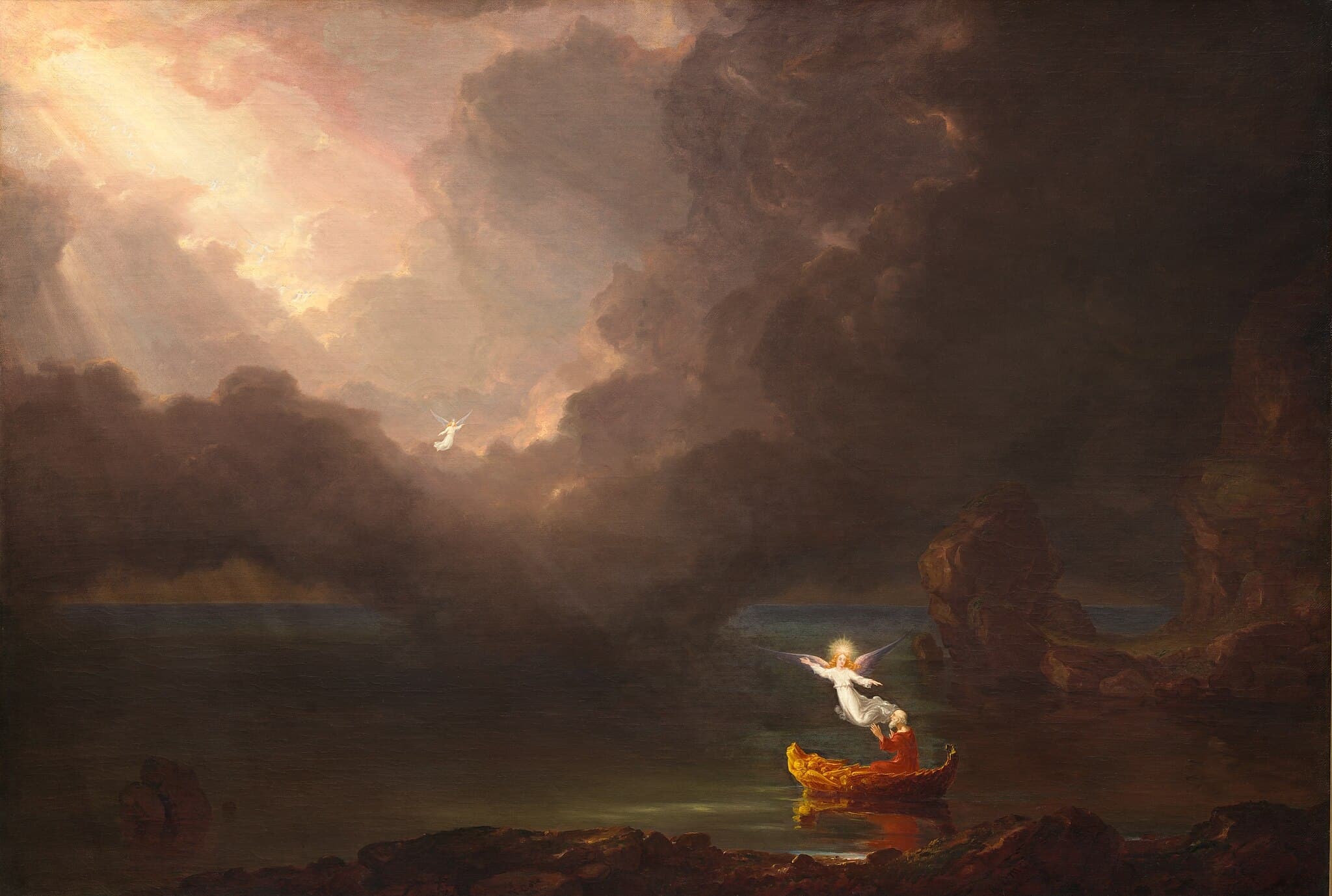
Conclusion: I estimate The Voyage of Life: Old Age (Thomas Cole, 1842; National Gallery of Art, acc. 1971.16.4) would realistically command between $8,000,000 and $20,000,000 in a private‑trophy or institutional replacement scenario, while the transparent public‑auction expectation would likely be materially lower (single‑ to low‑millions). This view balances direct auction comparables, provenance and institutional custody, and the documented market behavior for museum‑quality Hudson River School masterpieces [1][2].
Rationale: The public record for Thomas Cole shows realized auction results clustered in the mid‑six‑figures to low‑millions, with a new public auction high of $1,623,000 in January 2025 — a useful, transparent baseline for market liquidity and demand [2]. However, museum‑quality, canonical works like a Voyage of Life panel are seldom offered at auction; when similar works move, transactions often occur privately or by inter‑institutional transfer and can command substantially higher, non‑public sums. That private/replacement premium is the principal reason the replacement/insurance band sits well above observable auction prices.
Key value drivers: The painting’s canonical status within Cole’s oeuvre, excellent provenance (artist sale to George K. Shoenberger; 20th‑century institutional custodianship; NGA acquisition 1971), and sustained exhibition/publication history materially elevate its theoretical market value. Equally important are condition and conservation history: if the NGA record shows only routine conservation, the top of the band is plausible; significant restoration or structural issues would reduce marketability and push a sale toward the lower end of both auction and private scenarios [1].
Market scenarios: (A) Auction offering: if offered at Christie’s or Sotheby’s as a marquee Americana lot, expect robust institutional and private interest but a likely realized range in the low‑ to mid‑millions, informed by the artist’s public record. (B) Private/institutional sale or replacement valuation: museums/major private buyers would pay a premium for a canonical panel, and negotiated private purchase or replacement/insurance valuation in the $8M–$20M band is credible, depending on buyer competition and donor support. (C) Deaccession is unlikely from a major museum; any actual sale would be exceptional and contingent on institutional policy and donor context.
Recommended next steps: obtain the NGA’s condition/conservation report and any institutional replacement valuation; secure verified private‑sale comparables from auction houses; and, if a formal value is required for insurance or sale, commission a written appraisal from a senior specialist in 19th‑century American painting.
Key Valuation Factors
Art Historical Significance
High ImpactThe Voyage of Life is one of Thomas Cole’s signature allegorical projects and is central to his late career output. As a canonical panel from a four‑part series that is widely reproduced and cited in scholarship, Old Age carries strong intrinsic and institutional value beyond mere aesthetic merit. Museums and scholarship treat these panels as educational and cultural assets; that status raises replacement and insurance valuations materially relative to a garden‑variety landscape. Collectors prize canonical works for exhibition and loan potential, which increases demand among museums and well‑funded private buyers and supports a premium in negotiated sales.
Comparable Auction Record & Market Evidence
High ImpactTransparent auction evidence for Thomas Cole shows realized prices concentrated in the mid‑six‑figures to low‑millions, with a public auction high of $1,623,000 (Christie’s, Jan 2025). Those results set a clear, liquid baseline for free‑market sale expectations. However, the top of the market for museum‑quality Hudson River School works frequently transacts off‑market in private or institutional deals that are not reflected in auction databases. Thus the comparable auction record constrains what might realistically be achieved under an open auction sale, but it underestimates the ceiling available in negotiated, private or institutional transactions.
Provenance & Exhibition History
High ImpactThe painting’s documented chain of custody—artist to George K. Shoenberger, early 20th‑century institutional custody (Huenefeld/Bethesda Hospital), and eventual purchase by the National Gallery of Art in 1971—constitutes strong, museum‑grade provenance. Long museum custody and documented exhibition/publication history amplify value by reducing attribution risk and supporting scholarly citation. Strong provenance increases both institutional interest and private buyer confidence and therefore pushes a negotiated valuation upward compared with works that have gaps or contentious title.
Condition & Conservation
High ImpactCondition is a decisive commercial variable for a large 19th‑century oil on canvas. The NGA’s conservation record will determine structural stability, original paint survival, and any historic overpainting or restoration. Excellent, well‑documented conservation history supports the high end of the valuation band; unresolved structural issues, heavy restoration, or significant losses would materially reduce marketability and realized price. A formal condition report from the NGA is essential before moving from a hypothetical range to a transaction‑level valuation.
Market Liquidity & Sales Channel
Medium ImpactLiquidity for museum‑quality 19th‑century American paintings is limited and concentrated among institutions, specialist dealers, and a small set of high‑net‑worth collectors. Museum ownership both protects cultural value and reduces market liquidity—deaccessioning is rare and politically sensitive—so any sale would likely be negotiated privately or as a major auction‑house marquee lot. Private sales can generate premiums but depend on buyer appetite and fundraising structures. The channel through which the work is offered will therefore be a strong determinant of price realization.
Sale History
Private sale / early provenance
Private transfer / gift
National Gallery of Art acquisition
Thomas Cole's Market
Thomas Cole is the preeminent figure of the Hudson River School and commands significant scholarly and institutional attention. Public auction turnover for Cole is relatively limited; recent results (2023–2025) show a rising tone with a new public auction high in 2025. Most of Cole’s top‑tier works remain in museum collections, which limits auction supply and obscures private‑sale ceilings. As a result, observable auction records understate potential private/institutional values for masterpieces. Collectors and museums prize canonical works for exhibition and research, creating durable demand among a specialized buyer base.
Comparable Sales
Mount Chocorua, New Hampshire
Thomas Cole
Same artist; large, museum-quality 19th-century landscape. This lot set Thomas Cole's public-auction record (Jan 2025) and therefore indicates the upper bound of Cole's transparent auction market.
$1.6M
2025, Christie's New York
View Near Catskill
Thomas Cole
Same artist and similar period; sold at Christie’s in 2024 and represents a mid-market result for a well-provenanced Cole at a major house. Useful for pricing high-quality but non-masterpiece Cole canvases.
$504K
2024, Christie's New York
~$519K adjusted
Mount Chocorua (unsigned, smaller variant)
Thomas Cole
Same subject as the Christie’s top lot but unsigned and smaller, sold at a regional house. Demonstrates how attribution, size and venue materially reduce realized prices — useful for framing the lower end of the auction market for Cole works.
$150K
2023, Shannon's Fine Art (regional auction)
~$156K adjusted
Current Market Trends
Recent market activity (2023–2025) shows renewed interest in historic American art, driven by targeted auction programming, institutional acquisitions, and cultural anniversaries. Auction houses are packaging Americana more prominently and institutional buying (and private, off‑market purchases) has raised category visibility. Nonetheless, top‑end transactions often occur privately, leaving public auction data an incomplete indicator of maximum value. Condition, provenance and sale channel remain the dominant short‑term determinants of realized prices.
Sources
- National Gallery of Art — collection entry for The Voyage of Life: Old Age (Thomas Cole), accession 1971.16.4
- Christie’s — lot page / sale results for Thomas Cole, Mount Chocorua, New Hampshire (Jan 23, 2025)
- Artnet News — market commentary on historical American art trends (2024–2025)
- The Huntington — acquisition press release (illustrative institutional purchase raising category profile)