How Much Is The Voyage of Life: Youth Worth?
Last updated: April 27, 2026
Quick Facts
- Methodology
- comparable analysis
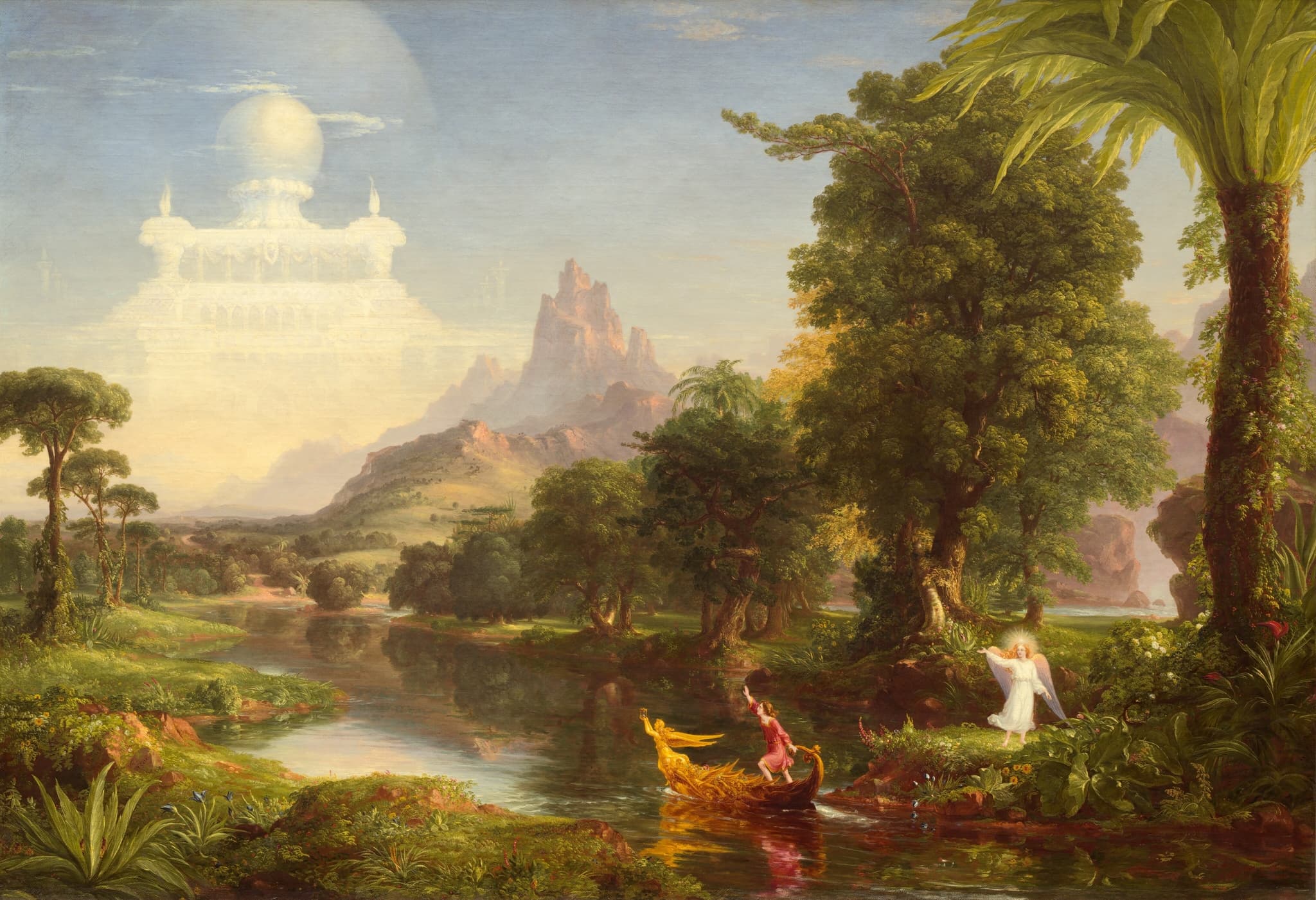
If the object is the autograph 1840/1842 Thomas Cole panel 'Youth' from the canonical Voyage of Life series in good condition with museum‑quality provenance, the market estimate in normal conditions is approximately USD 4,000,000–12,000,000. If it is a later studio copy, reduction, or reproduction, value would be orders of magnitude lower (typically tens–hundreds of thousands).
Valuation Analysis
Bottom line. If the work presented is the autograph Thomas Cole panel "Youth" from the canonical Voyage of Life (the 1840/1842 sets) and it is in sound condition with museum‑quality provenance, a reasonable market valuation in normal selling conditions is approximately USD 4,000,000–12,000,000. If the object is instead a later studio copy, artist's reduction, or reproduction the market value is typically an order of magnitude or more lower (generally in the tens to low hundreds of thousands).
Why this range. The canonical Voyage of Life panels are among Cole’s most important and widely documented works and the principal examples are museum‑held (Munson‑Williams‑Proctor and the National Gallery of Art), so a canonical “Youth” panel has not appeared on the open market in modern times and supply is effectively zero [1][3]. Market evidence for Cole’s auction ceiling comes chiefly from high‑grade landscapes sold in recent years; for example, Christie’s reported that Mount Chocorua realized USD 1,623,000 in January 2025, illustrating active demand for top‑tier Cole pictures while also showing that standalone landscapes (as opposed to canonical allegorical masterpieces) have historically topped out in the low‑ to mid‑seven‑figures at public sale [2][4]. Because canonical series pieces are rarer and carry outsized cultural weight, they command a premium that can push an autograph panel well above those baseline auction highs.
How to read the band. The low end (≈USD 4M) assumes the panel is autograph but may have limitations—minor condition issues, less continuous provenance, or sale under subdued market conditions. The high end (≈USD 12M) assumes pristine condition, uninterrupted and published provenance/exhibition history, and a sale environment with institutional and private buyers competing strongly. These figures are derived by extrapolating from available auction comparables for Cole and related Hudson River School masters, adjusted upward for the unique historical importance and zero‑market supply of an autograph Voyage panel.
Key contingencies. Attribution and technical confirmation, conservation history, legal/title clarity, and provenance completeness are the single largest determinants of where a given panel falls in this band. A confirmed studio copy, reduction, or later replica would generally trade for dramatically less—often a small fraction of the autograph band—because the buyer pool and institutional interest for copies are far smaller.
Next steps. For a formal appraisal or sale strategy: obtain high‑resolution recto/verso photographs, a professional condition report, and technical imaging (IRR/X‑ray/pigment analysis/dendrochronology where appropriate). Compile full provenance and exhibition citations and consult an American paintings specialist at a major auction house or a curator at NGA/Munson for a formal pre‑sale opinion; with those deliverables the estimate can be narrowed and converted into an insurance/replacement value.
Key Valuation Factors
Art Historical Significance
High ImpactThe Voyage of Life cycle occupies a central place in Thomas Cole’s output and in nineteenth‑century American art more broadly. As the founding figure of the Hudson River School and the author of major allegorical sequences, Cole’s canonical compositions are heavily studied, widely reproduced, and routinely cited in scholarship and museum interpretation. A panel from this series therefore functions both as a high‑quality picture and as a cultural artifact with exhibition, publication, and pedagogical value that extends beyond strictly pictorial merit. That elevated status increases institutional demand and collector interest, making art‑historical significance a primary driver that pushes an autograph 'Youth' toward the top of any realistic price band.
Rarity & Market Scarcity
High ImpactAutograph panels from the Voyage of Life series are functionally unavailable on the open market: the primary examples are in institutional collections and there is no modern auction history for canonical 'Youth' panels. This absolute scarcity compresses supply and magnifies the impact of any single appearance: museums, major collectors, and philanthropic buyers concentrate their efforts on the few opportunities that arise, which tends to push realized prices above those for more commonly traded works. The illiquid and concentrated buyer pool increases volatility and raises the probability that a single sale could establish a new price benchmark for Cole.
Provenance & Exhibition History
High ImpactFor a painting of this profile, clean, published, and continuous provenance together with a strong exhibition and publication history materially elevates value. Museum accession, ownership by important nineteenth‑ or twentieth‑century collectors, loans to major exhibitions, and citations in catalogues raisonnés or monographs create buyer confidence and institutional interest while materially reducing attribution risk. By contrast, gaps in provenance, unverified transfers, or association with poorly documented private hands substantially lower buyer appetite. Given the extensive scholarship surrounding Voyage of Life, documentary proof that a panel aligns with the accepted corpus is often decisive between multi‑million and much lower valuations.
Condition & Technical/Authenticity
High ImpactPhysical condition, restoration history, and technical authentication are decisive for valuation. Original ground and paint layers, minimal invasive restoration, and a stable support greatly increase desirability; severe losses, heavy overpainting, or unstable relining depress value. Technical tools—infrared reflectography, x‑radiography, pigment analysis, and dendrochronology for panel supports—are often required to corroborate dating and autograph status. A confirmed autograph panel with robust technical backing can command a premium, while uncertain attribution or extensive restorative intervention will meaningfully reduce the market price and increase buyer risk premiums.
Market Comparables & Demand
Medium ImpactComparable auction data for Thomas Cole is limited and skewed toward landscapes and studies rather than canonical multi‑panel works. The strongest public comparator is a recent top lot (Christie’s Jan 2025, Mount Chocorua, ~USD 1.62M), which demonstrates active interest but also shows that standalone landscapes have historically fallen below the proposed autograph‑panel band. Demand for a canonical 'Youth' would be concentrated and intense—museums, prominent collectors of nineteenth‑century American art, and philanthropic buyers typically compete in that niche. Because hard comparables are scarce, pricing an autograph panel requires a reasoned extrapolation from the best available sales plus an attached rarity premium.
Sale History
The Voyage of Life: Youth has never been sold at public auction.
Thomas Cole's Market
Thomas Cole (1801–1848) is the founding figure of the Hudson River School and retains strong institutional and scholarly visibility. Major canvases are concentrated in museum collections and rarely come to market; as a result, the auction record for Cole’s highest‑quality stand‑alone landscapes has historically been in the low‑to‑mid seven‑figures (recent peak circa USD 1.6M), while sketches and studies trade in five‑to‑six‑figure ranges. The scarcity of major autograph canvases combined with Cole’s canonical status produces episodic but intense demand when significant works appear, meaning valuation requires cautious extrapolation from limited public sales and careful attention to provenance and condition.
Current Market Trends
The market for high‑quality nineteenth‑century American painting remains resilient: museums and established collectors continue to acquire canonical works, and when rare, exhibition‑worthy pieces appear they attract competitive bidding. Liquidity at the very top is sensitive to macroeconomic conditions and institutional budgets, but scarcity and historical significance sustain relative price stability. Recent auction activity indicates appetite for major Hudson River School artists is intact, and philanthropic or institutional interest can sharply elevate outcomes for works with impeccable provenance and condition.