How Much Is The Singel near the Lutheran Church in Amsterdam Worth?
Last updated: June 25, 2026
Quick Facts
- Methodology
- comparable analysis
Estimated fair-market/insurance-equivalent value: $12–20 million for Vincent van Gogh’s The Singel near the Lutheran Church in Amsterdam (1885). The range reflects a strong artist premium tempered by the early Dutch-period date, small scale, and subdued palette, with blue-chip institutional provenance supporting the upper end.
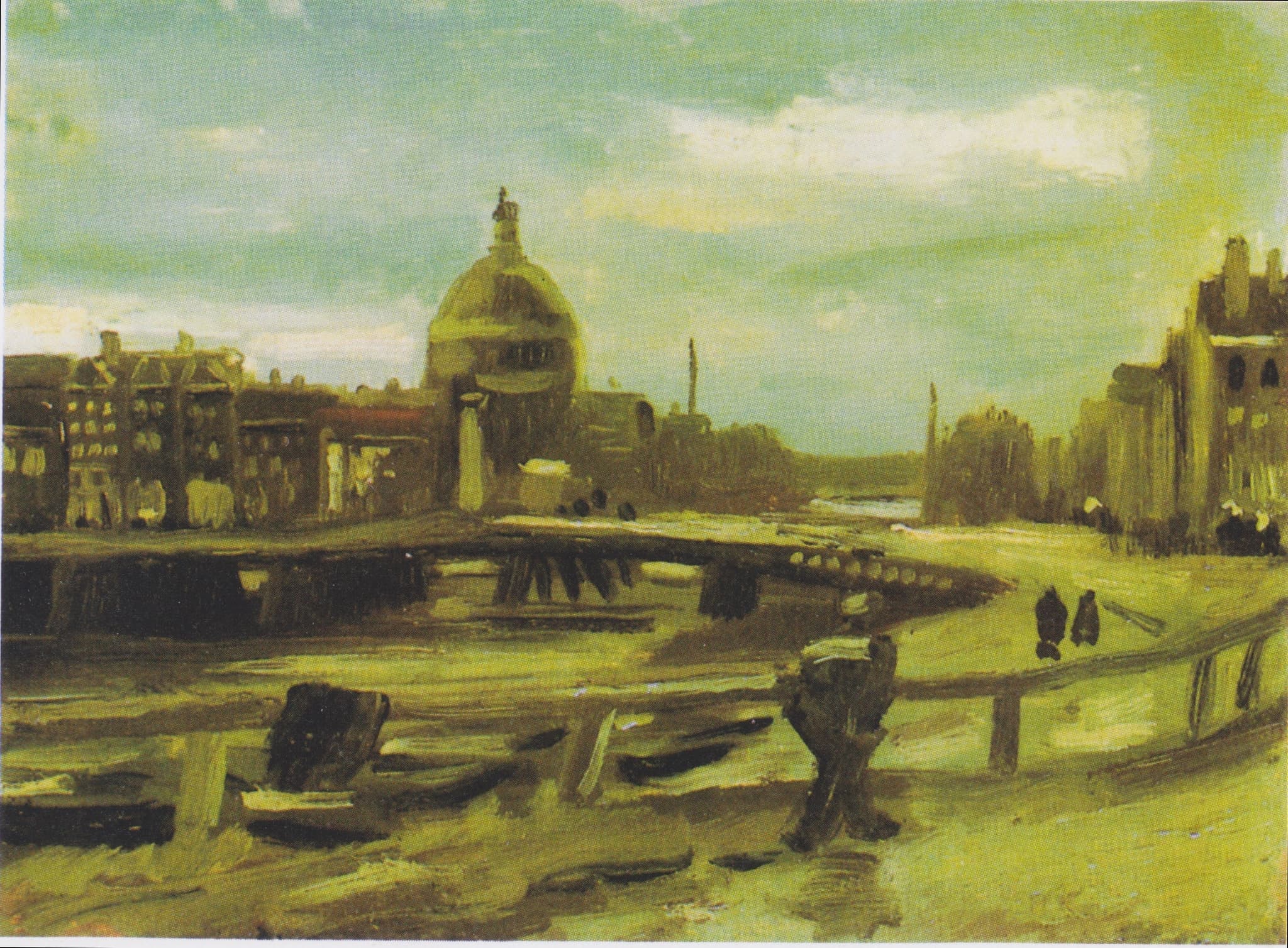
The Singel near the Lutheran Church in Amsterdam
Vincent van Gogh, 1885 • Oil on panel
Read full analysis of The Singel near the Lutheran Church in Amsterdam →Valuation Analysis
Conclusion: Based on comparable market evidence for Van Gogh’s early-period oils and the work’s established institutional standing, a fair-market/insurance-equivalent valuation of $12–20 million is appropriate for The Singel near the Lutheran Church in Amsterdam (1885, oil on panel, 19 × 25.5 cm). The painting is an authenticated work from Van Gogh’s Dutch/Nuenen period and is on long-term loan to the Rijksmuseum from the P. & N. de Boer Foundation—an eminent, public-facing context that affirms quality and importance while underscoring that pricing is hypothetical rather than sale-tested [1][2].
Position in the oeuvre: Market appetite for Van Gogh peaks with the late 1880s Arles/Saint-Rémy/Auvers canvases. Works from 1884–85 in darker, earth-toned palettes are considered secondary tier commercially, but they remain scarce and highly coveted. This Amsterdam city view is a relatively rare urban subject within the Dutch-period output, adding interest beyond peasant heads and interiors. The work’s date, format, and atmosphere place it above typical Nuenen heads/weavers but below the luminous, color-forward Paris and Provence pictures in market desirability [1][2].
Comparable sales: Early Dutch-period oils of modest size have achieved mid–single-digit millions in recent seasons, such as Weaver Facing Right (1884) at $5.495m (Christie’s New York, 2023) and Head of a Woman (Gordina de Groot) (1885) at £4.842m/~$5.8m (Christie’s London, 2023) [7][9]. For city/leisure subjects closer to Paris-period taste, prices escalate: Street Scene in Montmartre (1887) made about $15.4m (Sotheby’s Paris, 2021) and People Strolling in a Park in Paris (1886) achieved $9.7m (Sotheby’s New York, 2019) [6][8]. Recent coloristic 1887 works—Coin de jardin avec papillons and Les canots amarrés—have realized roughly $33m each in 2024, establishing a clear upper bound for small-to-medium urban/river motifs of that brighter period [4][5].
Market context: Van Gogh’s overall demand remains among the deepest in art, anchored by the $117.2m auction record for Orchard with Cypresses (1888) in 2022 and consistent eight-figure results for strong late-1880s paintings [3][4][5]. The market is highly quality- and period-sensitive: trophy-level works in prime palettes command multiples over early, darker canvases, but even secondary-period oils trade in the eight figures when provenance and condition are strong.
Valuation rationale: Placing this 1885 Amsterdam panel at $12–20 million aligns it above early Nuenen figure studies/weavers and below bright 1886–87 Paris scenes and 1888–90 icons. The rare urban Dutch-period subject and foundation-to-museum provenance support a mid-teens “most-likely” outcome, assuming sound condition consistent with museum-held panels. The upper range would be supported by excellent state, dense exhibition/literature, and a high-visibility sale context; any structural or cosmetic issues would bias the work toward the lower band [1][2][6].
Key Valuation Factors
Art Historical Significance
Medium ImpactPainted in October 1885 during Van Gogh’s Dutch/Nuenen period, this small panel captures a rare urban subject for the artist at that time: Amsterdam’s Singel with the Round Lutheran Church. While not among the iconic Arles or Saint-Rémy motifs, it documents a pivotal moment in his development as he explored composition, atmosphere, and city subject matter just before his palette and technique transformed in Paris. The work’s specificity of place and date, coupled with its connection to a well-documented episode in Van Gogh’s life, give it scholarly and curatorial appeal. In market terms, that translates to value above typical Nuenen interiors or heads, though still below the most celebrated late-1880s masterpieces.
Period & Subject Desirability
Medium ImpactBuyers prize Van Gogh’s late-1880s coloristic canvases most, followed by strong Paris-period works. Dutch-period oils, with their subdued palette and modest scale, are priced at a discount to those later icons. Within the early corpus, however, city and river subjects tend to outperform peasant heads and weavers. The Amsterdam view benefits from being a named, historically resonant urban scene, carrying more narrative and decorative appeal than many Nuenen interiors. This positions the painting ahead of early figure studies and craft scenes, yet still meaningfully below 1886–87 Paris leisure scenes and especially the 1888–90 Arles/Saint-Rémy/Auvers landscapes and portraits in expected market performance.
Provenance & Exhibition History
High ImpactThe work is on long-term loan to the Rijksmuseum from the P. & N. de Boer Foundation, placing it in a top-tier institutional context. Blue-chip, foundation-to-museum provenance signals authenticity, careful stewardship, and broad scholarly visibility—attributes that underpin liquidity and support mid-to-upper estimates. Museum display bolsters recognition and literature/exhibition citations, which matter in top-end Impressionist/Post-Impressionist markets. Because museum-held Van Goghs rarely transact publicly, pricing is a fair-market or insurance equivalent rather than a sale-tested figure. Even so, this provenance profile helps justify a valuation comfortably in the eight figures, nearer the mid-teens when combined with good condition and strong documentation.
Scale, Medium & Condition Sensitivity
Medium ImpactAt 19 × 25.5 cm and executed on panel, the painting’s intimate scale and support rank below large, exhibition-grade canvases that command premium prices. Early Van Gogh panels can be sensitive to warp, joins, and surface condition; stability, original paint preservation, and judicious restoration are critical value drivers. The present estimate assumes sound structural and cosmetic condition in line with museum-kept examples. In practice, an exemplary technical report and clean surface would reinforce bidding toward the upper teens, while structural issues, overpaint, or distracting retouch would compress value toward the lower bound. The medium/scale therefore moderate the estimate while keeping it firmly in eight figures due to the artist premium.
Sale History
The Singel near the Lutheran Church in Amsterdam has never been sold at public auction.
Vincent van Gogh's Market
Vincent van Gogh sits at the apex of global demand for 19th‑century art. His current auction record is $117.2 million for Orchard with Cypresses (1888) from the Paul G. Allen Collection (Christie’s, 2022). While masterpiece-level Arles/Saint‑Rémy/Auvers canvases drive nine-figure potential, recent sales show robust depth across the late 1880s: in 2024, Coin de jardin avec papillons (1887) realized $33.2 million in New York, and Les canots amarrés (1887) achieved roughly $32 million in Hong Kong. Earlier works from 1883–85, typically smaller and darker, trade at a discount but still command significant sums when condition and provenance are strong. Supply is thin, bidding is selective yet determined for quality, and institutional interest remains high, sustaining resilient price levels.
Comparable Sales
Weaver Facing Right (Wever naar rechts gekeerd)
Vincent van Gogh
Same artist; Dutch/Nuenen period (1884); small early oil closely aligned with the 1885 Amsterdam panel’s period, scale, and market segment.
$5.5M
2023, Christie's New York
~$5.8M adjusted
Head of a Woman (Gordina de Groot) (Kop van een vrouw)
Vincent van Gogh
Same artist; 1885 Dutch-period oil; modest format; a core Nuenen subject. Good proxy for pricing of early, darker-toned oils.
$5.8M
2023, Christie's London
~$6.1M adjusted
Scène de rue à Montmartre (Street Scene in Montmartre)
Vincent van Gogh
Same artist; urban subject; later Paris period (1887) with brighter palette and stronger market appeal—useful upper-mid benchmark for city views.
$15.4M
2021, Sotheby's Paris
~$17.9M adjusted
People Strolling in a Park in Paris
Vincent van Gogh
Same artist; early Paris (1886) urban/leisure scene of comparable scale; transitional palette—relevant as a city-subject benchmark near in date.
$9.7M
2019, Sotheby's New York
~$12.2M adjusted
Les canots amarrés (Boats Moored on the Seine)
Vincent van Gogh
Same artist; Paris 1887 river/city motif with high color and market preference; sets a strong upper bound for small-to-medium urban landscapes.
$32.2M
2024, Christie's Hong Kong
~$33.2M adjusted
Peasant Burning Weeds (Paysan brûlant de mauvaises herbes)
Vincent van Gogh
Same artist; early Dutch-period (1883) oil; small scale with subdued tonality; anchors the lower end for pre-Paris works.
$3.1M
2019, Sotheby's New York
~$4.0M adjusted
Current Market Trends
The Impressionist and Post‑Impressionist segment remains quality-driven and polarized: top-tier, fresh-to-market works achieve strong, sometimes record prices, while lesser examples are approached with discipline. New York continues to anchor the $10m+ price tier, with Hong Kong demonstrating meaningful participation for blue‑chip names. For Van Gogh specifically, a scarcity premium persists; late-1880s coloristic paintings routinely draw eight figures, and even secondary-period oils find deep demand when well-presented. Against this backdrop, fair-market values for early-period works are best anchored to tightly matched comparables, with institutional provenance and clean condition acting as decisive multipliers that can add several million dollars to outcomes.
Study print
Study this painting as a print
Pair the full artwork with a museum-style study sheet focused on one meaningful detail.
Sources
- Rijksmuseum collection: The Singel near the Lutheran Church in Amsterdam
- Rijksmuseum press: Rijksmuseum receives three Van Goghs on long-term loan
- Christie’s press: Paul G. Allen Collection—Van Gogh record
- Christie’s: May 2024 Marquee Week sale results
- Christie’s press: Inaugural sales at The Henderson (Hong Kong) total HK$13b
- The Art Newspaper: Van Gogh ‘Street Scene in Montmartre’ sells for €13.1m
- Van Gogh Gallery: Auction results (incl. Weaver Facing Right, 2023)
- NL Times: Two Van Gogh paintings auctioned for €11 million in New York (2019)
- NL Times: Van Gogh portrait sells for £4.8m (Head of a Woman, 2023)