How Much Is Excavation Worth?
Last updated: June 8, 2026
Quick Facts
- Methodology
- comparable analysis
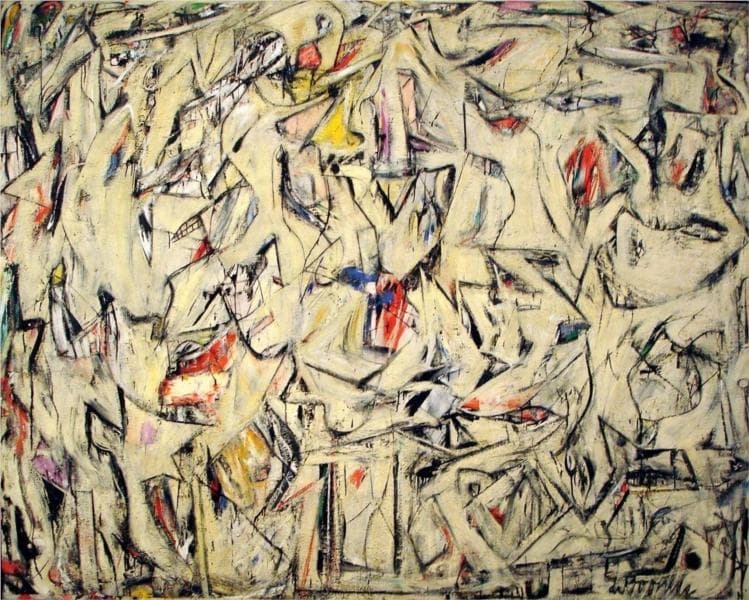
Excavation (1950) is a canonical, museum-held Willem de Kooning held by the Art Institute of Chicago and has not traded publicly since acquisition in 1952. If offered, a reasoned market range today is approximately $150–350 million, with final outcome driven by sale format (private vs auction), buyer competition and any donor/ deaccession constraints.
Valuation Analysis
Status and headline valuation: Excavation (1950) resides in the permanent collection of the Art Institute of Chicago and has been museum-held since 1952, so there is no modern public sale record to anchor a precise hammer price [1]. Based on a focused comparable analysis that balances verifiable auction highs and widely reported private-sale anchors, a defensible preliminary market range if the painting were to be offered today is approximately $150–350 million. This range reflects conservative and aggressive market outcomes tied to format, provenance clarity and bidder competition.
Comparables and price logic: The high end of the market for canonical mid‑century de Koonings is informed by reported private transactions (e.g., Interchange, reported c. $300M in 2015) and earlier nine‑figure private sales such as Woman III (reported c. $137.5M in 2006) — these transactions set directional ceilings driven by ultra‑high‑net‑worth private demand and are not auction-verified [2][3]. Publicly verifiable auction evidence provides a lower, but still substantial, baseline (artist auction record in the $60–70M range, e.g., Untitled XXV, 2016, $66.3M realized) and more recent marquee sales in the $30–40M band show steady retail interest at auction [4]. Excavation’s museum provenance, canonical date (1950) and scale place it squarely in the cadre of works that could attract the private‑sale ceilings when multiple trophy buyers compete.
How format and market mechanics influence value: The spread in the estimate primarily reflects sale format and buyer dynamics. In a public auction without multiple guaranteed bids or a competing private buyer pool, realizations could trend toward the lower half of the band; conversely, an aggressively brokered private placement with discreet bidder competition or a high‑profile guaranteed auction can push price well into the upper half or beyond. Museum custody improves condition and provenance clarity (value positives) but simultaneously reduces liquidity and introduces potential donor or accession restrictions that could suppress saleability or complicate a disposal—these legal or covenantary limits materially affect realizable price and must be verified with institutional records [1].
Condition, provenance and due diligence: Museum stewardship typically implies good conservation history and exhibition provenance, both of which are positive value drivers. However, the final market value would require a formal condition report, confirmation of any donor restrictions or covenants tied to the 1952 acquisition, and a thorough provenance and exhibition history review. Any discovered restoration, overpainting or unresolved title issues would be value‑negative and could move a sale toward the lower end of the estimate or beyond.
Caveats and recommended next steps: This estimate is necessarily hypothetical because Excavation is effectively off‑market. To refine or convert this opinion into a formal appraisal, you should (a) request the Art Institute’s accession/provenance and donor‑restriction documentation, (b) obtain the museum’s conservation/condition report, and (c) solicit preliminary written interest/opinions from major auction‑house specialists or blue‑chip dealers to understand likely sale strategy and appetite. With those inputs the range can be narrowed and a recommended sale pathway (private brokering vs guaranteed auction) can be proposed.
Key Valuation Factors
Art Historical Significance
High ImpactExcavation is a canonical, large‑scale 1950 work from Willem de Kooning’s decisive early 1950s period. The painting is widely reproduced in scholarship and featured in museum exhibitions, marking it as a key statement of the artist’s breakthrough into abstract figuration and gestural abstraction. Its date, scale and critical pedigree place it among the small set of mid‑century canvases that collectors and institutions prize most highly. Because prices for works of this stature are set by a handful of competitive sales, Excavation’s art‑historical status is a primary upward driver of valuation.
Provenance & Institutional Ownership
High ImpactThe Art Institute of Chicago’s long custodial history (acquired 1952 via purchase and restricted gifts) provides strong provenance and exhibition history, which increase buyer confidence and support a premium. However, museum ownership simultaneously reduces market liquidity: institutional works rarely appear for sale and may carry donor restrictions, accession covenants or institutional policies that limit disposition or require proceeds to be restricted to acquisitions/conservation. Confirming the exact accession/donor terms is essential because restrictive covenants can prevent sale or materially reduce marketability, which would depress realizable value despite high intrinsic significance.
Market Comparables & Price Anchors
High ImpactRecent private‑sale reports (Interchange ≈ $300M; Woman III ≈ $137.5M) provide directional ceilings that demonstrate ultra‑high‑net‑worth appetite for top de Kooning masterpieces, while verifiable auction records (e.g., Untitled XXV realized ~$66.3M in 2016) establish a public‑market baseline. The gap between private reports and auction evidence reflects differences in buyer pool, privacy of negotiation, and sale guarantees. Excavation’s placement among canonical 1950s works makes the private anchors particularly relevant; the final price would align with these anchors if multiple trophy buyers compete in a private process or through a guaranteed auction.
Condition & Conservation
Medium ImpactMuseum stewardship usually implies rigorous conservation oversight, stable display history and controlled environmental storage—factors that preserve intrinsic value. That said, even subtle issues (old restorations, relining, varnish discoloration, or structural canvas condition) can influence buyer perception and price. A formal, up‑to‑date condition report from the Art Institute is therefore necessary to confirm that no conservation liabilities would reduce the market estimate. If condition is pristine and thoroughly documented, this factor acts as a value enhancer; unresolved or invasive treatments would be value‑negative.
Market Liquidity & Timing
High ImpactLiquidity for museum‑quality 1950s de Koonings is extremely limited—supply is scarce while demand among ultra‑wealthy collectors and institutions remains concentrated. Timing relative to market cycles, competing trophy offerings, economic liquidity, and the sale strategy (public auction with guarantees vs negotiated private placement) will materially determine the final price. A tightly contested private placement or a headline guaranteed sale in a peak season could push the painting to the top of the range; conversely, constrained buyer appetite or legal/sale impediments could compress realizations toward the lower end.
Sale History
Excavation has never been sold at public auction.
Willem de Kooning's Market
Willem de Kooning ranks among the highest‑tier postwar American artists. His market includes both confirmed public‑auction successes in the mid‑eight figures and headline private transactions reported in the high nine figures. Demand concentrates on canonical early‑1950s canvases (including the 'Women' series and breakthrough gestural works) and a reappraised set of late‑career masterworks; works in these categories are rare and command disproportionate attention from blue‑chip collectors and institutions. While many de Koonings trade at lower price points, the top tier consistently attracts the kind of private capital that can produce nine‑figure sales.
Comparable Sales
Interchange (1955)
Willem de Kooning
Top-tier, mid‑1950s de Kooning masterpiece; private reported price establishes a directional ceiling for market value of canonical mid‑century canvases.
$300.0M
2015, Private sale (reported; David Geffen Foundation → Kenneth C. Griffin)
~$408.0M adjusted
Woman III (1952–53)
Willem de Kooning
Canonical early‑1950s de Kooning and part of the famed 'Women' series — a directly comparable era and level of museum/institutional significance; useful high anchor.
$137.5M
2006, Private sale (reported; David Geffen → Steven A. Cohen)
~$221.4M adjusted
Untitled XXV (1977)
Willem de Kooning
Verified public‑auction record (hammer + buyer's premium reported) that represents the high‑end auction baseline for a major de Kooning; shows the verifiable public market ceiling vs private reports.
$66.3M
2016, Christie's, New York
~$89.5M adjusted
Untitled (c.1979)
Willem de Kooning
Recent auction sale of a large late‑period de Kooning; useful for gauging demand/pricing for major late works and recent market strength at auction.
$34.8M
2022, Sotheby's, New York
~$38.6M adjusted
Orestes (1947)
Willem de Kooning
Auction sale of an earlier de Kooning work; shows how important but non‑canonical examples from near Excavation's period can trade in the $30–40M range at auction.
$30.9M
2023, Christie's, New York
~$32.7M adjusted
Current Market Trends
The top tier of the market has shown renewed strength through marquee single‑owner sales and dealer/house guarantees, while broader market liquidity remains sensitive to macroeconomic conditions. Supply of museum‑quality 1950s de Koonings is extremely limited, which supports price resilience for canonical works. Private placements remain the mechanism most likely to produce nine‑figure outcomes, while auctions provide verifiable public baselines and can be amplified by guarantees and competitive bidding.
Study print
Study this painting as a print
Pair the full artwork with a museum-style study sheet focused on one meaningful detail.