How Much Is Woman III Worth?
Last updated: June 6, 2026
Quick Facts
- Last Sale
- $137.5M (2006, Private sale)
- Methodology
- comparable analysis
Woman III is an apex de Kooning and the only canonical early Woman (1951–53) in private hands, placing it in the absolute top tier of Post‑War trophies. Anchored by the reported $137.5m private sale in 2006 and the ~$300m private benchmark for Interchange (1955), a present fair‑market value of $300–$375 million is supported. This range reflects scarcity, art‑historical primacy, and persistent top‑end demand.
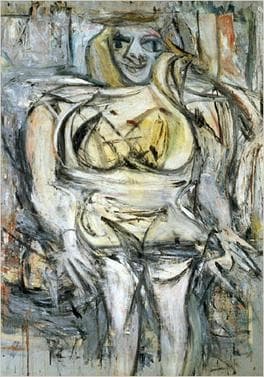
Woman III
Willem de Kooning, 1952–53 (often dated 1953) • Oil on canvas
Read full analysis of Woman III →Valuation Analysis
Conclusion: We estimate Willem de Kooning’s Woman III at $300–$375 million fair market value in today’s private‑treaty context. The work is the singular early Woman (1951–53) outside a museum, a status that commands a profound scarcity premium and cross‑category trophy demand. This range is triangulated from its reported $137.5 million private price in 2006 (inflation-adjusted >$200 million) and the ~$300 million private benchmark for Interchange (1955), a closely related, prime‑1950s masterpiece by the same artist [1][3].
Comparable anchors: At the public market ceiling, de Kooning’s auction record stands at $68.94 million for Woman as Landscape (1954–55) at Christie’s in 2018, underscoring both the artist’s depth at auction and the large gap historically observed between public results and private prices for true trophies [2]. The private sale of Interchange at roughly $300 million in 2015 demonstrates what the most significant 1950s de Koonings can command in discreet, negotiated settings when multiple top buyers are in play [1]. Given Woman III’s even more iconic status within de Kooning’s canon—and its unmatched availability—an estimate above Interchange’s 2015 price in today’s dollars is justified.
Price history and scarcity: The painting’s 2006 private sale around $137.5 million made it one of the most expensive works of its time; even on inflation alone, that points to a value well north of $200 million today. Crucially, among the six canonical early Women, Woman III is broadly reported as the only example in private hands, a condition that creates near‑zero supply and reliably elevates pricing far beyond typical artist records [3].
Market positioning: The top end of the Post‑War market has remained resilient despite broader auction volatility, with a consistent flight to quality and heavy use of guarantees for blue‑chip, museum‑grade material. Intelligence reports since 2024 emphasize selectivity but confirm that apex works with unassailable significance, provenance, and visibility continue to clear at strong levels when properly placed [4]. In this context, Woman III would be positioned as a cross‑collector trophy on par with the most coveted AbEx, Pop, and Modern masterworks.
Estimate frame: The $300–$375 million range reflects: (i) direct comparison to Interchange with time/price drift; (ii) a scarcity and iconography premium for being the only early Woman available to private buyers; and (iii) current trophy dynamics. At auction, with a full guarantee and global marketing, it would likely establish a new artist high by a wide margin; in a competitive private process, outcomes could cluster toward the upper end of the range. This is a fair‑market estimate as of mid‑2026.
Key Valuation Factors
Art Historical Significance
High ImpactWoman III belongs to de Kooning’s short, epochal “Woman” cycle (1951–53), a cornerstone of Abstract Expressionism and a defining pivot in postwar figuration. Within the artist’s oeuvre, these canvases stand alongside MoMA’s Woman I as touchstones of 20th‑century art history. The series embodies de Kooning’s synthesis of ferocious gesture and figuration, exerting an outsized influence on subsequent generations. As an instantly recognizable image and a staple of scholarship, Woman III carries authority beyond the artist’s broader market, attracting cross‑category buyers who prioritize cultural significance on par with Rothko, Pollock, or Picasso. This centrality translates directly into steep valuation premia for canonical examples.
Extreme Rarity and Access
High ImpactAmong the few canonical early Women, Woman III is broadly cited as the only example in private hands. That practical inaccessibility—nearly all peers are in museums—creates a unique scarcity premium. For buyers building private museums or global‑caliber collections, the opportunity to acquire an early Woman is effectively once‑in‑a‑generation. Such supply dynamics routinely propel prices beyond auction benchmarks into the realm of discreet, high‑stakes private negotiations. The lack of substitutable inventory within de Kooning’s own output further intensifies competitive pressure when (and if) such a work is offered, supporting a valuation in the mid‑to‑upper hundreds of millions.
Provenance and Prestige
High ImpactWoman III’s storied provenance—from the Tehran Museum of Contemporary Art to major Western collections (including David Geffen) and a 2006 private sale to Steven A. Cohen—adds reputational assurance and institutional visibility. Blue‑chip ownership histories, periodic high‑profile loans, and deep scholarly publication trails all reduce perceived risk, strengthen buyer confidence, and enhance storytelling. At the trophy level, provenance acts as a multiplier: it widens the global buyer pool, facilitates lender relations and museum showcases, and underpins pricing power in both auction and private‑treaty settings. For a canonical work already in the cultural canon, such pedigree is a forceful value driver.
Benchmark Sales and Trophy Dynamics
High ImpactTwo anchors frame today’s value: the reported ~$300m private sale of Interchange (1955) in 2015—establishing the apex for prime 1950s de Koonings—and the $68.9m auction record for Woman as Landscape (1954–55) in 2018. The divergence between private and public pricing for museum‑grade trophies is well‑documented; apex works often transact privately at multiples of public records. Against this backdrop, and given Woman III’s arguably greater iconography and unmatched availability, a present estimate above Interchange’s 2015 level in current dollars is justified. Persistent top‑end demand for blue‑chip Post‑War masterpieces supports a $300–$375m fair‑market range.
Sale History
Private sale
Sold privately by David Geffen to Steven A. Cohen; widely reported figure.
Willem de Kooning's Market
Willem de Kooning is a cornerstone of the Post‑War canon with deep institutional representation and a global collector base. His market bifurcates between apex 1940s–50s works—especially the breakthrough abstractions and early Women—and the sought‑after 1970s–80s abstractions. Public auction records peak at $68.9m (Woman as Landscape, 2018), while private‑treaty transactions set a much higher ceiling, notably Interchange (1955) at roughly $300m in 2015. Quality, period, and provenance drive substantial dispersion: prime 1950s paintings command multiples of late works, and canonical images can transact far above public benchmarks. Overall liquidity is robust, with eight‑figure results routine for strong examples and trophy‑level demand enduring across market cycles.
Comparable Sales
Interchange
Willem de Kooning
Same artist; large-scale, prime 1950s masterpiece closely aligned in period and stature with the early Women; definitive trophy benchmark for de Kooning at the very top of the market.
$300.0M
2015, Private sale
~$390.0M adjusted
Woman as Landscape (1954–55)
Willem de Kooning
Same artist and closely contemporaneous (mid‑1950s); figuration directly related to the Woman vocabulary; current public auction record for de Kooning and a key public market anchor.
$68.9M
2018, Christie's New York
~$82.7M adjusted
Untitled XXV (1977)
Willem de Kooning
Same artist; late‑1970s canonical ‘Untitled’ series; long‑standing bellwether for the artist’s auction market depth and bidding ceiling (albeit later period than Woman III).
$66.3M
2016, Christie's New York
~$86.2M adjusted
Orestes (1947)
Willem de Kooning
Same artist; critical ‘breakthrough’ period from the late 1940s that set up the early Women; demonstrates blue‑chip pricing for early, historically important canvases.
$30.9M
2023, Christie's New York
~$32.7M adjusted
Untitled (1979)
Willem de Kooning
Same artist; strong late‑career abstraction; indicates the durable eight‑figure liquidity baseline for major de Koonings outside the prime 1950s period.
$34.8M
2022, Sotheby's New York
~$38.3M adjusted
Untitled XXXIII (1977)
Willem de Kooning
Same artist; late‑1970s ‘Untitled’ from the Macklowe Collection with top provenance; reflects market depth for important but non‑trophy de Koonings.
$24.3M
2021, Sotheby's New York
~$28.5M adjusted
Current Market Trends
Despite a reset in broader auction volumes since 2022, the apex of the Post‑War category has remained resilient. Buyers show a pronounced flight to quality, with guarantees and third‑party backing concentrating demand around blue‑chip, museum‑grade works. Within Abstract Expressionism, marquee results for Rothko and high‑quality de Koonings reaffirm depth at the top, while mid‑tier material is more selective and estimate‑sensitive. Private sales continue to capture the highest prices for irreplaceable trophies, often at multiples of public records. In this climate, a canonical, uniquely available de Kooning such as Woman III would command aggressive bidding and premium pricing when properly positioned.
Study print
Study this painting as a print
Pair the full artwork with a museum-style study sheet focused on one meaningful detail.
Sources
- CNN: Ken Griffin buys de Kooning's Interchange for ~$300m (2015 private sale report)
- Christie’s Press Release: De Kooning auction record for Woman as Landscape (2018)
- Wikipedia: Woman III (sale to Steven A. Cohen for ~$137.5m; only early Woman in private hands)
- Artnet Intelligence Report (Mid‑Year 2025): market selectivity and top‑end resilience