Most Expensive Willem de Kooning Paintings
Willem de Kooning occupies a rarefied position in the postwar market: a titan of Abstract Expressionism whose canvases command collector attention for their visceral energy, art-historical significance and scarcity. At the apex sits Interchange, estimated at $400–450 million, a watershed work that helped recalibrate the market for gestural abstraction; Woman III, placed in the $300–375 million range, and Excavation, valued between $150–350 million, further demonstrate how iconic imagery and technical bravura translate into extraordinary prices. Lesser—but still marquee—works such as Woman I ($100–300 million) and the seminal Woman and Bicycle and Woman as Landscape (each roughly $100–150 million) underscore the enduring desirability of his “Woman” series, while more idiosyncratic pieces like Woman-Ochre ($50–150 million) and Police Gazette ($95–125 million) show collectors prize both narrative potency and provenance. Even Untitled XXV ($70–95 million) and Door to the River ($12–40 million) attract institutional and private interest, proving that condition, exhibition history and rarity are as decisive as aesthetic impact in defining de Kooning’s market standing.
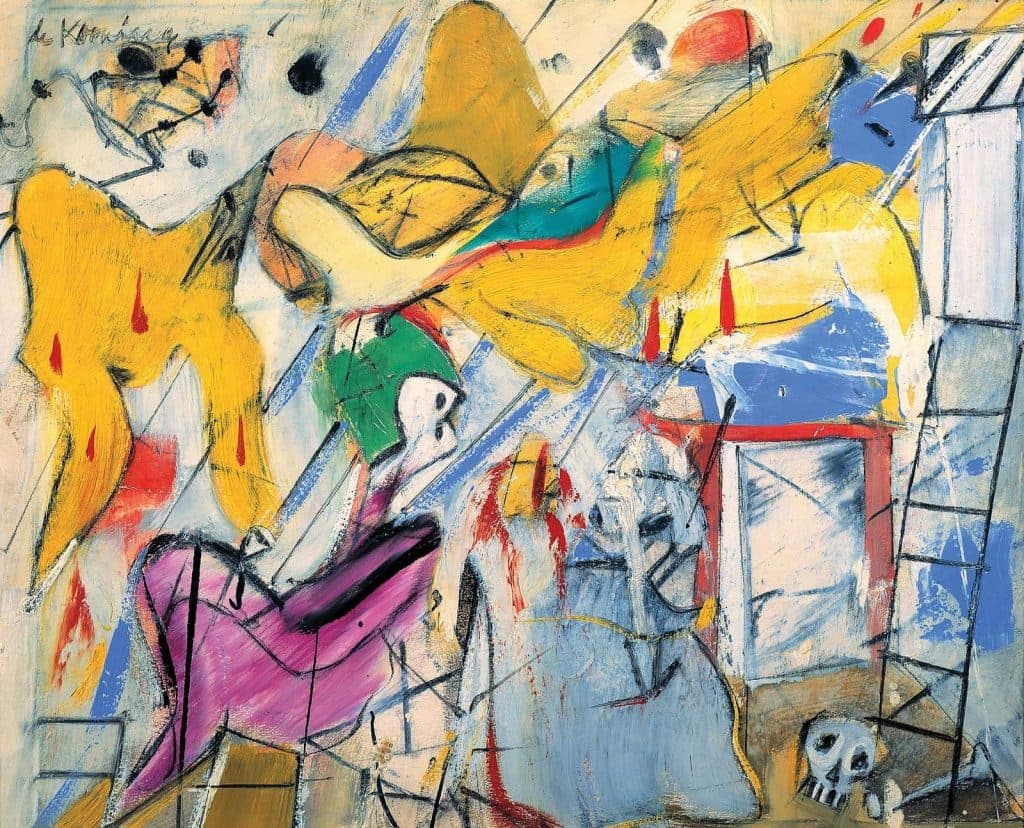
$400-450 million
Anchored to its reported $300 million private sale in 2015 and inflation‑adjusted to roughly $420 million today, Interchange is valued at $400–450 million (mid‑2026).
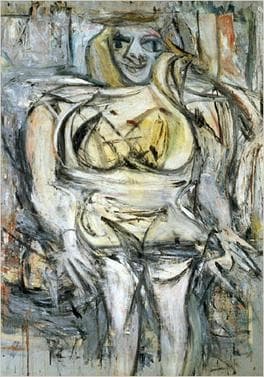
$300-375 million
As the only canonical early Woman (1951–53) in private hands and anchored to a reported $137.5m 2006 sale plus Interchange benchmarks, Woman III is valued at $300–375 million.
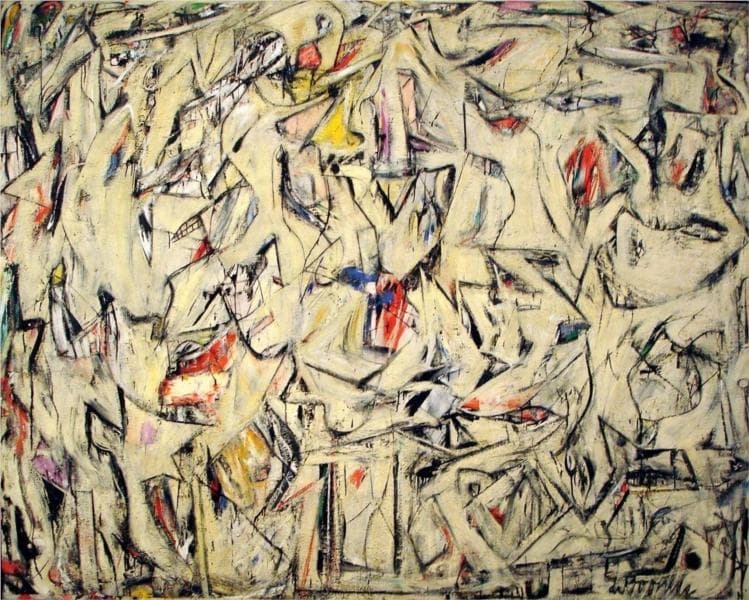
$150-350 million
Never publicly traded since the Art Institute of Chicago acquired Excavation in 1952, a hypothetical market range today is approximately $150–350 million, driven by sale format and buyer competition.
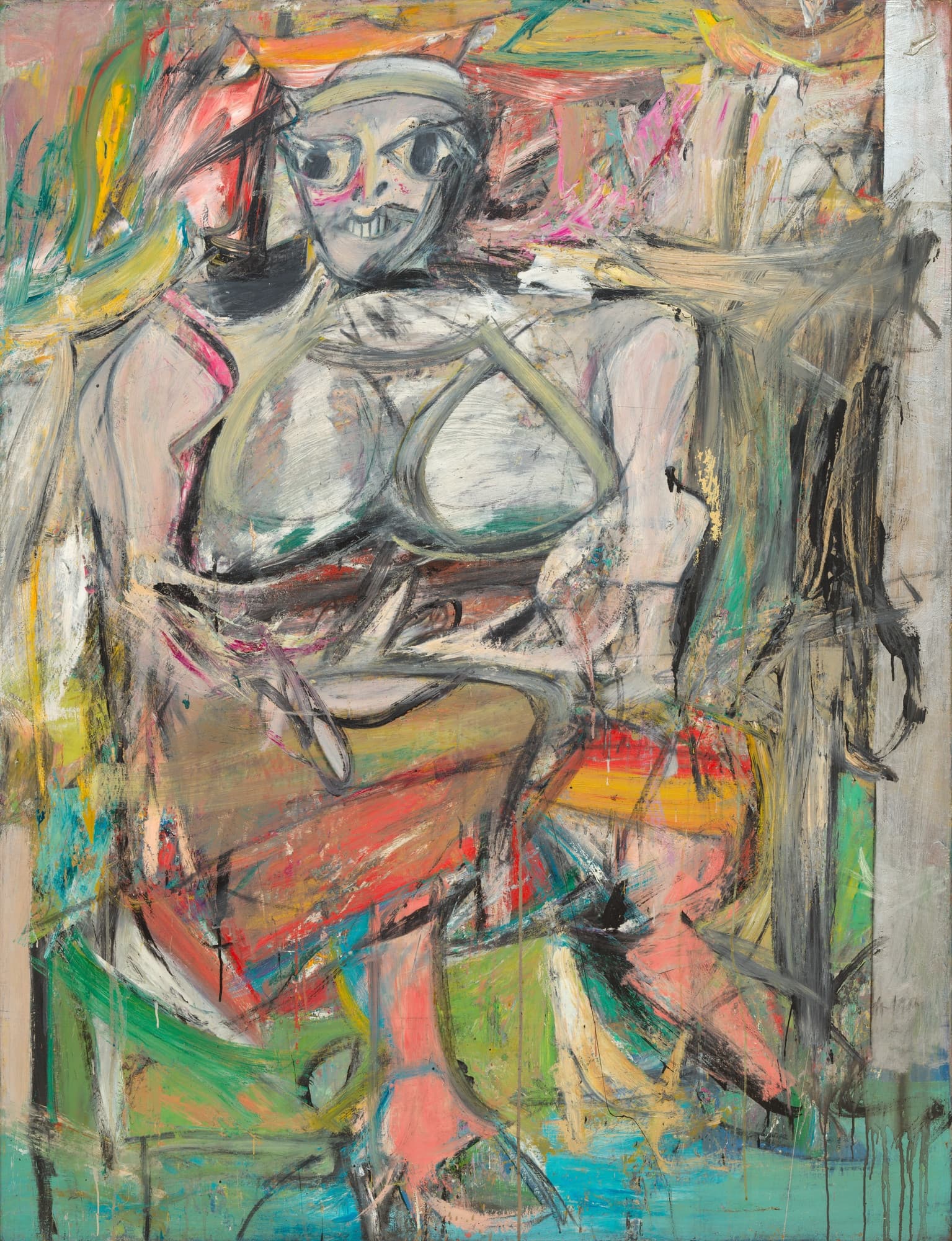
$100-300 million
Effectively non‑circulating as a museum masterpiece, Woman I’s hypothetical market range is USD 100–300 million, anchored to Interchange ceilings and verified auction precedents like Untitled XXV.
$50-150 million
Assuming clean title, authentication, and acceptable condition despite prior theft/recovery, Woman‑Ochre would likely command approximately $50–150 million on the open market.
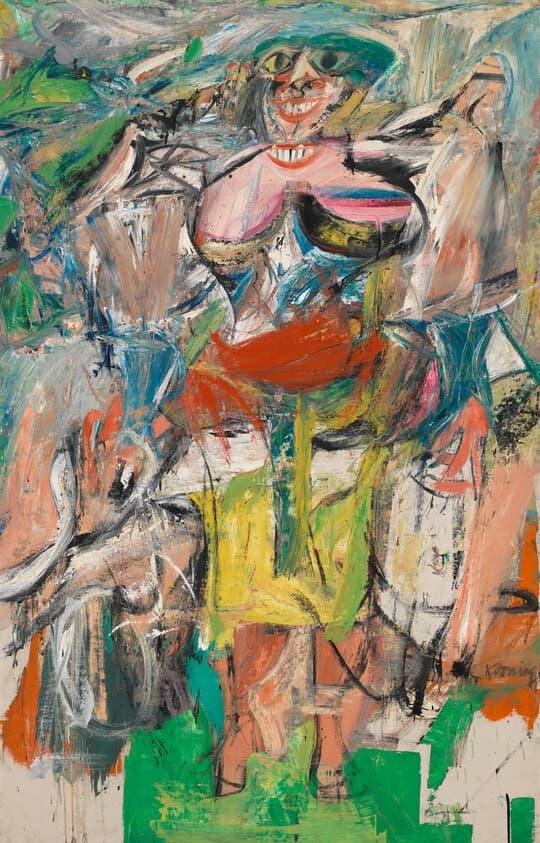
$100-150 million
Whitney accession 55.35 and off‑market status make Woman and Bicycle a hypothetical $100–150 million work, based on comparable canonical early‑1950s 'Woman' private‑sale and auction results.
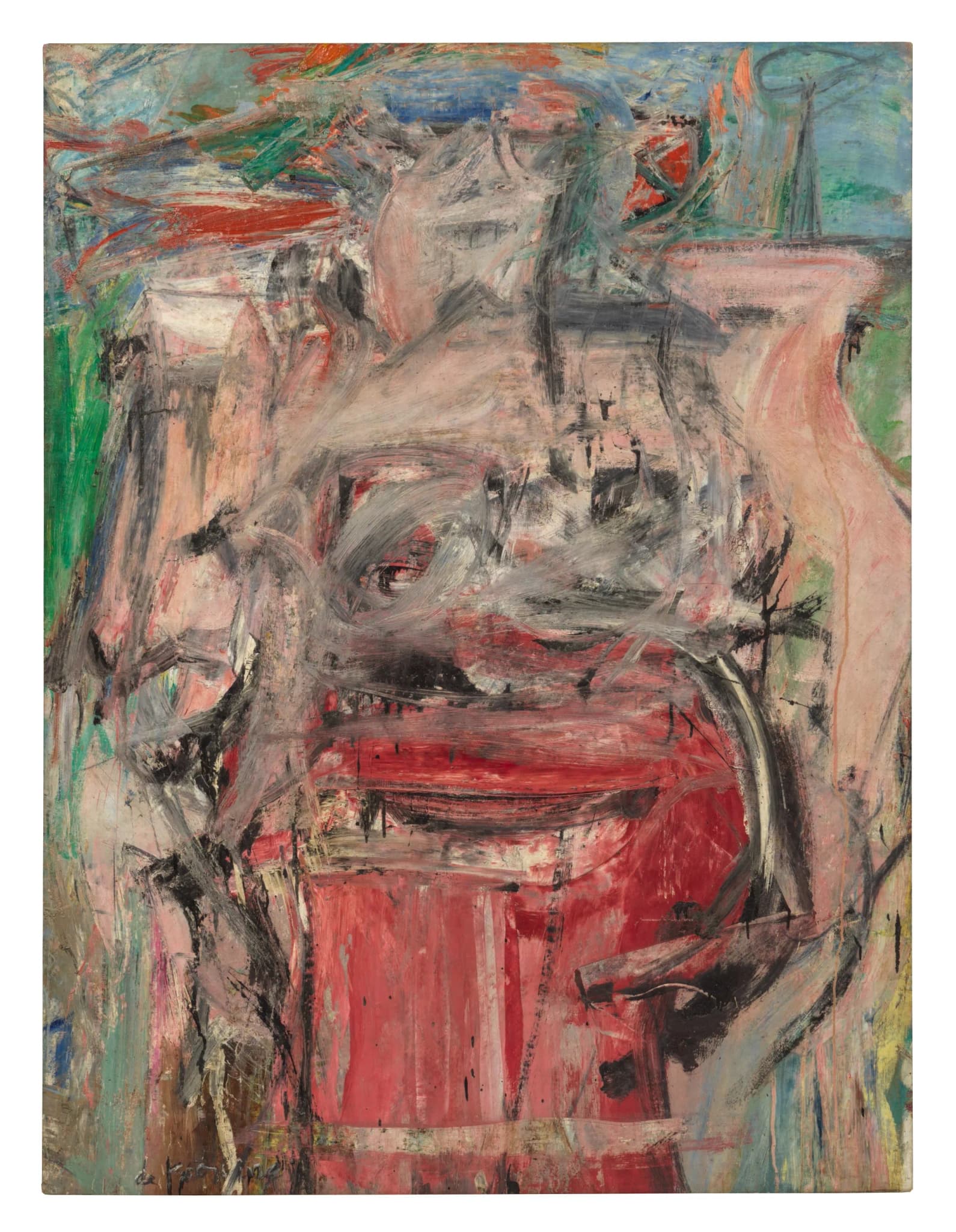
$100-150 million
Anchored to Christie’s Nov 2018 Price Realized of $68,937,500 and adjusted for market appreciation and scarcity, Woman as Landscape is estimated at $100–150 million.
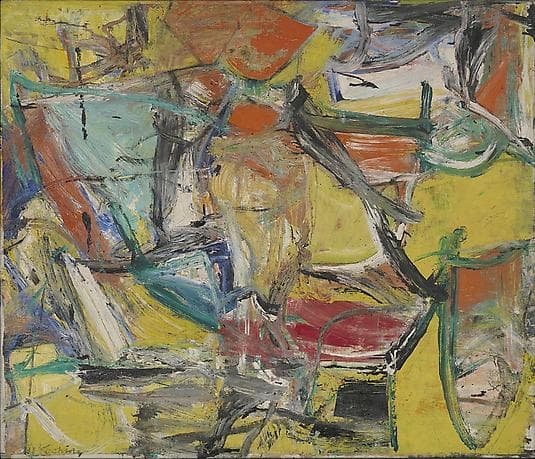
$95-125 million
Police Gazette’s $95–125 million indicative range is anchored to a reported $63.5m private sale in 2006 (inflation‑adjusted to ≈$100m) and nine‑figure de Kooning private benchmarks.
$70-95 million
Anchored to Christie's 2016 identical‑canvas benchmark and later comparables, Untitled XXV (1977) is valued at $70–95 million, depending on provenance and exhibition history.
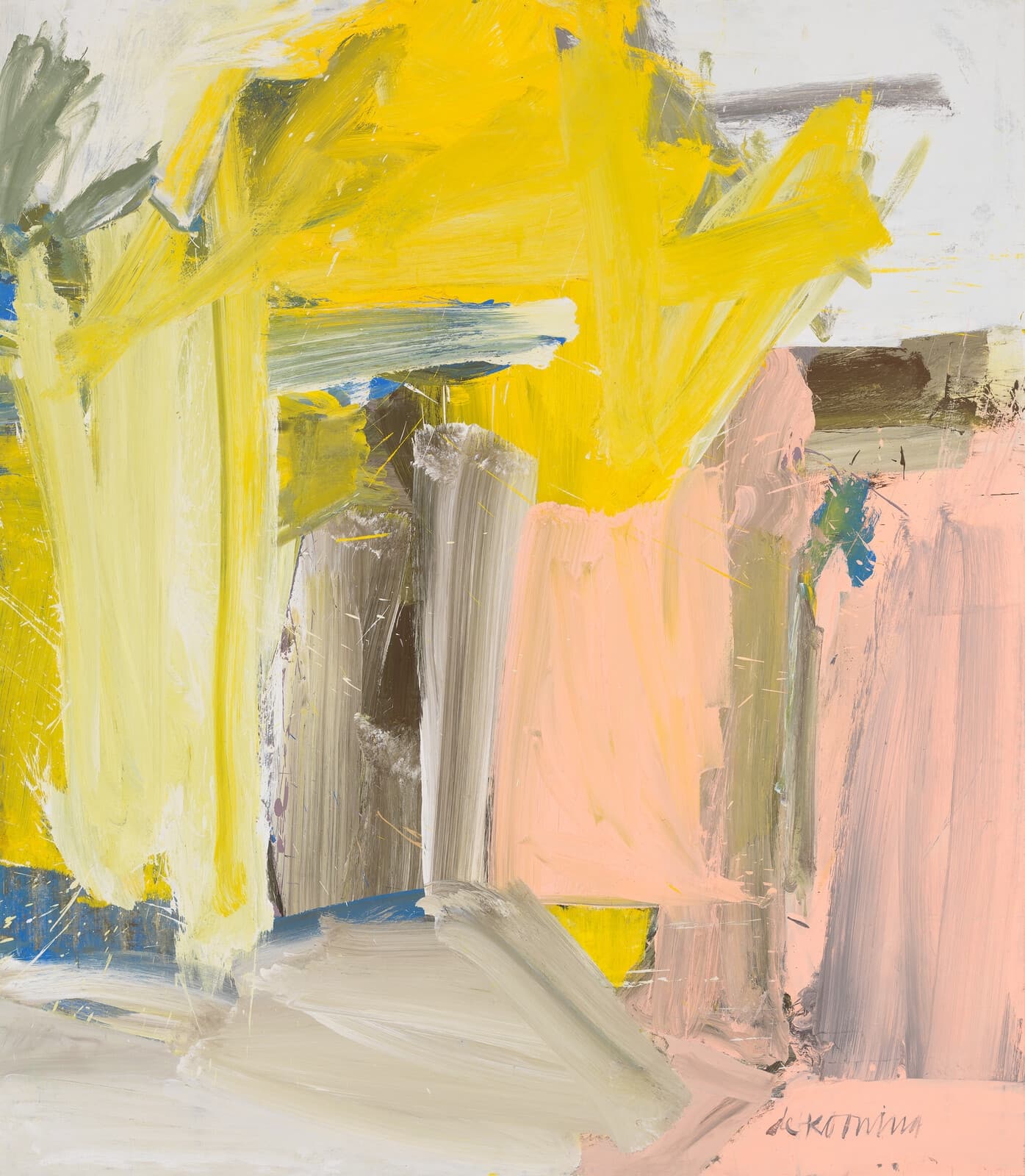
$12-40 million
Whitney accession 60.63 Door to the River is a hypothetical deaccession valuation of $12–40 million, conditional on clear title, condition, and sale authorization.
What Drives Value in Willem de Kooning's Work
Mid‑1950s Period Premium & Transitional Breakthroughs
De Kooning’s market is sharply periodized: canvases from the mid‑1950s—the pivot from the Women series into fractured urban/landscape abstractions—carry the highest premiums. Works like Interchange (1955), Police Gazette (1955) and Excavation (1950) are priced as epochal breakthroughs that anchor museum narratives. By contrast, late‑period works (e.g., Untitled XXV, 1970s) generally trade well below these trophies, so dating to that apex window is the single biggest artist‑specific determinant of price.
Canonical 'Woman' Series Rarity & Non‑Substitutability
Belonging to the short, canonical Woman cycle radically amplifies value: Woman I–III and related canvases are cultural touchstones that collectors treat as irreplaceable. Woman III’s practical status as the only early Woman in private hands (and Interchange’s near‑unique mid‑1950s stature) creates extreme substitution risk, producing trophy‑market outcomes and private‑sale ceilings far above ordinary de Koonings. Series membership therefore commands multi‑hundred‑million valuation differentials.
Blue‑Chip Provenance, Exhibition Visibility & Deaccession Effects
Provenance peculiarities specific to de Kooning—ownership by Geffen, Cohen, Beyeler or placement in MoMA, the Whitney, or the Art Institute—directly alter value. Museum custodianship (Woman I at MoMA, Excavation at the Art Institute, Woman and Bicycle at the Whitney) confers narrative authority but usually makes the work effectively unavailable, inflating theoretical value while reducing liquidity. High‑profile private owners (Geffen, Cohen, Griffin) create market confidence and lift realizations when those works surface.
Surface Technique & Conservation Sensitivity (Impasto, Mixed Media)
De Kooning’s thick impasto, layered oils and occasional mixed media (enamel, charcoal) produce unique conservation risks that materially affect price. Cases like Woman‑Ochre—rolled during theft and later conserved—show how condition uncertainty can compress value despite canonical status. Buyers of de Kooning demand up‑to‑date technical reports; confirmed original surfaces and stable conservation can unlock the top end, while flaking, relining or invasive restorations produce steep discounts specific to this artist’s handling.
Market Context
Willem de Kooning remains a blue‑chip pillar of the Post‑War market: the public auction high sits in the high‑tens of millions (c. $68.9M for Woman as Landscape), while private transactions — most notably the reported ≈$300M Interchange — establish a much higher ceiling. Recent market activity through 2025–26 shows the top end reasserting leadership, with museum‑quality 1940s–1950s canvases sparking aggressive, well‑financed bidding often supported by guarantees and dealer backing. Demand is concentrated among a stable cohort of global collectors and institutions, and institutional exhibitions and scholarship continue to underpin interest. The market is bifurcated: apex, scarce masterpieces dominate price discovery and liquidity, while mid‑tier and late works face greater selectivity and estimate sensitivity, making sale structure and timing critical to achieving peak outcomes.