How Much Is Woman as Landscape Worth?
Last updated: June 8, 2026
Quick Facts
- Last Sale
- $68.9M (2018, Christie's, New York — 'An American Place: The Barney A. Ebsworth Collection' (Evening Sale), Lot 7B)
- Methodology
- comparable analysis
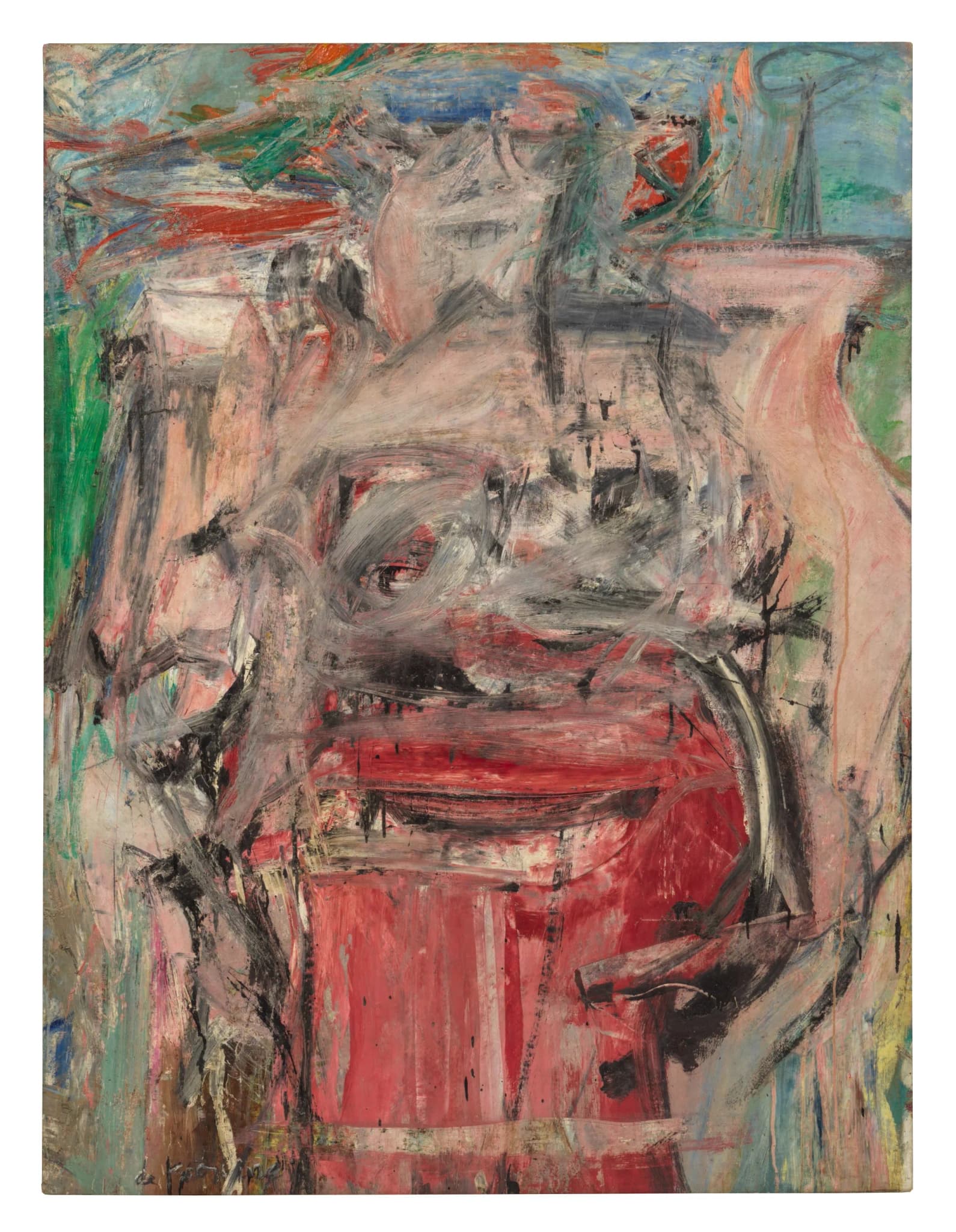
For a museum‑scale, canonical Willem de Kooning "Woman as Landscape" (c.1954–55) in excellent condition with clear provenance and catalogue‑raisonné confirmation, I estimate a market value of $100–150 million. This range is anchored to the confirmed Christie’s public‑auction result (Price Realized $68,937,500 in Nov 2018) and adjusted upward for top‑end market appreciation, scarcity of comparable canonical works, and high private‑sale ceilings for de Kooning masterpieces.
Valuation Analysis
Valuation conclusion: For a museum‑scale, canonical Willem de Kooning "Woman as Landscape" (c.1954–55) in excellent, well‑documented condition and with catalogue‑raisonné confirmation, I place the market value at $100,000,000–$150,000,000. This range is anchored to the nearest identical‑work public auction: Christie’s New York sale on 13 November 2018 (Price Realized $68,937,500, reported including buyer’s premium) [1].
Methodology: This opinion uses a comparable‑analysis approach that starts with the 2018 Christie’s anchor and applies upward adjustments reflecting (a) post‑2018 market appreciation for top‑tier postwar works, (b) the extreme scarcity and collector competition for canonical mid‑1950s "Woman" canvases, and (c) evidence from major private transactions that establish a significantly higher market ceiling for de Kooning masterpieces (notably the widely reported private sale of Interchange) [1][2]. The range is intentionally broad to capture variability in bidding dynamics, institutional interest, and private sale competition at the >$100m level.
Primary value drivers: The estimate assumes: a) museum‑scale dimensions consistent with the 1954–55 transitional "Woman→landscape" group; b) excellent structural and surface condition with minimal intrusive restoration; c) unambiguous provenance and early exhibition history (Martha Jackson Gallery 1955 and prominent later private owners as recorded by Christie’s), and d) catalogue‑raisonné and literature references or inclusion in major retrospectives. When those attributes are present, such works attract intense evening‑sale bidding and institutional interest, and can trade materially above prior auction outcomes [1][3].
Downside risks and sensitivity: The price is highly sensitive to condition, attribution, size and catalogue status. A smaller work, a study on paper, lack of catalogue entry, or significant conservation problems can reduce value sharply—often into the low‑millions for works on paper or the low‑tens of millions for secondary canvases. Conversely, renewed institutional demand or a private‑sale bidding contest can push realizations to the top of the stated band or beyond [2].
Practical recommendation: Treat this as a market‑level opinion suitable for planning (insurance, consignment strategy, estate/tax planning). For a binding insurance appraisal or a sale strategy, secure high‑resolution recto/verso photographs, an up‑to‑date condition report, and catalogue‑raisonné confirmation; then obtain a formal pre‑sale opinion from a major international auction house. Provide those materials and I will refine the estimate and produce a bespoke comparable‑lot list and proposed reserve/estimate strategy.
Key Valuation Factors
Art Historical Significance
High ImpactWillem de Kooning’s mid‑1950s "Woman" series occupies a foundational place in postwar American art. Works that sit at the transitional moment where figuration dissolves into landscape are heavily studied in monographs and retrospectives; they anchor de Kooning’s critical reputation. A confirmed 1954–55 "Woman as Landscape" with catalogue‑raisonné entry is therefore a canonical work, and canonical status elevates both demand and willingness to pay among institutions and blue‑chip collectors. In the secondary market, this classification converts to a materially higher price tier compared with studies, works on paper or later works, making this factor a primary driver of value.
Provenance & Exhibition History
High ImpactProvenance that traces a work through major galleries and prominent private collections (for example, Martha Jackson Gallery, later notable private owners and the Barney A. Ebsworth provenance recorded at Christie’s) substantially reduces market friction and increases buyer confidence. Exhibition history and literature citations further authenticate significance and make the work more attractive to museums and top collectors. Each high‑quality provenance link materially increases the pool of potential buyers at the top end and can convert a prior‑sale anchor into a much stronger contemporary bidding scenario.
Condition & Conservation
High ImpactDe Kooning’s thickly applied paint layers and energetic surface handling make condition a critical value determinant. Structural stability, lining history, inpaintings, varnish and past conservation interventions materially affect marketability and price. A painting in excellent original condition with minimal and well‑documented conservation attracts premium bidding; conversely, evidence of heavy restoration, unstable paint or losses reduces institutional interest and can depress value sharply. Condition certainty is therefore essential before assigning a sale reserve or insurance value.
Size & Medium (Rarity)
High ImpactMuseum‑scale oil on canvas works from de Kooning’s 1950s phase are rare on the open market; their scarcity concentrates demand. Large canvases carry outsized pricing relative to small studies or works on paper because they are suitable for major museum displays and have greater visual impact in a collection. The size premium at the top end is substantial and explains why two de Kooning works of similar date can sell in very different price bands. Rarity of comparable canvases on offer directly supports the upper end of the valuation range.
Market Evidence & Comparables
High ImpactPublic auction anchors (Christie’s 2018 Price Realized) provide the nearest identical‑work benchmark, while high‑profile private transactions (e.g., reported sales of de Kooning masterpieces) establish the market ceiling. Cross‑artist comparables among Rothko, Pollock and other postwar masters demonstrate buyer willingness to pay high multiples for canonical works. These market data points justify an upward adjustment from the 2018 public result when other premium attributes (condition, provenance, catalogue entry) are present, and they underlie the decision to place this painting in the $100–150M band for sale in a competitive environment.
Sale History
Christie's, New York — 'An American Place: The Barney A. Ebsworth Collection' (Evening Sale), Lot 7B
Private sale (reported) — David Geffen Foundation to Kenneth C. Griffin
Christie's, New York — major evening sale
Willem de Kooning's Market
Willem de Kooning is one of the most sought‑after postwar American artists. His museum‑scale mid‑1950s canvases are among the top‑tier blue‑chip assets in the contemporary art market. Auction and private‑sale evidence show a wide price dispersion—works on paper and late paintings trade in the low‑to‑mid millions, while canonical 1950s canvases have achieved tens of millions at auction and, in private transactions, have been reported at substantially higher sums. Institutional interest, scarcity and high‑net‑worth collectors sustain robust demand at the top of the market.
Comparable Sales
Woman as Landscape
Willem de Kooning
Identical work (same large 1954–55 canvas). Firm public-auction anchor showing what a museum-scale mid‑1950s de Kooning can achieve.
$68.9M
2018, Christie's, New York (Barney A. Ebsworth sale)
~$84.1M adjusted
Interchange
Willem de Kooning
Reported blockbuster private sale of a canonical 1955 de Kooning — establishes the private‑sale market ceiling for top‑tier mid‑1950s masterpieces by the artist.
$300.0M
2015, Private sale (reported)
~$375.0M adjusted
Orange, Red, Yellow
Mark Rothko
Major museum‑scale Color Field work by a primary Abstract Expressionist peer; useful cross‑artist benchmark for buyer demand and pricing for top‑tier post‑war canvases.
$86.9M
2012, Christie's, New York
~$112.9M adjusted
No. 5, 1948
Jackson Pollock
High‑profile private sale of a landmark Abstract Expressionist large canvas; demonstrates top‑end prices for post‑war American masterpieces and sets comparative ceiling.
$140.0M
2006, Private sale (reported)
~$210.0M adjusted
Current Market Trends
The top‑end postwar/modern market remains selective but resilient: scarcity of canonical works and strong private‑sale activity support elevated price ceilings, while liquidity at very high price points is limited to a small pool of global collectors and institutions. Macroeconomic shifts and regulatory/tax changes can compress short‑term demand; nevertheless, well‑provenanced, museum‑scale masterpieces continue to attract competitive bids when they reach market.
Sources
- Christie's — Lot page and press materials for 'An American Place: The Barney A. Ebsworth Collection' (Woman as Landscape)
- Guinness World Records / widely reported press on the reported private sale of Willem de Kooning's Interchange (2015)
- MoMA / exhibition and catalogue references discussing de Kooning's 1954–55 transitional works