How Much Is Police Gazette Worth?
Last updated: June 6, 2026
Quick Facts
- Last Sale
- $63.5M (2006, Private sale)
- Methodology
- comparable analysis
Indicative fair market value for Willem de Kooning’s Police Gazette (1955) is $95–125 million. The range is anchored by the well‑reported $63.5m private sale in 2006, inflation‑adjusted to ≈$100m today, and supported by nine‑figure private benchmarks for top 1950s de Koonings. At auction, with a robust third‑party guarantee, a likely hammer outcome would cluster around $80–100m.
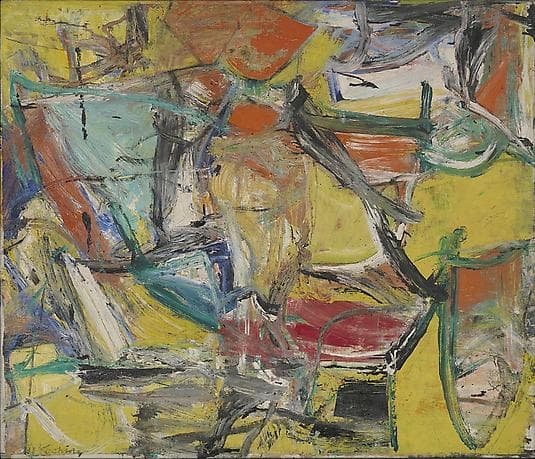
Police Gazette
Willem de Kooning, 1955 • Oil, enamel, and charcoal on canvas
Read full analysis of Police Gazette →Valuation Analysis
Conclusion: Police Gazette (1955) is valued at $95–125 million in today’s private market. This synthesis triangulates (i) the painting’s widely reported $63.5 million private transaction in 2006, brought forward by U.S. CPI to roughly the low nine figures today [1][6]; (ii) the extraordinary private benchmark set by de Kooning’s 1955 Interchange at about $300 million (2015) for a directly comparable apex‑period canvas [3]; and (iii) the current public ceiling for the artist at $66.3 million with premium (2016), which underprices 1950s masterpieces relative to their private liquidity [2]. In a prime New York evening sale with a strong third‑party guarantee, a realistic hammer range would be ~$80–100 million, implying an all‑in price into the low/mid nine figures under prevailing fee schedules.
Art‑historical standing and scarcity: Painted in 1955, Police Gazette is a marquee example from de Kooning’s pivotal mid‑1950s turn from the Woman series to luminous, fractured landscape‑abstractions. Works from 1954–57 sit at the apex of his oeuvre, with museum‑caliber examples surfacing rarely. The price hierarchy in de Kooning’s market is clear: top 1950s canvases command nine figures privately (Interchange) [3], while the most visible public comps (often 1970s works) cap the auction record but do not reflect the premium paid for canonical mid‑1950s pictures [2].
Market evidence and calibration: The last well‑documented trade of Police Gazette—David Geffen to Steven A. Cohen for ~$63.5m in 2006—provides a concrete anchor; normalized to 2025–26 dollars, that price equates to roughly $100m [1][6]. Public auction benchmarks confirm depth across periods but underscore the premium for the 1950s: the standing auction record is $66.33m for a 1977 painting (Christie’s, 2016) [2]; a first‑rate 1940s abstraction, Orestes (1947), achieved $30.885m in May 2023 [5]. Against these, a 1955 trophy with name recognition and blue‑chip provenance warrants a step‑up consistent with our indicated range.
Provenance and long‑run appreciation: The work’s chain—Scull Collection (sold publicly in 1973 to Ernst Beyeler), later David Geffen, then Steven A. Cohen—supports trophy‑grade desirability and institutional familiarity [4][1]. The 1973 hammer at $180,000 underscores a multi‑decade compounding story into today’s nine‑figure context [4].
Sale mechanics and positioning: At auction, guarantees and estimate strategy will be decisive. With a well‑pitched estimate and third‑party backstop, competitive bidding from a concentrated pool of top‑tier Post‑War buyers should place the work around $80–100m hammer; privately, disciplined scarcity and targeted placement justify $95–125m. This synthesis assumes standard, sound condition for a 1950s oil on canvas and no restrictive encumbrances.
Key Valuation Factors
Art Historical Significance
High ImpactPolice Gazette (1955) sits within de Kooning’s most coveted window, when he pivoted from the Woman series to radiant, fractured landscape-abstractions that redefined post-war painting. Works from 1954–57 are central to his canon and to Abstract Expressionism’s narrative, widely published and institutionally exhibited. Within that tight cohort, Police Gazette is a frequently cited, name-recognition canvas that encapsulates the lyrical color, slashing brushwork, and spatial ambiguity that collectors prize. Its date aligns directly with Interchange (1955), the period’s apex benchmark. This art-historical positioning commands a significant premium over strong but later-period de Koonings and supports a nine-figure valuation.
Rarity and Period Premium
High ImpactLarge, high-color, mid-1950s de Kooning canvases are scarce in private hands and surface infrequently. The top of the market has demonstrated a robust period premium: Interchange (1955) achieved an estimated $300m privately, and high-quality 1950s works rarely appear at auction. The combination of limited supply and deep collector demand for apex-period Abstract Expressionism concentrates competition when such works are offered. Police Gazette’s 1955 date positions it at the zenith of scarcity and desirability, justifying a material uplift above public auction benchmarks set largely by 1970s examples and reinforcing our $95–125m range.
Provenance and Market Visibility
High ImpactThe painting’s provenance—Scull Collection (sold publicly in 1973), acquired by Ernst Beyeler, subsequently owned by David Geffen, and then sold privately to Steven A. Cohen—reads as a who’s who of blue-chip dealers and collectors. This caliber of ownership confers transactional confidence and supports premium pricing when reoffered. The 2006 $63.5m private sale provides a concrete, well-reported anchor from which to project forward using CPI and peer comparables. Works with this level of name recognition and vetted ownership are demonstrably easier to place at the top end of the market, especially when paired with a well-structured guarantee.
Market Liquidity and Sale Mechanics
Medium ImpactDe Kooning’s public auction ceiling remains $66.33m (2016), but that figure reflects the specific period (1977) and auction dynamics rather than the private-market potential of 1950s masterpieces. Recent marquee sales show renewed depth for top-tier Post-War lots, with guarantees catalyzing competition. For Police Gazette, a prime-evening slot, a calibrated estimate, and a strong third-party guarantee should draw an $80–100m hammer outcome. Privately, disciplined scarcity and targeted outreach to a small group of trophy buyers support the higher $95–125m fair market range. Execution risk and macro tone remain variables, hence a “medium” impact assessment.
Sale History
Sotheby Parke Bernet, New York (Scull Collection)
Hammer price; purchased by Ernst Beyeler. No buyer's premium applied in 1973.
Private sale
Private transaction reportedly from David Geffen to Steven A. Cohen at $63.5m.
Willem de Kooning's Market
Willem de Kooning remains an A+ Post-War master with deep institutional support and a global collector base. The public auction record stands at $66.33 million for Untitled XXV (1977) at Christie’s in 2016, while the private market has validated far higher prices for apex 1950s works—most notably Interchange (1955) at an estimated $300 million in 2015. Recent auctions confirm durable demand across periods: Orestes (1947) realized $30.885 million in 2023, and strong late canvases have traded in the low eight figures. The market exhibits a clear period premium for the mid‑1950s abstractions, where supply is extremely tight and private transactions dominate.
Comparable Sales
Interchange
Willem de Kooning
Same artist and year (1955) as Police Gazette; a canonical peer from the apex of de Kooning’s mid‑1950s abstractions; establishes nine‑figure private-sale benchmark for the period.
$300.0M
2015, Private sale (David Geffen to Kenneth C. Griffin)
~$390.0M adjusted
Woman III
Willem de Kooning
Same artist, closely adjacent period (1953), museum‑level trophy from the storied Woman series; demonstrates sustained nine‑figure private values for top 1950s de Koonings.
$137.5M
2006, Private sale (David Geffen to Steven A. Cohen)
~$219.0M adjusted
Untitled XXV
Willem de Kooning
Artist’s standing auction record; while from 1977 (later period), it sets the publicly demonstrated ceiling for de Kooning at auction against which a 1955 masterpiece can be gauged.
$66.3M
2016, Christie's New York
~$86.2M adjusted
Orestes
Willem de Kooning
Major early abstraction (1947) by the same artist; recent blue‑chip auction result that calibrates current demand and pricing for historically important de Koonings.
$30.9M
2023, Christie's New York
~$32.7M adjusted
Untitled (circa 1979)
Willem de Kooning
Strong late‑1970s canvas by the same artist; shows depth of bidding and current price level for major de Koonings outside the 1950s apex, providing a lower‑bound reference.
$34.8M
2022, Sotheby's New York
~$38.3M adjusted
Current Market Trends
The upper tier of Post-War and Abstract Expressionism softened in 2023–24 but rebounded in 2025 and into Spring 2026, as guarantees and single-owner collections restored depth at the top end. Public results again approach record territory across peers, signaling improved risk appetite. Within this context, canonical 1940s–50s works by blue-chip names continue to command the strongest competition, while later-period examples sell selectively. For de Kooning, this means sustained private-market premiums for apex 1950s canvases, with auction outcomes sensitive to estimate discipline and third‑party support. Supply scarcity remains the primary driver of nine‑figure pricing.
Study print
Study this painting as a print
Pair the full artwork with a museum-style study sheet focused on one meaningful detail.
Sources
- Los Angeles Times (Nov 10, 2006): Geffen sells art for $143m
- The Art Newspaper (Nov 16, 2016): De Kooning painting sells for record $66m at Christie's New York
- CNN (Feb 19, 2016): Ken Griffin buys paintings by de Kooning and Pollock for $500 million
- Lapham's Quarterly: Blue Chips (Scull sale context and prices)
- Christie’s: 20/21 May 2023 Marquee Week sale results (includes de Kooning Orestes, 1947)
- U.S. Bureau of Labor Statistics CPI Inflation Calculator