How Much Is Woman I Worth?
Last updated: June 8, 2026
Quick Facts
- Methodology
- comparable analysis
Woman I (c.1950–52) is a canonical, museum‑held masterpiece by Willem de Kooning and is effectively non‑circulating. Based on comparable private‑sale ceilings (Interchange) and verified auction anchors (Untitled XXV), a reasoned working market range if it ever reached the open market is USD 100–300 million. This is hypothetical and contingent on sale mechanism, condition, provenance and deaccession/legal constraints.
Valuation Analysis
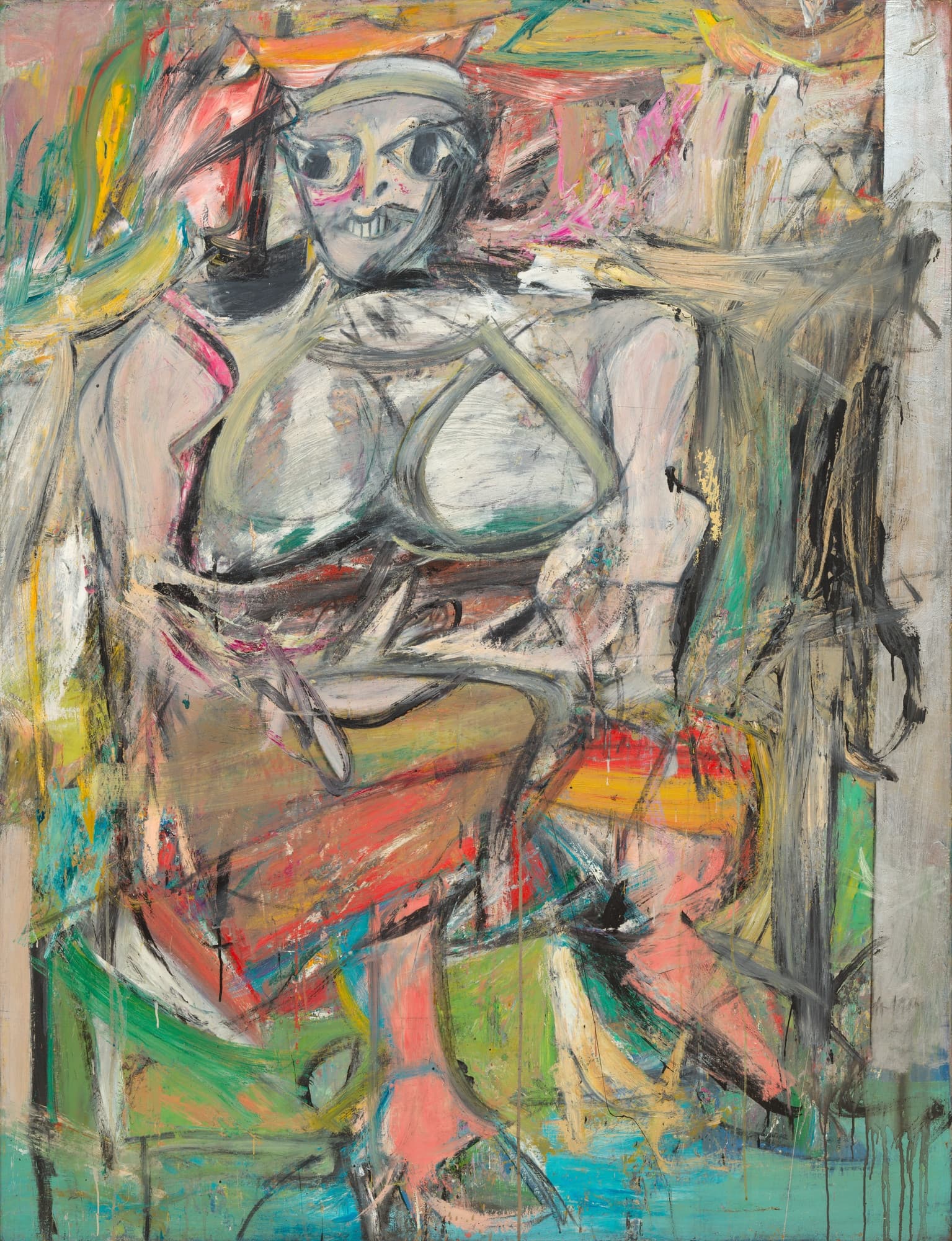
Overview: Woman I (Willem de Kooning, c.1950–52) is in the Museum of Modern Art’s permanent collection (acquired 1953) and is widely regarded as the defining canvas of his Woman series. As a museum‑held masterpiece it is effectively non‑circulating; any hypothetical market valuation must start from the premise that public sale would be exceptional and context‑dependent [1].
Method and anchors: This valuation uses a comparable‑analysis approach anchored to the highest publicly reported private transactions and the verified auction record. The reported private‑sale ceiling for de Kooning is set by Interchange (reported ≈ US$300M, 2015) and other high‑profile private trades (e.g., Woman III, reported US$137.5M), while the public auction high remains Untitled XXV (US$66.3M, Christie’s 2016). Private transactions create headline ceilings; public auctions provide transparent realizations and liquidity signals that are typically lower but verifiable [2][3].
Why $100–300M: The lower bound (≈ USD 100M) represents a conservative market outcome for a canonical, large‑scale Woman if sold under restrained competitive conditions (limited bidders, legal/ethical encumbrances or sale route constraints). The upper bound (≈ USD 300M) is anchored to the Interchange private‑sale ceiling and the unique cultural primacy of Woman I — a museum‑quality, iconic canvas could approach that level in an exceptional private sale with multiple ultra‑high‑net‑worth bidders. The broad band reflects differences between private ceilings and auction discovery, and the imperfect comparability of individual works in terms of size, condition and exhibition history.
Key contingencies: The dominant uncertainty is institutional ownership: MoMA’s custody (object no. 478.1953) makes a sale improbable absent extraordinary circumstances, and deaccession rules or donor restrictions can materially alter marketability or limit the buyer pool [1]. Condition and conservation history, any known encumbrances, and the chosen sale mechanism (private treaty with confidentiality, single‑owner auction, or public evening sale) would each shift a realized price toward the low or high end of the band.
Market context: The post‑war market has polarized: top‑tier masterpieces retain deep buyer demand but a larger share of high value trading now happens privately or with guarantees, narrowing public price discovery. That structural context increases the likelihood that any sale of Woman I, were it to occur, would be private and could realize a price closer to private‑sale ceilings if competitive pressure is present [4].
Conclusion and next steps: On a reasoned comparable basis the working estimate is USD 100–300 million. To refine this further would require access to MoMA’s conservation and technical reports, full provenance and donor‑restriction documentation, and clarity on sale permission/encumbrances. With those inputs, a narrower and better‑supported valuation could be delivered.
Key Valuation Factors
Art Historical Significance
High ImpactWoman I is arguably Willem de Kooning’s most iconic single canvas and the lead painting in his Woman series — a touchstone work for mid‑century American painting and Abstract Expressionism. Its scholarly prominence, frequent reproduction, central role in retrospectives, and broad public recognition give it exceptional cultural capital. That status directly translates to market value: canonical, narrative‑defining works routinely command disproportionate premiums versus smaller or less‑central works by the same artist. Collectors and institutions prize this combination of art‑historical importance and recognizability, meaning the painting’s significance is the primary value driver and supports placement at the very top tier of de Kooning prices.
Ownership & Rarity (Museum Holding)
High ImpactMoMA’s long‑term ownership (acquired 1953) makes the canonical Woman I effectively non‑available in the secondary market; this scarcity increases theoretical value while simultaneously reducing liquidity and price transparency. Deaccessioning policies, donor restrictions, and ethical norms typically constrain sale of major museum pieces, so an actual transaction would be exceptional and may carry legal or reputational encumbrances. If sold, the painting’s institutional provenance could elevate buyer competition among ultra‑high‑net‑worth individuals and private foundations, but any sale restrictions or mandated use of proceeds could materially affect realizable price.
Comparable Sales & Price Anchors
High ImpactComparable evidence is the primary quantitative input. Reported private transactions (Interchange ≈ US$300M; Woman III ≈ US$137.5M) establish headline ceilings, while the public auction record (Untitled XXV, US$66.3M) provides a verified public realization. Private sales can push the ceiling much higher than public auctions, but are less transparent; auction results offer verifiable market proof. Differences in subject, size, provenance and sale conditions limit direct comparability, so these anchors create a broad but justifiable valuation band rather than a precise single number.
Condition & Conservation
Medium ImpactTechnical condition and conservation history materially influence price for large‑scale oil paintings. De Kooning’s layered impasto, patching, relining, or structural work to stretcher/canvas can affect both aesthetic quality and market confidence. For Woman I, MoMA’s internal conservation record (generally confidential) would be decisive: a painting in well documented, stable condition supports top‑end pricing, while evidence of major restoration or ongoing instability would reduce marketability and could lower the realizable price significantly. A full technical report is essential before a firm valuation.
Market Liquidity & Buyer Demand
Medium ImpactDemand for canonical post‑war masterpieces remains concentrated in a small pool of deep‑pocket bidders (private collectors, foundations, institutions). The market has polarized, with many high‑value trades occurring privately; this raises the probability that a sale would be private and subject to bilateral negotiation dynamics. Liquidity at the very top remains strong but is driven by few buyers, meaning competition can push prices up if several eligible bidders bid; conversely, limited buyer participation or legal/ethical constraints can suppress realizations.
Sale History
Woman I has never been sold at public auction.
Willem de Kooning's Market
Willem de Kooning is a principal figure in Abstract Expressionism and ranks among the most valuable 20th‑century artists. His market shows wide dispersion: a handful of canonical canvases have produced very large private‑sale headlines (Interchange reported ≈ US$300M) while the verified public auction record sits lower (Untitled XXV, US$66.3M, 2016). Smaller works, drawings and late‑period canvases trade at materially lower levels, creating a bifurcated market where museum‑quality masterpieces dominate price discovery. Increasing private sales and guarantees have concentrated value at the top end.
Comparable Sales
Woman III
Willem de Kooning
Direct same‑series ('Woman') subject and early‑1950s period — closest subject/period comparable to Woman I.
$137.5M
2006, Private sale (David Geffen → Steven A. Cohen), reported November 2006
~$220.0M adjusted
Interchange
Willem de Kooning
Canonical mid‑1950s de Kooning masterpiece that establishes the private‑sale high ceiling for the artist.
$300.0M
2015, Private sale (David Geffen Foundation → Kenneth C. Griffin), reported Sept 2015
~$407.6M adjusted
Untitled XXV
Willem de Kooning
Public auction record for de Kooning — a large‑scale example showing public price discovery and an auction ceiling.
$66.3M
2016, Christie's New York (Evening sale), Nov 15, 2016
~$89.0M adjusted
Orestes
Willem de Kooning
High‑profile auction sale of an early/figurative de Kooning — useful for recent market context on museum‑quality early works.
$30.9M
2023, Christie's New York (S.I. Newhouse sale), May 11, 2023
~$32.9M adjusted
Untitled (1982)
Willem de Kooning
Recent sale of a late‑period canvas — indicates price tier for high‑quality later works and illustrates market dispersion by period.
$13.3M
2024, Christie's New York, Nov 19, 2024
~$13.7M adjusted
Current Market Trends
The contemporary market is polarized: canonical masterpieces still attract deep demand while mid‑market lots are more selective. Since the mid‑2010s a larger share of headline prices has been set privately or under guarantees, reducing public price discovery. For a museum‑quality de Kooning, private sale channels are likelier and can produce results closer to private‑sale ceilings when multiple competitive bidders participate.