Two ways light acts
Both painters make charged events feel present-tense and near. They use life-size staging, ordinary bodies, and directive light to conscript the viewer. The deepest shared ground is their fixation on threshold instants—recognition, decision, catastrophe. The decisive difference is what their light means: Caravaggio’s beam arrives like grace or verdict; Rembrandt’s illumination gathers as understanding.
Comparison frame: How does painted light work differently in Caravaggio and Rembrandt—as an outside strike of grace versus an inside growth of understanding?
Quick Comparison
| Topic | Caravaggio | Rembrandt van Rijn |
|---|---|---|
| What light does | External beam that acts—grace/verdict arriving from outside | Interior glow that ripens perception and feeling |
| Typical staging | Close-up, table-depth, raking diagonals; curtain-like drapery | Enveloping darks with pooled or backlit focus; soft gradations |
| Moment in time | Split second of decision or impact | Threshold of recognition and assent |
| Gesture vs touch | Pointing, grasping, foreshortened leaps | Hands that teach, bless, or hold; interlocking gazes |
| Viewer’s role | Summoned into an event that commands | Invited to dwell in a scene that persuades |
| Naturalism used for | Persuasion via grit and tactile still life | Empathy via material handling and selective detail |
| Commission ecosystem | Counter‑Reformation church programs; public persuasion | Protestant urban market; civic groups and private devotion |
| Violence pictured | Tableau clarified by a cut of light | Centripetal shock inside a lit vortex |
Shared Ground
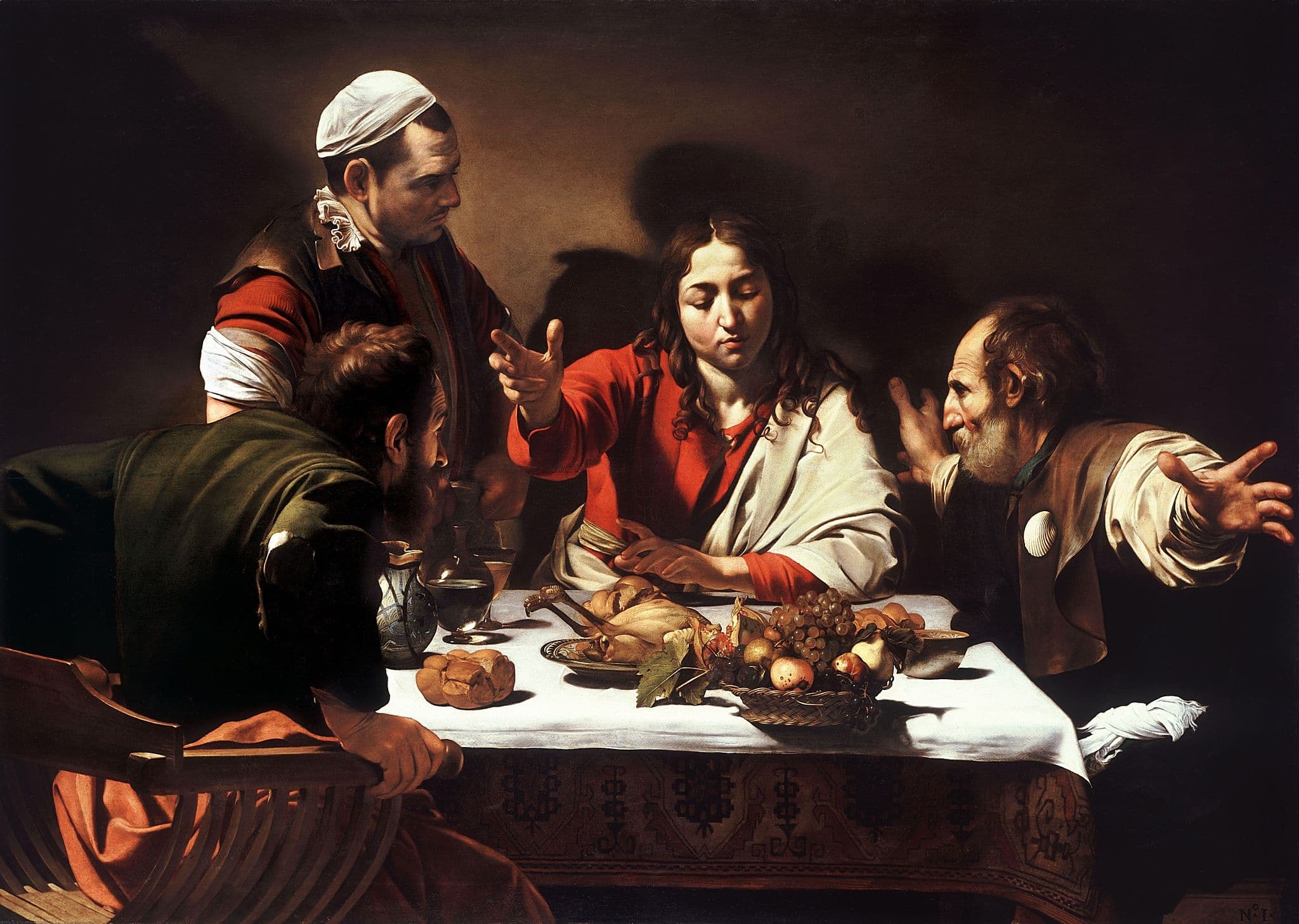
Caravaggio and Rembrandt confront the same problem: how to make viewers experience sacred or consequential events as present realities. Both pull us close with table-depth spaces, life-size figures, and light that directs attention as clearly as a narrator’s voice. The tactic turns looking into participation. In Caravaggio’s The Supper at Emmaus (1601), foreshortened arms and a teetering fruit basket break the picture plane so revelation lands at our edge of the table. In Rembrandt’s The Anatomy Lesson of Dr. Nicolaes Tulp (1632), a cone of light binds cadaver, book, and demonstrator’s hands into a live chain of knowledge performed before witnesses.
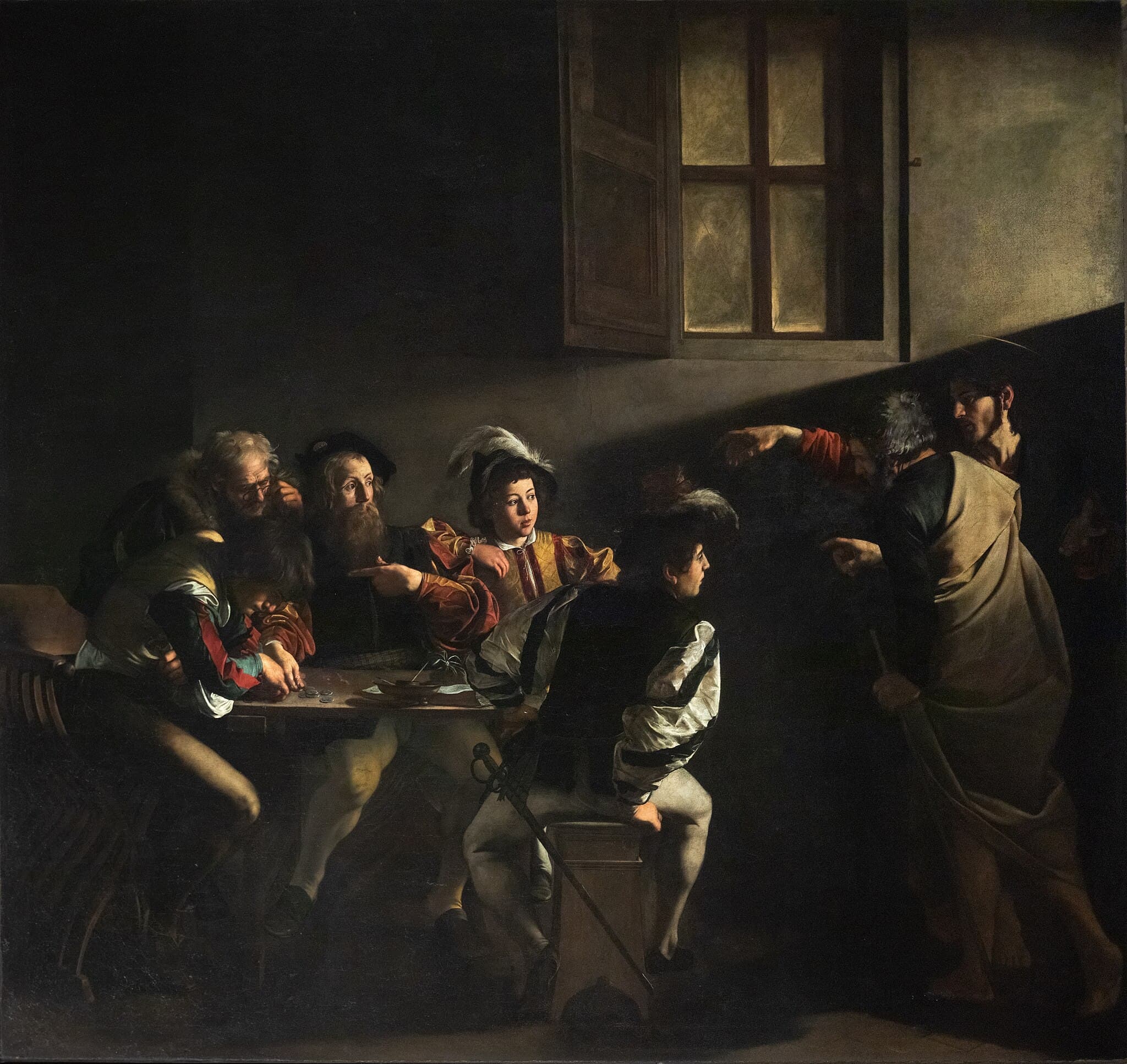
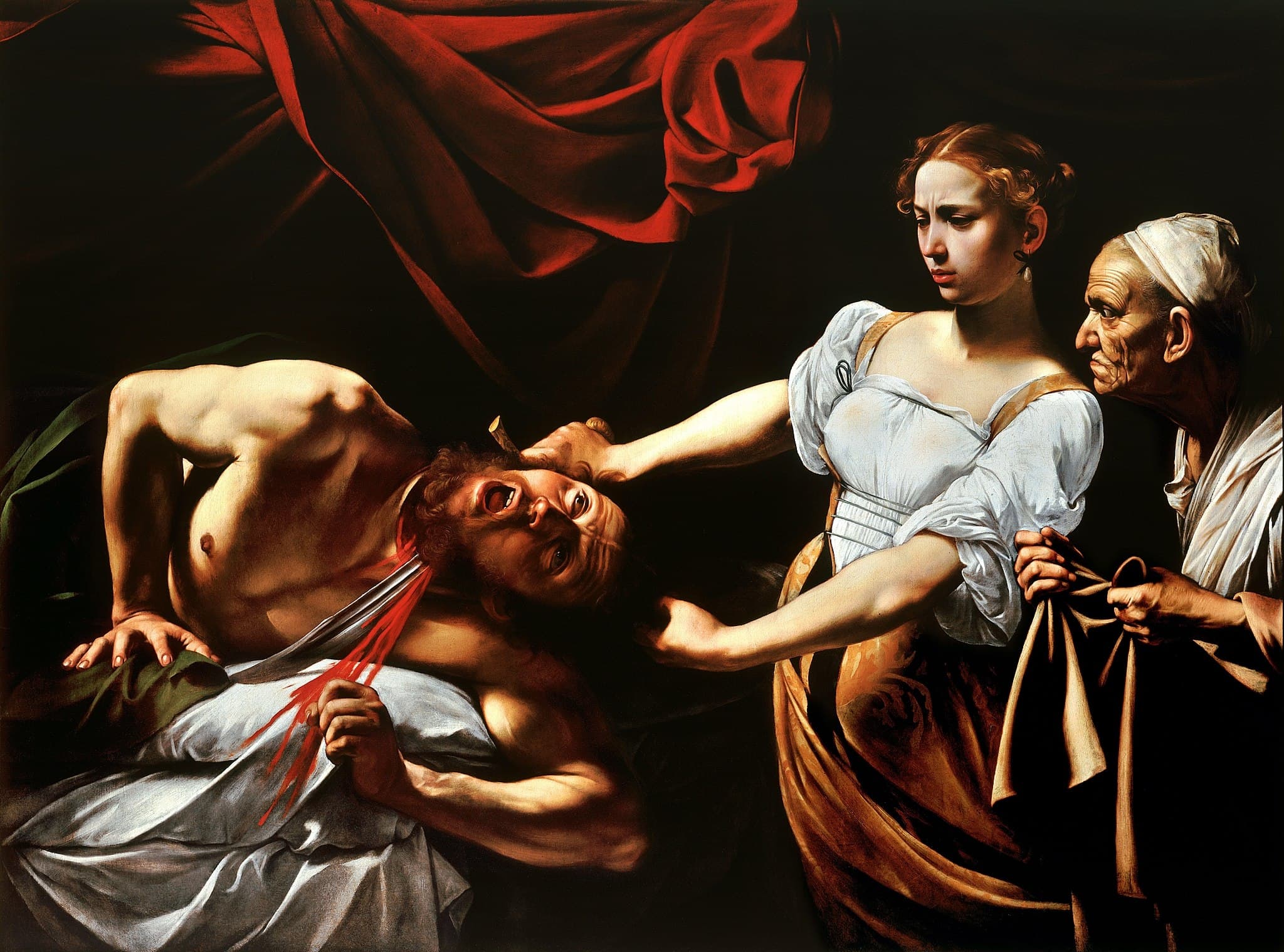
Each artist favors threshold moments—calls, recognitions, rescues, and shocks—so that decision or catastrophe reads as a hinge in time. Caravaggio’s Calling of Saint Matthew and Judith Beheading Holofernes hold us at the instant a command or justice arrives. Rembrandt’s Storm on the Sea of Galilee, The Blinding of Samson, and The Return of the Prodigal Son likewise arrest the second when fear peaks or mercy begins. Naturalism is instrumental for both: everyday dress, unideal bodies, low vantage points, and tactile props make doctrine or drama legible through matter. Their light is not generic chiaroscuro but an argument that paces what we notice—faces, hands, bread, coin, blade—so meaning is built in real time. On this shared ground, painting becomes an ethics of attention: to see rightly is to follow how light gathers faces, touches, and objects into significance.
Decisive Difference
The split opens with what their light means. Caravaggio treats light as an external strike. In the Calling of Saint Matthew, a raking beam keyed to the chapel’s architecture slashes across the wall as Christ points: grace arrives from outside and forces a decision now. In Judith Beheading Holofernes, a hard, directional light cuts the act from darkness like a verdict; in The Supper at Emmaus (1601), a crisp illumination detonates recognition as bodies jolt and still-life edges teeter. His dramaturgy is public and instantaneous: beams, stage-like drapery, emphatic gestures. The viewer stands within range of a command.
Rembrandt makes light feel interior—less interruption than ripening. In the Supper at Emmaus (1648), near-monochrome hush and a backlit Christ let recognition rise slowly. In The Jewish Bride, gold impasto and soft faces let touch glow from within; in The Return of the Prodigal Son, light pools around hands and heads as conscience steadies into assent. Even when crisis spikes (The Blinding of Samson), the flare of light reads as concentrated awareness inside the melee. Context helps explain this divergence: Caravaggio’s Counter‑Reformation church commissions prized persuasive, present-tense theater; Rembrandt worked in a Protestant urban market of civic portraits, private histories, and prints, where inwardness and sustained looking thrived. Via the Utrecht Caravaggisti he absorbed the beam and recast it as glow. The result is two optical theologies: Caravaggio’s theater of decision and Rembrandt’s theater of conscience.
Paired Works
Recognition at Emmaus
Focus question: When recognition happens, does light command or gather?
The Supper at Emmaus vs The Supper at Emmaus (1648)
Call versus refusal
Focus question: How do the optics of a call differ from the optics of a denial?
The Calling of Saint Matthew vs The Denial of St Peter
Violence in the split second
Focus question: What kind of shock do they want us to feel—and how?
Judith Beheading Holofernes vs The Blinding of Samson
Why This Comparison Matters
This pairing clarifies two durable models for how images change us. Caravaggio shows what happens when light arrives as command: a world re-sorted in an instant, decisions made in the open, truth legible on skin, bread, coin, and blade. Rembrandt shows what happens when light gathers as conscience: recognition ripens, hands teach or bless, and empathy takes time. Both invent ways for the viewer to join—either by standing within range of a beam or by dwelling within a pool of quiet.
Understanding this split sharpens how we read art well beyond the 1600s. It explains why Caravaggio’s devices fuel persuasive spectacle—from church altarpieces to cinema’s raking spotlights—while Rembrandt’s inform intimate scenes where faces and hands carry ethical weight. It also gives language to our own looking: do we expect revelation to strike, or are we willing to wait for it to glow? Either way, these painters make vision answerable to meaning.
Related Links
Sources
- National Gallery (London), Caravaggio, The Supper at Emmaus (NG172)
- Smarthistory, Caravaggio, Calling of Saint Matthew
- Gallerie Nazionali Barberini Corsini, Caravaggio, Judith Beheading Holofernes
- Louvre Collections, Rembrandt, Les Pèlerins d’Emmaüs (1648)
- Mauritshuis, Rembrandt, The Anatomy Lesson of Dr Nicolaes Tulp
- Rijksmuseum, Rembrandt, Isaac and Rebecca, Known as ‘The Jewish Bride’ (SK‑C‑216)
- Städel Museum, Rembrandt, The Blinding of Samson
- The Met Heilbrunn Timeline, Caravaggio and His Followers
- Gardner Museum, Rembrandt, Christ in the Storm on the Sea of Galilee
- Contarelli Chapel overview (lighting for the Matthew cycle)
- National Gallery, Rembrandt Now: abstracts (Emmaus 1648 notes)