Stilling the Gaze, Setting it in Motion
Near-contemporaries, Friedrich and Turner both turn landscape into a test of perception rather than a record of place. Each constructs the act of looking: Friedrich stabilizes it into inward scrutiny; Turner sets it in motion as an optical event. Their shared ground is the sublime made experiential—weather, light, and scale—yet they diverge on what a picture is for.
Comparison frame: How do Friedrich's engineered stillness and Turner's engineered flux each change what 'seeing' can mean in a landscape?
Quick Comparison
| Topic | Caspar David Friedrich | J. M. W. Turner |
|---|---|---|
| Primary aim | Landscape as inward, often spiritual self-scrutiny | Perception as an event unfolding in time |
| How the view is built | Studio composites from field studies; tuned for symbolic clarity | Engineered perspective, diagonals, vortex atmospheres |
| Vantage design | Fixed perch; Rückenfigur anchors the gaze | Thrown viewpoint; viewer buffeted by motion and weather |
| Sense of time | Suspended and contemplative | Time-pressed, contingent, modern |
| Technology’s role | Rarely central; ruins and crosses as moral anchors | Bridges, railways, and steam tugs reshape what and how we see |
| Edges and surface | Clear contours against veiling mists; calm surfaces | Dissolving edges; scumbled, tactile atmospheres |
| Sublime mode | Steady contemplation before veiled vastness | Engulfing flux—risk, speed, and storm |
Shared Ground
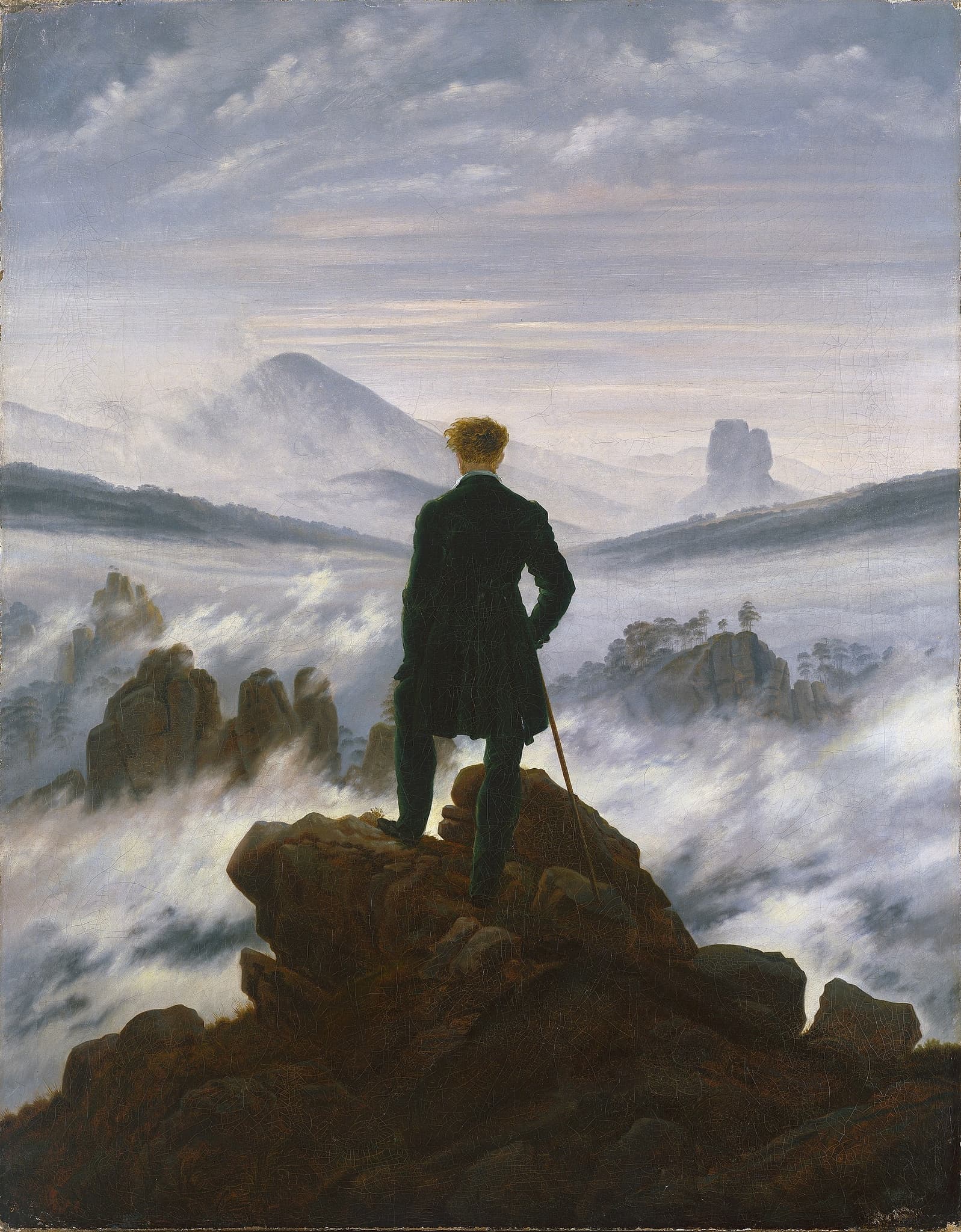
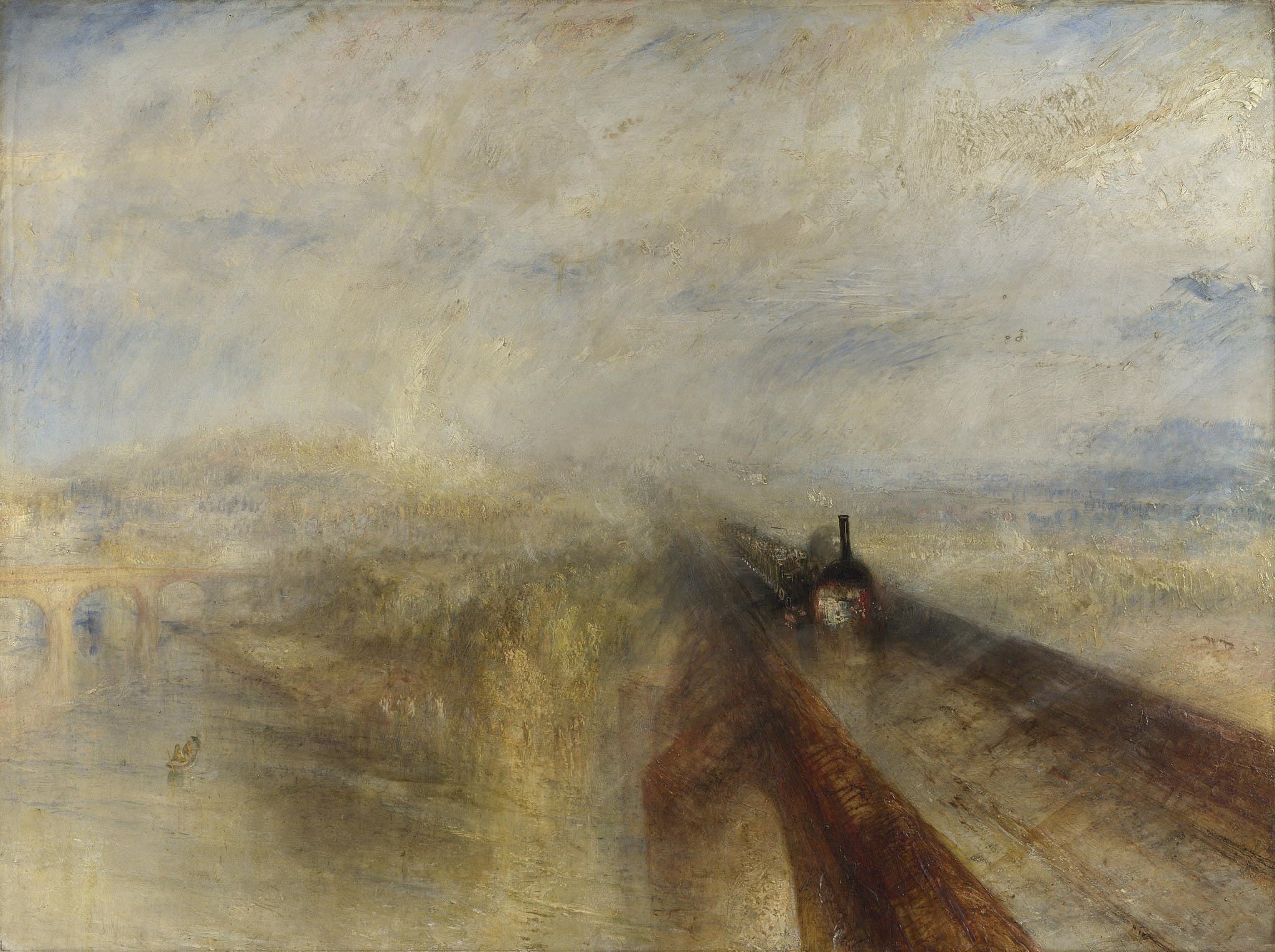
Friedrich (1774–1840) and Turner (1775–1851) make landscape a vehicle for thought. Neither accepts the view as given. Each artist builds a vantage to shape how we look and what looking can mean. Friedrich routinely composes landscapes in the studio from precise field drawings, producing an ideal—rather than literal—prospect that concentrates meaning. The Wanderer above the Sea of Fog is assembled this way, its firm crag and veiling mist designed to turn outward scenery into inward attention. Turner similarly fabricates the experience of seeing, but toward instability: Rain, Steam and Speed uses extreme foreshortening along Brunel’s Maidenhead Bridge so that the locomotive compresses distance and sight lines into an onrush.
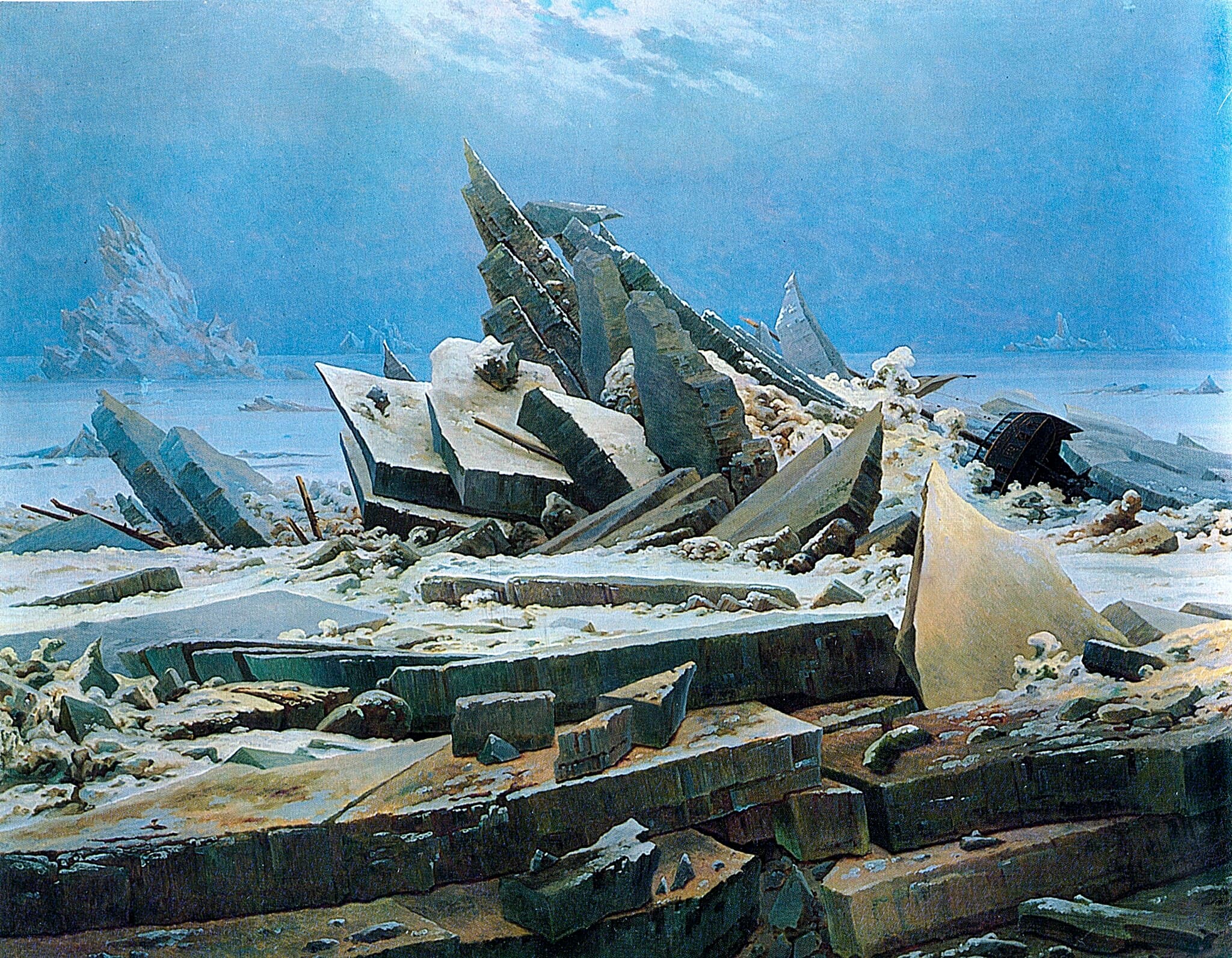
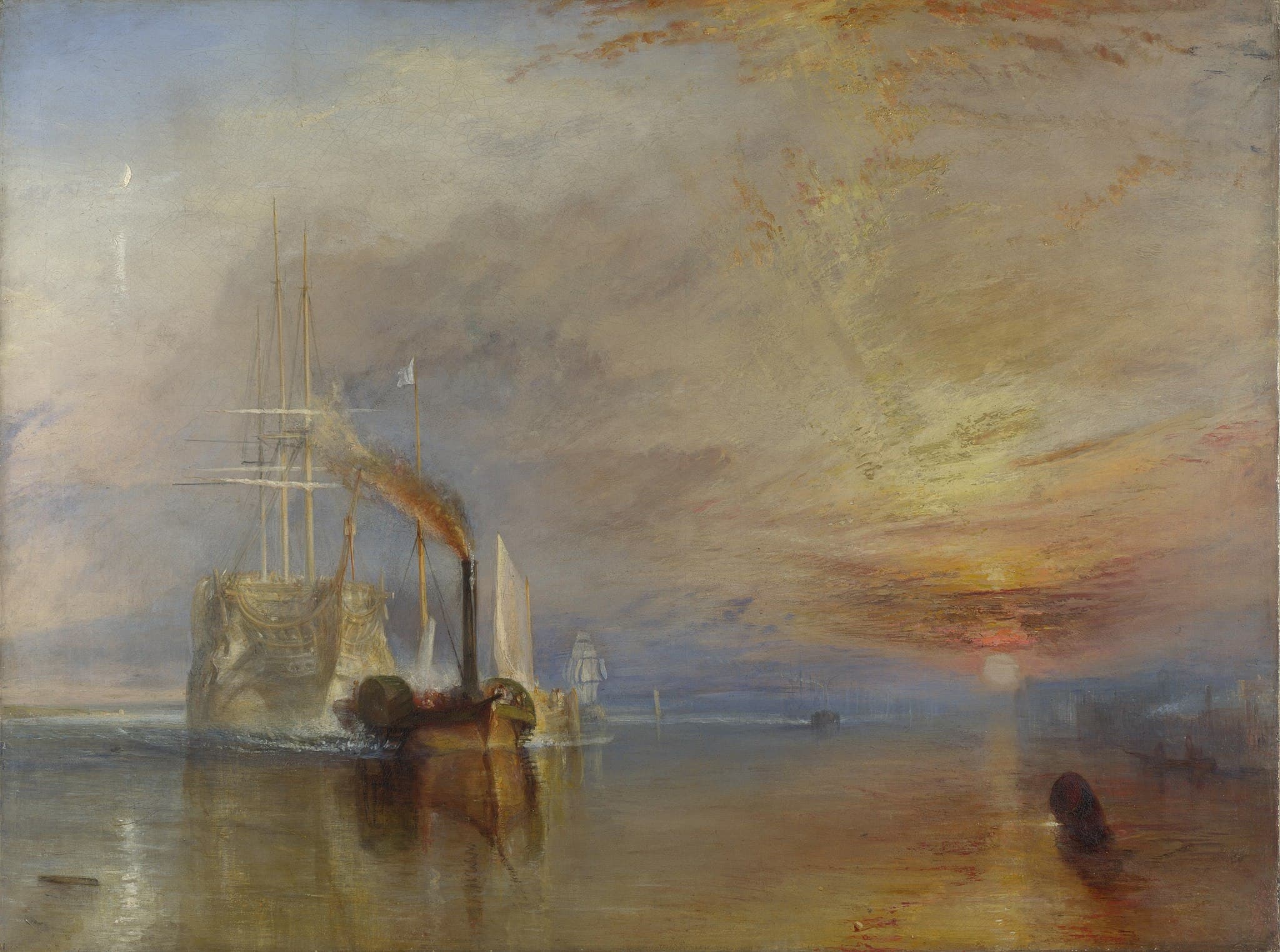
Both artists recast the sublime as an experiential problem. Human agents shrink, atmospheres thicken, and scale becomes precarious. Friedrich’s The Sea of Ice removes all rescuing narrative, setting a wreck beneath an architectonic heap of floes; nature reads as judgment, not backdrop. Turner’s storm and speed pictures make weather and technology the active forces in vision—Snow Storm—Steam-Boat off a Harbour’s Mouth dissolves contour into a vortex, and The Fighting Temeraire folds sunset, smoke, and hulls into a single elegy of transition. In each case, light, weather, and construction—not topography—carry the claim. The result is a shared modern premise: a landscape painting is not a place so much as a designed experiment in perception.
Decisive Difference
The decisive difference lies in what a landscape picture is for. Friedrich builds a fixed, clarifying vantage to stage self-scrutiny with spiritual overtones. From the Tetschen Altarpiece onward, he treats landscape as capable of religious and moral work. To secure that inwardness he stabilizes the gaze: composite “ideal” views, axial geometries, and the Rückenfigur that turns us into poised witnesses. His horizons are legible, his forms firm against veils, and events often paused at threshold—Monk by the Sea clears the middle ground to suspend narrative, and The Sea of Ice withholds rescue so reflection can do the work.
Turner, by contrast, makes perception contingent. He designs the image as an event in time—diagonals that hurl, spirals that engulf, edges that fray under rain and spray. As Professor of Perspective, he weaponizes learned construction to collapse survey into immediacy: Rain, Steam and Speed drives a Firefly-class engine down a single lance of track; Snow Storm—Steam-Boat pulls the viewer into a storm’s gyring core. Modern infrastructure is not incidental but constitutive: bridges, locomotives, and tugs alter vision itself. Even in historical subjects, he privileges poetic truth over fact—The Fighting Temeraire’s invented sunset and compressed tug flotilla announce allegory. Put simply: Friedrich steadies seeing so thought can gather; Turner unsettles seeing so time, weather, and technology are felt. One asks for stillness before the infinite; the other shows how the infinite moves through us.
Paired Works
Perch vs onrush
Focus question: What changes when the picture gives you a perch versus when it sends the subject straight at you?
The Wanderer above the Sea of Fog vs Rain, Steam and Speed
Horizon vs vortex
Focus question: How do blankness and swirl differently test what can be known in a picture?
Monk by the Sea vs Snow Storm—Steam-Boat off a Harbour's Mouth
Two elegies for power
Focus question: When painting bids farewell to an era, does it judge, mourn, or re-time it?
The Sea of Ice vs The Fighting Temeraire
Why This Comparison Matters
This pairing clarifies two durable models for modern vision. Friedrich’s engineered stillness proposes that meaning emerges when the gaze is steadied and the world is allowed to veil itself; Turner’s engineered flux proposes that meaning emerges when the gaze is thrown into time, weather, and machinery. Later art repeatedly chooses between, or fuses, these logics—from symbolist horizons and minimalist emptiness to the cinematic blur of motion and the photograph’s split-second.
For a contemporary viewer, the distinction has practical use. It explains why some images invite meditation while others feel like events; why technology can be felt not only as subject matter but as a change in how seeing works. It also grounds current debates—environmental precarity on one side, accelerated infrastructures on the other—in a long visual history. Understanding Friedrich and Turner on this axis equips you to read landscapes as designed vantage points rather than mere views, and to recognize when a picture asks you to stand firm—or to move.
Related Links
Sources
- National Gallery (London): Rain, Steam and Speed — The Great Western Railway (NG538)
- National Gallery (London): The Fighting Temeraire (Egerton 2000 catalogue entry)
- Hamburger Kunsthalle / 250 CDF: Wanderer above the Sea of Fog (composite process and studies)
- Alte Nationalgalerie (Berlin): Caspar David Friedrich — Gallery texts (incl. Tetschen Altarpiece controversy)
- Caspar David Friedrich Center: The Sea of Ice (chronicle and analysis)
- Victorian Web: Turner’s Snow Storm—Steam-Boat off a Harbour’s Mouth
- Encyclopaedia Britannica: J. M. W. Turner (biography; Professor of Perspective)
- Quodlibet (University of Michigan): Turner’s Snow Storm—Steam-Boat off a Harbour’s Mouth (context and reception)
- Wikipedia: The Monk by the Sea (context and formal description)
- Koerner, Caspar David Friedrich and the Subject of Landscape (University of Chicago Press)