Seeing as Method: Monet and Picasso
Monet and Picasso both turn painting into a way to learn how seeing works. Monet organizes vision as an environmental field that changes through time; Picasso organizes vision as a built structure the viewer must assemble. Each scaled this inquiry to public formats that recondition how a body looks—Monet’s immersive Water Lilies rooms; Picasso’s confrontational Guernica.
Comparison frame: How do Monet’s atmospheres and Picasso’s facets re-train the eye—one through time in the world, the other through the mind’s reconstruction?
Quick Comparison
| Topic | Claude Monet | Pablo Picasso |
|---|---|---|
| What anchors a picture | A stable motif inside a changing atmospheric ‘enveloppe’ (haystacks, cathedrals, London). | An object decomposed into facets, signs, and viewpoints that must be reassembled (Analytic Cubism). |
| Time in the image | Sequence across canvases—hour/season differences become the work’s structure (series). | Simultaneity on one surface—successive glances compressed into a single stage. |
| Light’s job | Environmental condition that tints everything and can be empirically traced (fog, sun position). | An emblematic force within a constructed drama (electric bulb vs. hand‑lamp in Guernica). |
| How recognition happens | Through micro‑shifts of hue and contrast; objects feel provisional under changing air. | Through cognitive reconstruction; cues, text, and planar seams instruct the eye to ‘read’ form. |
| Scale & spectator | Immersion: Water Lilies rooms create a continuous field that envelops the body. | Confrontation: mural‑scale tableaux (Guernica) stage witnesses and shocks on a shallow plane. |
| Materials & surface | Layered strokes fuse motif and reflection; surface records duration. | Faceting, collage, stencils declare the canvas as a constructed artifact. |
| Where meaning lives | In conditions—weather, hour, haze—rather than iconography alone. | In structure—relations among planes, viewpoints, and signs. |
Shared Ground
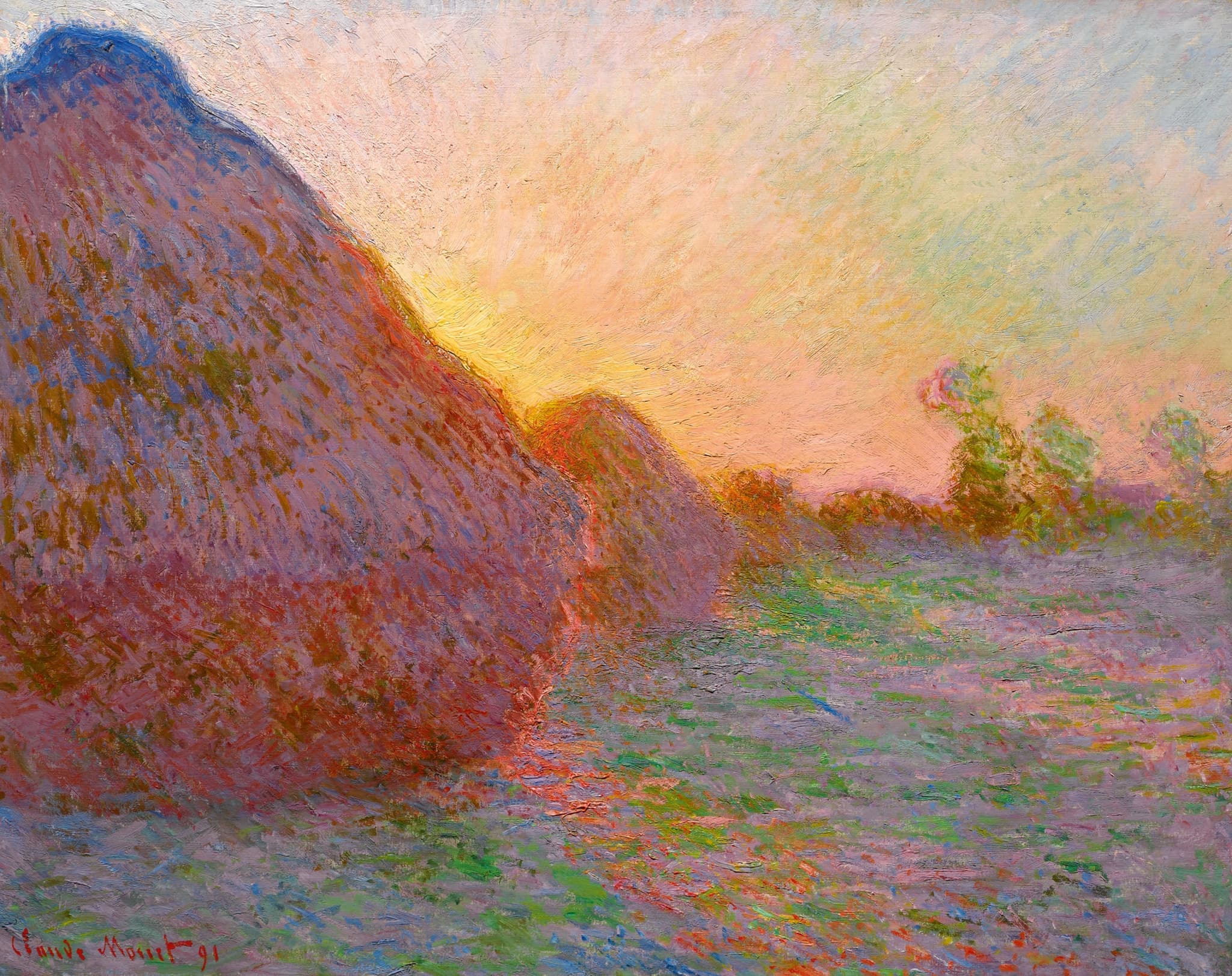
Monet and Picasso meet on one deep ground: they treat painting as a device for testing how vision works. Monet builds pictures around an atmospheric field—the enveloppe—that makes architecture and objects read as events in light. His commitment to instantaneity is procedural as well as pictorial: he holds a vantage and lets hours, weather, and season rewrite the motif across a calibrated series. Time is distributed canvas by canvas so that viewers learn to read chromatic intervals as narrative.
Picasso, by contrast, compresses time and viewpoints into a single surface. In Analytic Cubism, objects are splintered into facets and partial views that ask the beholder to assemble them conceptually; in later public works he keeps that constructed grammar but turns it outward, staging witnesses, lights, and emblematic figures on a shallow, theater‑like plane. In both cases, looking is active and learned: recognition does not arrive at a glance.
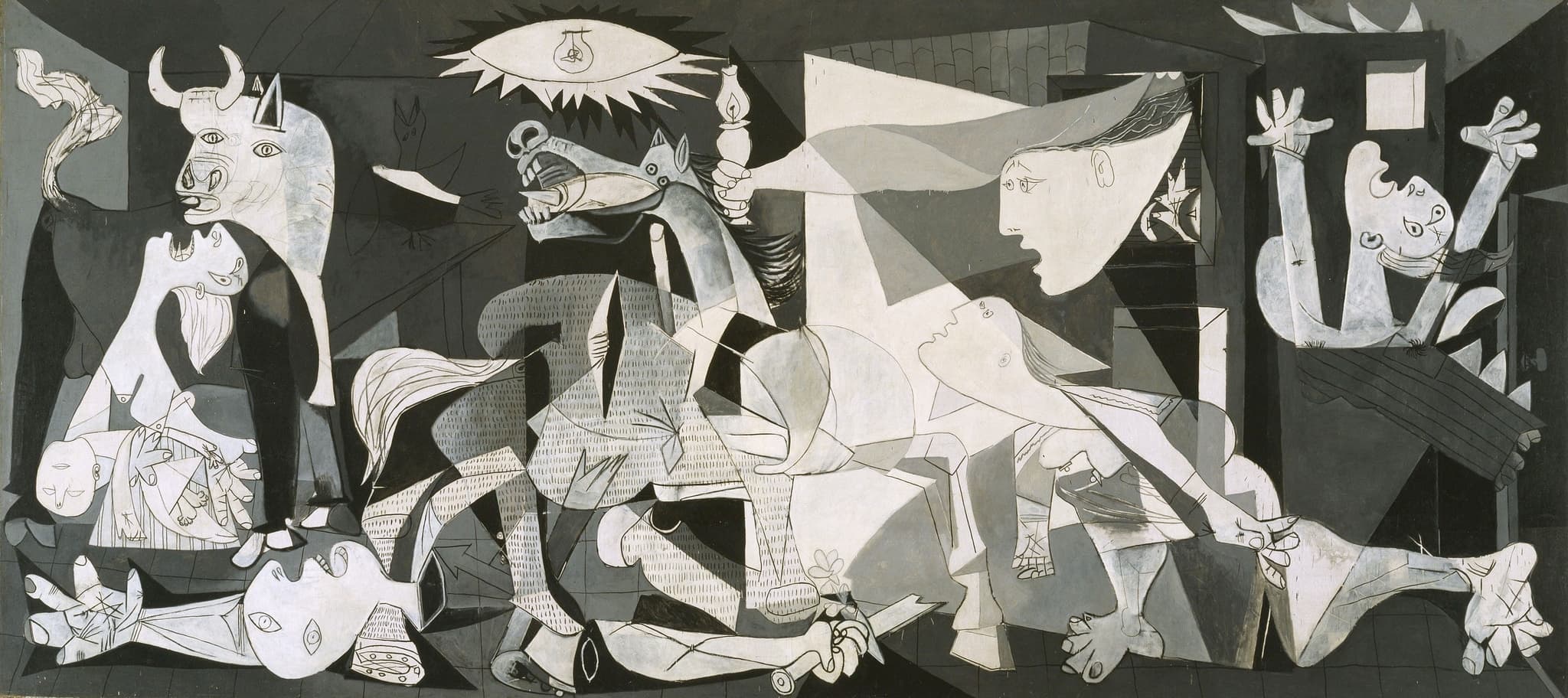
Each artist scales these inquiries to public formats that reorganize spectatorship. Monet’s Water Lilies rooms at the Orangerie immerse viewers in a continuous perceptual field; Picasso’s Guernica marshals mural dimensions to choreograph a civic lament, with an overhead electric bulb and a hand‑lamp turning light into an argument about modernity. Both also tie perception to contemporary conditions—Monet’s London campaigns register fog, smog, and sun geometry; Picasso’s 1937 works bind fractured seeing to the media age and aerial war. The shared project is not style; it is retraining the eye.
Decisive Difference
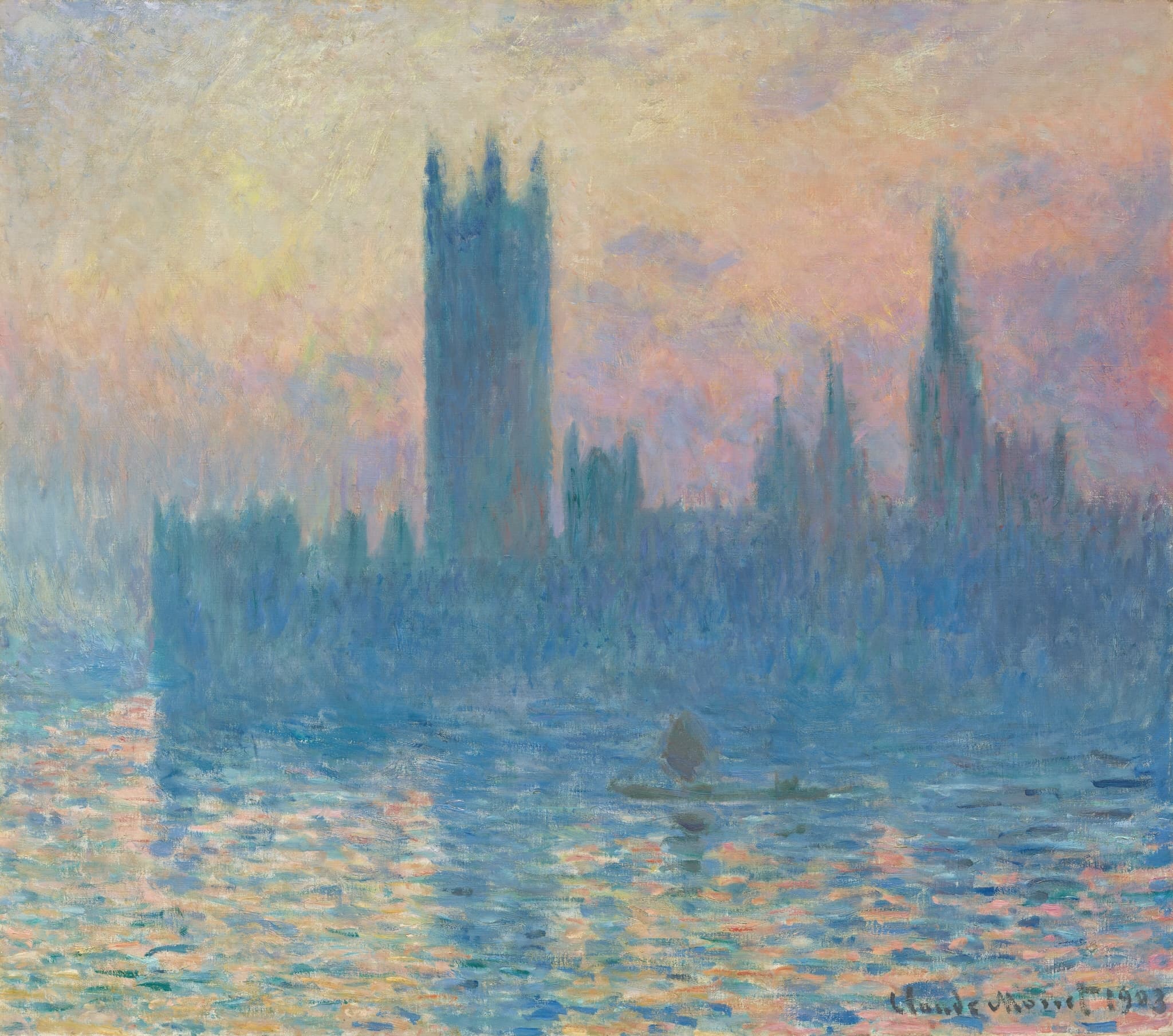
Monet’s wager is ecological: perception is what happens to things inside changing conditions. Keep the motif steady and let light, air, and time alter it; paint the enveloppe so thoroughly that contour feels provisional. Meaning relocates to atmosphere. In the Haystacks and London series, hue and contrast—cool to warm, clear to veiled—carry the drama. Even monuments submit to climate: Westminster dissolves into a backlit haze, and the Water Lilies flatten horizon into a field where reflection becomes a second architecture. The viewer’s work is to notice small chromatic shifts as real events.
Picasso’s wager is cognitive: perception is constructed. Break the object into facets, graft in text, musical notation, or collage; force the viewer to rebuild the world conceptually rather than by retina alone. In Ma Jolie, stenciled words and notational signs declare that reading organizes vision. In Guernica, fracture becomes a public syntax: the electric bulb, the hand‑lamp, and the shallow stage tell us that meaning arises from structural relations among planes and emblems. Monet relocates meaning in conditions—serial change in light; Picasso relocates meaning in structure—simultaneity, fracture, montage. The first teaches us to see through time in the world; the second to think seeing as assembly. That difference—environmental optics versus analytic construction—most clearly reveals how each artist understands painting, perception, and the modern.
Paired Works
Time as sequence vs time as simultaneity
Focus question: How does each artist turn time into the very structure of recognition?
Haystacks (Meules) series, 1890–91 vs Ma Jolie, 1911–12
Light as condition vs light as indictment
Focus question: What is light doing in each image, and why does it matter?
The Houses of Parliament, Sunset, 1903 vs Guernica, 1937
How a picture handles your body
Focus question: What changes when the work scales up to reprogram spectatorship?
Water Lilies (Nymphéas), Orangerie installation, inaugurated 1927 vs Guernica, 1937
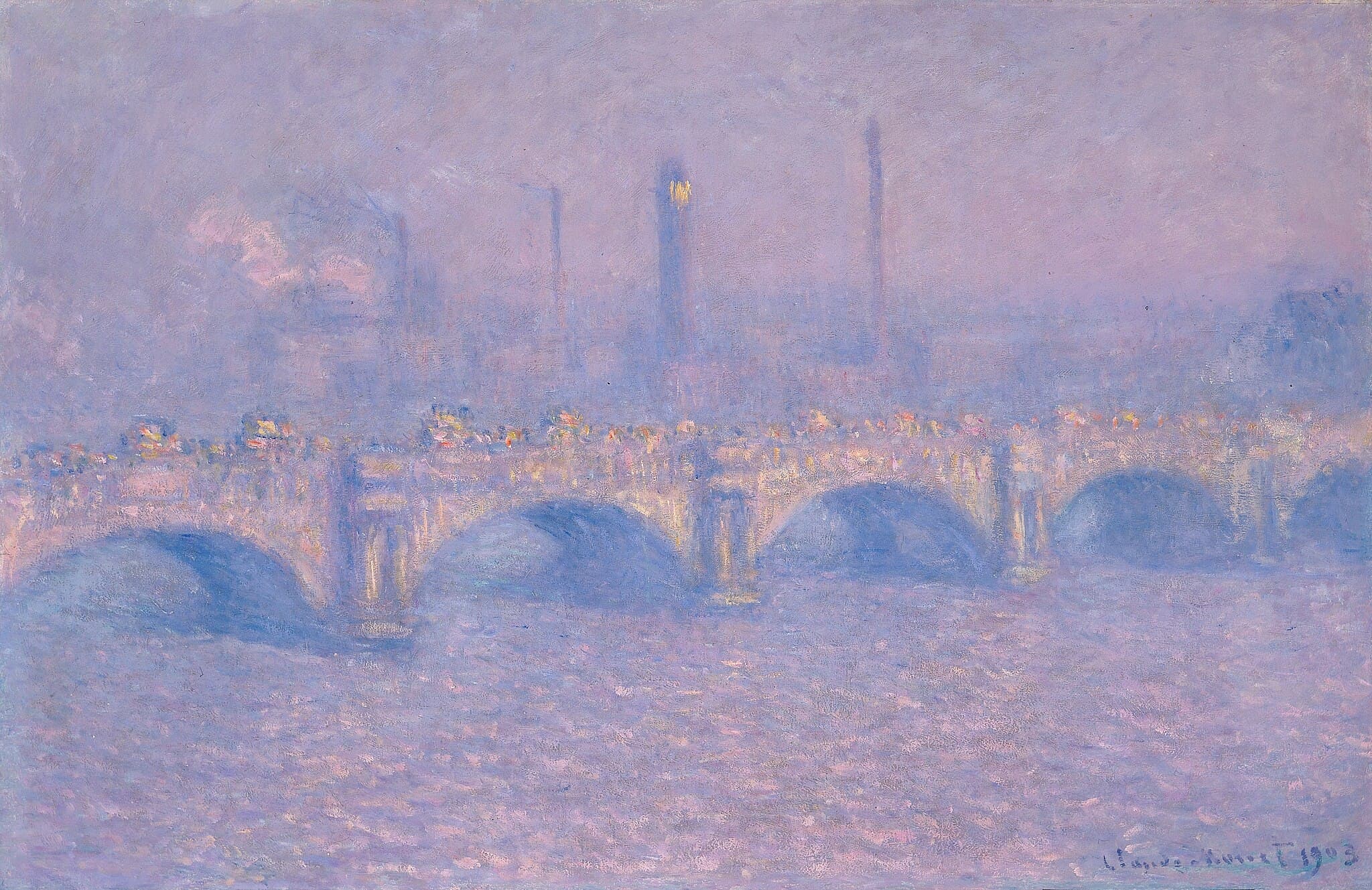
Modernity on skin and skyline
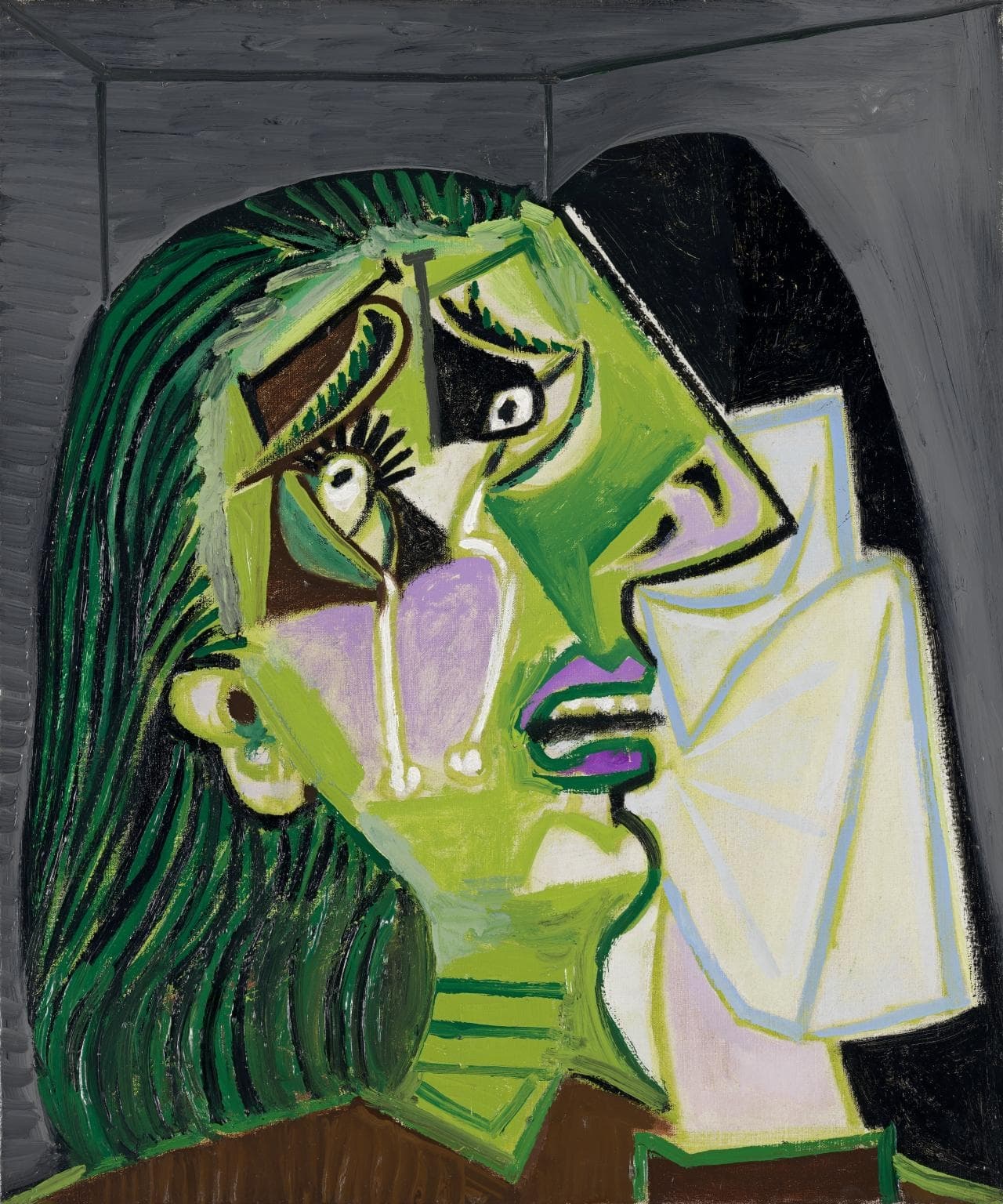
Focus question: How do industrial atmosphere and political trauma register in faces and places?
Waterloo Bridge, Veiled Sun, 1903 vs The Weeping Woman, 1937
Why This Comparison Matters
This pairing clarifies two durable models for modern vision. Monet shows that truth in painting can be environmental and time‑bound: keep a motif steady and let conditions write it. That approach seeded later serial practices, immersive formats, and a broader ecological sensitivity to how context determines appearance. Picasso shows that truth can be constructed and legible only through active assembly: fracture, simultaneity, and embedded signs transform looking into a kind of reading. That approach underwrites modern collage, conceptual strategies, and the idea that images can analyze experience rather than mirror it.
For a reader deciding between “light” and “geometry,” the more decisive axis is where meaning lives. With Monet it resides in conditions; with Picasso it resides in structure. Recognizing this lets you navigate both artists without cliche: Monet’s fog is not softness but a measurable optic that reorganizes a city; Picasso’s Cubism is not escape from reality but a different realism—cognitive and public—capable of carrying grief, history, and witness. The result is a clearer map of how painting changes seeing, then and now.
Related Links
Sources
- Art Institute of Chicago, Monet on “instantaneity” and the enveloppe
- Musée d’Orsay, Londres, le Parlement. Trouée de soleil dans le brouillard
- Solar position within Monet’s Houses of Parliament
- Atmospheric pollution and Impressionist optics (open access)
- MoMA object: Picasso, Ma Jolie (text and musical notation)
- MoMA Learning: Cubism (multiple viewpoints, collage)
- Reina Sofía: Guernica commission, making, and repatriation
- Critique d’art: Monet’s Water Lilies as immersive environment
- Les Meules (Haystacks) exhibition logic and numbers
- National Gallery of Art: The Houses of Parliament, Sunset
- NGV: A witness to Guernica — Picasso’s Weeping Woman