Claude Monet vs Paul Cézanne
Both artists turn a fixed motif into an instrument for testing perception over time. The crucial split is what they stabilize: Cézanne constructs a durable order that can withstand sequential looking, while Monet registers the truthful instability of conditions—light, weather, and air. Read through paired works, the difference becomes a method for seeing time either inside one canvas (Cézanne) or across a calibrated series (Monet).
Comparison frame: How do Cézanne’s constructions and Monet’s atmospheres each change what a painting asks the eye to do?
Quick Comparison
| Topic | Claude Monet | Paul Cézanne |
|---|---|---|
| What the motif tests | Stability of relations—can forms be built to hold together? | Stability of conditions—how light/air make and unmake what we see. |
| How time enters | Accreted within a single canvas via revisions and sliding viewpoints. | Distributed across a series; on-site starts, studio distillation of effects. |
| What carries structure | Color-planes, edges, warm–cool modulation; constructive stroke. | Atmospheric envelope; reflections, haze, and color keys organize form. |
| Space handling | Purposeful misalignments compress multiple glances into one surface. | Withheld horizons and mirrored surfaces flatten and re-layer depth. |
| Serial practice | Mont Sainte‑Victoire from different stations, refined after Les Lauves (1902). | Haystacks shown as a set in 1891; later Rouen, London, Venice, Water‑Lilies. |
| Engineered site | Les Lauves studio built to secure a working view onto Sainte‑Victoire. | Giverny water garden and Japanese bridge designed to sustain long study. |
| Brushwork aim | Short, blocky touches build volume and equilibrium. | Softened edges and vibrating strokes level object hierarchies. |
| Environment | Local geology becomes a schema of interlocking planes. | London series track smog‑tinted light; atmosphere as measurable condition. |
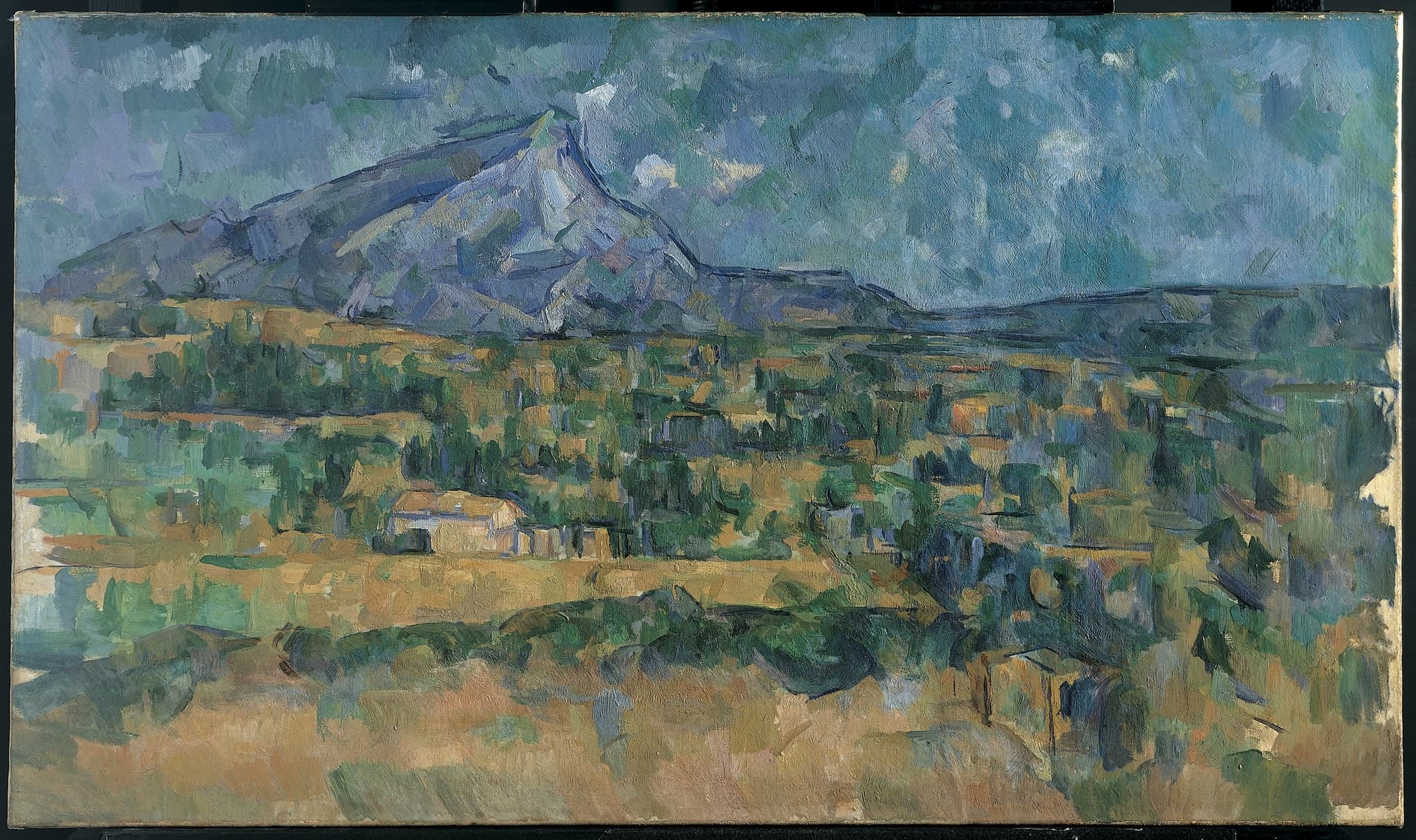
Shared Ground
Monet and Cézanne treat painting as a laboratory for perception rather than a stage for anecdote. Each fixes a motif and uses repetition to find out what looking can build. Monet anchors himself to a stack, a façade, or a bridge, then lets changing light, weather, and hour write the picture. Cézanne anchors himself to a mountain, a tabletop, or a group of bathers, then lets sequential looking stitch a more durable order. This serial logic is structural, not decorative: Monet first presented his Haystacks as a calibrated ensemble in 1891, while Cézanne returned to Mont Sainte‑Victoire for years, especially after establishing the Les Lauves vantage in 1902.
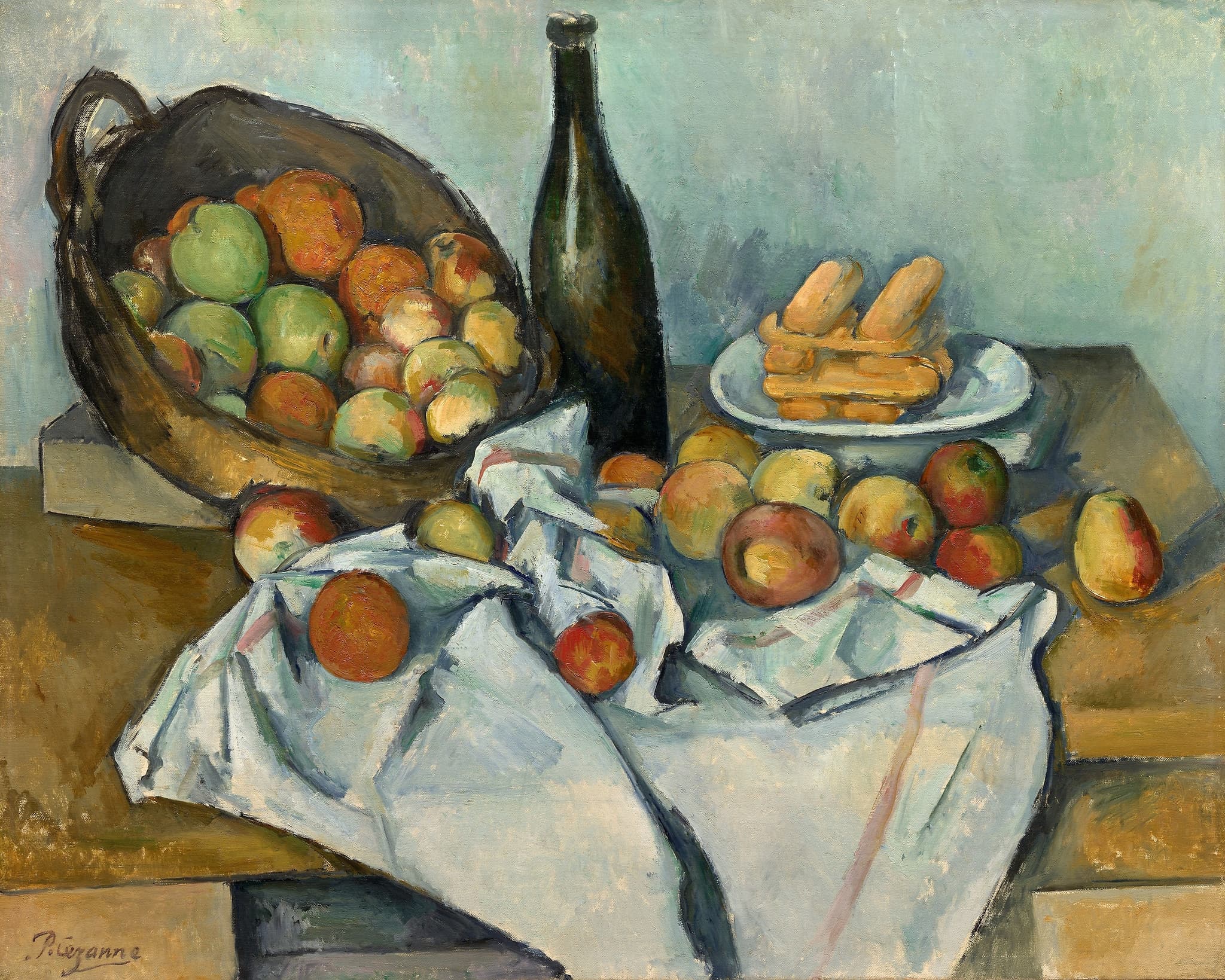
Both relocate structure into color relations on the surface. Cézanne’s short, constructive strokes and warm–cool modulations build volume without theatrical chiaroscuro; Monet sets up color intervals that register the atmospheric envelope so that objects seem to emerge from light. Each also flattens and complicates space to tell the truth about seeing. Cézanne’s tilted planes, misaligned edges, and sliding viewpoints compress multiple glances into one field; Monet often withholds conventional depth cues and lets reflection become a second architecture that rivals, even replaces, objects.
Finally, both artists design their practice around sustained attention. Monet literally engineers a site at Giverny to make motif and method coincide; Cézanne turns still life into a studio laboratory where apples, bottles, and cloth can endure long campaigns of adjustment. The result in both cases is a painting that asks the eye to work—comparing intervals of color, pacing across planes, and recognizing time as part of what a picture is.
Decisive Difference
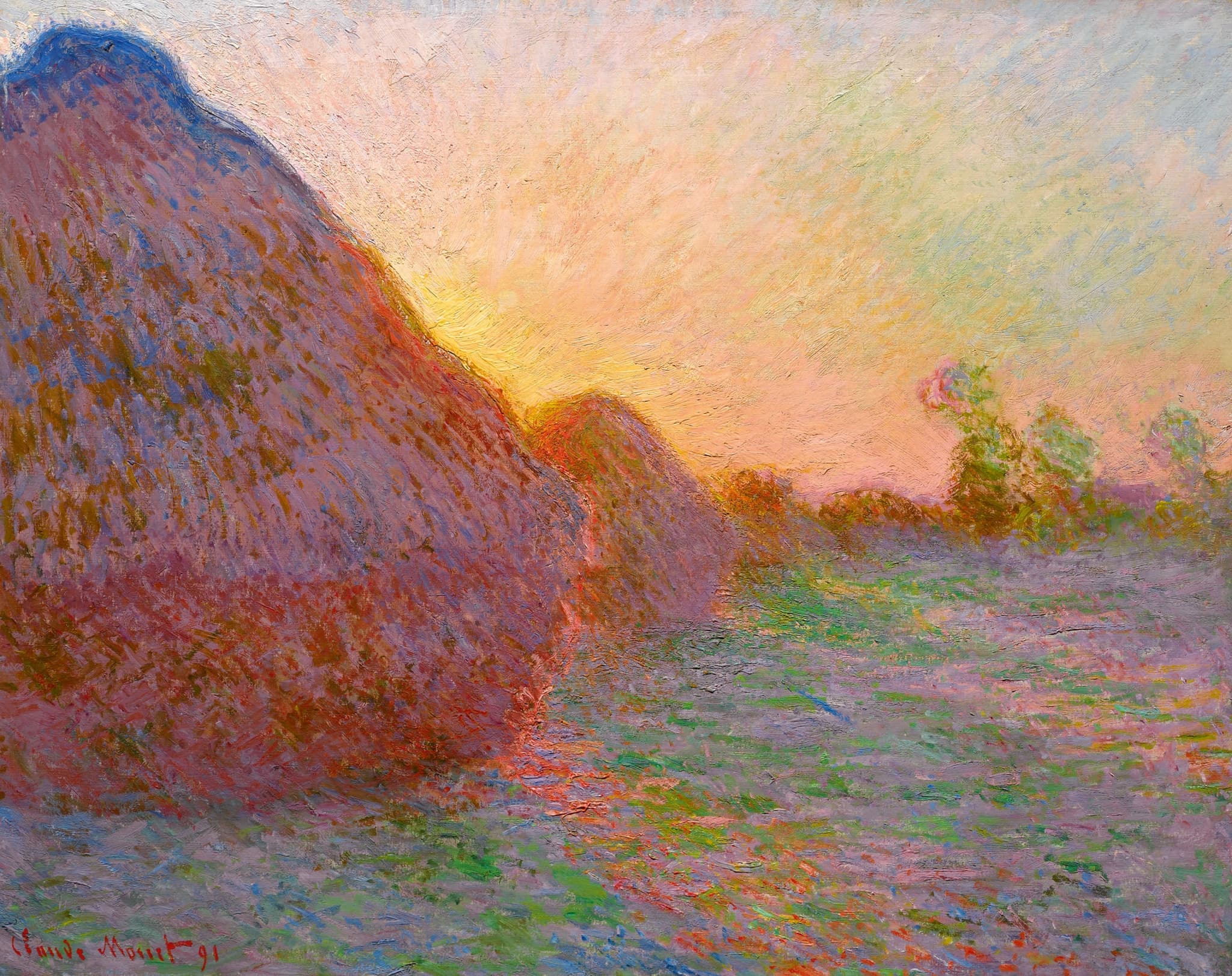
The decisive difference is what each artist tries to stabilize. Cézanne seeks a constructed, lasting pictorial order—relations that remain coherent after perception has been tested, revised, and re‑knit on the canvas. Monet seeks the truthful instability of conditions—how the same motif is remade by light, season, and air. For Cézanne, time is accretive inside the image: a single canvas records multiple lookings, which is why tables tilt, edges slide, and color-planes carry weight. For Monet, time is externalized as a suite: each canvas in a series holds one calibrated interval, and meaning emerges when versions hang together.
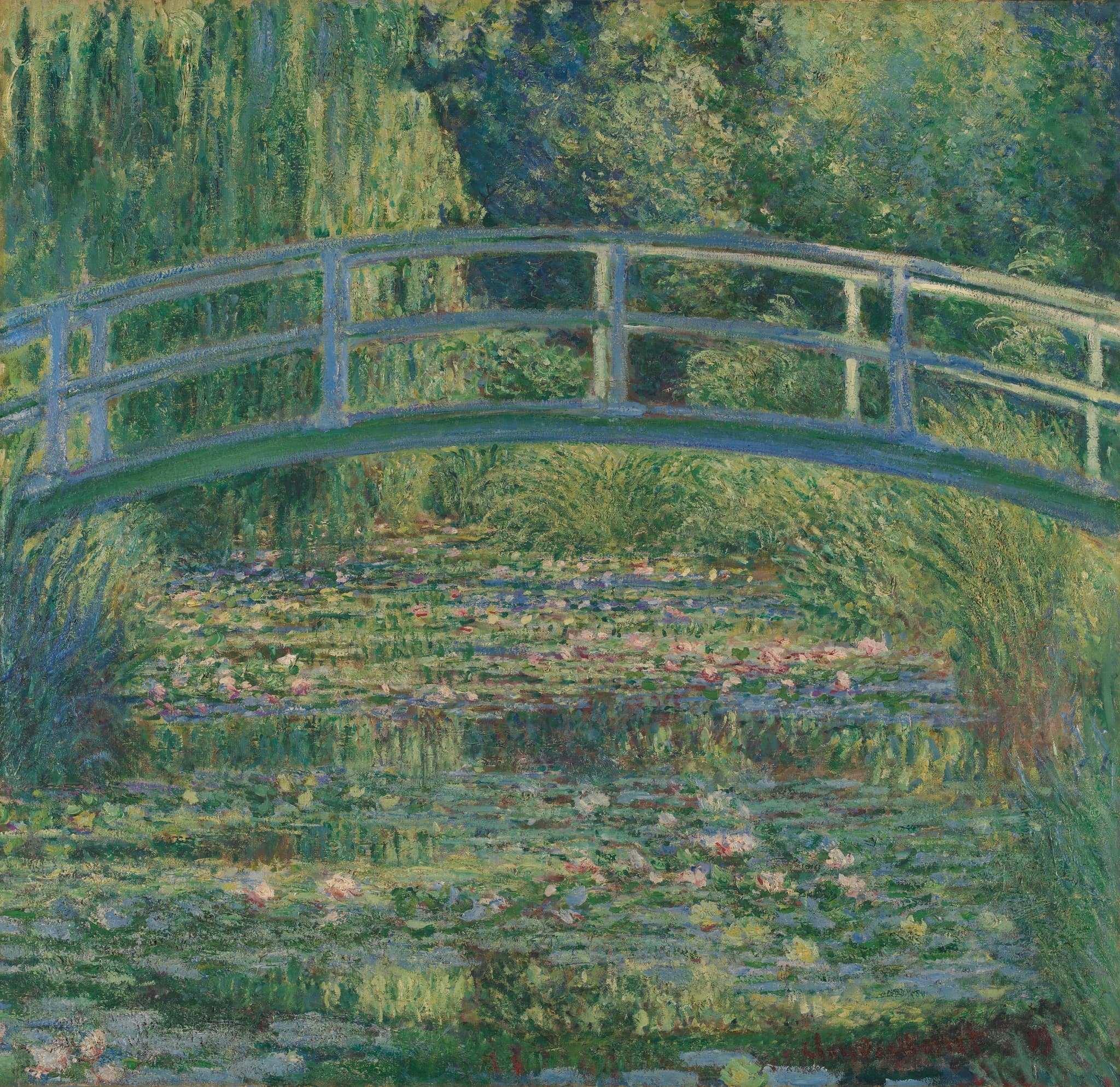
That split changes where structure lives. Cézanne lets color‑planes and measured tilts perform the work of architecture even when perspective is violated; Mont Sainte‑Victoire reads like masonry made of hue. Monet lets the atmospheric envelope do that work; in the Water‑Lily Pond or Houses of Parliament, reflections and haze turn landscape and building into armatures for light. Philosophically, Cézanne’s method constructs visibility—an attempt to make seeing itself intelligible as order—while Monet foregrounds contingency, the optics of a world in flux.
The implications are concrete. Cézanne’s still lifes and bathers ask the eye to resolve tensions into stable relations. Monet’s haystacks, cathedrals, and bridges ask the eye to read differences across canvases as the subject. Even environmental facts enter differently: London’s smog becomes Monet’s chromatic data; Cézanne’s Provence becomes a schema of interlocking planes. Two modern truths result—nature as constructed order, and nature as changing condition.
Paired Works
Fixed motif, two logics of time
Focus question: When the subject is fixed, what does each artist stabilize—order or conditions?
Mont Sainte-Victoire vs Haystacks Series by Claude Monet | Light, Time & Atmosphere
Flattening space, different ends
Focus question: How do they flatten depth to tell the truth about seeing?
The Basket of Apples vs The Water Lily Pond
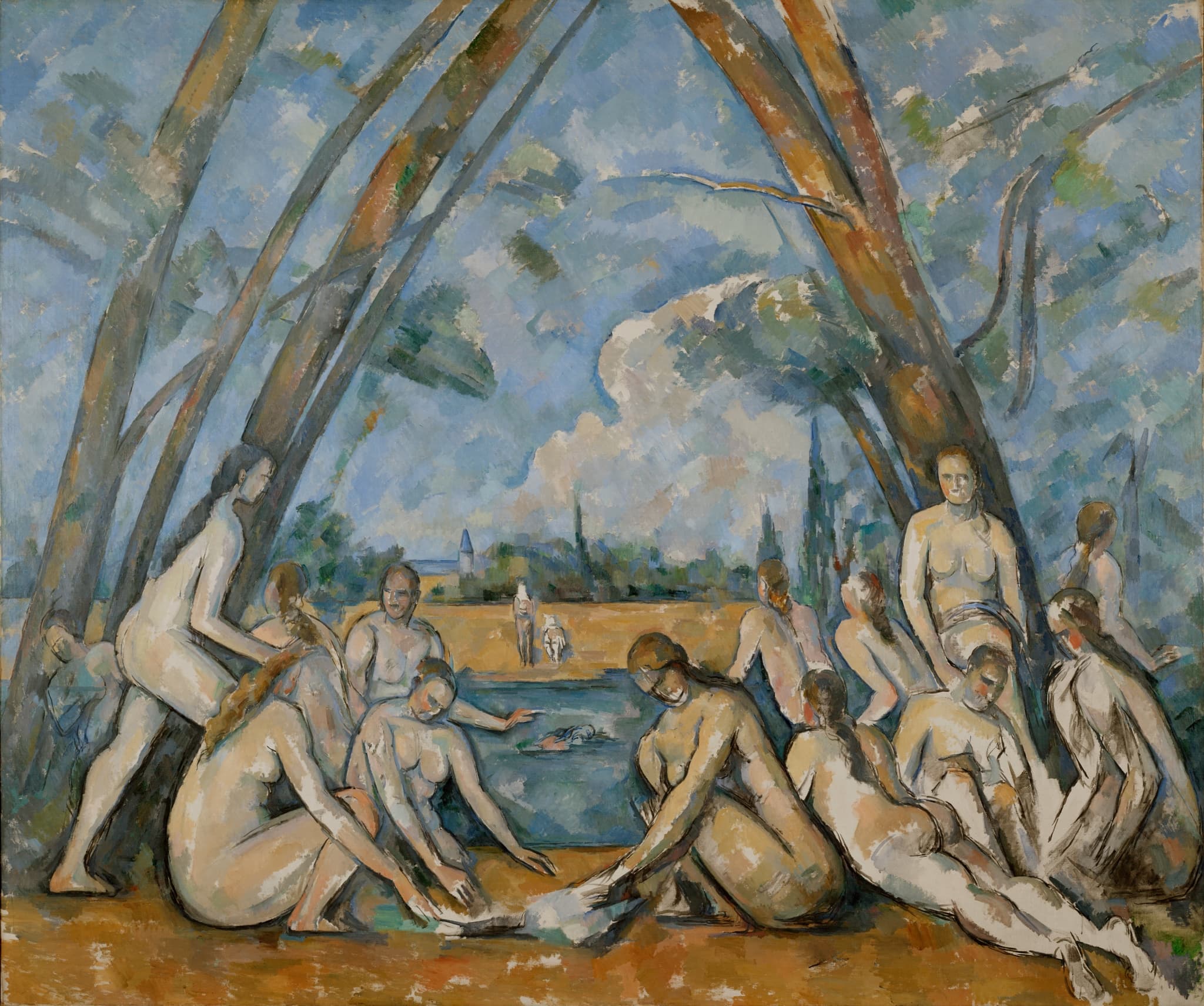
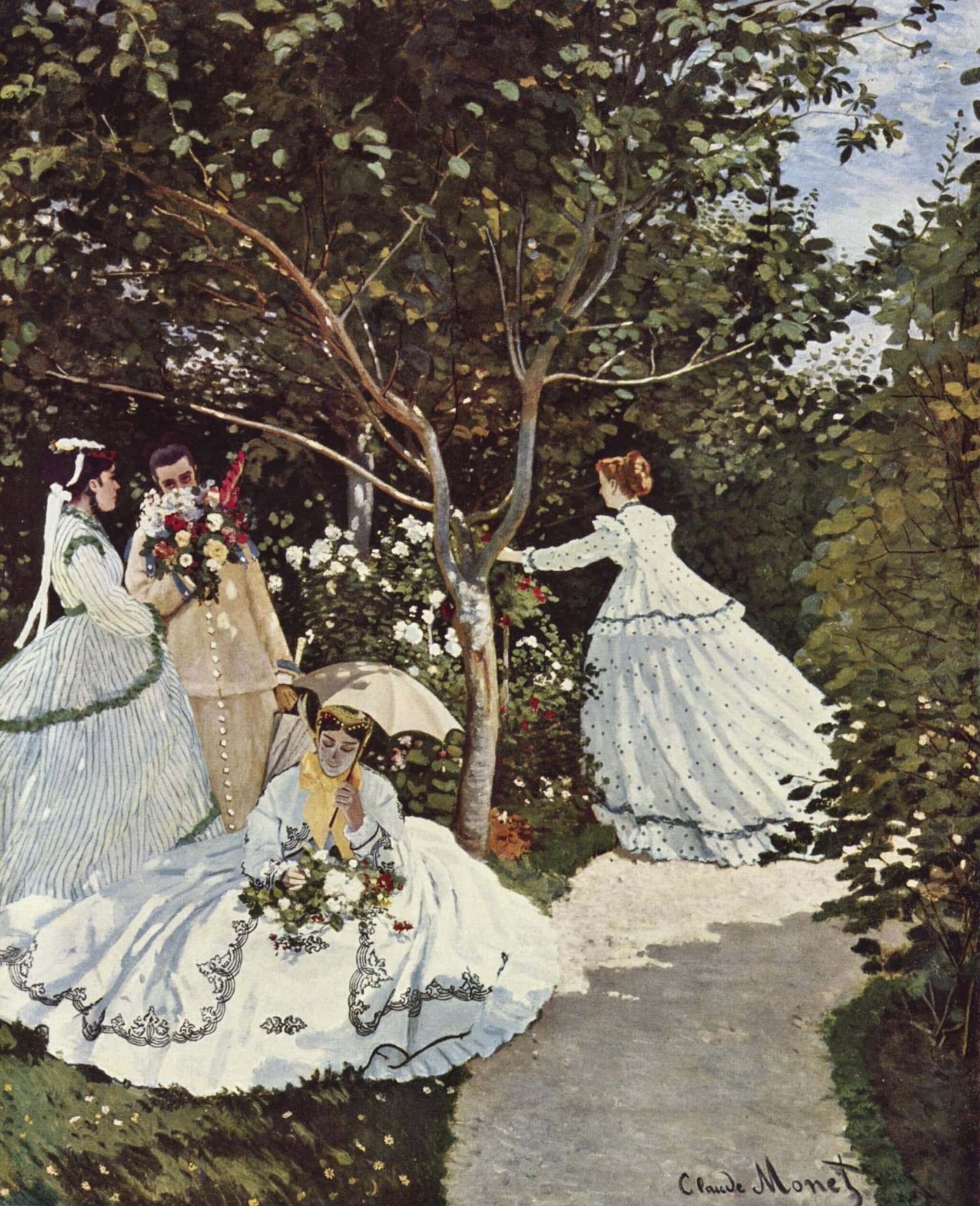
Figures as modules vs. optical surfaces
Focus question: What is a figure for—structure or sensation?
Bathers by Paul Cézanne: Geometry of the Modern Nude vs Women in the Garden
Architecture under pressure
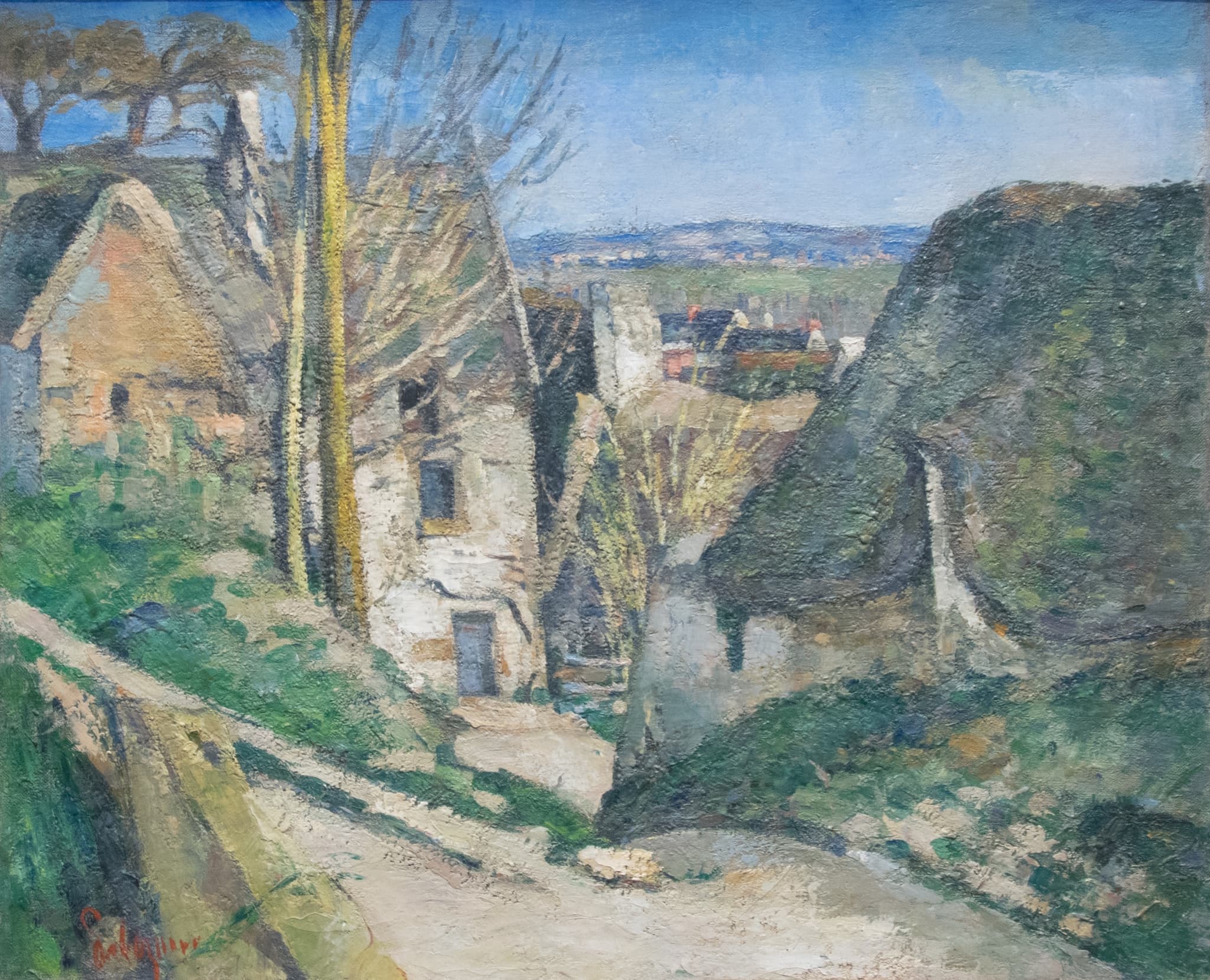
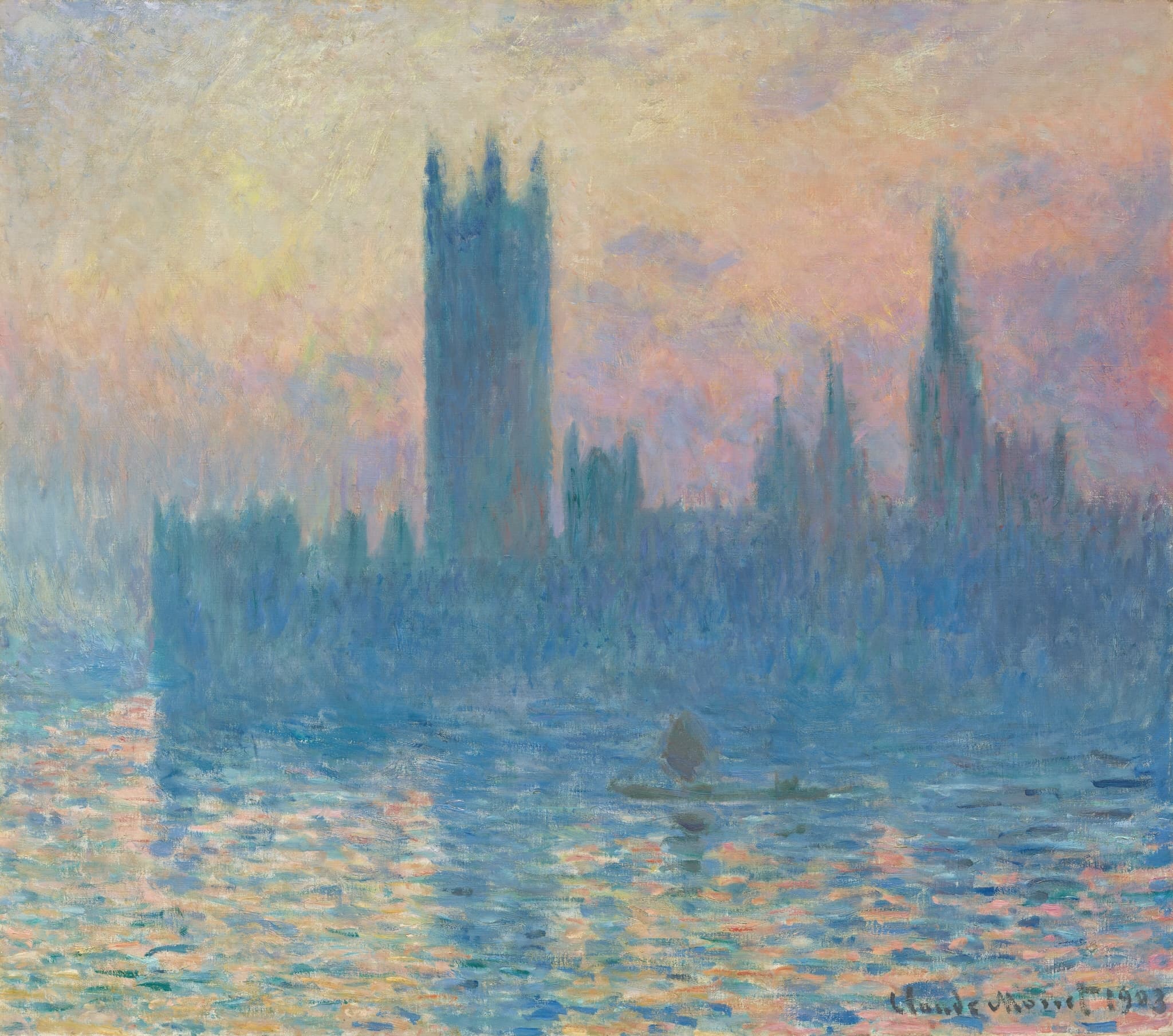
Focus question: When buildings appear, do they anchor structure or yield to atmosphere?
The House of the Hanged Man vs Houses of Parliament
Why This Comparison Matters
This pairing clarifies two modern definitions of pictorial truth. Cézanne shows that a painting can build a knowable order from the flux of sensation; his canvases ask the eye to reconcile differences into structure that lasts. Monet shows that truth also lies in conditions—the way light, weather, and even pollution change what we see; his series ask the eye to compare calibrated states across canvases.
Learning to toggle between these modes sharpens how we look at all painting. It explains why Cézanne became a foundation for analytic procedures in the 20th century, and why Monet’s serial practice anticipates installation-scale environments like the Water‑Lilies at the Orangerie. It also re-grounds familiar labels: “Impressionism” and “Post‑Impressionism” name not just styles but rival answers to how time belongs in an image. Seen this way, the question “conditions or construction?” is not a contest but a toolkit for reading visual experience—useful in museums, and just as useful outdoors when the world is busy changing in front of you.
Related Links
Sources
- The Metropolitan Museum of Art – Haystacks (Effect of Snow and Sun) and 1891 display
- National Gallery, London – Claude Monet, The Water-Lily Pond (1899)
- Art Institute of Chicago – Cézanne’s Still Lifes Under the Microscope
- Smarthistory – Cézanne, The Basket of Apples
- Princeton University Art Museum – Cézanne, Mont Sainte‑Victoire (Les Lauves vantage context)
- The Metropolitan Museum of Art – Houses of Parliament (Effect of Fog)
- Musée d’Orsay – Women in the Garden (work logistics and format)
- Musée de l’Orangerie – Water‑Lilies cycle installation history
- The Met Publications – Cézanne to Picasso: Ambroise Vollard, Patron of the Avant‑Garde
- Stanford Encyclopedia of Philosophy – Merleau‑Ponty (Perception and Cézanne)
- PNAS (2023) – Atmospheric pollution and the optics of Impressionist skies