Stagecraft vs. Atmosphere
Both artists turn painting into a model of modern looking. Degas choreographs attention—off‑axis views, footlights, and institutional space—so we feel how systems produce appearances. Renoir composes connective atmospheres where color and touch make sociability feel shared and humane.
Comparison frame: When painting modern life, why does Degas make looking feel engineered and partial while Renoir makes it feel shared and enveloping?
Quick Comparison
| Topic | Edgar Degas | Pierre-Auguste Renoir |
|---|---|---|
| What “seeing” does | Engineers attention; exposes how institutions stage vision | Connects viewers and figures within a luminous social envelope |
| Typical settings | Opéra studios, orchestra pit, shops, racecourses, Paris squares | Gardens, café terraces, ballrooms, salons, civic plazas |
| Light regime | Footlights, gaslight, contre‑jour; reflected glare as structure | Ambient daylight and prismatic color binding figure and ground |
| Compositional grammar | Crops, raked floors, diagonals; stacked audiences–pit–stage | Curves, color chords, frontal poise; harmonized contours |
| Figure truth | Workers within systems; discipline, fatigue, surveillance | Participants in sociability; tact, grace, shared pleasure |
| Serial method | Analytic reworking across media; studio‑built composites | Variations refined for audience and state; style shifts within series |
| Overall tone | Cool, structured, revealing the machinery behind grace | Warm, immersive, affirming sociability without sentimentality |
Shared Ground
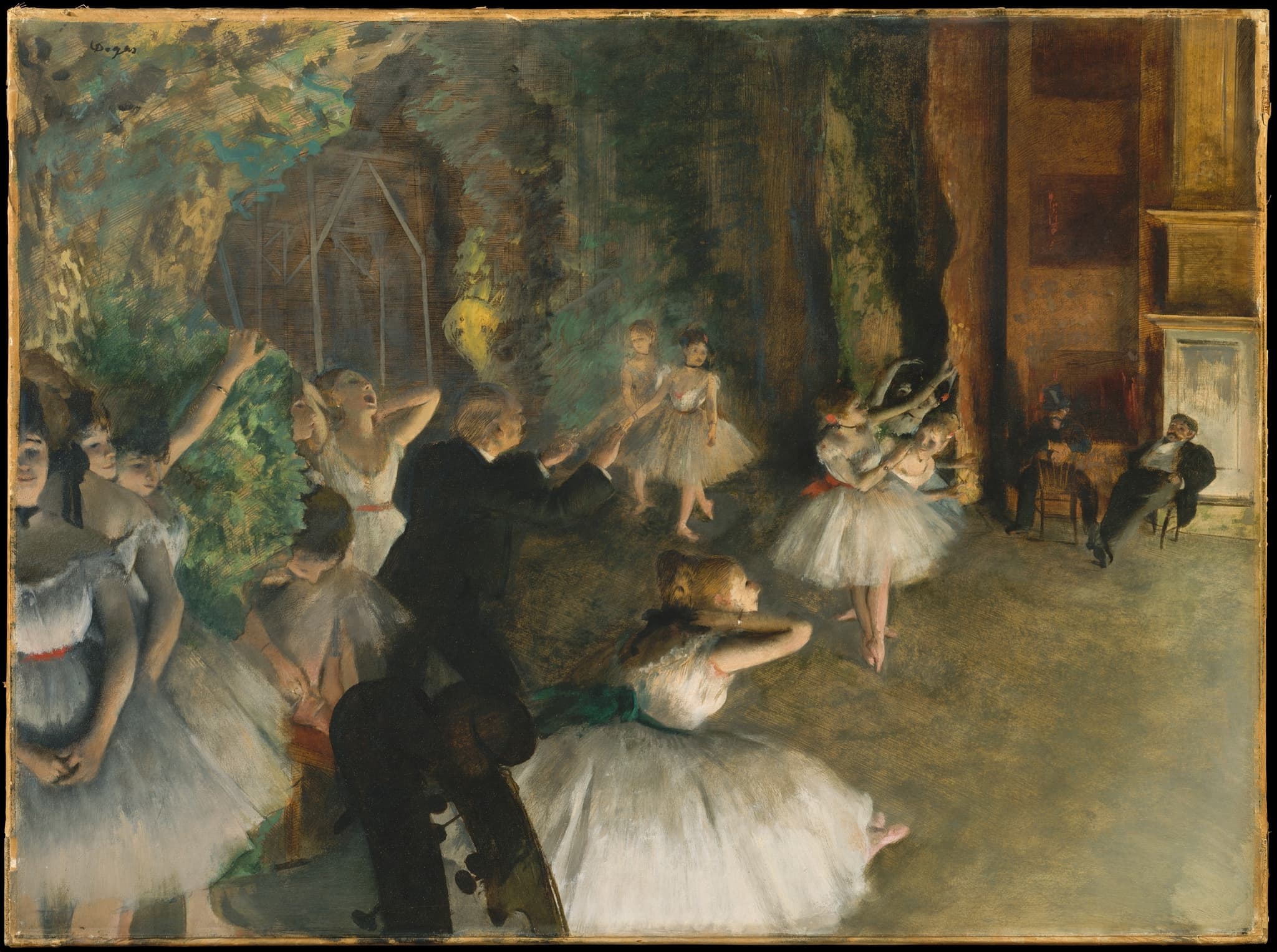
Degas and Renoir meet on the ground of modern vision. Each treats painting not as a neutral window but as a way to model how attention actually moves in the late 19th century—glancing, partial, socially situated. Their subjects are ordinary or semi‑ordinary: rehearsals, lessons, cafés, squares. Degas’s The Rehearsal of the Ballet Onstage makes the stage a lab for attention under footlights; Renoir’s Young Girls at the Piano turns a home lesson into an atmosphere of poise. In both cases, the scene is less anecdote than a test site for seeing.
They also share a serial, revisionary method. Degas recomposes motifs across drawings, oils, pastels, and monotypes, adjusting vantages and lighting to refine how a moment can be built. Renoir similarly iterates—producing multiple versions of the piano lesson for different contexts and famously revising The Umbrellas as his drawing tightened after Italy. Both raise everyday spaces to the level of formal problems: How do bodies and objects choreograph attention? How do institutions—Opéra studio, state museum, café culture—shape what is visible? Even civic settings become optical themes. Degas’s Place de la Concorde queries the public as non‑encounter; Renoir’s The Piazza San Marco, Venice turns architecture into shared light. Across this common project, the artists make modern perception their subject, arguing that the look of the present—flicker, drift, and social framing—deserves the full weight of painting.
Decisive Difference
The split is what “seeing” is for. For Degas, sight is engineered. He constructs off‑axis vantages, clips figures at the frame, and stacks spaces—box, pit, and stage—to reveal the systems that produce appearance. His rehearsal pictures run on batons, footlights, and doubles basses; the white tutus flare because labor underneath is organized. In The Millinery Shop, hat stands press forward like surrogate heads, commodities crowding out the maker. Place de la Concorde cools a famous square into negative ground and misaligned gazes, rendering the public as non‑encounter. Degas’s modern instant is meticulously built in the studio; drawing, diagonals, and artificial light lay bare discipline, hierarchy, and the choreography of work.
For Renoir, sight is connective. He seeks a luminous “envelope” where color and touch knit people into situations. Dance at Bougival fuses a couple with their crowd through red‑and‑blue color chords and circling brushwork; public intimacy reads as shared rhythm. Young Girls at the Piano turns training into harmony, letting décor, hands, and page‑turns rhyme like musical phrases. Even when he tightens drawing—Dance in the City or the reworked Umbrellas—clarity serves tact and grace, not dissection. The Piazza San Marco, Venice dissolves architecture into atmosphere so the square becomes common light. Where Degas isolates, Renoir includes; where Degas treats the stage as a machine, Renoir treats society as a field of warmth. That contrast—engineered attention versus connective atmosphere—most clearly separates their visions of modern life.
Paired Works
Work vs. Leisure in Dance
Focus question: Does the picture make you feel choreographed or carried along?
The Rehearsal of the Ballet Onstage vs Dance at Bougival
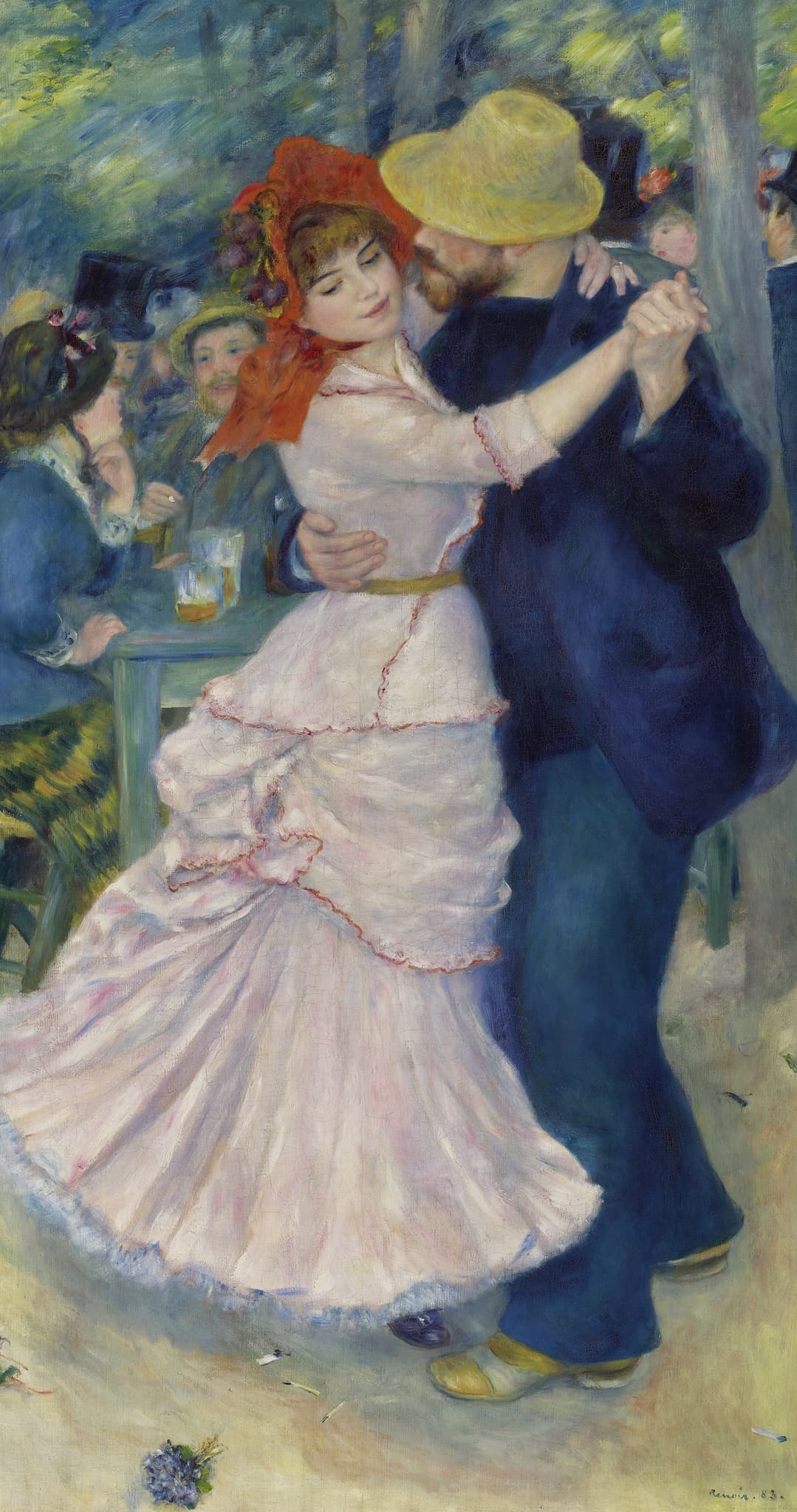
Degas’s stage is a machine. From a raked, side view, bands of pit–stage–wings lock into place; a conductor’s baton and a looming double bass meter time, while tutus flare under footlights that flatten color and isolate gestures. Abonnés sit in the wings, embedding surveillance in the scene. Everything funnels attention and shows how grace is manufactured. Renoir’s outdoor dance is the opposite: a vortex of color and touch that carries the couple and the viewer together. Scarlet bonnet against ultramarine jacket anchors a chromatic duet; brushwork loops through skirt, arm, and trees so motion feels shared. Where Degas stacks and cuts to analyze labor before spectacle, Renoir builds a chromatic engine that creates public intimacy. One picture teaches you how the stage works; the other lets you feel what dancing is like.
Feminine Culture vs. Feminine Craft
Focus question: Do objects eclipse people, or does training melt into harmony?
The Millinery Shop vs Young Girls at the Piano
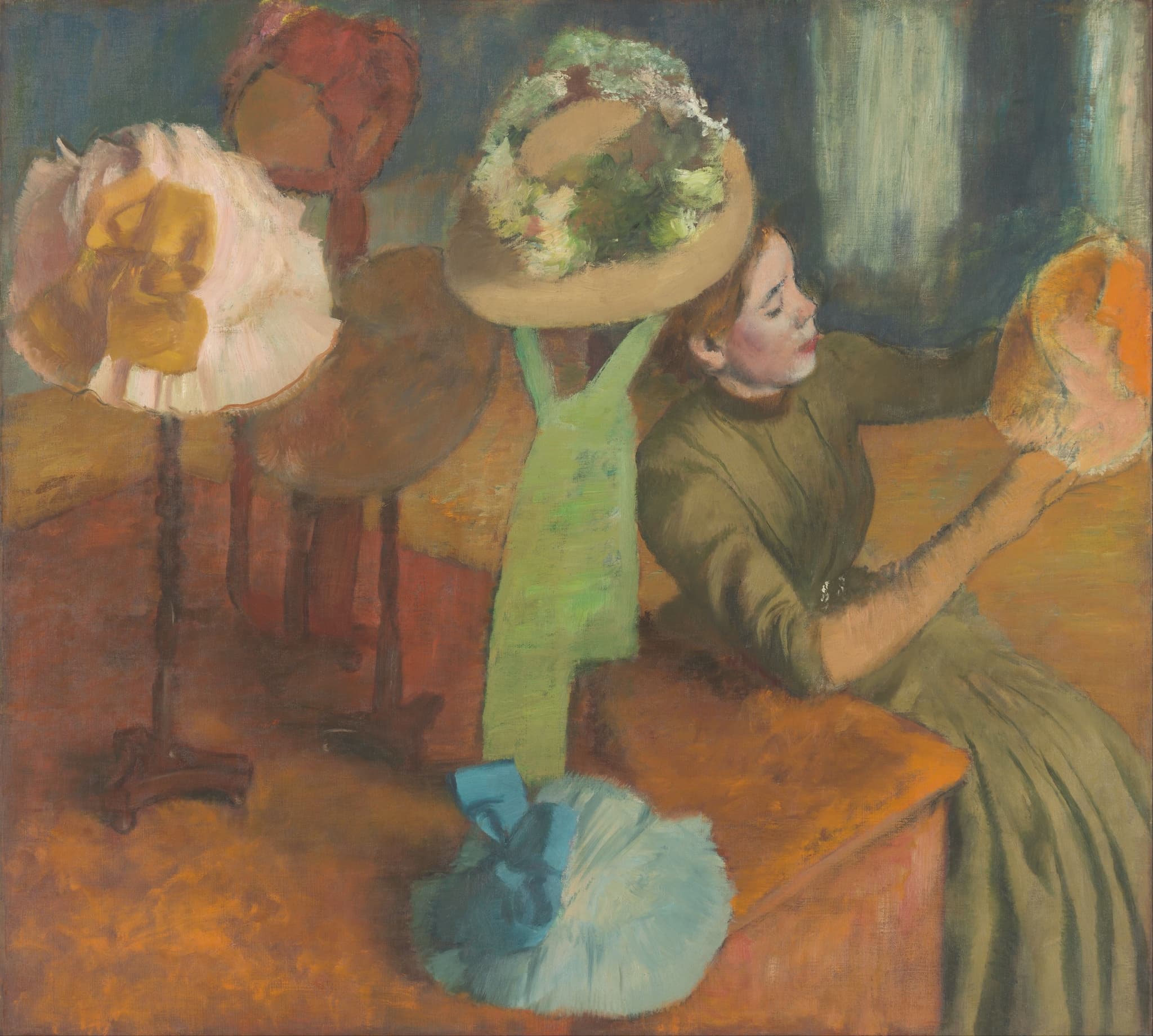
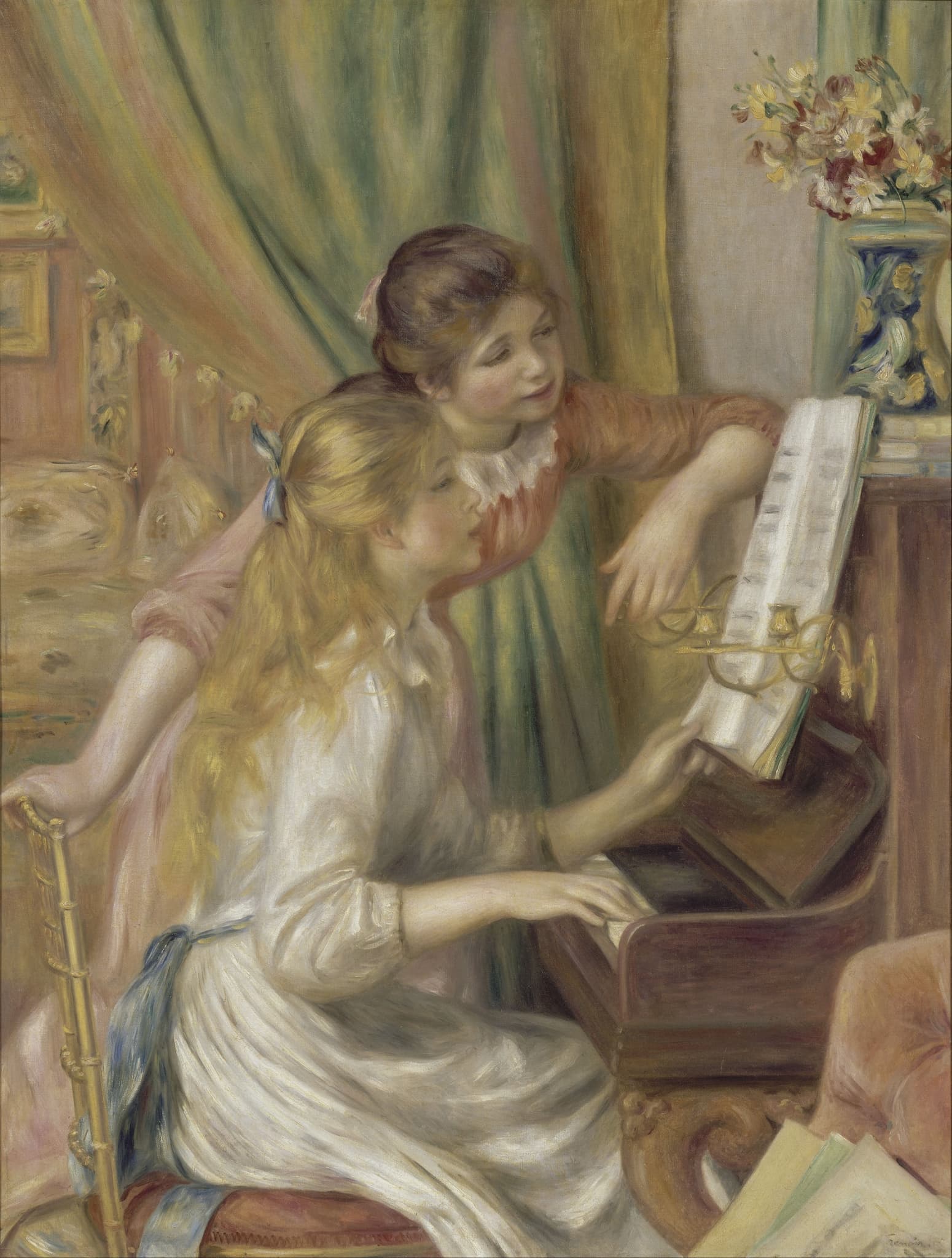
Degas presses hats, ribbons, and stands toward the surface until they rival the worker’s cropped profile; faceless supports read as heads awaiting wearers. Ambiguity—client or maker?—keeps attention toggling while color blocks and tilts assert that commodities organize vision. The scene is a shop as optical problem and a studio of labor. Renoir answers with culture as harmony. The piano’s scrolls, the girls’ inclined heads, hands, and page‑turns rhyme across a honeyed interior so discipline reads as duet. A state‑backed, serially refined composition presents domestic training as public virtue. Degas shows how goods eclipse the person; Renoir shows how cultivation envelops the person. Both paint “women’s work,” but one reveals its pressures while the other translates it into grace.
Public Space, Two Logics
Focus question: Is the crowd isolated by space or joined by light?
Place de la Concorde vs The Piazza San Marco, Venice
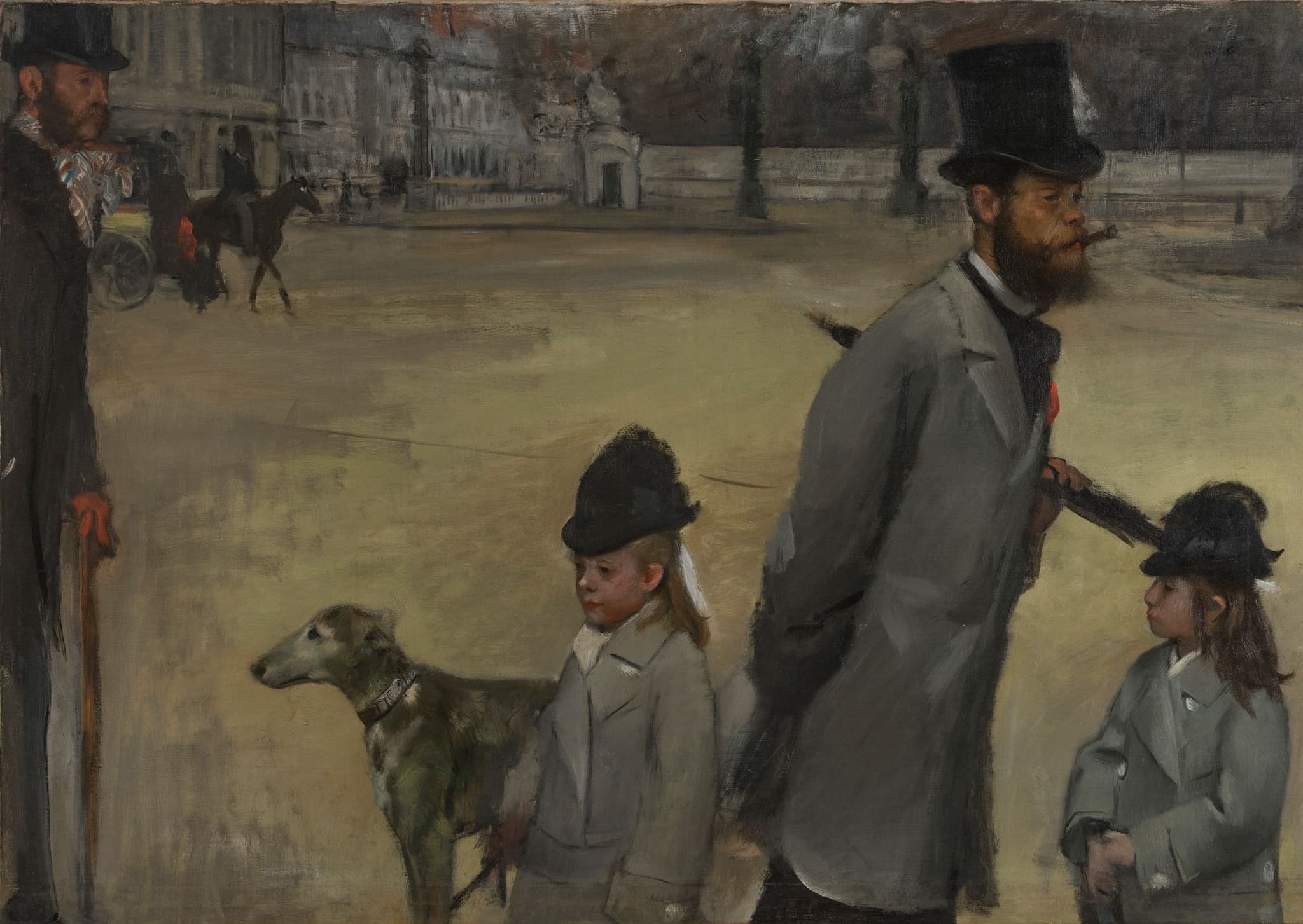
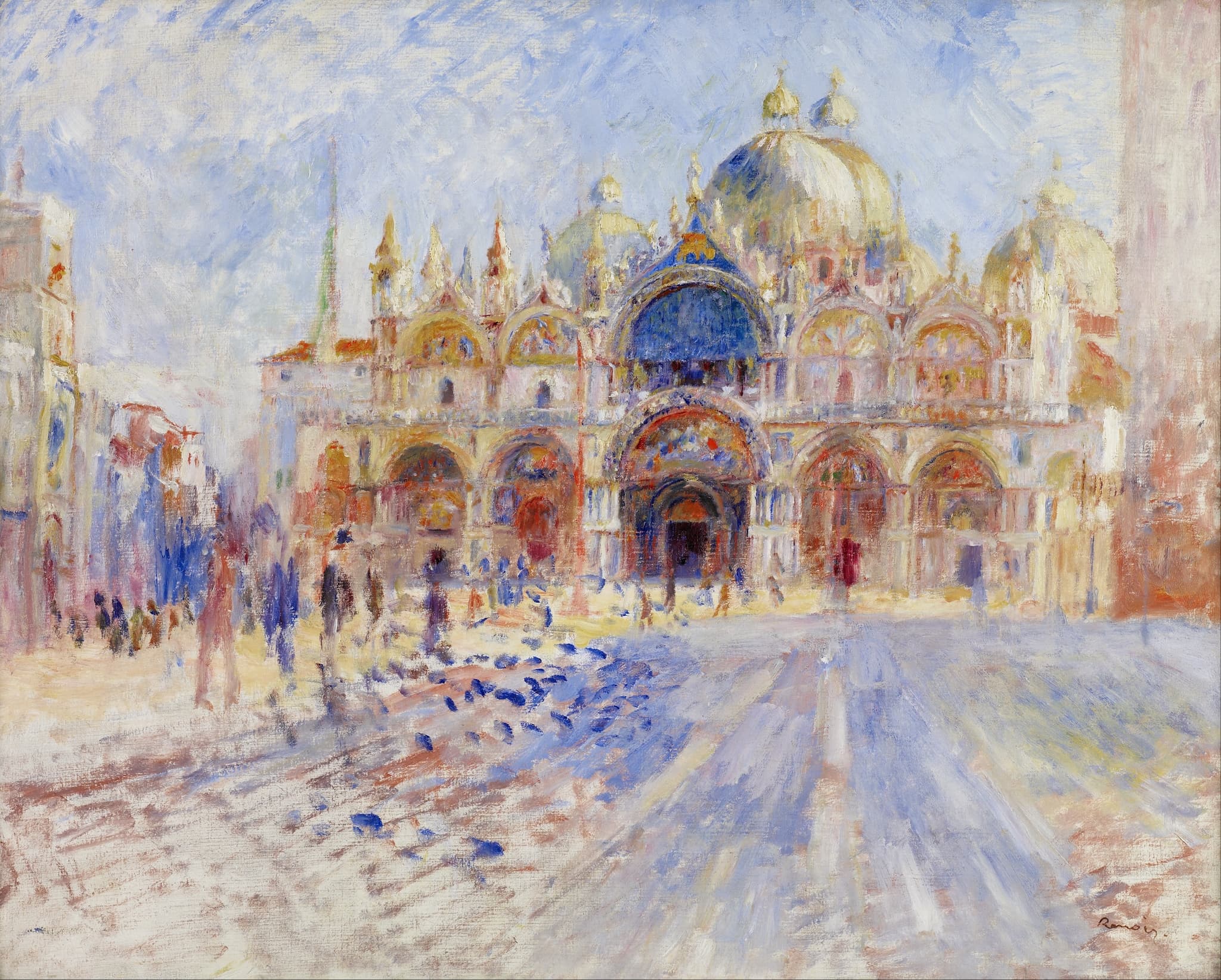
Degas empties the Paris square into a pale, airless expanse; figures are cropped, gazes miss, and the space between people does most of the talking. Negative ground and clipped edges perform modern instantaneity and social disconnection at once. Renoir’s Venice gathers architecture, pigeons, and passersby into a single optical field; domes and crowd dissolve into prismatic strokes so the plaza feels like common atmosphere. The difference is diagnostic. Degas uses space to isolate and cool modern public life; Renoir uses light to knit it. One treats the square as a stage of non‑encounter; the other as a place where vision itself makes a public.
Maintenance vs. Afterglow
Focus question: Is attention closed around a task, or circulating among companions?
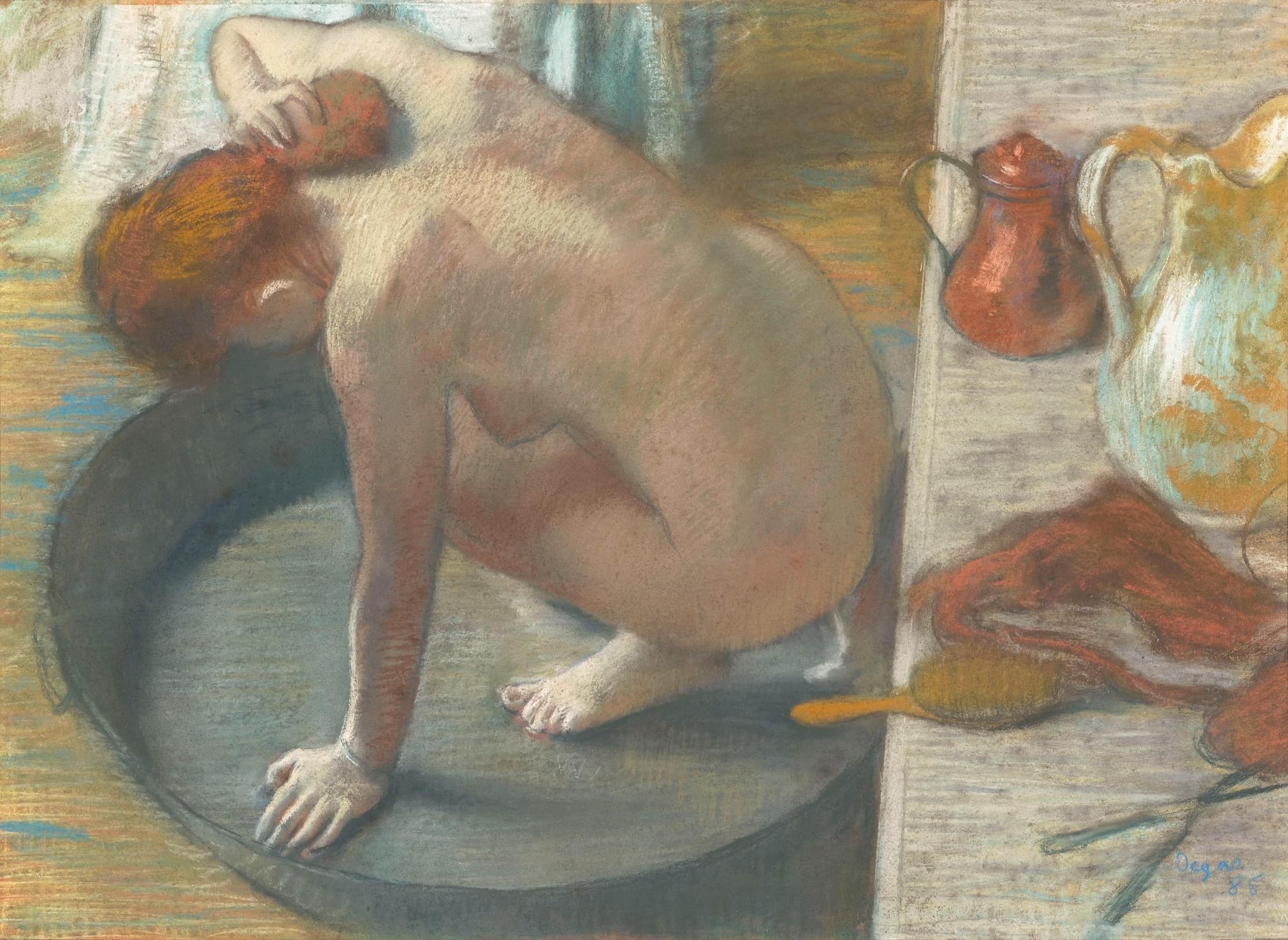
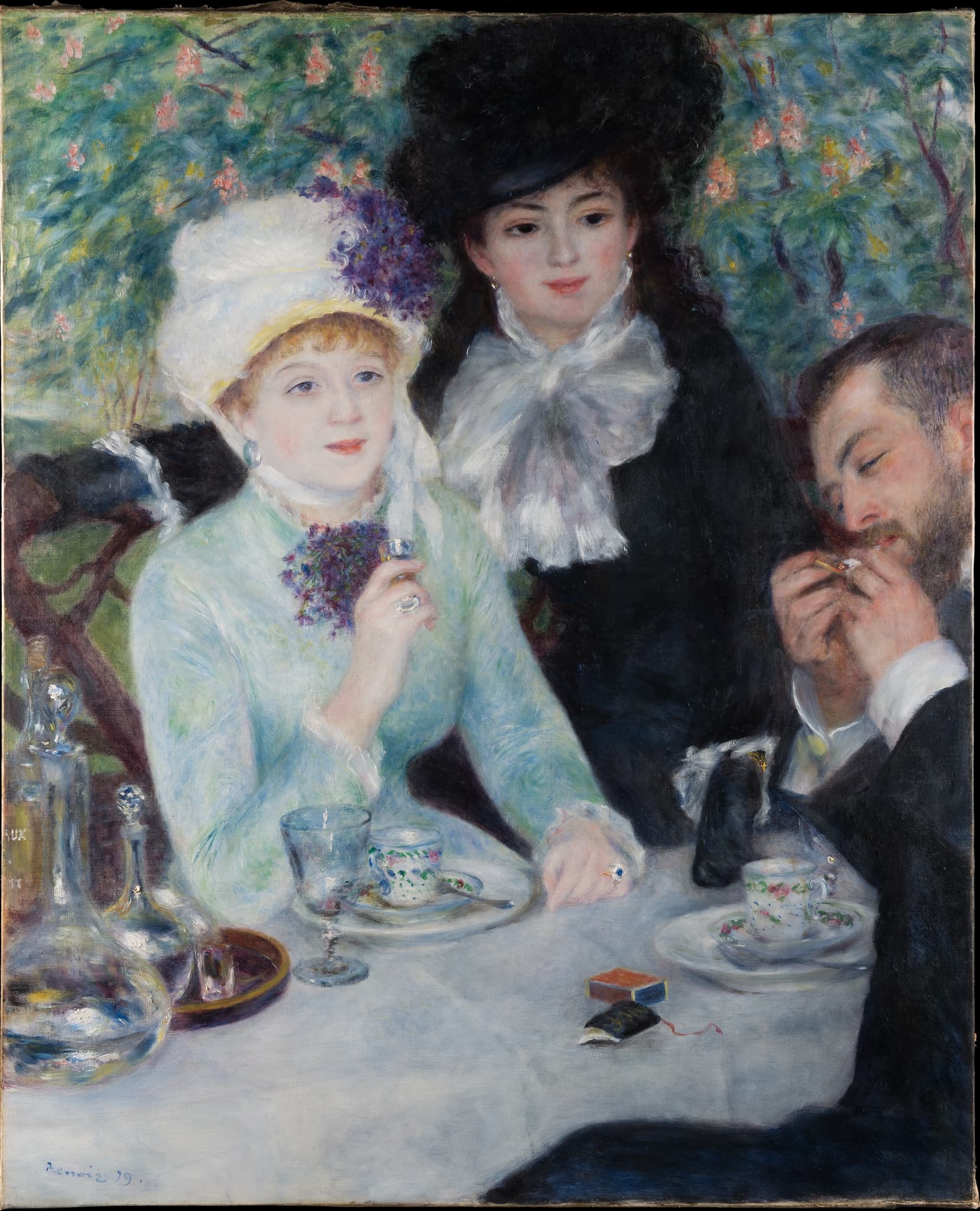
In Degas, a steep, overhead view locks body and basin into a spiral. Pastel weaves skin, water, and objects into a tactile field; the woman’s averted face and braced hand create a closed circuit of self‑care. The scene is solitary maintenance rendered as structure. Renoir opens the circuit: a small table becomes a ledger of time—glasses, cups, matchbox—while trellis light wraps three figures. Edges soften so glances, glass, and foliage exchange reflections; attention circulates across the group. Degas compresses intimacy inward, away from us; Renoir lets sociable afterglow expand outward, making convivial time legible in objects and light.
Why This Comparison Matters
Set side by side, Degas and Renoir map two workable models for modern painting. Degas proves that a picture can think: by engineering vantage, cut edges, and artificial light, he turns rehearsal rooms, shops, and squares into devices that disclose labor and power. Renoir proves that a picture can hold: by bathing figures in chromatic atmosphere and calibrated touch, he makes sociability, tact, and shared pleasure perceptible without sentimentality. Together they show that “Impressionism” isn’t one look but a choice about what vision should do—analyze or connect.
That choice still matters. Museums, screens, and feeds ask us to decide whether images will expose systems or sustain community. Degas’s stagecraft sharpens attention when spectacle risks blurring causes; Renoir’s envelope restores human warmth when analysis turns brittle. Learning to see through both artists—engineered sight and shared light—equips us to read images of work, leisure, and public life with clarity and care.
Related Links
Sources
- The Met — Rehearsal of the Ballet Onstage (object essay)
- Musée d’Orsay — La Classe de danse
- Art Institute of Chicago — The Millinery Shop
- The Frick Collection — Renoir’s three Dances (exhibition dossier)
- MFA Boston — Dance at Bougival
- Musée d’Orsay — Young Girls at the Piano
- Minneapolis Institute of Art/Wikimedia — The Piazza San Marco, Venice
- The Met Heilbrunn — The Ballet (Degas and the Opéra)
- Musée d’Orsay — Degas at the Opéra (exhibition overview)
- Städel Museum — After the Luncheon