Edit or rebuild? Two routes to modern vision
Manet modernizes by editing appearances—cropping, planar staging, and a cool, selective gaze shaped by Velázquez, japonisme, and photography. Picasso modernizes by rebuilding form—multi‑viewpoint, fracture, and emblematic contour that turn looking into a structural problem. Put together, they map the shift from painting what is seen to engineering how seeing works.
Comparison frame: How do Manet’s edits of attention and Picasso’s reconstructions of form change what “seeing” in painting means?
Quick Comparison
| Topic | Édouard Manet | Pablo Picasso |
|---|---|---|
| Governing method | Edits appearances: cropping, planar staging, selective focus | Rebuilds vision: multi‑viewpoint, fracture, emblematic contour |
| Modern subject | Urban present staged as immediacy (cafés, crowds, beaches) | Structures of perception and crisis (brothel lab, war lament) |
| Old Masters repurposed | Velázquez’s figure‑in‑air, Goya’s sobriety—used for present tense | Goya for indictment; Velázquez for meta‑studio variations |
| Viewer’s position | Staged implication and cool proximity (Folies‑Bergère; Maximilian) | Confrontation and simultaneity—no safe vantage (Demoiselles; Guernica) |
| Space handling | Flat planes and silhouette stabilize appearance | Collapsed, interlocking planes replan seeing itself |
| Media logic | Photography/Japanese prints: cropping, flat light, abrupt edges | Collage mentality; press‑photo grisaille; circulating icons |
| Politics/ethics | Reportorial cool; violence rendered as procedure (Maximilian) | Structural scream; civic mural of grief (Guernica) |
| Beauty and the figure | Allegory via appearance and fashion (Jeanne/Spring) | Split visage; color-as-feeling icons (1930s portraits) |
Shared Ground
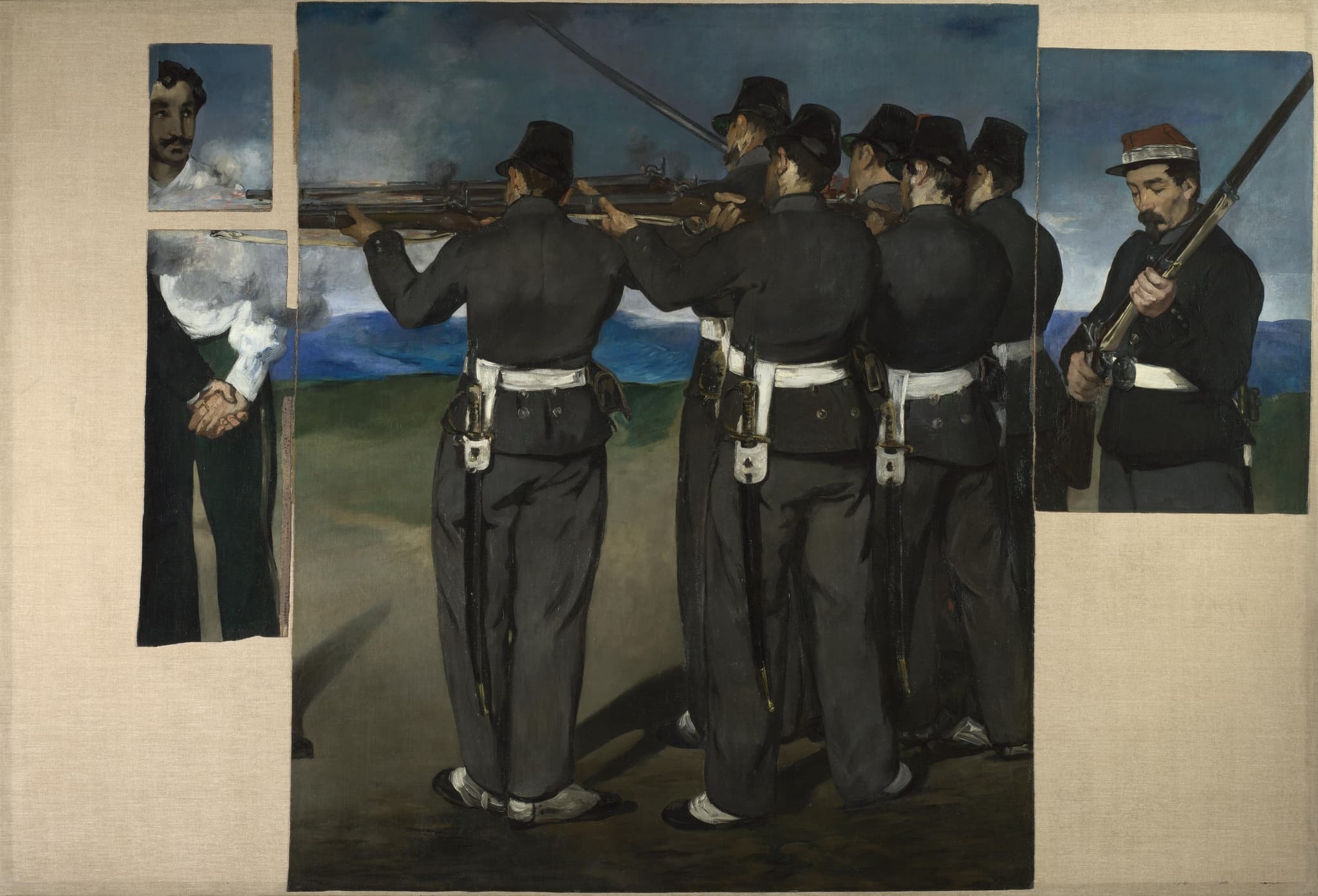
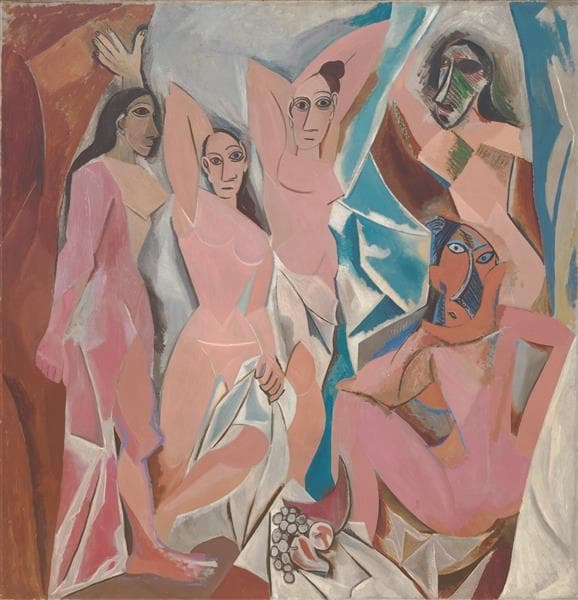
Both artists make modern seeing the subject of painting. Manet converts the city’s crowds, cafés, and seaside pauses into laboratories of attention: Music in the Tuileries disperses focus across a restless frieze; A Bar at the Folies‑Bergère folds the spectator into a mirror‑riddle; The Execution of Emperor Maximilian positions us beside the firing squad, turning vision into ethical placement. Picasso, from Les Demoiselles d’Avignon to Guernica, recasts figure and space so that looking itself becomes unstable—analytic, masked, compressed. In each case, the work is less a transcript of events than a model of how to look now.
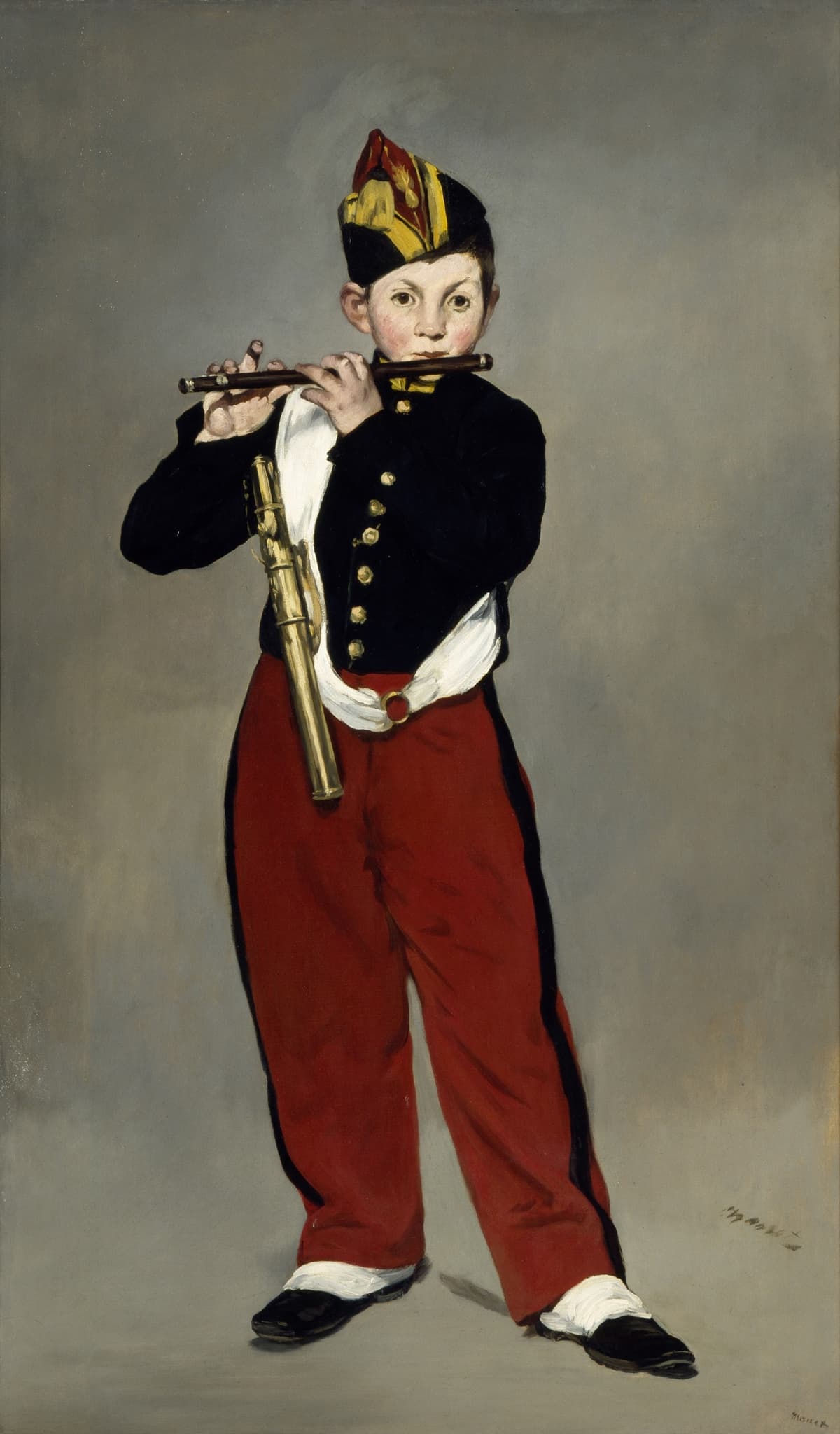
Both also modernize through the Old Masters. Manet absorbs Velázquez’s “figure set in air” and Goya’s sobriety to dignify ordinary subjects and to cool the rhetoric of history painting (The Fifer; Maximilian). Picasso routes Goya’s charge into a twentieth‑century indictment (Guernica) and later interrogates Velázquez through his Las Meninas variations, using the past as an engine for present structure. Each is attuned to media modernity: Manet’s flat light, japoniste planar stacking, and photographic cropping adapt painting to the illustrated press; Picasso’s collage logics and Guernica’s newsprint grisaille answer a world of mass images, with Dora Maar’s process photographs making construction part of meaning. Crucially, both implicate the viewer: Manet through staged immediacy and edited clarity; Picasso through confrontational address and space that leaves no neutral seat. The result is a shared project—painting that teaches its audience how to see the modern world while showing it.
Decisive Difference
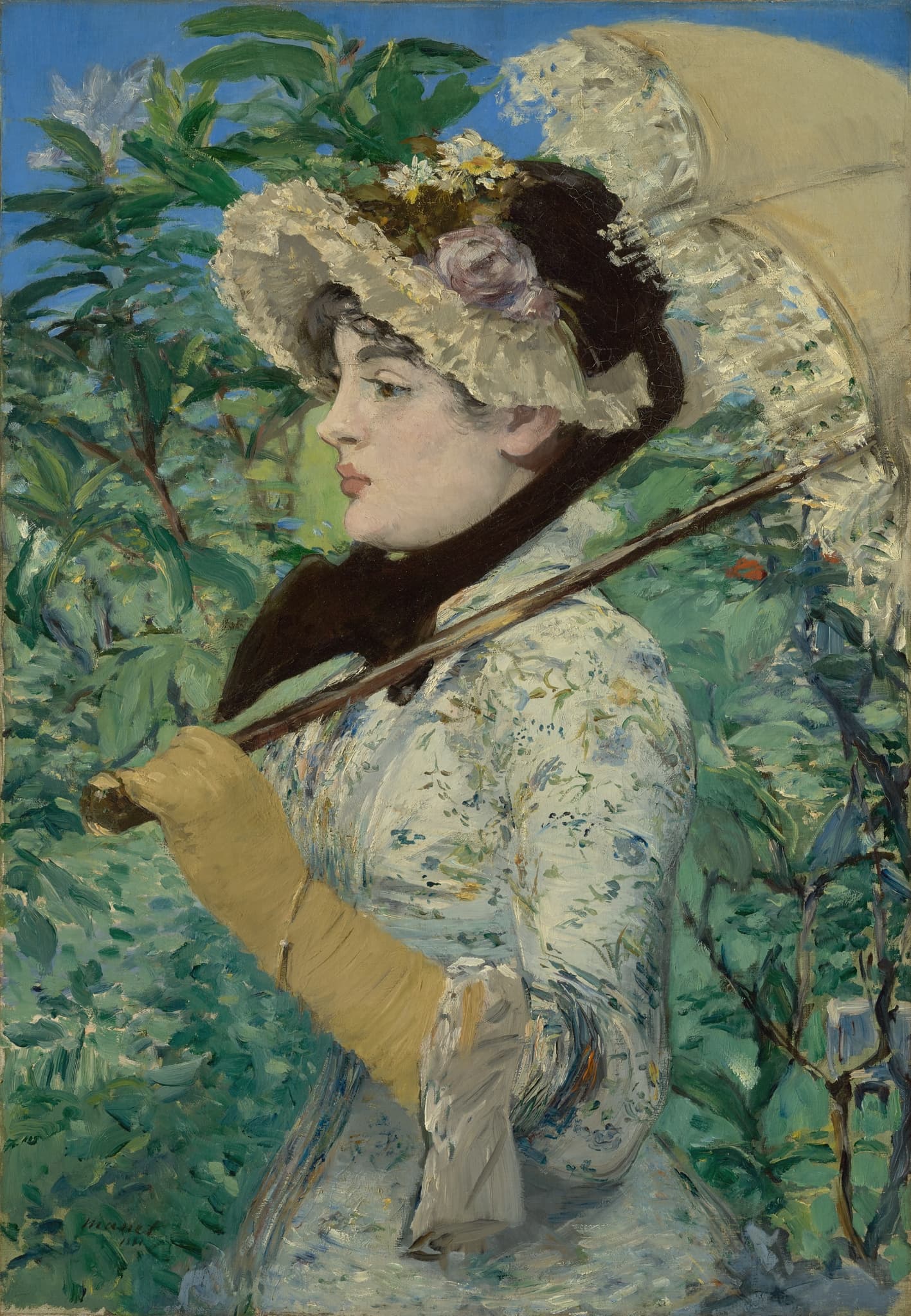
Manet reorients attention by editing appearances; Picasso reconstructs vision by replanning form. Manet’s method is curatorial and optical: he selects, crops, levels light, and simplifies planes to keep faith with how things present themselves to an urban observer—even when the scene is built in the studio. The Fifer extracts a crisp silhouette from an indeterminate field; Jeanne (Spring) refits allegory to fashion through profile and atmosphere; The Execution of Emperor Maximilian suppresses anecdote to indict violence as procedure. His coolness is not detachment but ethics: editing becomes a way to refuse melodrama and to place the viewer—often uncomfortably—inside modern events.
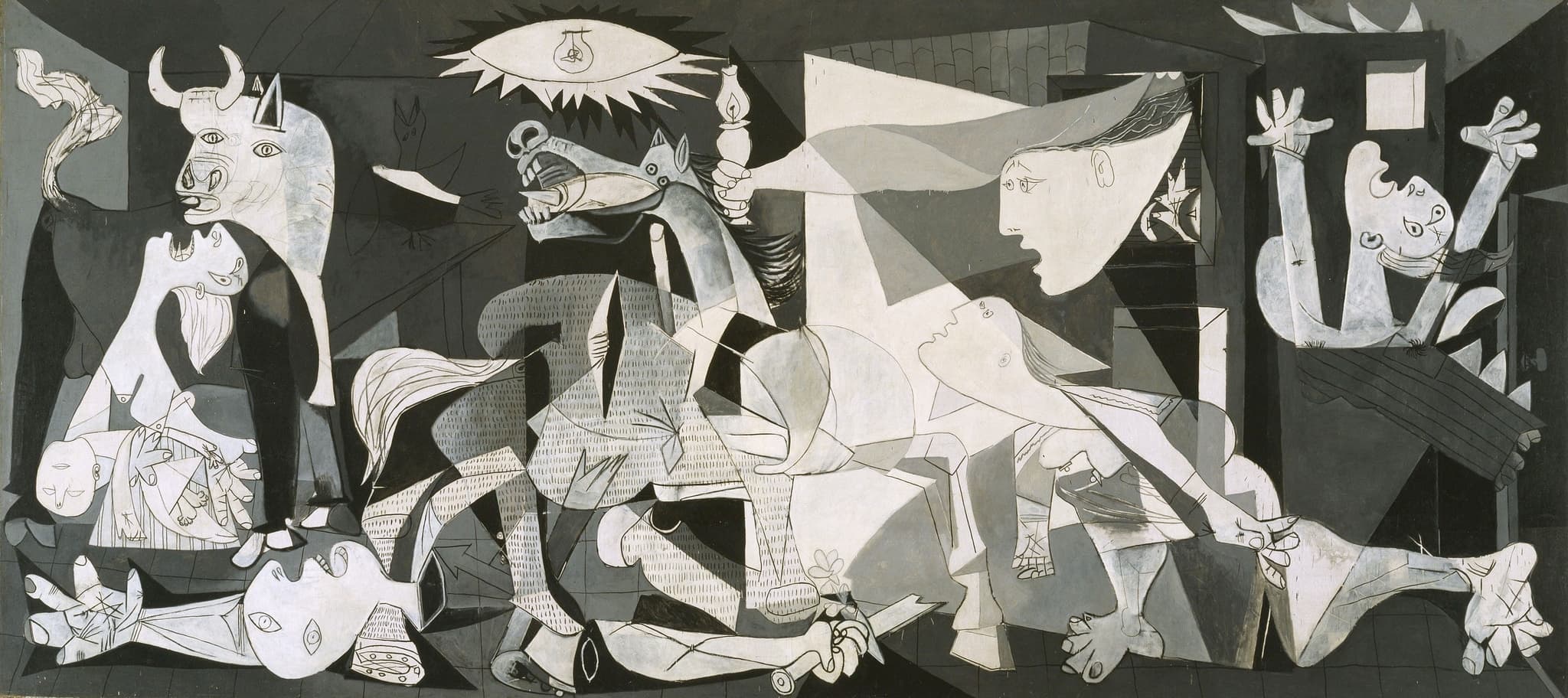
Picasso’s method is architectural. He rebuilds the very syntax of depiction: multiple viewpoints, fracture, emblematic contour and color, and—at times—a deliberate re‑scaling into neoclassical bulk. Les Demoiselles d’Avignon explodes single‑point persuasion, turning the brothel into a chamber of competing angles that test the beholder; Guernica engineers a civic lament from Cubist shards, with a light bulb’s mechanical glare battling a hand‑held lamp’s human testimony. Even his 1921 “return to order” is structural, not nostalgic: classicizing mass answers a need for stability while retaining modern compression. Where Manet’s pictures clarify the present by disciplined edits of what appears, Picasso asserts that modern truth demands a built image—one that makes perception work differently. The decisive difference, then, is between an art of lucid selection and an art of constructed vision.
Paired Works
State violence, reframed
Focus question: How do the two painters indict power without resorting to heroic rhetoric?
The Execution of Emperor Maximilian vs Guernica
Modern beauty as icon
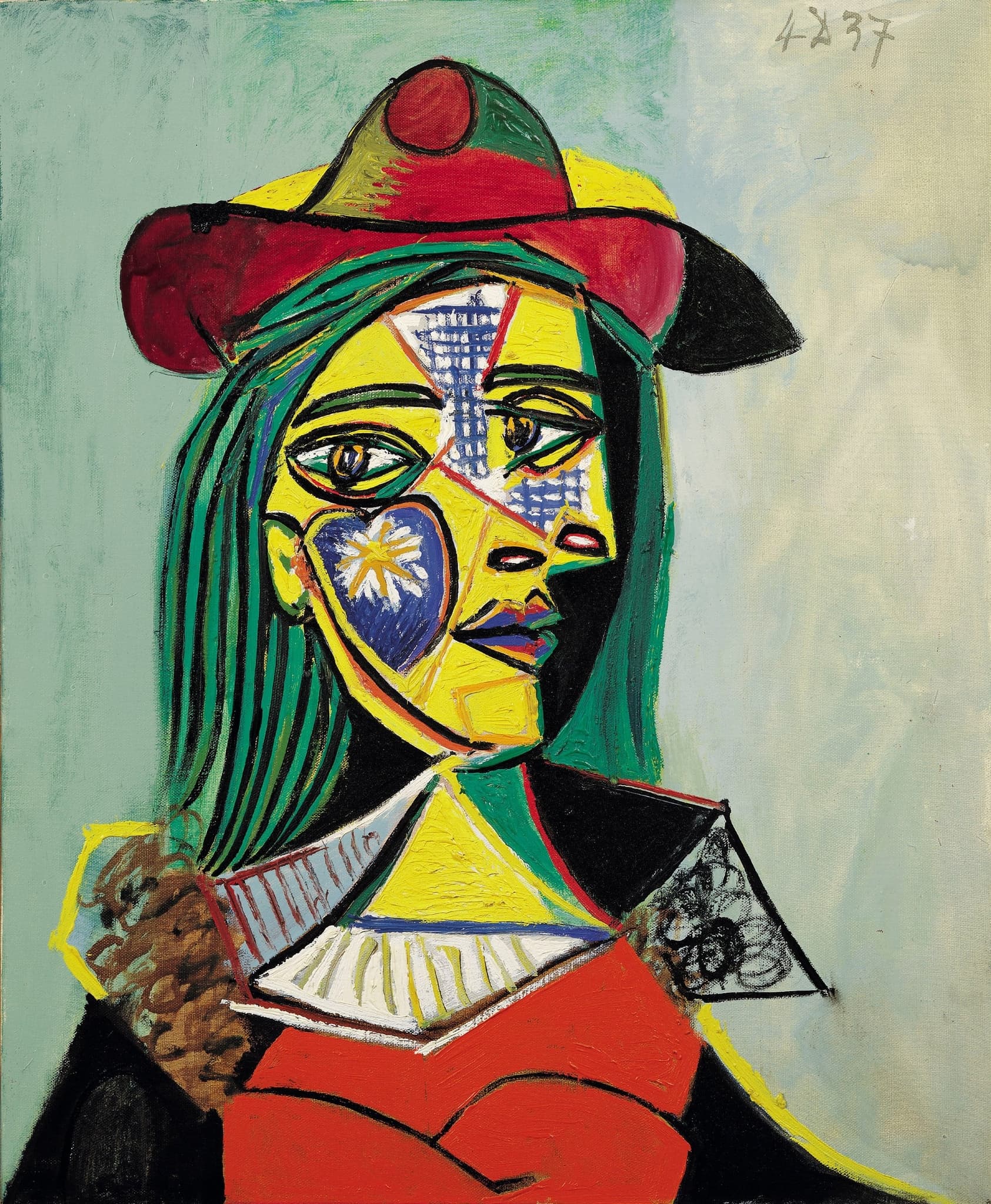
Focus question: What happens when fashion becomes a vehicle for truth rather than ornament?
Jeanne (Spring) vs Woman in Hat and Fur Collar (Marie-Thérèse Walter)
Refounding the figure
Focus question: How do they break with Renaissance space to reassert the picture plane?
The Fifer vs Les Demoiselles d'Avignon
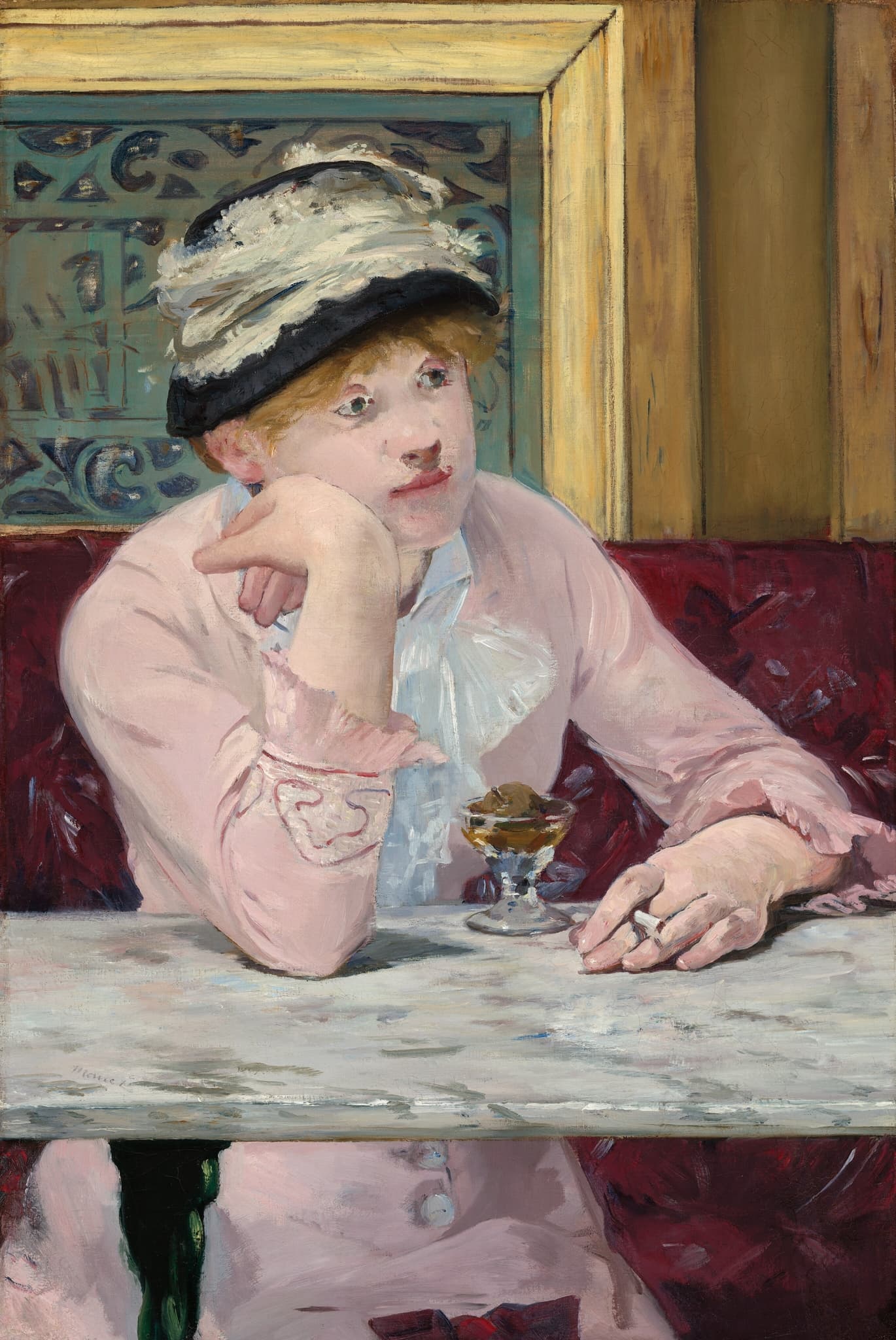
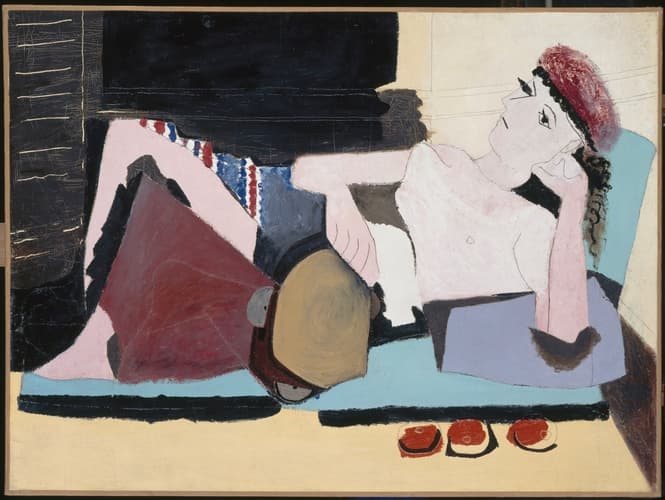
Leisure and spectacle
Focus question: What ethics of looking emerge from café pause and staged performance?
Plum Brandy vs Femme au tambourin
Why This Comparison Matters
This pairing clarifies two durable toolkits for seeing. Manet shows how editing appearances—cropping, planar staging, and measured light—can turn ordinary scenes and public crises into lucid images that implicate the viewer without theatrics. Picasso shows how rebuilding form—fracture, simultaneity, emblematic contour and color—can force perception to work harder, making space and structure carry the weight of desire, fear, and civic grief. Both routes shape how images persuade today, from a phone’s crop that directs attention to the built grammars of logos, posters, and memorials.
Understanding the split—edit versus rebuild—helps decode why certain pictures feel cool and witness‑like (Manet) while others feel urgent and system‑level (Picasso). It also reveals how each artist uses the past: not as costume but as a machine for the present. If you want a clear guide to modern painting’s stakes, start here: Manet asks what in the world deserves attention and how to show it; Picasso asks what structures our seeing and how to change them.
Related Links
Sources
- National Gallery, London – Manet: The Execution of Emperor Maximilian
- National Gallery, London – In the Line of Fire: Manet’s ‘The Execution of Maximilian’ (essay pages)
- Musée d’Orsay – Manet: The Fifer
- The Metropolitan Museum of Art – Édouard Manet (essay overview)
- The Metropolitan Museum of Art – Cubism (primer)
- Museo Reina Sofía – Guernica (collection context)
- Reina Sofía – Rethinking Guernica (process and circulation portal)
- MoMA – Les Demoiselles d’Avignon
- Getty – Late Manet: Jeanne (Spring)
- Musée de l’Orangerie – Picasso: Femme au tambourin (1925)
- National Gallery, London – Manet: Music in the Tuileries Gardens
- Smarthistory – Manet: A Bar at the Folies‑Bergère
- Charles Baudelaire – The Painter of Modern Life (1863)