Marc Chagall vs Pablo Picasso
Both artists rebuild how a picture organizes seeing: instead of single‑viewpoint naturalism, they stage multiple moments, signs, and angles on one surface. From this shared method, they diverge: Chagall bends fracture toward lyric continuity and spiritual reciprocity; Picasso turns it into a diagnostic engine that exposes rupture. Read through key works from I and the Village to Guernica, the contrast clarifies two durable models for modern vision.
Comparison frame: How do Marc Chagall and Pablo Picasso use fracture and color to make vision either heal a world or expose its rupture?
Quick Comparison
| Topic | Marc Chagall | Pablo Picasso |
|---|---|---|
| Core stance on fracture | To repair continuity; lyric montage | To expose rupture; analytic construction |
| What color does | Aura, sanctity, renewal | Dissonance, shock, diagnosis |
| Space | Elastic, floating simultaneity; protective scale | Shallow, pressurized trap; interlocking planes |
| Face/figure | Reciprocal gazes; nested memory scenes inside forms | Multiperspectival, masklike or engineered tears |
| Motif vocabulary | Fiddler, village animals, onion domes; Jewish/Christian overlays | Bull, horse, electric bulb vs oil lamp; the Weeper |
| Public address | Devotional lament and communal memory | Secular civic indictment and witness |
| Breakthrough image | I and the Village: a pact across species | Les Demoiselles d’Avignon: confrontation in a splintered room |
| Working method | Returns to icons and stained‑glass cycles for continuity | Serial reworking and shifts of idiom to solve problems |
Shared Ground
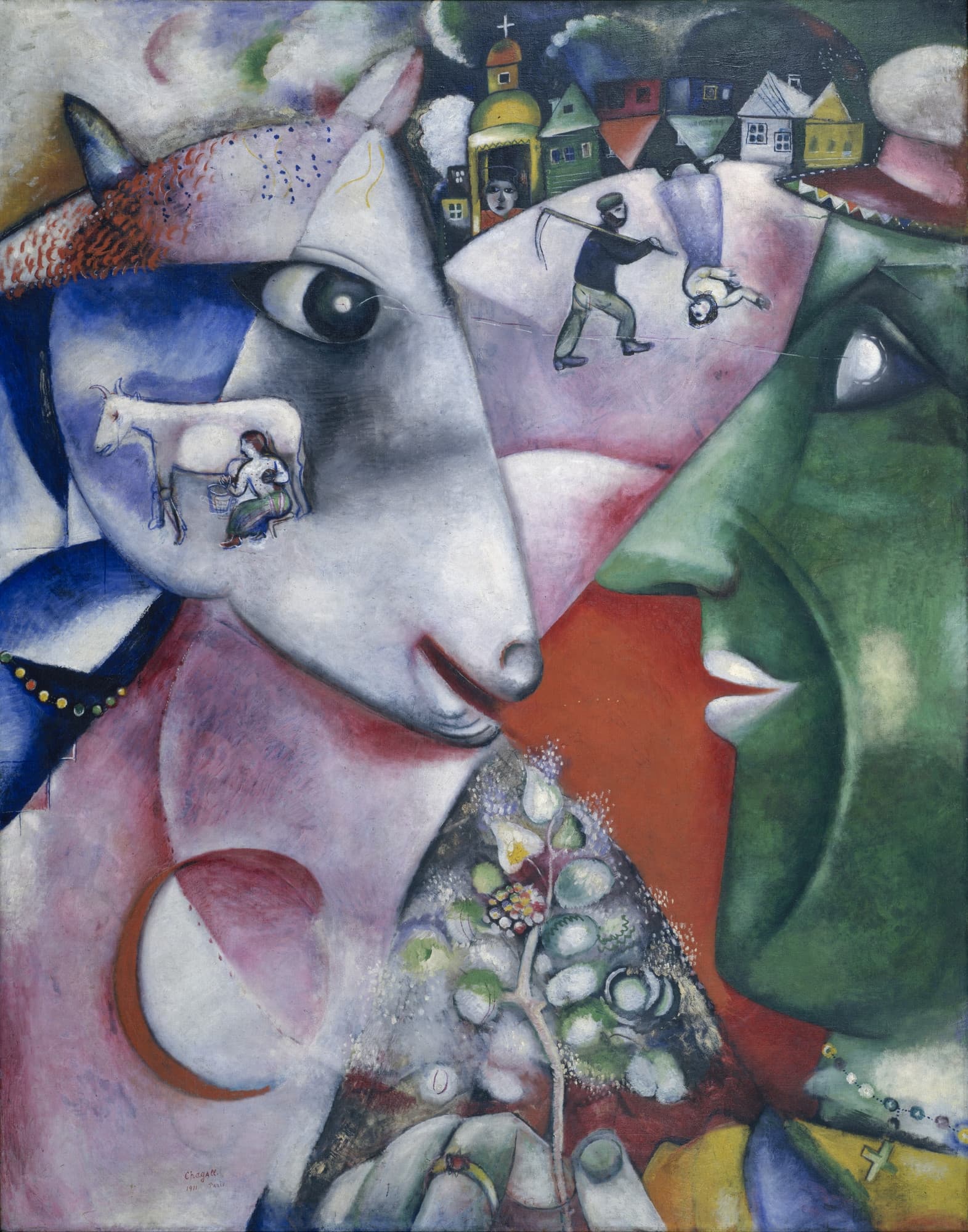
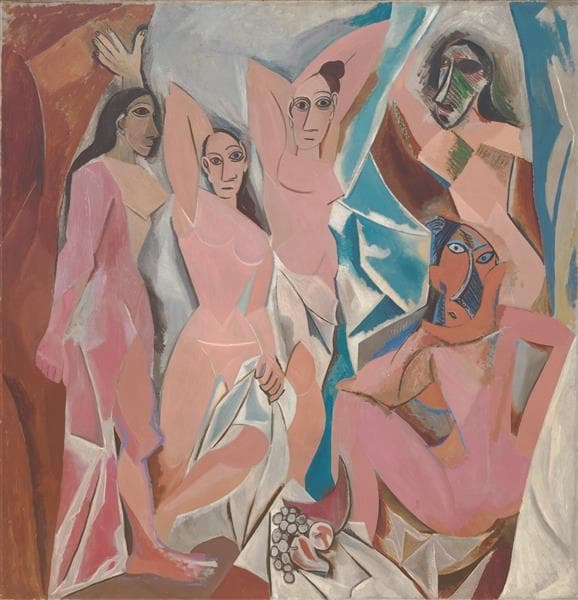
Chagall and Picasso meet on the ground where naturalism gives way to construction. Both reject a single fixed viewpoint, assembling images from overlapping planes, simultaneous angles, and emblematic signs. In Chagall, that grammar carries memory and devotion—rural rituals, musicians, animals, seasons—so that time stacks rather than flows. I and the Village binds a green‑cheeked villager to a pale animal with a literal eye‑line, while a milking vignette nests inside the animal’s head. The picture is less a scene than a map of reciprocal life. Picasso turns the same technical field into a crucible for pressure and confrontation. In Les Demoiselles d’Avignon, five figures are forced into a shallow chamber whose shards deny visual retreat; the front/profile fusion of faces makes looking itself unstable.
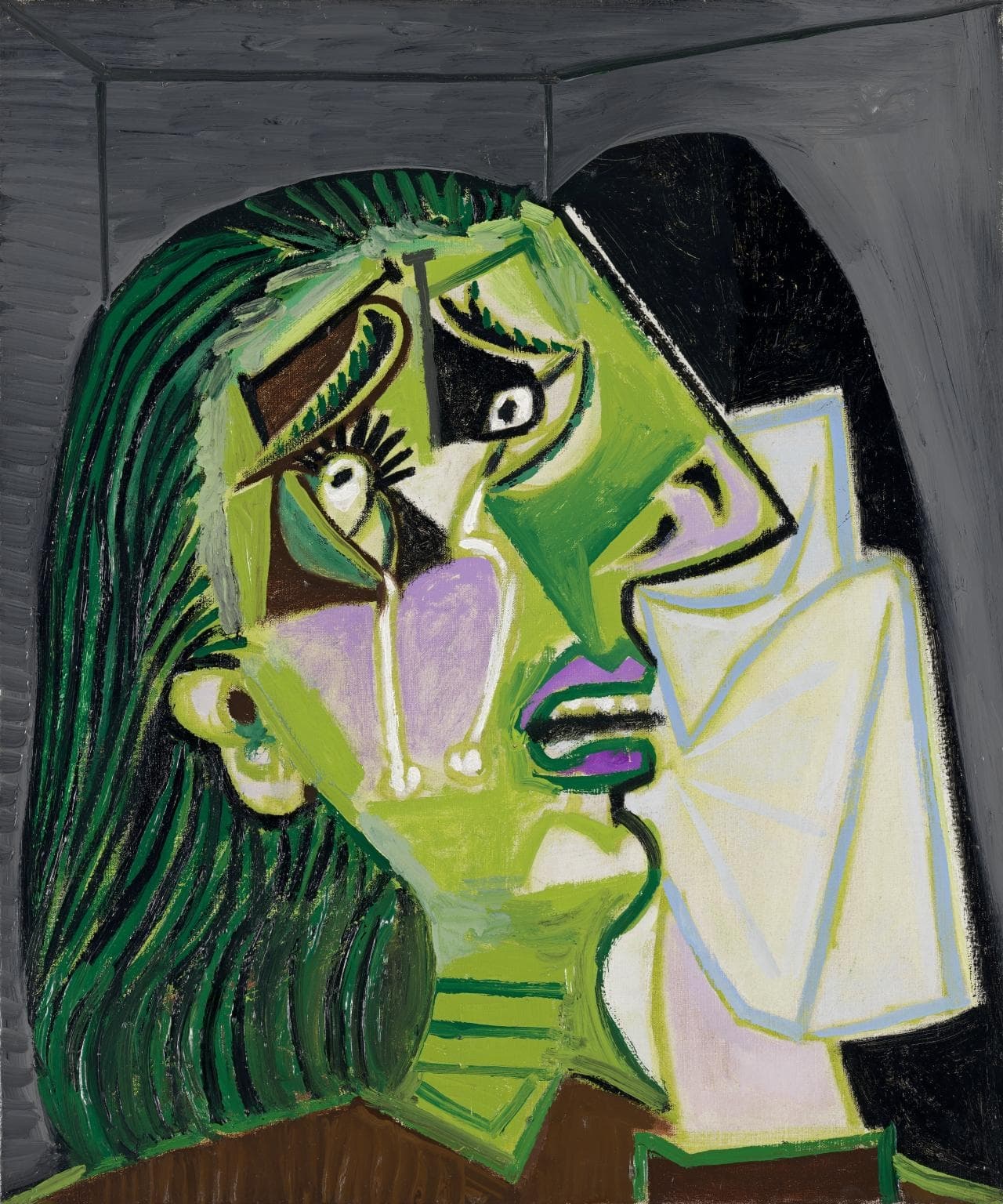
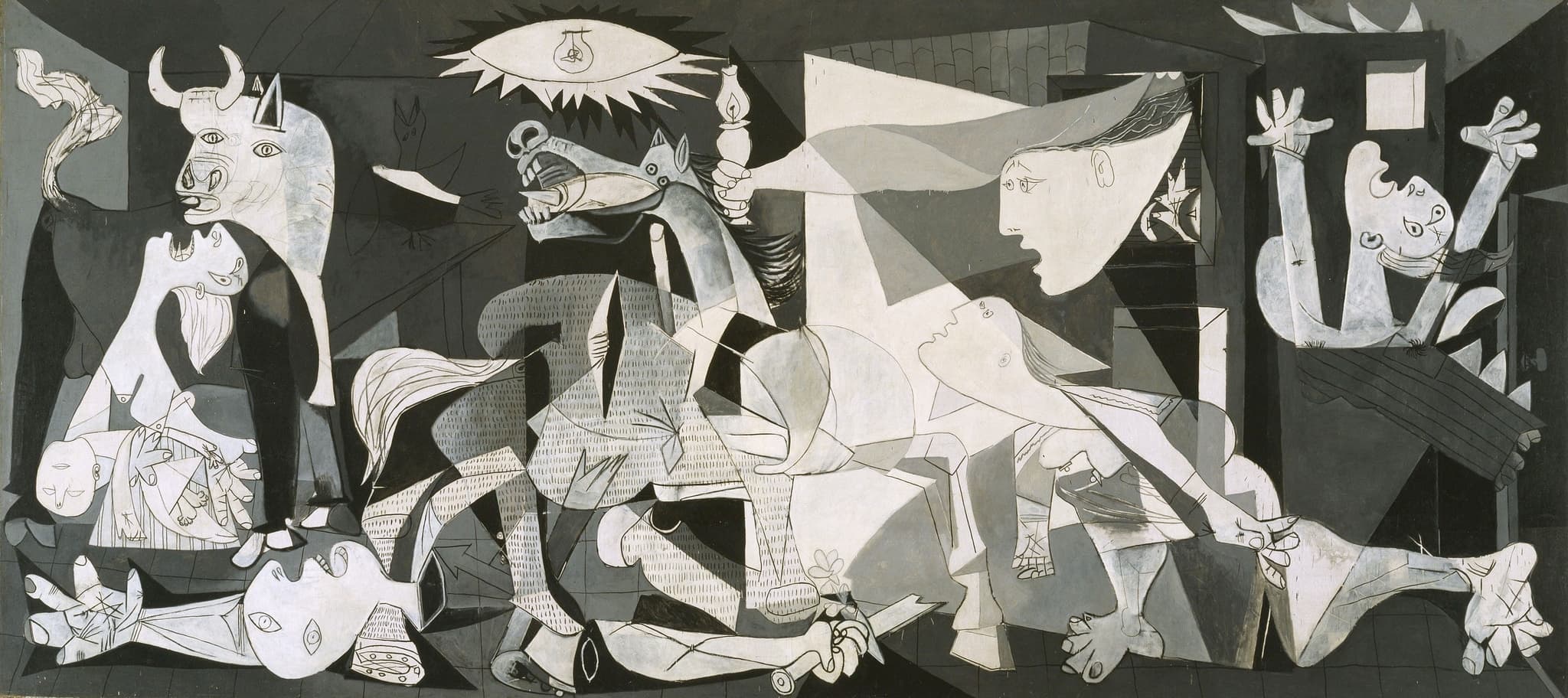
Both artists also enlarge private motifs into public address. Chagall’s The Green Violinist inflates a village fiddler into a sky‑bridging guardian; later, White Crucifixion fuses Jewish and Christian emblems to lament persecution with sanctified clarity. Picasso scales symbols into civic indictment: Guernica condenses a bombing into a monochrome drama where an electric bulb glares against a frail oil lamp, bull and horse stage populace and force, and space presses like a trap. Color, too, is a structural agent for both—never mere decoration. Chagall’s non‑natural greens and blues read as aura; Picasso’s sour greens and hard blacks in the Weeping Woman make grief palpably engineered. Series and icons—Chagall’s recurring fiddlers and stained glass, Picasso’s weepers and studio revisions—confirm how both artists reengineer vision to carry ethical weight.
Decisive Difference
Their split lies in what fracture is for. Chagall uses modernist cuts to mend a world—to superimpose memories, creatures, and rites into a renewed whole. His spaces float and enfold: figures hover without crushing rooftops, an aura of color wraps bodies, and scale swells to protect. I and the Village frames a pact sealed eye‑to‑eye; The Green Violinist strides above roofs like a custodian of culture; White Crucifixion overlays a tallit on Christ and rings him with burning shtetl scenes so suffering is held within a sanctified bond. In Chagall, form engineers reciprocity: planes open, gazes return, and color acts as a medium of presence. Painting becomes a vessel that re‑joins what exile, violence, or time have separated.
Picasso, by contrast, uses fracture to test where vision breaks. From Les Demoiselles to Guernica and the Weeping Woman series, he rebuilds faces and rooms as designed conflicts—front and profile collide, contours cage forms, values clash. Guernica’s shallow geometry locks figures into a civic interior lit by a merciless bulb; a small oil lamp threads human witness through the wreckage. The Weeping Woman’s jaw clamps a geometric handkerchief; garish greens and blacks turn lament into a public signal. For Picasso, art is an instrument that stages pressure and makes the lie of illusion expose a deeper truth. In short: Chagall transfigures; Picasso interrogates. One turns seeing into reciprocity and care; the other turns seeing into confrontation and diagnosis.
Paired Works
Breakthrough rooms: pact vs confrontation
Focus question: What changes when fracture links beings (Chagall) versus when it traps the viewer in a charged chamber (Picasso)?
I and the Village vs Les Demoiselles d'Avignon
Chagall’s canvas builds a pact: a villager and a pale animal meet eye‑to‑eye, their gazes bridged across the surface. Inside the animal’s head, a woman milks a goat; around them, inverted houses and floating figures fold memory into the present. Planes facet gently, color circulates like weather, and the whole field reads as a porous commons—human, animal, and seasonal cycles nested together. Fracture here is a grammar of simultaneity that keeps relationships intact.
Picasso’s painting inverts the terms. Five nudes press into a shallow, splintered room; faces at right harden into masklike stylizations drawn from non‑European prototypes encountered in colonial‑era Paris. Drapery, wall, and body share the same cutting edges. The fruit at the bottom becomes a baited still life, and the women’s frontal address pins the viewer as participant. Where Chagall’s room proposes reciprocity, Picasso’s chamber stages confrontation: multiple viewpoints ricochet, empathy is challenged, and the ethics of looking become the subject. Both works rewrite space and the face; one opens a pact, the other exposes an economy of desire and fear.
Single figures as public emblems
Focus question: How do color and contour turn one face into communal meaning?
The Green Violinist vs The Weeping Woman
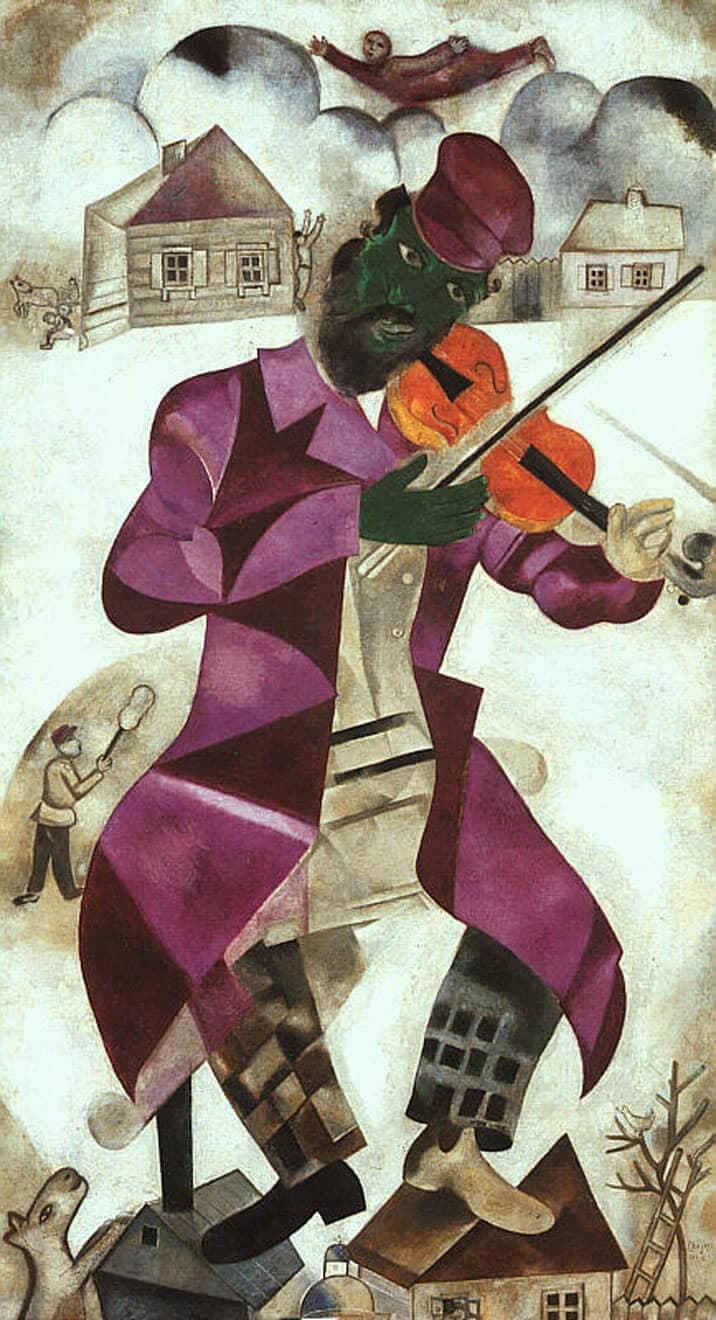
Chagall enlarges a village fiddler into a guardian who strides rooftops without crushing them. The emerald face, purple coat, and tilted hat are not eccentricities; they read as aura—color as spiritual agency binding houses, tree, and clouds into one chord. Scale is elastic but protective, as if the musician shelters the community under his song. Faceting softens into drift; modern devices are bent toward continuity and care.
Picasso condenses grief into a single, engineered face. Black contours cage acid greens and violets; the jaw visibly bites a crisply folded handkerchief; tears become crystalline blades. The head sits in a pressurized, shallow space that renders private sorrow as a public signal. Color is a shock engine and line a vise, forcing the viewer to feel perception fracture under trauma. Paired, the figures disclose the axis: Chagall’s chroma and contour spiritualize and protect; Picasso’s rebuild the face as a diagnostic device that broadcasts civilian pain.
1937–38: sacred lament vs secular indictment
Focus question: When catastrophe arrives, does painting sanctify continuity or stage a civic alarm?
Chagall answers 1930s violence by reframing the Crucifixion as a Jewish martyrdom: Christ wears a tallit, scenes of burning villages and refugees ring the central figure, and the palette turns cool and clarifying. The montage sanctifies witness; different times and symbols coexist without canceling each other. The result is a devotional lament that holds suffering inside a wider continuity of faith and memory.
Picasso compresses the bombing of a town into a civic interior of jagged tiles, windows, and bodies. A glaring electric bulb crowns the scene, clashing with a small hand‑held lamp—a drama of terror versus human testimony. Bull and horse anchor the composition as charged signs; grisaille recalls newsprint and strips away partisan color. Space is a trap, not a refuge. Side by side, the works show fracture put to different ends: Chagall assembles a sacred montage of endurance; Picasso constructs a secular indictment whose forms enact shock and pressure.
Why This Comparison Matters
This comparison clarifies two durable paths for modern art once imitation gave way to construction. Chagall models how fractured form can be turned toward repair—layering memory, ritual, and care so that a painting re‑joins what history has torn. Picasso models how the same tools can expose rupture—rebuilding faces and rooms so that looking registers conflict, grief, and responsibility.
Knowing the difference helps readers navigate 20th‑century images that share techniques but not purposes. It explains why a green face can feel like a blessing in one artist and a wound in another; why shallow space can cradle a community or trap a populace; why recurring signs (fiddlers, bulls, lamps) carry meaning not as fixed allegories but as functional devices for ethical address. From civic murals to intimate portraits, the two stances—transfiguration and interrogation—remain active options for artists and viewers deciding what pictures are for.
Related Links
Sources
- MoMA: Marc Chagall, I and the Village
- MoMA: Pablo Picasso, Les Demoiselles d’Avignon
- Museo Reina Sofía: Picasso, Guernica
- Museo Reina Sofía: Dora Maar’s photo report on Guernica
- Art Institute of Chicago: Marc Chagall, White Crucifixion
- Guggenheim: The Green Violinist (collection poster entry)
- Tate: Picasso, The Weeping Woman
- MoMA: What Is Cubism?
- The Met: Essay on Cubism
- MoMA: Picasso Speaks (1923)