Color-built empathy vs constructed seeing
Both artists remake vision rather than record it. Van Gogh uses color, light, and touch to heighten a single lived moment. Picasso builds a language of planes, masks, and signs that must be read. This page maps their shared ground and the decisive split.
Comparison frame: When painting stops imitating sight and starts building it, what differs between Van Gogh’s intensified experience and Picasso’s analytic reassembly?
Quick Comparison
| Topic | Pablo Picasso | Vincent van Gogh |
|---|---|---|
| What a painting is | A charged encounter; color and touch make presence felt. | A constructed language of planes and signs that organizes perception. |
| How truth is earned | Intensified presence from one embodied vantage; empathic uptake. | Multiperspectival construction; “a lie that makes us realize the truth.” |
| Space and viewpoint | Compressed depth, high horizons, tilted floors, print-like flatness. | Fractured simultaneity; sliding planes, collapsed depth. |
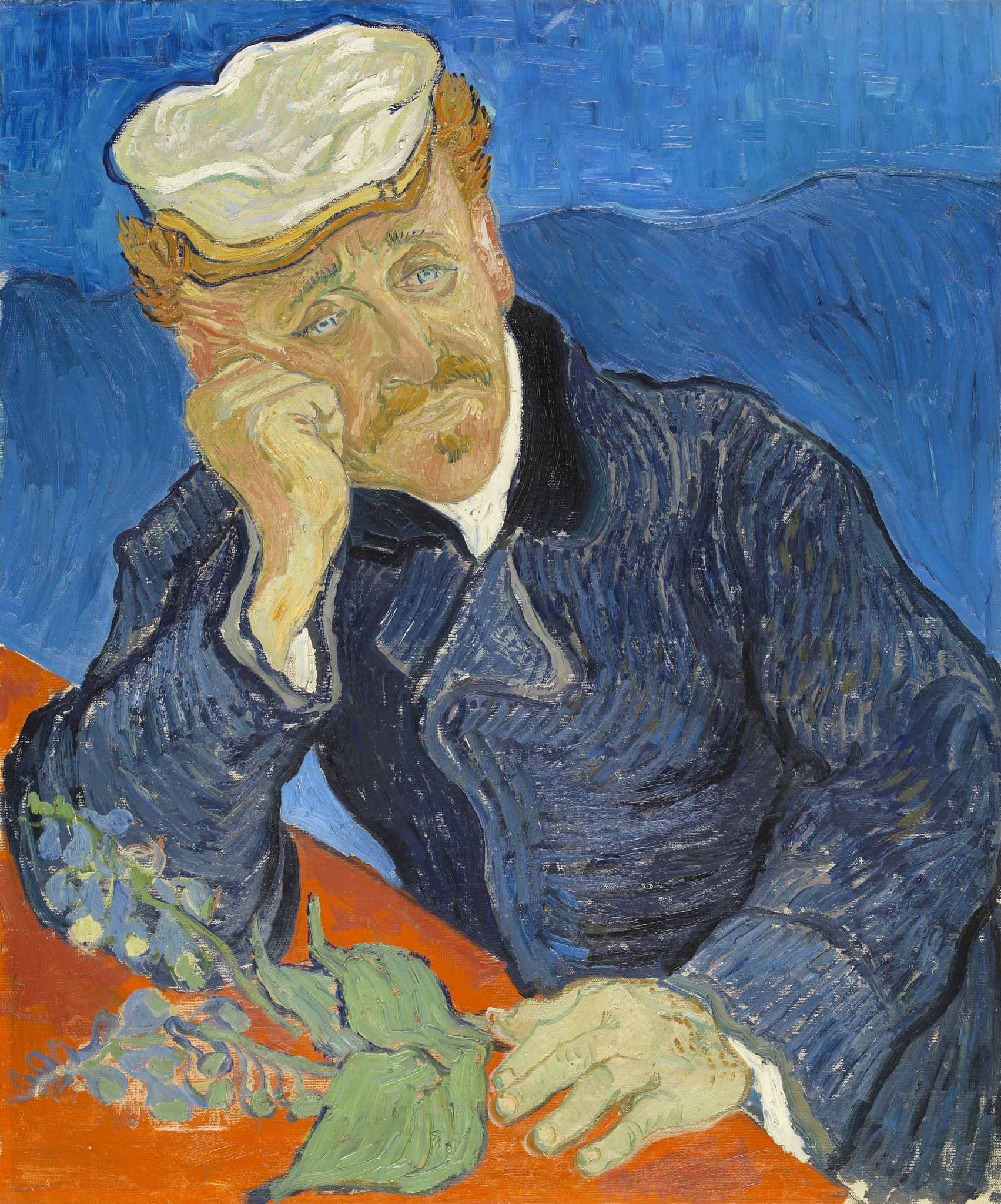
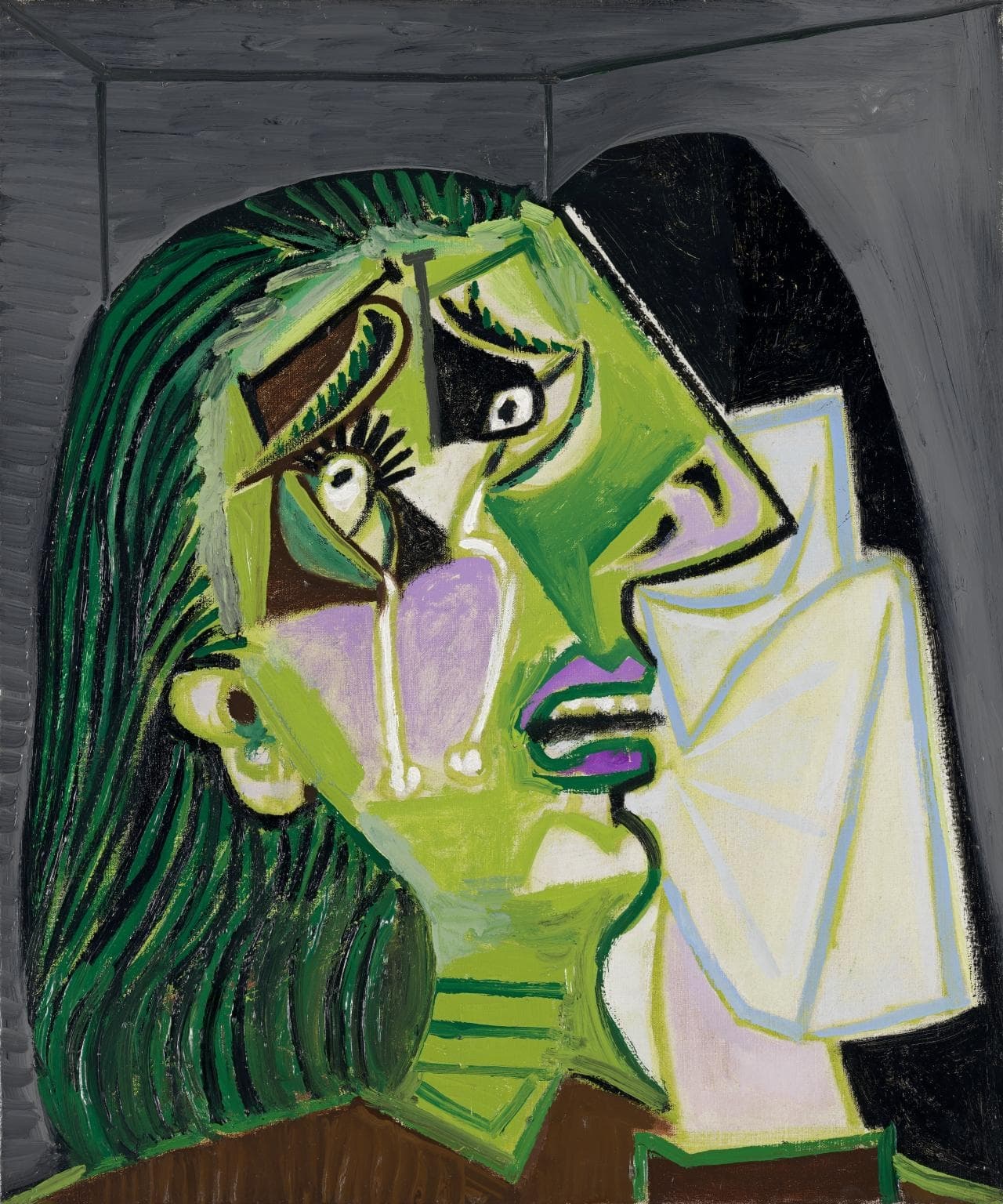
| Faces and psychology | Individual temperament made visible by chromatic pressure (Dr. Gachet). | Mask-like heads and emblematic types (Weeping Woman). |
| Light as argument | Gaslit nights “without black”; light codes welcome/solitude. | Competing lights—electric bulb vs oil lamp—stage power and witness. |
| Non‑Western models | Ukiyo‑e: flat color fields, bold contour, cropping. | Iberian sculpture and African masks: planar, frontal heads. |
| Viewer’s task | Feel through color and stroke; stabilize a moment. | Read the syntax; assemble meaning across facets and signs. |
Shared Ground
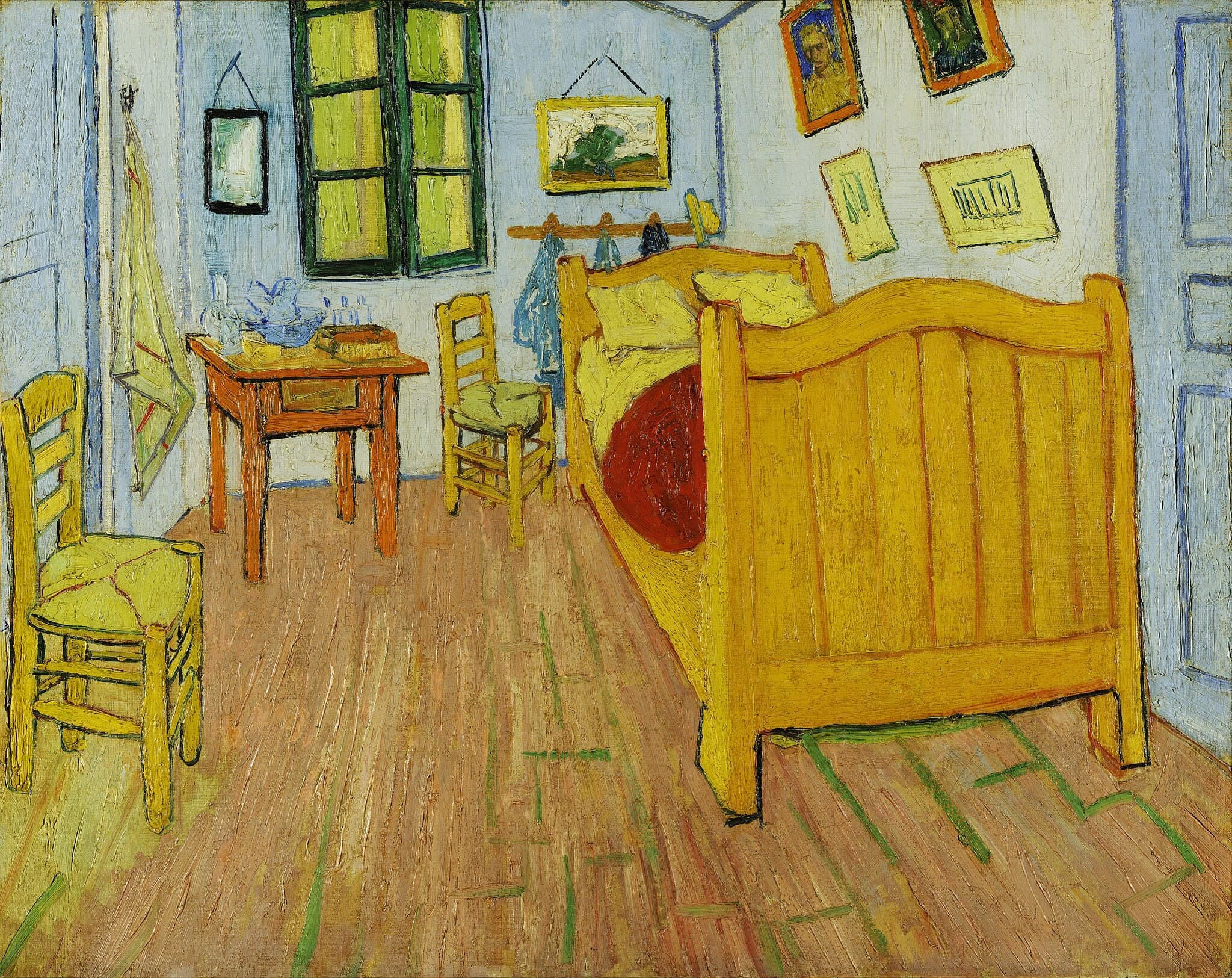
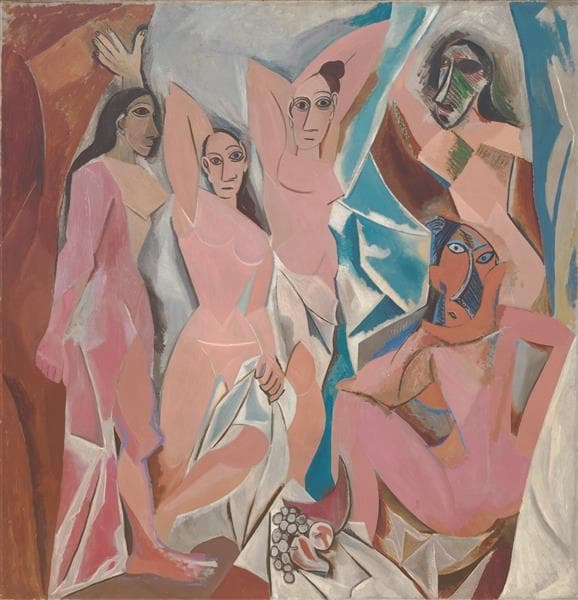
Van Gogh and Picasso both treat painting as a way to rebuild seeing. Neither records appearances; each constructs a picture the viewer must actively read. Van Gogh presses color, light, and touch until sensation becomes legible: a night can be luminous without black in Café Terrace at Night; a face can register fragility through orange-and-cobalt pressure in Portrait of Dr. Gachet; a room can promise rest while tilting with unease in The Bedroom. Picasso remakes perception by reorganizing form and space: Les Demoiselles d’Avignon fuses figure, drapery, and room into angular planes that demand interpretive assembly; Guernica compresses a town’s destruction into a civic theater of signs—bull, horse, bulb, lamp—so we read catastrophe rather than watch a narrative unfold.
Both artists also reset Western habits of vision by turning to non‑Western models. Van Gogh absorbs Japanese ukiyo‑e—flat color fields, emphatic contours, radical cropping—to simplify and intensify what he sees. Picasso looks to Iberian heads and sub‑Saharan African masks to block Renaissance softness with frontal, mask‑like faces, a move that underwrites Demoiselles and much of Cubism’s planar language. Light becomes a subject and an argument for both: Van Gogh’s gaslit yellows and star fields turn nocturne into chromatic ethics; Picasso stages a clash between an electric bulb and a fragile hand‑lamp in Guernica, making illumination itself political. Finally, each binds seeing to care. Van Gogh’s portraits, fields, and interiors seek empathic nearness; Picasso forges a public iconography of grief and witness, asking how we stand before others’ suffering.
Decisive Difference
The decisive difference lies in what each calls truth in painting. For Van Gogh, truth is intensified presence: a single, embodied encounter thickened by color and touch until it feels inevitable. Complementary hues carry temperature and feeling; impastoed, directional strokes behave like weather; shallow, print‑like space lets color and mark do ethical work. Café Terrace at Night argues that night can be built from chroma; Portrait of Dr. Gachet turns melancholy into a blue/orange architecture of care; Wheatfield with Crows compresses horizon and drives blue into yellow so nature bears a psyche’s pressure. The viewer’s task is empathic uptake—staying with the mood the painting stabilizes.
For Picasso, truth is constructed seeing. Cubism rejects single-point perspective to present multiple viewpoints and a built pictorial language; by the 1930s he wields fracture, emblem, and often restricted palettes to generalize experience into civic sign. Les Demoiselles d’Avignon dismantles Renaissance space, inserting mask‑like faces that deflect possession and force analytic looking. In Guernica, grisaille sharpens form like newsprint; the electric bulb surveils while a hand‑lamp bears human witness. Picasso’s own dictum—art as a crafted means that makes truth recognizable—describes this stance precisely. The viewer’s task is to read a syntax of planes and symbols, to assemble meaning across discontinuities. Put simply: Van Gogh heightens a singular present to be felt; Picasso engineers a system to be decoded.
Paired Works
Modern grief, two languages
Focus question: How do these portraits convert sorrow into form?
Portrait of Dr. Gachet vs The Weeping Woman
The remade interior
Focus question: What replaces Renaissance space in their rooms?
The Bedroom vs Les Demoiselles d'Avignon
Catastrophe and stance
Focus question: How do they picture threat—and what stance do they ask of us?
Wheatfield with Crows vs Guernica
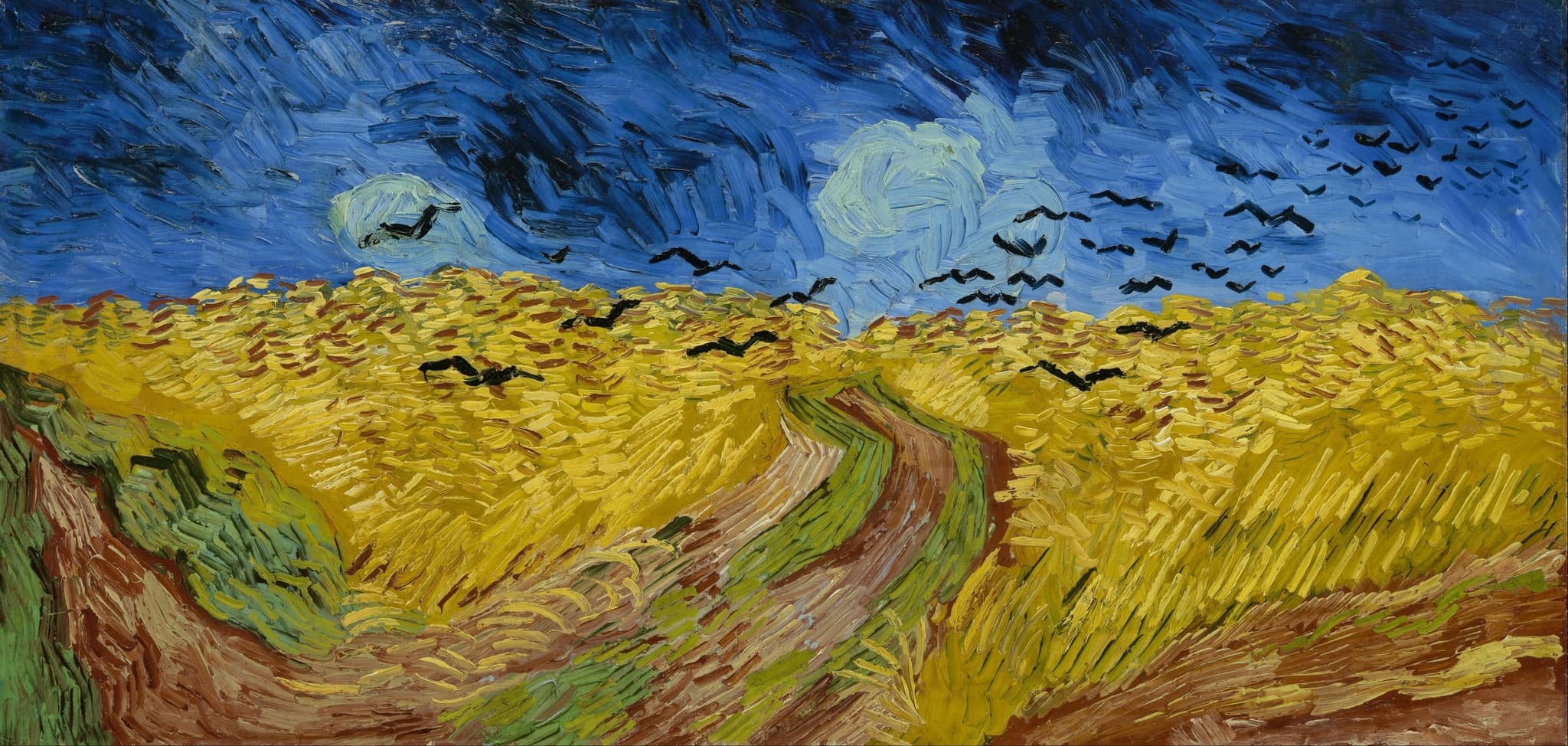
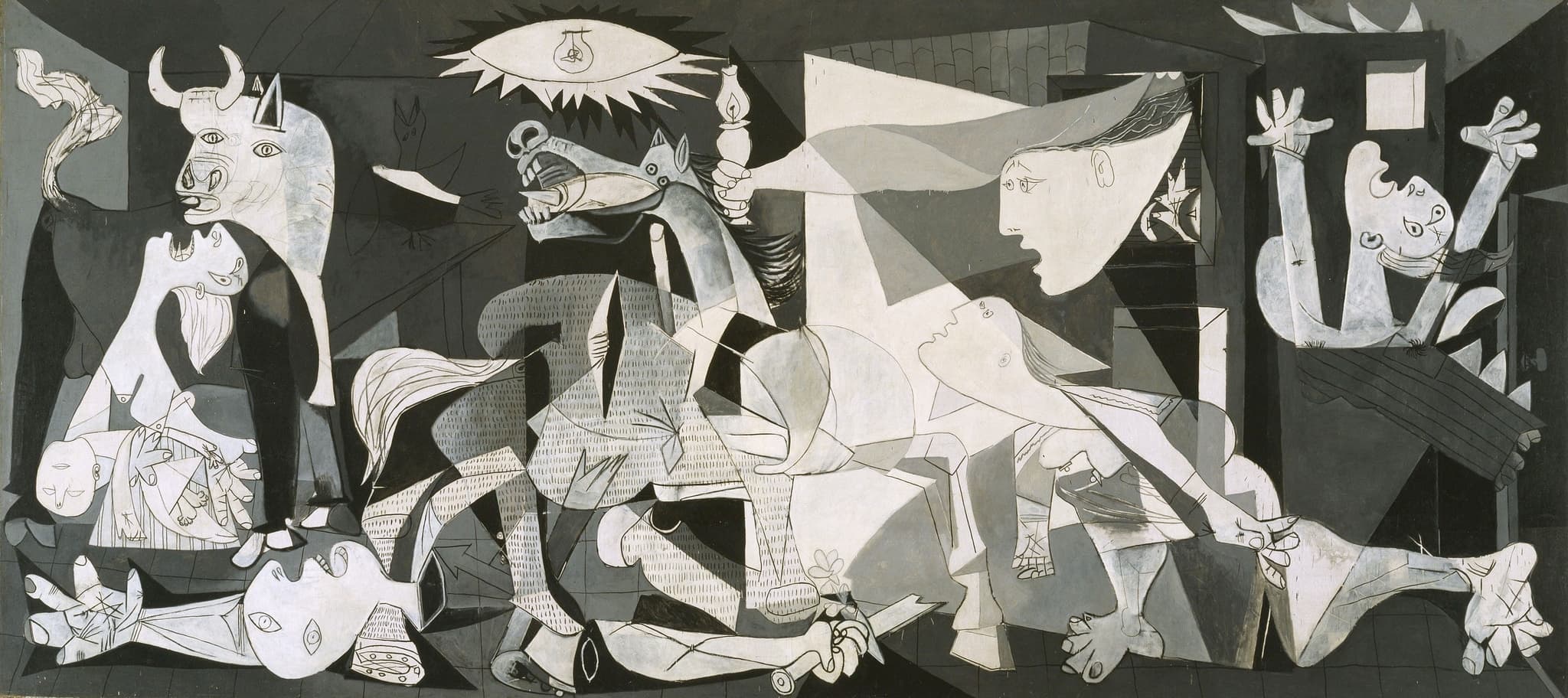
Why This Comparison Matters
Setting Van Gogh’s presence against Picasso’s construction clarifies two durable routes for modern art. One pursues intensity—color and touch thickening a singular moment until it feels necessary and shared. The other builds a syntax—planes, masks, and recurring signs that let painting state public truths without illusion. Understanding that split helps explain why a yellow café can hold communal warmth without black, and why a gray mural can indict a bombing without depicting a single plane. It also equips viewers: some works ask you to feel a weather of mood; others ask you to assemble meanings across facets and emblems. Both are ethical positions. They shape how twentieth‑century art handles faces, rooms, and light—from empathy in saturated color to the cool grammar of civic lament. Seeing the kinship and the fork lets you read not just Van Gogh and Picasso, but the modern choices any painter makes when turning sight into meaning.
Related Links
Sources
- Van Gogh Museum – Van Gogh & Japan (gallery research)
- Café Terrace at Night – overview and letter context
- MoMA: Analytic and Synthetic Cubism (terms and overview)
- MoMA Conservation: Les Demoiselles d’Avignon (technical studies)
- Encyclopaedia Britannica: Guernica
- Museo Reina Sofía: Dora Maar, Photo report on the evolution of Guernica
- MoMA Inside/Out: Guernica’s stretcher and custody history
- Getty: Investigating color change in Van Gogh’s Irises
- Smithsonian Magazine: Van Gogh’s last painting likely Tree Roots
- Picasso Speaks (1923): “Art is a lie that makes us realize the truth”