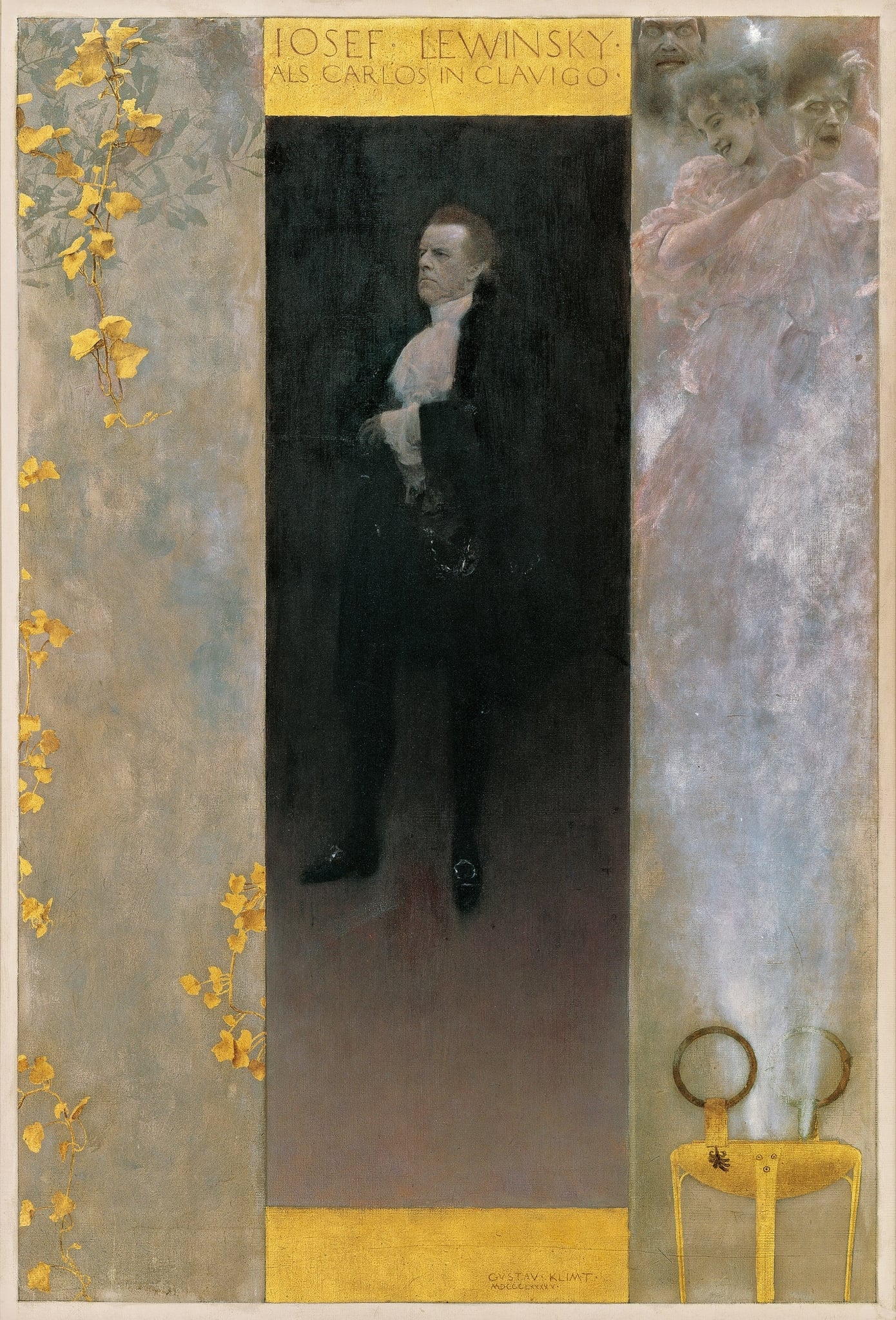
Antique tripod/brazier Symbolism
In art, an antique tripod or brazier evokes the apparatus of classical ritual—raised stands that bear a living, often sacred, fire. As a symbol it gathers meanings of sacrifice, purification, and the ignition of inspiration, the flame from which vision or pronouncement arises. Artists use it to summon the authority of antiquity and a charged ceremonial atmosphere.
Antique tripod/brazier in Josef Lewinsky as Carlos in Clavigo
In Josef Lewinsky as Carlos in Clavigo (1895) by Gustav Klimt, a smoking antique tripod appears alongside masks and laurel/ivy within a stark, triptych-like design. Its active smoke charges the scene like a rite in progress: the tripod connotes sacrificial fire and dramatic inspiration, turning the actor’s upright silhouette into a test of will and helping Klimt fuse portrait and allegory. By staging this ritual emblem amid theatrical motifs, the work visualizes the drama’s psychic weather and previews the artist’s Symbolist turn.